体系竞争

Search documents
用时间证明“慢即是快”
Zhong Guo Zheng Quan Bao· 2025-12-21 20:13
Core Viewpoint - The investment philosophy of the company emphasizes stability and long-term gains over short-term volatility, with a focus on low-volatility products that can yield consistent returns for investors [1][2][5]. Group 1: Investment Strategy - The company has evolved from managing 200 million to nearly 7.5 billion in assets, focusing on low to medium volatility strategies such as quantitative convertible bond strategies and quantitative hedging strategies [1]. - The founder believes that the core goal of investing is not to chase short-term excitement but to ensure that investors can "hold on, sleep well, and make money" [1][2]. - The company’s approach is to control drawdowns and balance risks, using a multi-asset quantitative system to achieve stable returns [1][2]. Group 2: Risk Management - The company has established a "valuation-momentum-risk parity" decision-making system to ensure robust investment execution, adapting concepts from leading hedge funds to local market conditions [3]. - The risk management framework integrates AI and big data analysis, allowing for real-time monitoring and rapid response to market changes, thus maintaining a controlled investment environment [3][4]. - The company emphasizes that risk management is not about limiting returns but protecting compound growth, focusing on sustainable long-term performance [4]. Group 3: Performance Metrics - The flagship product, "Youmeili Win Value No. 1 A Class," has achieved over 150% cumulative returns and an annualized return exceeding 15% since its inception [5]. - The company aims to demonstrate that low volatility does not equate to low returns, achieving stable annual returns through controlled drawdowns and systematic operations [5][6]. - The founder highlights that consistent small gains, rather than high volatility, lead to sustainable wealth accumulation over time [5][6]. Group 4: Technological Integration - The company invests heavily in technology, with half of its profits allocated to technological advancements, establishing a complete chain from data collection to risk control [8]. - The team comprises members with backgrounds in computer science, mathematics, and financial engineering, enhancing the company's capability to develop automated execution systems [8]. - The founder asserts that the future of the asset management industry will rely on "systemic competition," where technological investment and automated capabilities will determine a firm's longevity and competitive edge [8].
智驾不是 “功能竞赛”!独家对话北汽研究总院副院长郑新芬:行业已进入 “体系竞争” 阶段
Mei Ri Jing Ji Xin Wen· 2025-10-30 11:03
Core Insights - The automotive industry's competition has evolved from manufacturing and configuration to a comprehensive focus on intelligent driving, necessitating a systematic organization and technological framework for sustainable innovation [1][3] - The penetration rate of L2-level intelligent driving is expected to exceed 60% this year, but the industry faces increasing homogenization, leading to a competitive landscape characterized by iterative improvements rather than genuine differentiation [1][6] - Regulatory frameworks are tightening, emphasizing safety and standardized development in intelligent driving, which presents a challenge for companies to achieve technological breakthroughs within compliance [1][2] Industry Trends - The shift from a focus on functional competition to a balance between safety and innovation is becoming evident, requiring companies to enhance their technical reserves to ensure quality and speed in mass production [2][7] - The integration of intelligent driving with smart cockpit and electronic architecture is essential for long-term competitive advantage, as seen in the "Yuanjing Intelligent System" developed by BAIC [3][11] - The adoption of intelligent driving features in the domestic new energy passenger vehicle market has increased significantly, with L2-level and above installation rates surpassing 82.6% in the first half of the year, indicating a growing consumer demand for these technologies [6] Safety and Innovation - Establishing a consensus on safety as a foundational principle is crucial for balancing innovation and safety, necessitating multi-dimensional support from regulations, standards, and industry collaboration [7][8] - The development of a comprehensive safety verification system is vital, with BAIC implementing a "one core, three rings" safety development framework to enhance testing efficiency and coverage [8] - Companies are encouraged to share testing resources to avoid redundant investments and foster innovation at a higher safety baseline [8] Strategic Approaches - Companies must choose between "full-stack self-research" and "ecosystem collaboration" based on their capabilities and goals, with many opting for a hybrid model that combines core self-research with strategic partnerships [9][11] - BAIC's strategy emphasizes maintaining control over product definition and system integration while collaborating with leading firms like Huawei and Pony.ai to enhance their technological capabilities [9][11] - The depth of technological reserves directly influences the speed and quality of mass production, with BAIC focusing on data-driven safety validation and foundational capabilities to ensure compliance with stringent regulations [11]


全球航运巨头法国达飞,无视美国新政选印度造6艘大船,成本高三成也认了
Sou Hu Cai Jing· 2025-10-23 17:54
Core Viewpoint - The unexpected shift in global shipbuilding orders, where India benefits from a $300 million order from French shipping giant CMA CGM, highlights the complexities of international trade dynamics and the limitations of U.S. policies aimed at reviving its shipbuilding industry [3][5][6]. Group 1: U.S. Policies and Global Reactions - The U.S. attempted to revive its declining shipbuilding industry by imposing port fees to redirect orders from China back to American shipyards [3][6]. - Despite these efforts, the order that was expected to return to the U.S. instead went to India, marking a significant setback for American policies [5][6]. - The Los Angeles port executive expressed disappointment, indicating that the American public would ultimately bear the costs of these misguided policies [5]. Group 2: India's Strategic Positioning - India secured the order due to its status as a "safe zone" for shipping companies, avoiding high fees associated with both U.S. and Chinese ports [6][7]. - The Indian government has proactively targeted the shipbuilding sector, implementing favorable policies and constructing new docks to capitalize on emerging opportunities [7]. - Despite the excitement surrounding this order, India's shipbuilding industry remains underdeveloped, holding less than 1% of the global market share and facing higher costs due to reliance on imported components [7]. Group 3: Broader Implications for Global Competition - The situation illustrates India's ability to leverage opportunities amid U.S.-China tensions, showcasing a form of "opportunism" that has allowed it to benefit from geopolitical rivalries [9]. - China remains unfazed, focusing on its industrial strength and market competition rather than reacting emotionally to the developments [11]. - The incident underscores the importance of a robust industrial system over mere regulatory frameworks, as evidenced by China's continued growth in shipbuilding orders despite U.S. tariffs [12][15]. Group 4: Future Outlook - The dynamics of this situation serve as a reminder that practical capabilities and strategic foresight are crucial for success in global competition, rather than solely relying on rules and regulations [12][15]. - The rise of India in this context highlights the potential for countries to identify and exploit "gap profits" in the midst of great power competition [14].

零跑越级,直面百万豪华
汽车商业评论· 2025-10-19 23:06
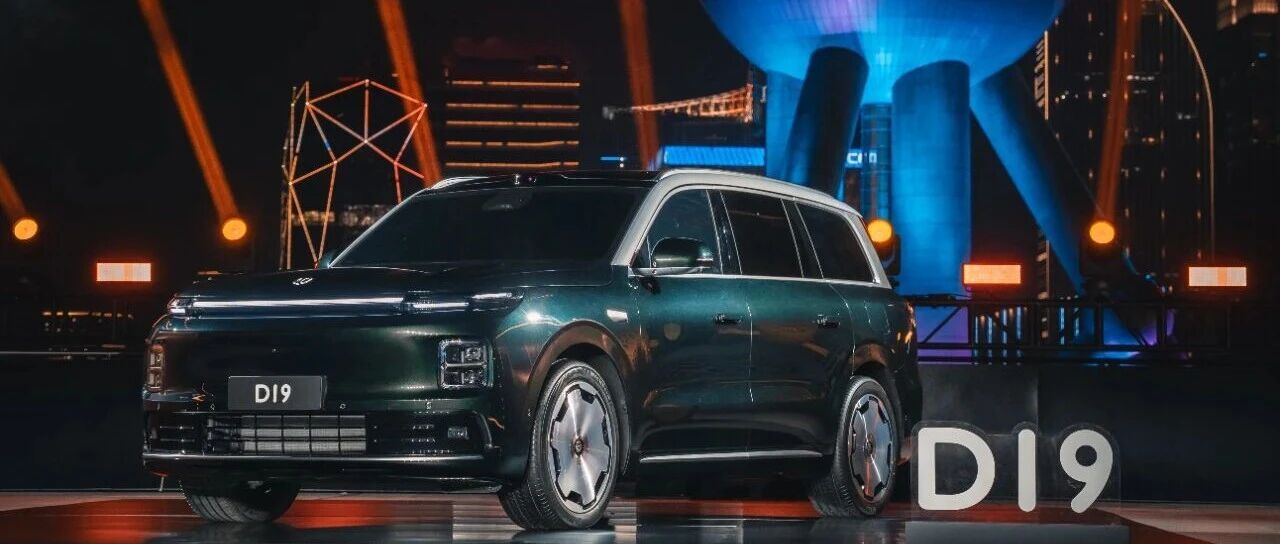
Core Viewpoint - Leap Motor is redefining the concept of luxury in the automotive industry by offering high-end technology and experiences at an accessible price point, specifically through the launch of its flagship D19 model, which combines luxury features typically found in million-level vehicles with a price tag of 300,000 yuan [6][19][26]. Group 1: Product Launch and Technology - The launch event for the D19 marked the global debut of Leap Motor's flagship D platform, showcasing the company's decade-long commitment to self-research and development, which allows it to offer luxury technology at a competitive price [6][7]. - The D19 features six pioneering technologies, including a 80.3 kWh range-extended battery and a dual Qualcomm Snapdragon 8797 central computing unit, which provide advanced performance and safety features typically reserved for high-end luxury vehicles [21][23]. - Leap Motor's strategy emphasizes a "million-level experience at a 300,000 yuan price," challenging the traditional notion that flagship vehicles must be expensive [19][24]. Group 2: Market Positioning and Strategy - The automotive market has shifted from price wars to a focus on systemic competition, where companies are evaluated based on their platform capabilities, software upgrades, and supply chain integration [12][28]. - Leap Motor's approach targets two consumer segments: practical middle-class families and tech-savvy individuals who prioritize advanced technology without paying a premium for brand prestige [27][28]. - The company has achieved significant brand recognition, with a 30% increase in brand awareness and a 40% increase in familiarity from 2024 to 2025, indicating a successful establishment of its value proposition in the market [16]. Group 3: Competitive Advantage and Future Outlook - Leap Motor's competitive edge lies in its high level of self-research, with 80% of its workforce dedicated to R&D and 65% of its core components being self-developed, allowing for better cost control and rapid production [13][15]. - The D19's launch signifies a new chapter for Leap Motor, as it aims to fill the gap in the 300,000 yuan flagship SUV market while proving that luxury does not have to come with a high price tag [8][28]. - The company's model of providing accessible luxury through technological advancements could serve as a new paradigm for Chinese automotive brands aiming to penetrate the global high-end market [28][29].
国产手机开启新较量,「不争先」的赢了
36氪· 2025-10-13 14:44
Core Viewpoint - The Chinese smartphone industry has entered a new phase characterized by systemic competition, where brands like Huawei, Xiaomi, and vivo are focusing on technological depth and ecosystem innovation rather than just product iteration [2][5][26]. Market Dynamics - As of September 28, 2025, vivo (including iQOO) holds an 18.4% market share, leading the Chinese smartphone market for the third quarter of 2025, and a 17.2% share for the first three quarters of 2025 [4]. - In the high-end market (above 4000 yuan), vivo ranks second with a 22.14% share, following Huawei [4]. Competitive Landscape - The current competitive landscape is defined by a shift from "single-point leadership" to "system leadership," where brands must build closed loops in technology, experience, and ecosystem [5][26]. - The evolution in the imaging sector reflects this shift, moving from hardware competition to a focus on real-world problem-solving capabilities [5][11]. Innovation Strategies - vivo's innovation strategy involves deep collaboration with partners like MediaTek and Arm, allowing for co-development of chipsets and imaging algorithms, which enhances their competitive edge [7][20]. - The X300 series exemplifies this approach, integrating advanced imaging capabilities with AI to create a seamless user experience [9][19]. Long-term Vision - vivo's approach is likened to a river, emphasizing patience and accumulation over time, which allows for the development of a reusable system capability [16][19]. - The "Blue Technology" system represents a comprehensive ecosystem that integrates chip performance, imaging, system interaction, and AI understanding, enabling continuous self-evolution [19][20]. Societal Impact - The focus on user-centric innovation is evident in vivo's projects, such as the "Digital National Treasure Plan," which utilizes imaging technology for cultural heritage preservation [23]. - By addressing real-world needs, vivo demonstrates that technological innovation can create significant social value beyond mere product performance [24][28].