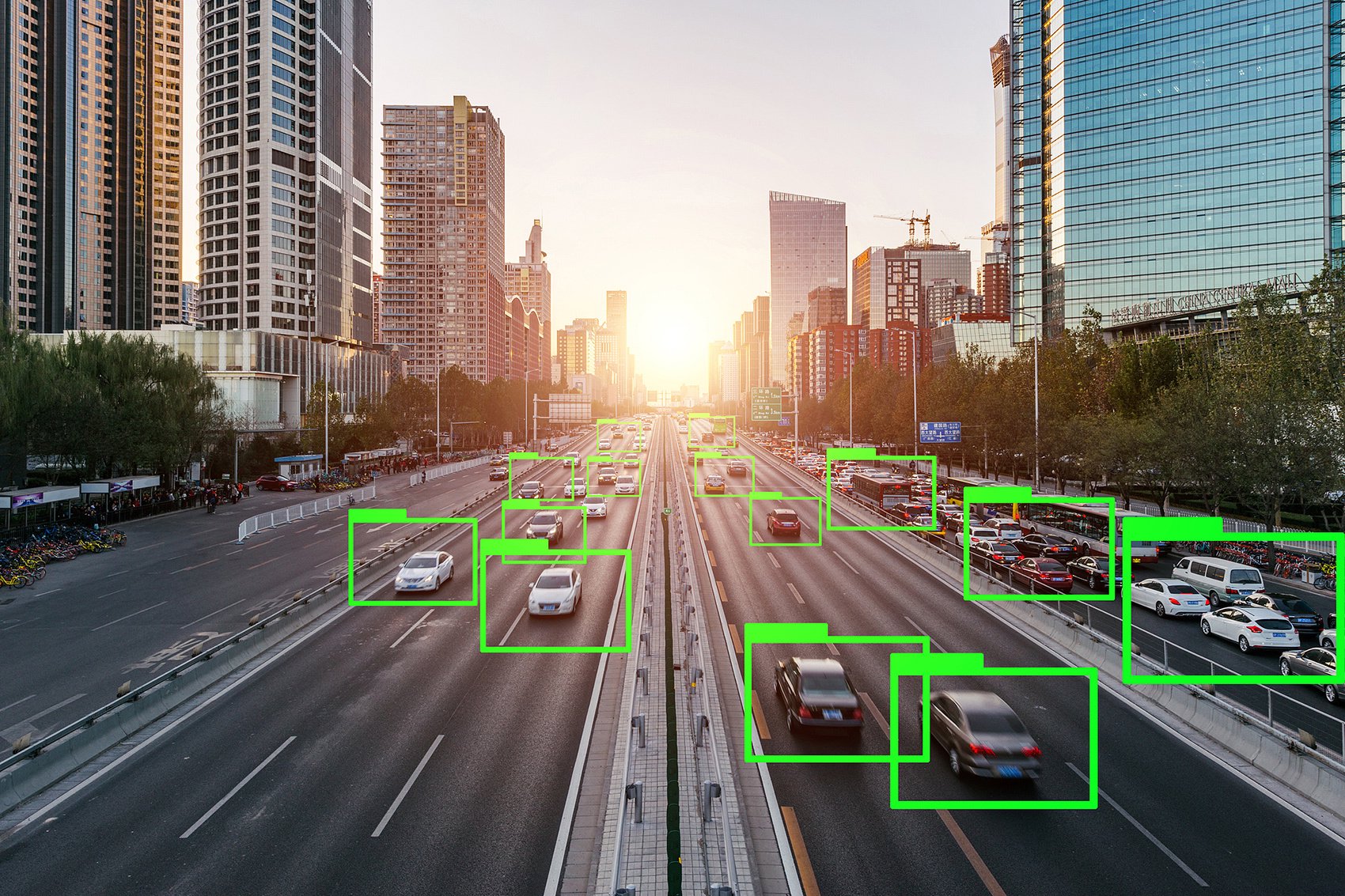
极狐阿尔法S6(L3)版

Search documents
从“辅助”到“自动”的关键一跃,首批L3级自动驾驶车型获批,车企明确:L2车辆暂无法直接升级
3 6 Ke· 2025-12-19 06:17
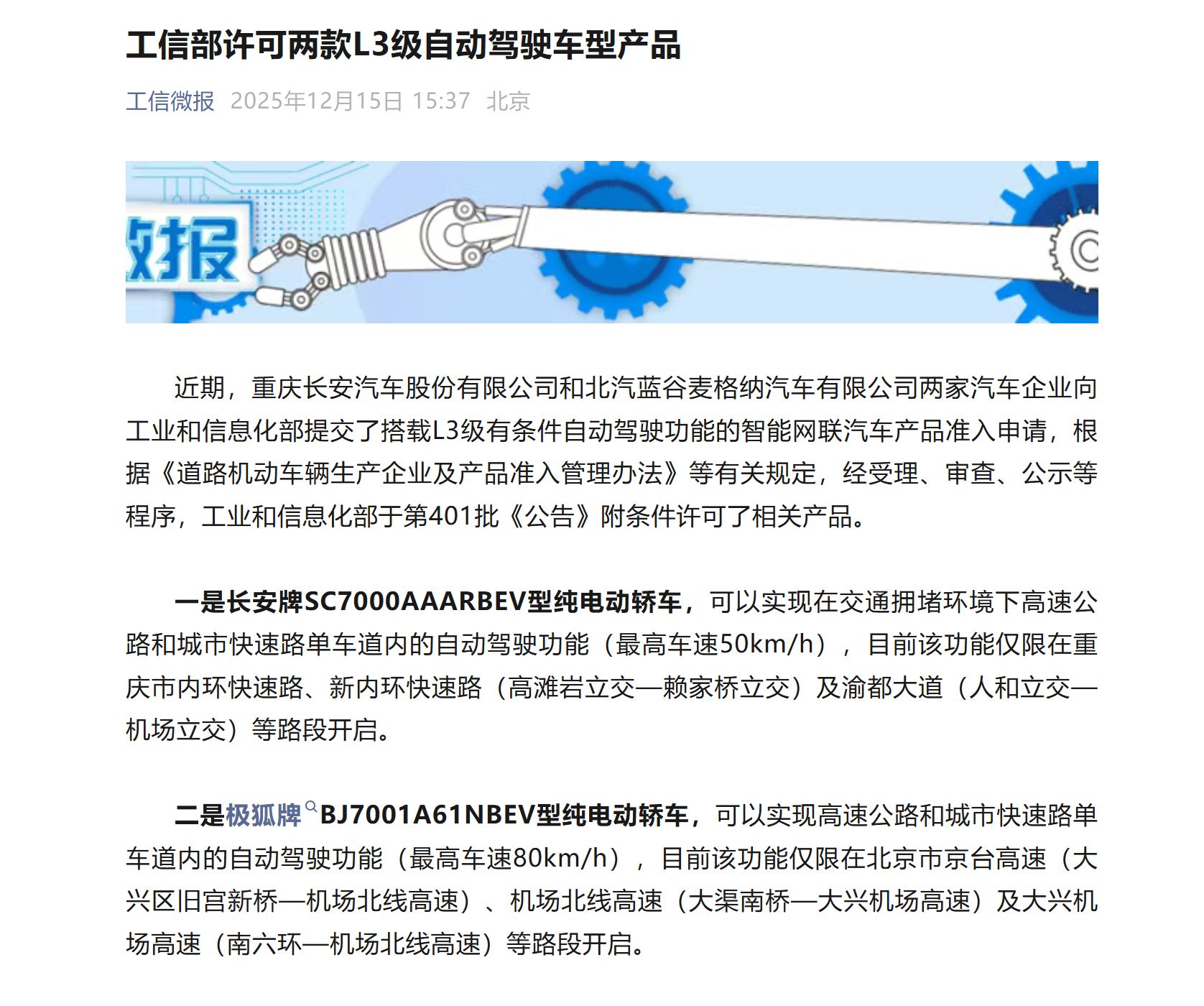
12月15日,这份束缚迎来被打破的关键节点——工业和信息化部正式公布我国首批L3级有条件自动驾驶车型准入许可,长安深蓝、北汽极狐各有一款纯 电动轿车入选,分别在重庆、北京的指定区域开启上路试点。 周二早高峰的北京京台高速,阳光刚穿透薄雾,刘磊(化名)的手指已经在方向盘上搭了23分钟。他每天要往返50公里通勤,座驾是2023年购入的搭载 L2级辅助驾驶的轿车——这套能自动跟车、保持车道的系统,曾让他以为"轻松开车"触手可及。但此刻,仪表盘上"请保持注意力"的提示灯第三次亮起, 他不得不挺直腰板,紧盯前方缓行的车流。 上周晚高峰堵在机场北线,L2级辅助驾驶帮忙跟着车,但眼睛得一直盯着,他的手臂僵了一路。刘磊想起手机里刷到的工信部许可两款L3级自动驾驶车 型产品的新闻,屏幕上"特定场景解放双手"的描述让他忍不住多看了两眼。"要是能在拥堵的高速上真正松开方向盘,哪怕只是让我活动下胳膊,都是奢 望成真了。"他心里想。 刘磊的期盼,正是中国数千万L2级辅助驾驶车主的共同心声。按乘联分会近年乘用车销量数据估算,结合中国L2级辅助驾驶超50%的全球第一普及率, 仅近三年累计售出的7000余万辆乘用车中,就有超3500万辆搭载 ...



首批L3级自动驾驶车型获批 车企明确:L2车辆暂无法直接升级
Mei Ri Jing Ji Xin Wen· 2025-12-19 00:50
Core Viewpoint - The approval of the first L3-level conditional autonomous driving models in China marks a significant milestone in the transition from "assisted driving" to "autonomous driving," fundamentally altering the responsibility chain in driving and paving the way for commercial applications in specific scenarios [2][5][9]. Group 1: Market Response - Following the announcement of L3-level model approvals, the capital market reacted swiftly, with several stocks in the intelligent driving sector experiencing significant gains, indicating strong investor interest [4]. - The approval is seen as a leap towards mass production and application of intelligent connected vehicles, reflecting a balance between regulatory oversight and technological advancement [4][17]. Group 2: Technical and Regulatory Developments - The L3-level models approved include Changan's "Deep Blue SL03" and BAIC's "Arcfox Alpha S6 (L3 version)," which will operate in designated areas in Chongqing and Beijing, respectively, under specific speed limits [6][8]. - The transition to L3-level driving involves a shift in responsibility from the driver to the system under certain conditions, a significant change from L2-level systems where the driver retains full responsibility [5][10]. Group 3: Future Projections - Industry experts predict that by 2026, the penetration rate of L3 and above autonomous vehicles could reach 10%, with L3-level vehicles expected to be commercially viable in specific applications such as airport shuttles and campus commuting [5][25]. - The market for Robotaxi services is projected to grow significantly, with estimates suggesting a market size exceeding 2.93 trillion yuan by 2030, driven by advancements in autonomous driving technology [12][24]. Group 4: Technological Innovations - The cost of key components for autonomous driving, such as lidar and AI chips, is decreasing, which is expected to stimulate the entire supply chain and create new business models in the automotive industry [21][24]. - The integration of advanced sensor technologies and AI models is crucial for the development of reliable L3-level autonomous driving systems, with a focus on multi-sensor fusion to handle complex driving environments [26][30]. Group 5: Regulatory Framework - The approval process for L3-level vehicles has been gradual, involving multiple stages of regulatory development and safety assessments, indicating a structured approach to integrating autonomous vehicles into the market [13][15]. - Local regulations, such as those in Beijing and Wuhan, are being established to support the commercialization of L3-level autonomous vehicles, providing a framework for future developments [16][30].
从“辅助”到“自动”的关键一跃!首批L3级自动驾驶车型获批,车企明确:L2车辆暂无法直接升级
Mei Ri Jing Ji Xin Wen· 2025-12-19 00:36
Core Viewpoint - The approval of L3-level conditional autonomous driving vehicles in China marks a significant milestone in the transition from L2-level assistance to true automation, fundamentally altering the responsibility chain in driving and opening new market opportunities for the automotive industry [4][10][19]. Group 1: Market Response and Impact - Following the announcement of L3-level vehicle approvals, the stock market reacted positively, with several companies in the intelligent driving sector experiencing significant stock price increases, indicating strong investor interest [6][19]. - The approval of L3 vehicles is expected to lead to a competitive landscape where companies that can leverage L3 technology will gain a strategic advantage in the automotive market [10][19]. Group 2: Technical Specifications and Regulations - The first two approved L3 vehicles, the Changan Deep Blue SL03 and the BAIC Arcfox Alpha S6, will operate in designated areas with maximum speeds of 50 km/h and 80 km/h respectively, highlighting the initial application of L3 technology in specific scenarios [8][10]. - The L3 technology represents a shift in responsibility from the driver to the system under certain conditions, which is a fundamental change from L2 systems where the driver retains full responsibility [7][10]. Group 3: Future Projections and Industry Trends - Industry experts predict that by 2026, the penetration rate of L3 and above autonomous vehicles could reach 10%, with L2-level vehicles expected to achieve a 70% market penetration [10][27]. - The development of L3 technology is anticipated to create a new market worth trillions, as the industry shifts from selling vehicles to selling mileage, particularly in specific applications like airport shuttles and logistics [26][27]. Group 4: Challenges and Considerations - Despite the advancements, the rollout of L3 vehicles will face challenges, including the need for high-precision infrastructure and regulatory frameworks to ensure safety and operational efficiency [31][32]. - The approval process for L3 vehicles has been gradual, involving extensive testing and regulatory compliance, which underscores the importance of a robust safety and operational framework for the future of autonomous driving [19][28].