核级阀门

Search documents
大制造中观策略行业周报:秩序重构投资安全:新能源、新军事、新科技
ZHESHANG SECURITIES· 2026-03-26 10:24
Investment Rating - The industry investment rating is "Positive" (maintained) [4] Core Insights - The report emphasizes the restructuring of investment safety in sectors such as new energy, new military, and new technology, highlighting the importance of these areas in the manufacturing sector [1] - The report identifies key companies in the manufacturing sector, including Zhonglian Heavy Industry, Xugong Machinery, and Sany Heavy Industry, among others, as core investment targets [1] - The report outlines the expected growth in the nuclear fusion market, projecting a global market size of approximately 266 billion yuan by 2035, driven by advancements in technology and increasing energy demands [6] Summary by Sections Industry Overview - The report summarizes significant weekly deep reports and commentary from the manufacturing sector, focusing on the latest trends and marginal changes [1] - It highlights the performance of various indices, noting that the best-performing sectors include telecommunications and banking, while the manufacturing sector indices showed mixed results [2][12] Key Company Reports - Jiangsu Shentong is identified as a leader in nuclear-grade valves, with significant growth potential in the nuclear fusion and semiconductor sectors [6] - The company is projected to achieve revenues of 2.2 billion yuan in 2025, with a compound annual growth rate (CAGR) of approximately 10% from 2024 to 2027 [7] Market Trends - The report discusses the acceleration of the nuclear fusion commercialization process in Shanghai, with a focus on creating a complete industrial ecosystem that includes research, manufacturing, and services [3] - It notes that the industry is entering a phase of intensive equipment procurement and construction, driven by AI computing power and the increasing importance of controllable nuclear fusion as a "final energy" source [6] Investment Recommendations - The report suggests focusing on high-value segments and "chain leader" companies within the nuclear fusion supply chain, including key players like China National Nuclear Corporation and Jiangxi Fusion Energy [6] - It recommends investing in midstream equipment suppliers and upstream material providers, highlighting companies such as Lianchuang Optoelectronics and Xuguang Electronics as potential investment opportunities [6]
大制造中观策略行业周报:秩序重构投资安全:新能源、新军事、新科技-20260326
ZHESHANG SECURITIES· 2026-03-26 08:07
Investment Strategy Overview - The report focuses on the restructuring of investment safety in sectors such as new energy, new military, and new technology, summarizing key internal reports and marginal changes within the manufacturing strategy team [1] Key Companies and Core Portfolio - The core companies highlighted include: Yaxing Anchor Chain, Zoomlion Heavy Industry, XCMG, Yokogawa Precision, Zhejiang Rongtai, Shanghai Yanpu, Jinwo Co., Huatest, Taotao Vehicle, Sany Heavy Industry, China Shipbuilding, Hangcha Group, Juxing Technology, Hongdu Aviation, Hengli Hydraulic, Zhongji United, BGI, Robotech, and Jereh Holdings [1] - The core investment portfolio consists of: Zoomlion Heavy Industry, Yokogawa Precision, Zhejiang Rongtai, Shanghai Yanpu, Fudan Microelectronics, Jinwo Co., New Times, Taotao Vehicle, Sany Heavy Industry, XCMG, Zhenlan Instrument, China Shipbuilding, Huatest, Hangcha Group, Yaxing Anchor Chain, Robotech, Juxing Technology, Yadi Holdings, Aima Technology, Hongdu Aviation, Zhongji United, BGI, Huaxiang Co., Jack Technology, Wuzhou Xinchun, Anhui Heli, Zhongli Co., Shantui, LiuGong, Hengli Hydraulic, Jereh Holdings, Jinghua New Materials, China Marine Defense, China Ordnance, Inner Mongolia First Machinery, and Optoelectronic Co. [1] Industry Insights - The report notes that the machinery sector is experiencing a shift towards embodied intelligence, with companies like Yushu Technology filing for an IPO, indicating potential future opportunities in the sector [2] - The report also highlights the performance of various industry indices, with the best-performing indices being the communication sector (+2.1%) and banking sector (+0.36%) during the week of March 16-20, 2026 [2] Fusion Energy Development - Shanghai Minhang District has accelerated the commercialization of fusion energy, establishing a comprehensive industrial ecosystem that includes R&D, manufacturing, and services [3] - The report outlines a three-step development plan for fusion energy, focusing on pilot experimental reactors, demonstration reactors, and commercial reactors, with an emphasis on creating a complete industrial ecosystem [5] Market Outlook and Investment Recommendations - The industry is entering a phase of intensive equipment procurement, bidding, and construction, driven by increasing demand for AI computing power and the significance of controllable nuclear fusion as a "ultimate energy" source [6] - The report estimates that the global nuclear fusion equipment market could reach an annual scale of 266 billion yuan by 2035 [6] - Investment strategies should focus on high-value segments and "chain leader" enterprises, with recommendations for midstream equipment suppliers and upstream material companies [6] Company-Specific Analysis: Jiangsu Shentong - Jiangsu Shentong is identified as a leading manufacturer of nuclear-grade valves, with significant growth potential in controllable nuclear fusion and semiconductor sectors [6] - The company holds over 90% market share in domestic nuclear-grade butterfly and ball valves, benefiting from the normalization of nuclear power approvals [7] - The report projects Jiangsu Shentong's revenue to grow from 2.2 billion yuan in 2025 to 2.8 billion yuan in 2027, with a compound annual growth rate (CAGR) of approximately 10% [7]



浙商证券浙商早知道-20260319
ZHESHANG SECURITIES· 2026-03-19 10:44
Market Overview - On March 19, the Shanghai Composite Index fell by 1.39%, the CSI 300 decreased by 1.61%, the STAR Market 50 dropped by 2.44%, the CSI 1000 declined by 2.31%, the ChiNext Index decreased by 1.11%, and the Hang Seng Index fell by 2.02% [4][6] - The best-performing sectors on March 19 were coal (+1.82%), oil and petrochemicals (+1.34%), and utilities (+0.34%). The worst-performing sectors were non-ferrous metals (-6.1%), steel (-4.08%), basic chemicals (-3.75%), building materials (-3.62%), and comprehensive sectors (-3.1%) [4][6] - The total trading volume of the A-share market on March 19 was 21,273 billion yuan, with a net inflow of southbound funds amounting to 26.19 billion HKD [6] Important Recommendations - Jiangsu Shentong (002438) is highlighted as a leading domestic nuclear-grade valve manufacturer, with growth potential in emerging fields such as controlled nuclear fusion and semiconductors [2][7] - The recommendation logic emphasizes the company's leadership in nuclear-grade valves and the normalization of domestic nuclear power station approvals as a growth driver [7] - Revenue projections for Jiangsu Shentong are estimated at 2,178 million yuan in 2025, 2,430 million yuan in 2026, and 2,790 million yuan in 2027, with corresponding growth rates of 1.62%, 11.57%, and 14.81% [7] Key Insights - The macroeconomic research indicates that the expectation for interest rate cuts by the Federal Reserve may narrow further, with the possibility of a shift towards rate hikes in extreme scenarios. The report suggests that quantitative easing in 2026 is the least resistant direction [8] - The strategy research indicates that free cash flow ETFs offer better cost-effectiveness compared to dividend ETFs, although dividend strategies may provide stronger defensive value in the event of unexpected external turmoil or economic recovery setbacks [10] - The quarterly A-share strategy maintains a neutral optimism, predicting that the Shanghai Composite Index may challenge the range of 5,178 to 2,440 between the second half of Q2 and Q3 of 2026 [12]
核电建设热潮下,设备厂忙到“飞起”
Mei Ri Jing Ji Xin Wen· 2026-02-01 13:03
Core Insights - The nuclear power equipment manufacturing sector is experiencing a surge in demand, with companies reporting full order books extending to 2028 and requiring continuous production to meet orders [1][6] - The rapid expansion of nuclear power construction in China has been evident since 2022, with approvals for 10 or more nuclear units each year, driving significant demand for nuclear equipment [1][14] - The competition for nuclear power plant sites has intensified, as multiple companies are vying for the same strategic locations, highlighting the scarcity of quality sites [2][3] Industry Demand and Supply - The nuclear power equipment market is facing tight supply conditions, particularly for critical components like valves and turbines, leading to a situation where manufacturers are operating at full capacity [6][7] - The market for nuclear-grade valves is projected to exceed 5 billion yuan annually, with demand for each nuclear unit's valves estimated between 800 million to 1.2 billion yuan [6][7] - The production cycle for nuclear equipment is lengthy and complex, with manufacturers striving to reduce delivery times while maintaining safety standards [10][18] Strategic Developments - Companies like China Nuclear Power and Shanghai Electric are actively increasing their site reserves and adjusting strategies to enhance their competitive edge in the nuclear sector [4][17] - The "Hualong One" reactor design has become the leading model for new constructions, supported by government policies promoting nuclear energy as part of a diversified energy strategy [14][16] - The domestic nuclear power industry is expected to see a significant increase in installed capacity, with projections of reaching 120 million kilowatts by 2030 [16] Talent Acquisition and Workforce Challenges - The nuclear industry is facing a talent shortage, leading to aggressive recruitment strategies and competitive salaries to attract skilled professionals [12][13] - Companies report that employees are frequently traveling for project work, with some teams spending over 200 days a year on the road [11][12] - The need for specialized training and certification for new hires adds to the challenges of workforce management in the rapidly growing nuclear sector [11][13] Global Market Expansion - Chinese nuclear companies are looking to expand their presence in international markets, targeting regions like Argentina and Pakistan for nuclear project opportunities [17][18] - The global market share for Chinese nuclear equipment is anticipated to rise to 10% by 2030, driven by both domestic demand and international exports [18][19] - The entry of private capital into the nuclear sector is increasing, as the government encourages private investment in major projects [19]
核电建设热潮下,设备厂忙到“飞起”!订单已排至2028年,员工三班倒,产线24小时不停
Mei Ri Jing Ji Xin Wen· 2026-01-29 15:09
Core Insights - The nuclear power equipment manufacturing sector is experiencing a significant surge in demand, with companies reporting full order books extending to 2028 and requiring overtime production to meet deadlines [1][3][10] - The current boom in nuclear power equipment production is not a coincidence, as the trend began to emerge in 2022, driven by a consistent approval of 10 or more nuclear reactor units annually in China [2][3] Industry Demand and Supply - The rapid acceleration of nuclear power construction has triggered a chain reaction across the entire industry chain, leading to increased competition for nuclear power plant sites and a pressing need to address capacity constraints [3][7] - The scarcity of quality nuclear power sites is intensifying competition among companies, as a single site can support multiple reactors and generate substantial economic benefits [6][7] - Companies are now compressing the preparation period for site development from six months to as little as three months to keep pace with the growing demand [8][9] Equipment Manufacturing Challenges - The manufacturing of critical nuclear components, such as valves and turbines, is under strain, with suppliers operating at full capacity and facing challenges in meeting delivery timelines [10][11] - The market for nuclear-grade valves is projected to exceed 5 billion yuan annually, with demand for each reactor unit estimated between 800 million to 1.2 billion yuan [11] - Companies are adopting smart manufacturing and modular production techniques to reduce delivery times from 18 months to 12 months [11] Talent Acquisition and Workforce Issues - The nuclear industry is facing a significant talent shortage, with companies competing aggressively for skilled professionals, leading to high salaries and extensive travel requirements for employees [15][18][19] - The average salary for skilled positions, such as CNC operators and welders, exceeds industry averages, reflecting the competitive nature of talent acquisition [19][20] Strategic Industry Developments - The Chinese government has set clear policy directions to support the growth of nuclear energy, emphasizing its role in the national energy strategy [21][23] - The "Hualong One" reactor model is becoming the dominant technology in new nuclear projects, with a focus on enhancing safety and efficiency [23][27] - The nuclear power sector is expected to see sustained growth, with projections indicating a need for 6 to 8 new large-scale reactors annually to meet future energy demands [28][29] International Market Expansion - Chinese nuclear companies are actively pursuing opportunities in international markets, aiming to capture a significant share of the global nuclear power equipment market [29][30] - The involvement of private capital in nuclear projects is increasing, reflecting a shift in the industry landscape as the government encourages private investment [30]

江苏神通(002438.SZ):已顺利完成玲珑一号试验堆项目所需阀门的供货任务
Ge Long Hui· 2026-01-07 07:04
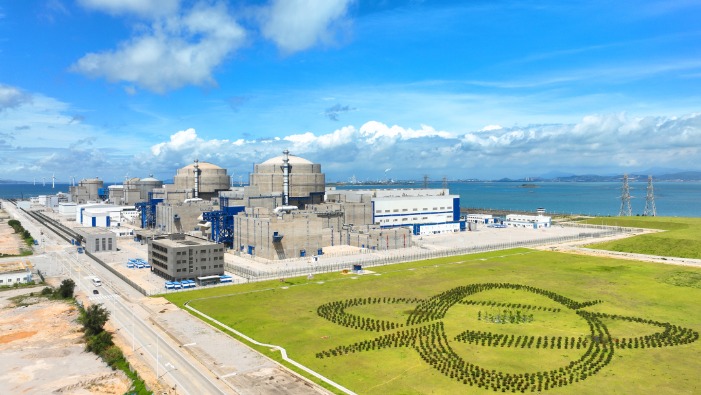
Core Viewpoint - Jiangsu Shentong (002438.SZ) is a key supplier of valve equipment necessary for nuclear power construction in China, actively participating in the nuclear power industry chain and providing high-quality nuclear-grade valve products for domestic projects [1] Company Summary - The company has successfully completed the supply tasks for the valves required for the Linglong No. 1 experimental reactor project [1] - Jiangsu Shentong plans to continue its focus on the nuclear energy application field, aiming to provide more reliable and high-end valves for China's nuclear energy initiatives [1]
江苏神通:已顺利完成玲珑一号试验堆项目所需阀门的供货任务
Mei Ri Jing Ji Xin Wen· 2026-01-05 03:49
Core Viewpoint - The company, Jiangsu Shentong, is a key supplier of valve equipment necessary for nuclear power construction in China and has successfully completed the supply of valves for the Linglong No. 1 experimental reactor project [1] Group 1: Company Involvement - Jiangsu Shentong is actively involved in the nuclear power industry chain and has been a core supplier of nuclear-grade valve products for nuclear power construction projects in China [1] - The company has a commitment to follow the development and application of nuclear energy technology in China [1] Group 2: Future Prospects - Jiangsu Shentong plans to continue its focus on the nuclear energy application field and aims to provide more high-quality and reliable high-end valves for China's nuclear energy initiatives [1]
2025年工业阀门行业词条报告
Tou Bao Yan Jiu Yuan· 2026-01-04 13:13
Investment Rating - The report rates the industrial valve industry as a growth sector with a positive outlook, projecting a market size increase from $14.586 billion in 2024 to $18.705 billion by 2029, reflecting a compound annual growth rate (CAGR) of 5.10% [3][59]. Core Insights - The industrial valve market is driven by the demand for ball valves and cast steel valves, with new power plants and smart city construction contributing to growth [3]. - The industry is characterized by a wide variety of valve types, significant cost influence from upstream materials, and a clear technological gradient, with high barriers in high-end sectors [8][10][11]. - The market is expected to expand due to factors such as new infrastructure, energy demand, accelerated domestic substitution of ball valves, and downstream industry upgrades [3]. Industry Definition - Industrial valves are essential components in industrial fluid control systems, used across various sectors including oil, chemicals, power, and aerospace [4]. - They can be categorized into different types based on their functions, including shut-off valves, check valves, safety valves, regulating valves, and diverter valves [4][5][6][7]. Industry Characteristics - The industry features a diverse range of products that can adapt to complex working conditions, with costs heavily influenced by upstream material prices [8][10]. - There is a notable technological gradient, with high-end valves requiring advanced materials and manufacturing techniques, creating significant barriers to entry [11]. Development History - The industrial valve industry has evolved through several phases, from its inception in the early 20th century to a period of rapid growth post-1979, leading to increased marketization and technological advancements [12][20]. Industry Scale - The market size of the industrial valve industry grew from $11.945 billion in 2019 to $14.586 billion in 2024, with a CAGR of 4.08% [59]. - The demand for ball valves is particularly strong, accounting for 24.50% of the market share in 2024, driven by their applications in oil and gas, food and beverage industries [61]. Industry Chain Analysis - The industrial valve industry chain includes upstream raw materials, midstream manufacturing, and downstream application sectors, with each segment influencing the overall market dynamics [22][49]. - Upstream material quality and processing techniques significantly impact valve manufacturing efficiency and cost [24][25][36][38]. Downstream Analysis - The oil and gas sector remains a traditional stronghold for valve applications, while emerging markets such as marine engineering are becoming increasingly important [54]. - The nuclear power sector is identified as a key area for technological advancement and competitive positioning among valve manufacturers [58].
江苏神通(002438) - 2025年11月19日调研活动附件之投资者调研会议记录
2025-11-20 08:34
Group 1: Company Overview and Market Position - The company has a market share of over 90% in key products such as nuclear butterfly and ball valves, with 150,000 nuclear valves currently in operation [3] - The domestic nuclear valve localization rate has reached 85%-90%, indicating significant progress in the valve manufacturing industry [4] - The company’s nuclear-grade valves cover all levels of nuclear applications, including nuclear level 1, 2, and 3, as well as non-nuclear valves [5] Group 2: Business Strategy and Growth Areas - The company aims to consolidate its position in metallurgy, develop nuclear power, expand in petrochemicals, and serve the energy sector, while focusing on domestic markets and increasing exports [6] - Continuous R&D investment has led to the successful launch of valve products that meet the requirements of third and fourth-generation nuclear technologies, enhancing the company's competitiveness in major nuclear projects [6] - The company is also making strides in hydrogen energy and semiconductor equipment, with its subsidiary developing special high-pressure valves that are now capable of mass supply [6] Group 3: Maintenance and Replacement Needs - Valves are considered consumables that require regular maintenance and preventive replacement of parts to ensure the safe and stable operation of nuclear power plants [7] - The growing number of operational nuclear units and the demand for spare parts from aging units are expected to provide stable and sustainable revenue growth for the company [7] Group 4: Future Opportunities and International Expansion - The development of controllable nuclear fusion technology is expected to create long-term opportunities for the valve industry, driven by technological upgrades and increased market demand [8] - The company is actively expanding its international business, having established an international trade department and a professional team to enhance its export capabilities [9][10] - Future export efforts will focus on core areas such as oil refining and oil and gas extraction to achieve long-term development goals [10]
多维度透视沪深2025年中报:谁在领衔增长?
2 1 Shi Ji Jing Ji Bao Dao· 2025-09-04 23:09
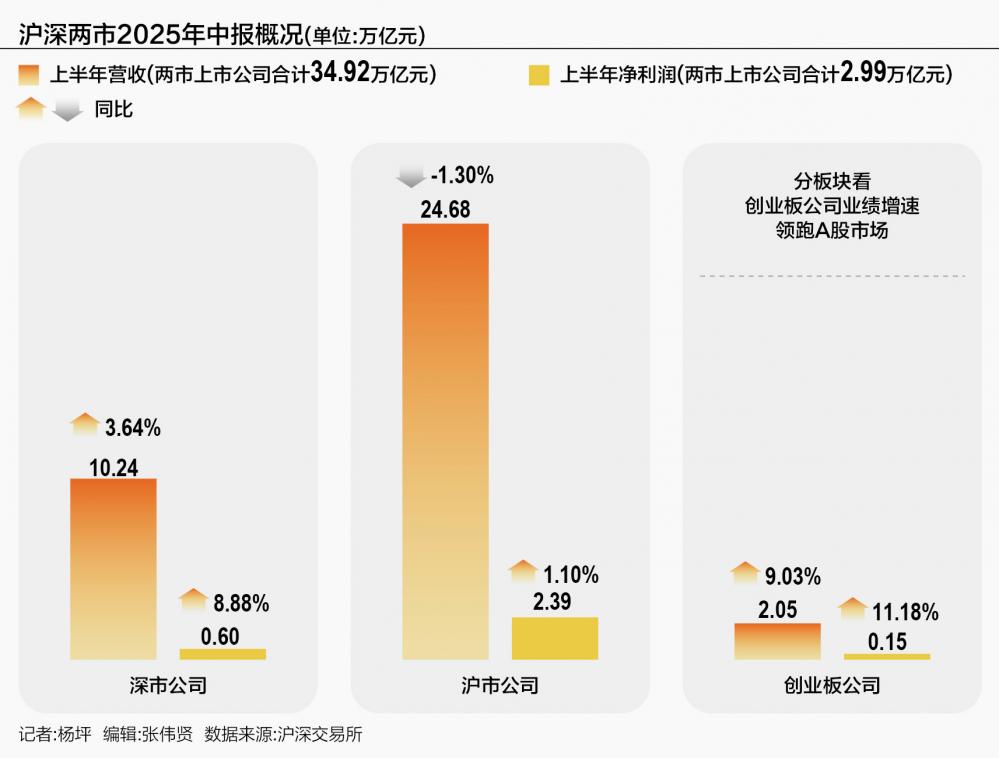
Group 1: Overall Performance of Listed Companies - The total operating revenue of listed companies in Shanghai and Shenzhen reached 34.92 trillion yuan, with a net profit of 2.99 trillion yuan for the first half of 2025 [1] - Shenzhen companies achieved a total operating revenue of 10.24 trillion yuan, a year-on-year increase of 3.64%, and a net profit of 595.46 billion yuan, up 8.88% [1] - Shanghai companies reported operating revenue of 24.68 trillion yuan, a slight decrease of 1.3%, with a net profit of 2.39 trillion yuan, an increase of 1.1% [1] Group 2: Sector Performance - Emerging industries such as semiconductors, electronics, pharmaceuticals, and new energy are rapidly rising, while traditional industries like steel and machinery are seeking transformation [2] - The electronics sector in Shenzhen saw 253 companies generate 984.76 billion yuan in revenue, a 14.1% increase, and a net profit of 454.57 billion yuan, up 24.59% [3] - The computer industry in Shenzhen reported 501.25 billion yuan in revenue, a 13.74% increase, and a net profit of 122.85 billion yuan, up 26% [5] Group 3: R&D Investment - Shenzhen companies invested a total of 352.97 billion yuan in R&D, with significant contributions from companies like BYD and ZTE [9] - The R&D investment in strategic emerging industries in Shenzhen reached 92.46 billion yuan, a year-on-year increase of 22.36% [9] - Shanghai's R&D investment also hit a record high of 432.6 billion yuan, growing by 1% [9] Group 4: International Expansion - Over 830 manufacturing companies in Shanghai achieved overseas revenue of 1.1 trillion yuan, a 5% increase [11] - Shenzhen's strategic emerging industries reported overseas income of 434.66 billion yuan, a 23.59% increase, with a 29.22% share of total revenue [11] - Companies are diversifying their overseas markets, with significant growth in exports from firms like Huayou Cobalt and Quectel [12] Group 5: Dividend and Shareholder Returns - A total of 794 listed companies in Shanghai and Shenzhen announced mid-term dividends amounting to 643.81 billion yuan [12] - Shenzhen companies saw an 18.04% increase in the number of mid-term dividends declared, with a 49.51% increase in dividend amounts [12] - Companies are also increasing share buybacks, with Shenzhen firms announcing 230 buyback plans totaling 68.21 billion yuan [13]