
樱桃西红柿

Search documents
中外网友“大对账”,对到了菜市场
Xin Lang Cai Jing· 2026-02-14 06:12
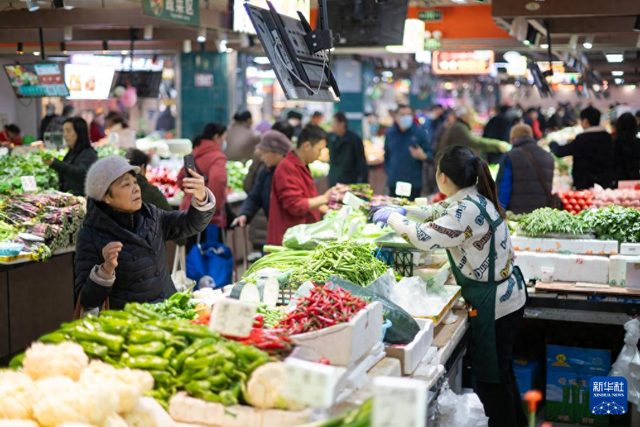
Core Viewpoint - The article highlights the stark contrast in fruit and vegetable availability between China and several Western countries, emphasizing China's successful agricultural policies and practices that ensure year-round supply of diverse produce [3][10]. Group 1: Agricultural Policies and Achievements - China's "vegetable basket" project, initiated in 1988, has significantly improved the supply of vegetables, meat, and dairy, leading to increased farmer incomes and a stable supply chain [6][7]. - In 2023, the average per capita vegetable consumption in China reached 588 kilograms, with vegetable cultivation area consistently exceeding 300 million mu, maintaining the world's largest scale [3][10]. - China is the world's largest producer and consumer of fruits, with a total fruit production of 335 million tons and consumption of 328 million tons in 2024, far exceeding the global average per capita fruit consumption [3][10]. Group 2: Technological Advancements and Infrastructure - The use of advanced technology in agricultural practices, such as smart systems for monitoring soil conditions and automated irrigation, has transformed traditional greenhouses into intelligent "cloud greenhouses" [9]. - The establishment of a comprehensive cold chain logistics system facilitates the efficient transportation of produce across regions, ensuring fresh vegetables reach consumers quickly [9][10]. - China's focus on seed breeding has led to a domestic seed market share exceeding 91%, contributing to the diversity and quality of produce available [9][10]. Group 3: Global Context and Comparisons - In contrast to China's agricultural success, several Western countries face challenges such as adverse weather conditions and rising energy costs, leading to reduced vegetable production and supply shortages [3][6]. - Reports from the UK, South Korea, and Australia indicate significant vegetable shortages due to various factors, highlighting the effectiveness of China's agricultural policies in maintaining a stable supply [3][6].

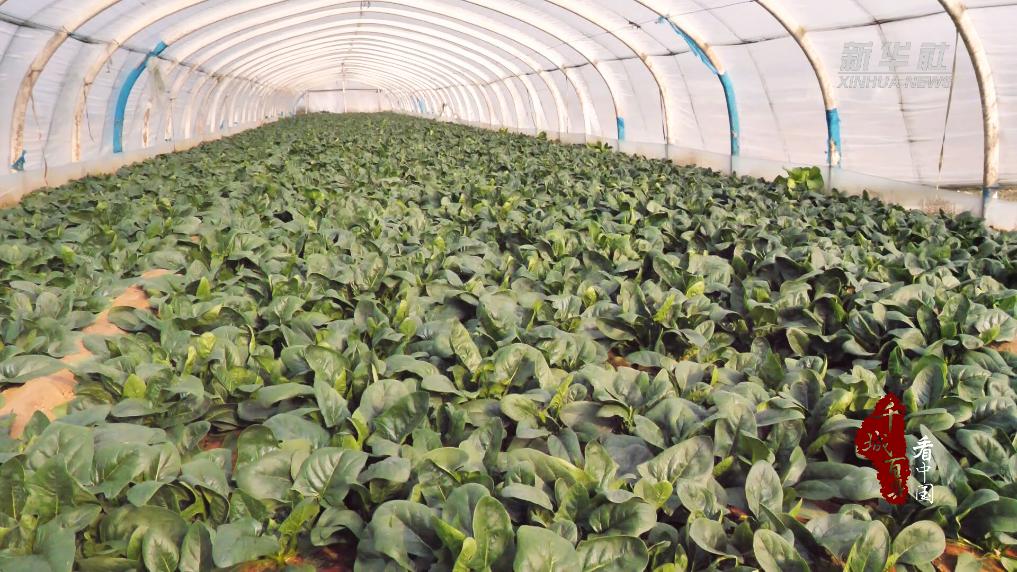
千城百县看中国|山东东阿:大棚菜鲜
Xin Hua Wang· 2026-02-01 01:42
Group 1 - The core viewpoint of the article highlights the thriving agricultural activities in Liuji Town, Dong'a County, where greenhouse vegetables are being harvested, providing fresh produce to local markets and ensuring healthy food options for residents [1] - The village's development of greenhouse vegetables has led to increased income for over 150 farming households and created job opportunities for more than 500 villagers [4] - Dong'a County plans to continue promoting agricultural structural adjustments, focusing on the cultivation of specialty agricultural products and deep processing to drive rural development [4]
【杨凌】农业科技赋能金米村产业升级
Shan Xi Ri Bao· 2025-12-04 22:42
Core Insights - The article highlights the transformation of Jinmi Village from a single-industry reliance on wood ear mushrooms to a diversified agricultural model, incorporating modern agricultural practices and technology [1][2][5]. Group 1: Industry Transformation - Jinmi Village, known for its wood ear mushroom production, faced challenges due to market volatility and increased competition, prompting a need for diversification [2]. - The introduction of the "Yangling Jinmi Mushroom Fruit and Vegetable Circular Economy Demonstration Park" project, with an investment exceeding 10 million yuan, marks a significant step towards industrial transformation [2][3]. Group 2: Circular Economy and Sustainable Practices - The project emphasizes a circular economy, integrating high-end cherry tomatoes, quality grape cultivation, and ecological mushroom farming, creating a complete ecological cycle [3][4]. - Waste mushroom substrates will be repurposed into organic fertilizers, addressing environmental concerns while reducing production costs, thus forming a resource-product-recycled resource model [4]. Group 3: Employment and Community Development - The project has revitalized local land use and created job opportunities for over 50 villagers, enhancing local employment [5]. - Educational initiatives are being established in collaboration with local universities to develop a skilled workforce, ensuring sustainable growth and knowledge retention within the community [6]. Group 4: Future Vision and Goals - The leadership envisions a shift from "blood transfusion" assistance to "blood-making" strategies, aiming for a prosperous, ecologically sound, and culturally rich community [7]. - Jinmi Village is positioned to become a model for rural revitalization in the Qinba Mountain area, showcasing a successful blend of agricultural innovation and community engagement [7].
青岛平度解锁乡村振兴“丰收密码”
Qi Lu Wan Bao· 2025-09-25 23:40
Core Insights - The article highlights the agricultural development and modernization efforts in Pingdu, Shandong Province, focusing on the cultivation of grapes and other specialty crops, aiming to establish a robust agricultural economy and enhance rural prosperity [1][4]. Agricultural Development - Pingdu has achieved a comprehensive mechanization rate of 92%, positioning itself as a leader in agricultural modernization in China [1]. - The city aims to cultivate a 30 billion yuan modern agricultural industry chain, emphasizing the importance of product quality, brand development, and the integration of agriculture with culture and tourism [1][4]. Grape Cultivation - Pingdu is recognized as a core area for grape cultivation in China, with over 300 grape varieties and more than 40 core cultivation varieties, establishing itself as a "Silicon Valley" for grape research and development [2][3]. - The local climate and advanced cultivation techniques contribute to the high quality of grapes, characterized by large size, vibrant color, rich flavor, and high sugar content [2]. Technological Integration - The use of IoT devices in smart greenhouses allows for real-time monitoring of grape growth, enabling precise management of irrigation, fertilization, and environmental conditions [3]. - The integration of technology has facilitated the cultivation of over 30 foreign grape varieties, extending the grape supply season from one to four seasons [3]. Specialty Crop Industries - Pingdu has developed various specialty food industry clusters, including grapes, cherry tomatoes, and mushrooms, with 86 "three products and one standard" agricultural products and 84 leading agricultural enterprises [4]. - The cherry tomato industry in Cuijiaji Town has expanded significantly, with over 2,600 greenhouses and an annual production of over 97 million pounds, generating sales exceeding 880 million yuan [6]. Rural Tourism and Cultural Integration - Pingdu is actively promoting the integration of agriculture, culture, and tourism, creating unique experiences through festivals and local attractions, which enhances the overall rural economy [8][9]. - The Dazeshan Grape Cultural Industry Park is being developed to include a grape cultivation base, winery, and logistics facilities, projected to generate an annual output value of 200 million yuan [9]. Economic Impact - The agricultural initiatives in Pingdu have transformed initial poverty alleviation efforts into sustainable industries, contributing to rural revitalization and increased income for local farmers [7][10]. - The integration of tourism with agriculture has led to high occupancy rates in local accommodations, with over 95% booking rates during peak seasons [9].