
江门中微子实验大科学装置

Search documents
“十四五”期间重大科技成果加速涌现 大国科技跑出“新成绩”
Yang Shi Wang· 2025-10-17 03:39
Core Insights - The "14th Five-Year Plan" marks a significant year for China's technological and industrial innovation, emphasizing the integration of new productive forces and the acceleration of major scientific achievements [1][3] - The plan highlights the importance of innovation as a core element in China's modernization and positions technological self-reliance as a strategic support for national development [1][3] Group 1: Achievements in Technology - Major technological achievements during the "14th Five-Year Plan" include the operational normalization of the "Tiangong" space station, the successful lunar sample return by "Chang'e 6," and the large-scale application of 5G technology [3] - The "China Sky Eye" neutrino experiment facility has commenced operations, and the construction of the new generation nuclear fusion device BEST is fully underway, with expectations to light the first lamp through nuclear fusion by 2030 [3] Group 2: Investment and R&D Growth - In 2024, total R&D investment is projected to exceed 3.6 trillion yuan, representing a 48% increase compared to 2020, with R&D intensity surpassing the average level of EU countries [5] - The total number of R&D personnel in China ranks first globally, indicating a robust workforce dedicated to innovation [5] Group 3: Impact on Society and Youth Involvement - Over the past five years, technology has significantly transformed daily life, with more than half of the world's new energy vehicles operating in China and 60% of global artificial intelligence patents originating from the country [7] - Funding for basic research is expected to grow by over 70% compared to 2020, fostering breakthroughs in quantum technology, life sciences, and space science [7] - The proportion of young scientists under 45 leading national key R&D projects exceeds 40%, with 80% of National Natural Science Foundation projects undertaken by this age group, highlighting the emergence of young talent as a key driver of technological resilience [7] Group 4: Technology Transfer and Economic Impact - The level of technology transfer has reached new heights, with the national technology contract transaction volume maintaining double-digit growth for several years, projected to reach 6.8 trillion yuan in 2024 [10] - The transition of scientific achievements from laboratories to production lines is becoming more efficient, contributing to national strategies and enhancing public welfare [10]

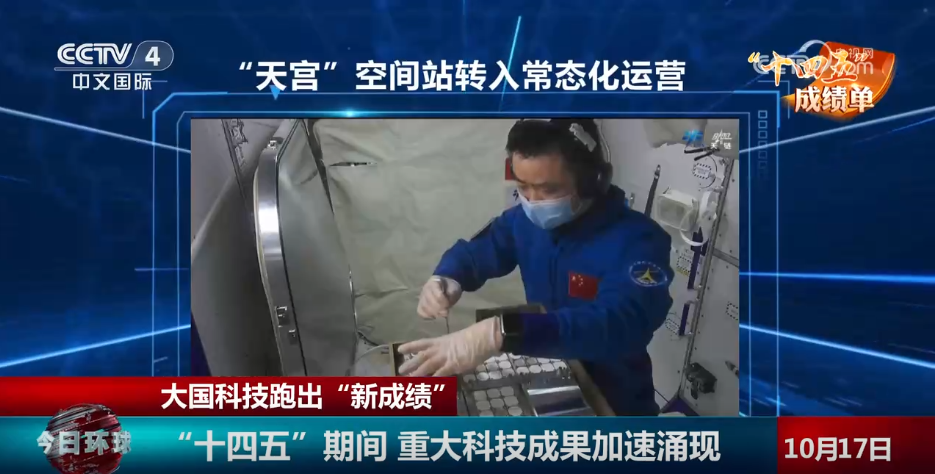
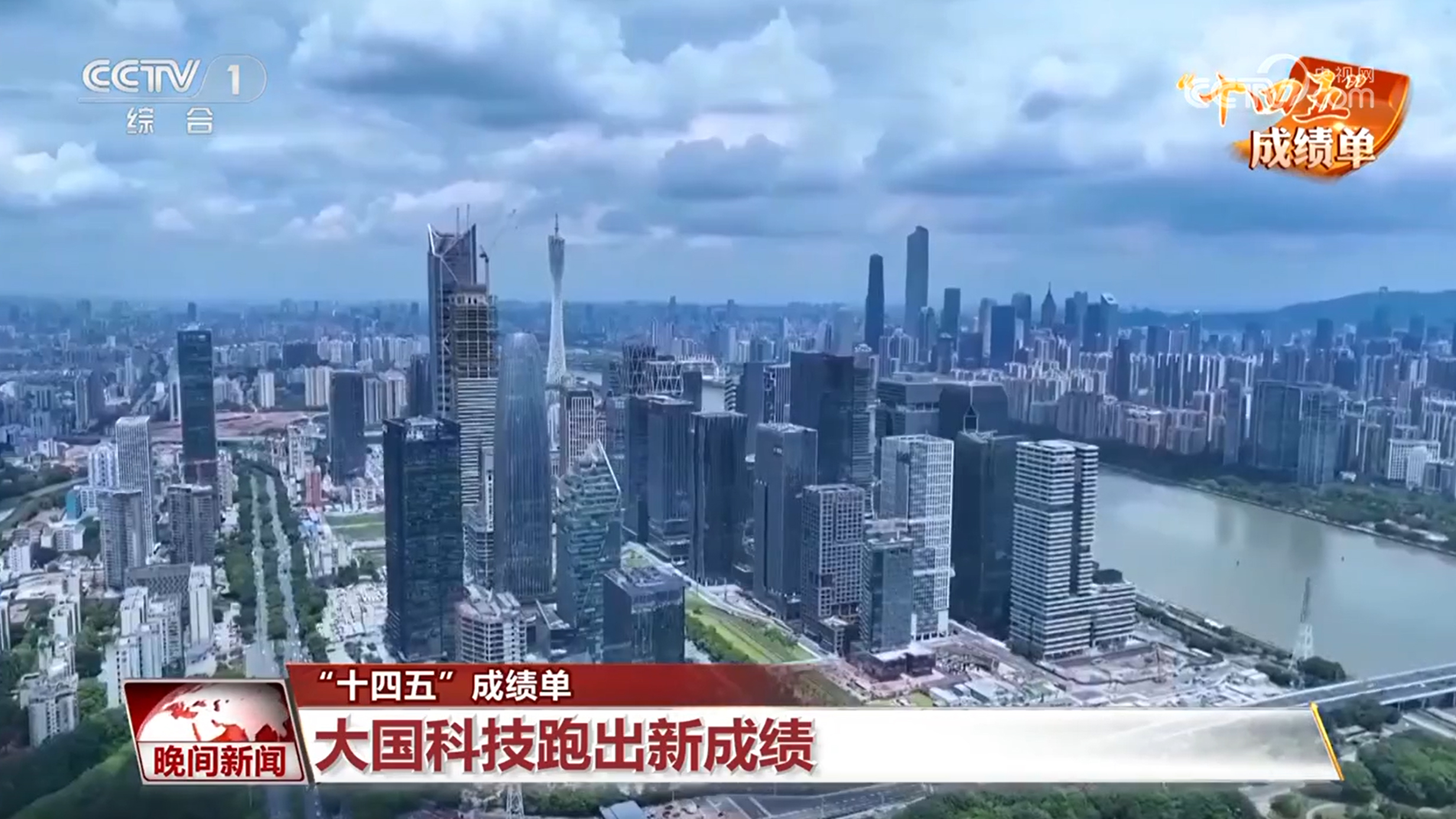
【“十四五”成绩单】大国科技跑出新成绩
Yang Shi Wang· 2025-10-16 15:23
Core Insights - The "14th Five-Year Plan" has led to significant advancements in China's technological and industrial innovation, with a focus on self-reliance and strategic support for national development [3][10] - Major technological achievements include the operationalization of the "Tiangong" space station, the successful lunar sample return by "Chang'e 6," and the large-scale application of 5G technology [3][10] Investment and R&D - In 2024, total R&D investment is expected to exceed 3.6 trillion yuan, representing a 48% increase from 2020, with R&D intensity surpassing the average level of EU countries [5] - The number of R&D personnel in China ranks first globally, indicating a strong workforce dedicated to innovation [5] Breakthroughs in Fundamental Research - Funding for basic research is projected to grow by over 70% compared to 2020, with significant achievements in quantum technology, life sciences, and space science [6] - The proportion of young scientists (under 45) leading key national R&D projects exceeds 40%, showcasing a shift towards younger talent in the scientific community [8] Technology Transfer and Economic Impact - The total value of technology contracts has maintained double-digit growth for several years, expected to reach 6.8 trillion yuan in 2024, facilitating the transition of scientific achievements from laboratories to production lines [8] - The advancements in technology have notably improved daily life, with over half of the world's new energy vehicles operating in China and the country holding 60% of global AI patents [5][6]
【人民日报】江门中微子实验大科学装置正式运行
Ren Min Ri Bao· 2025-08-27 00:36
Core Insights - The Jiangmen Neutrino Experiment (JUNO) has successfully completed the infusion of 20,000 tons of liquid scintillator and has officially begun data collection, marking a significant milestone in particle physics research [1][2] - This experiment is the first of its kind in the world to operate a large-scale and high-precision neutrino-specific scientific facility, aimed at addressing the fundamental question of neutrino mass ordering [1][2] Group 1 - The JUNO experiment is a major international collaboration led by the Institute of High Energy Physics of the Chinese Academy of Sciences, involving approximately 700 researchers from 74 institutions across 17 countries and regions [2] - The detector is located 700 meters underground in Jiangmen, Guangdong Province, and is capable of detecting neutrinos produced by nearby nuclear power plants, allowing for high-precision measurements of their energy spectrum [1] - The successful operation of JUNO is expected to pave the way for determining the mass hierarchy of neutrinos, which is a fundamental parameter influencing the evolution of the universe [1][2] Group 2 - The experiment's initial data collection has shown that key performance indicators of the detector have met or exceeded design expectations, enabling advanced research on neutrinos from various cosmic sources [1] - The research will open new avenues for exploring unknown physics, including the search for sterile neutrinos and proton decay [1]