
汾酒竹叶青果味酒

Search documents
“哑铃型”结构显现 白酒市场如何淡季不淡
Bei Jing Shang Bao· 2026-02-25 16:13
Core Insights - The white liquor market is entering a consumption off-season after the Spring Festival, with a clear "dumbbell" consumption structure emerging, where high-end and mass-market products are seeing increased demand, while mid-range products are struggling [1][3][4] Group 1: Market Trends - High-end liquor brands like Moutai and Wuliangye have shown strong performance during the Spring Festival, with sales volume and prices rising, indicating robust demand [3][4] - The mid-range liquor segment (priced between 300-800 yuan) is facing significant challenges, lacking the financial attributes and gifting demand that high-end products possess, and is also competing with lower-priced products in the market [4][6] - Mass-market products under 300 yuan, such as Luzhou Laojiao and Hai Zhi Lan, have gained popularity, particularly in home consumption scenarios [4][6] Group 2: Consumption Patterns - The recovery of high-end liquor sales is driven by the resurgence of gifting and social occasions during the Spring Festival, with Moutai and Wuliangye being perceived as valuable gifts [6][7] - Home consumption has become a dominant trend, with a significant portion of consumers engaging in solitary drinking or social drinking at home, creating opportunities for products priced between 100-300 yuan [7][8] - The demand for liquor is increasingly tied to family gatherings and social events, with a notable increase in the number of people traveling during the Spring Festival, leading to heightened demand for home consumption [6][7] Group 3: Strategic Recommendations - As the industry enters a traditional off-season, companies are advised to focus on inventory management and explore new consumer demands, particularly in family and high-cost-performance products [8][9] - Companies should leverage successful strategies from the banquet market to enhance sales in lower-demand periods, ensuring they capture the growing demand for liquor in various social settings [9][10] - The banquet market remains a critical area for growth, with opportunities for brands to enhance visibility and sales through targeted marketing and product offerings [9][10]



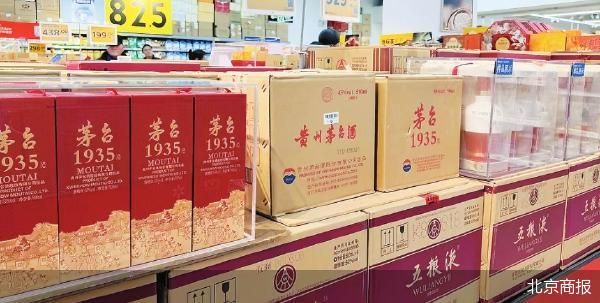
春节消费成“哑铃型”分化 白酒淡季如何接棒
Bei Jing Shang Bao· 2026-02-24 05:37
Core Viewpoint - The Chinese liquor market is experiencing a "dumbbell" consumption structure, with high-end and mass-market products seeing increased demand, while the mid-range segment (300-800 RMB) is struggling [1][2][3]. Group 1: High-End and Mass Market Performance - High-end liquor brands like Moutai and Wuliangye have shown resilience during the Spring Festival, achieving both volume and price increases [2][3]. - Moutai's sales performance exceeded expectations, with some regions reporting sold-out conditions and a stable price recovery [2]. - Wuliangye's sales also saw significant growth, particularly in banquet settings, with double-digit year-on-year increases in sales volume [2][3]. Group 2: Mid-Range Segment Challenges - The mid-range price segment (300-800 RMB) is facing difficulties, lacking the financial attributes and gifting demand that high-end products enjoy [3]. - Brands like Jiuziyuan have seen some growth in lower-priced products, but core mid-range offerings are underperforming [3]. Group 3: Changing Consumption Scenarios - The recovery of high-end markets is driven by the resurgence of gifting and socializing during the Spring Festival, with strong demand for premium brands [4][5]. - Family consumption scenarios are becoming increasingly dominant, with significant growth in home dining and social gatherings [5][6]. - Data shows that over 50% of consumers engage in both social and solitary drinking, indicating a shift in consumption patterns [6]. Group 4: Strategies for the Off-Season - As the industry enters a traditional off-season, companies must focus on maintaining operational stability and managing inventory effectively [7]. - Companies are advised to leverage digital tools to monitor distribution and maintain pricing structures established during the peak season [7]. - The off-season presents an opportunity for companies to innovate products tailored to family and casual consumption scenarios [8]. Group 5: Banquet Market Opportunities - The banquet market remains a critical area for growth, with weddings and other celebrations driving demand even in the off-season [8][9]. - Companies are encouraged to replicate successful strategies from the Spring Festival to capture banquet market opportunities in lower-tier markets [9].
银河证券:头部酒企定调2026年战略 逆周期调节与长期变革并行
Di Yi Cai Jing· 2025-12-26 00:37
Core Viewpoint - Leading liquor companies are setting their strategic direction for 2026, focusing on both counter-cyclical adjustments and long-term transformations [1] Group 1: Counter-Cyclical Adjustments - Major liquor companies acknowledge that the industry will continue to face objective pressures from a cyclical downturn in the short term [1] - Maintaining price systems and stabilizing channel profit margins are prioritized, with specific measures including the development of high-margin flagship products and increased investment to enhance distributor motivation [1] Group 2: Long-Term Transformations - On the demand side, companies aim to cultivate new customer segments, particularly younger demographics [1] - On the product side, there is a focus on developing products that align with new consumption trends, such as Moutai's provincial formula liquor, Wuliangye's low-alcohol products, and Fenjiu's fruit-flavored liquor [1] - Embracing new channel transformations is essential, including maintaining good relationships with e-commerce platforms and actively collaborating with instant retail channels [1] Group 3: Industry Outlook - The report suggests that by 2026, the industry will be in a bottoming process, characterized by a narrowing decline in terminal demand and continued supply-side adjustments among listed liquor companies [1] - As industry adjustments progress, long-term value is expected to become more apparent, with companies that proactively position themselves for long-term transformations likely to achieve excess returns in the next upward cycle [1]