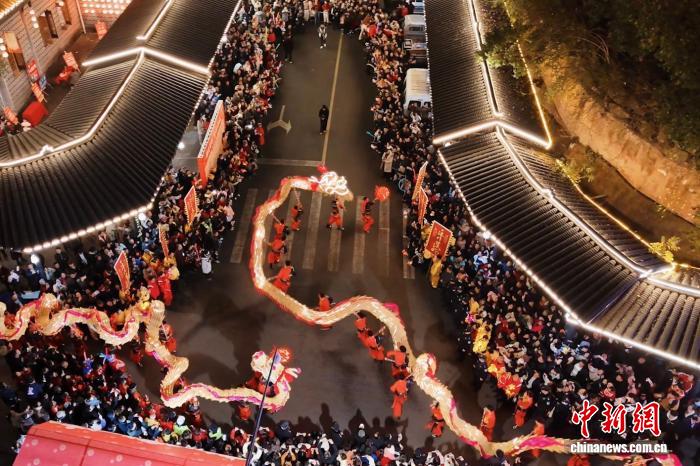
沐川草龙

Search documents
(新春见闻)守艺人与少年共舞草龙 舞活沐川春节记忆
Zhong Guo Xin Wen Wang· 2026-02-20 01:33
Core Viewpoint - The article highlights the cultural significance of the grass dragon dance in Sichuan's Muchuan County, emphasizing its role in preserving agricultural traditions and fostering community identity during the Spring Festival [1][3]. Group 1: Cultural Heritage - The Muchuan grass dragon is recognized as a national intangible cultural heritage, made from rice straw and bamboo, symbolizing good harvests and agricultural prosperity [3][5]. - The tradition of the grass dragon dance is rooted in the agricultural society's hopes for a bountiful harvest, with the dragon being paraded through villages to pray for favorable weather and abundant crops [3][5]. Group 2: Community Involvement - The dance involves participants of various ages, from elderly individuals to teenagers, showcasing a blend of generational participation and community pride [5][7]. - Young individuals, such as 15-year-old Wen Minghao, express a sense of identity and pride in their local culture through participation in the grass dragon dance [5][7]. Group 3: Challenges and Innovations - The grass dragon tradition faced challenges over a decade ago, including an aging participant base and low income, prompting efforts to revitalize the practice [5][7]. - Innovations in teaching and product development are being explored to engage younger generations, ensuring the tradition remains relevant and integrated into daily life [7].

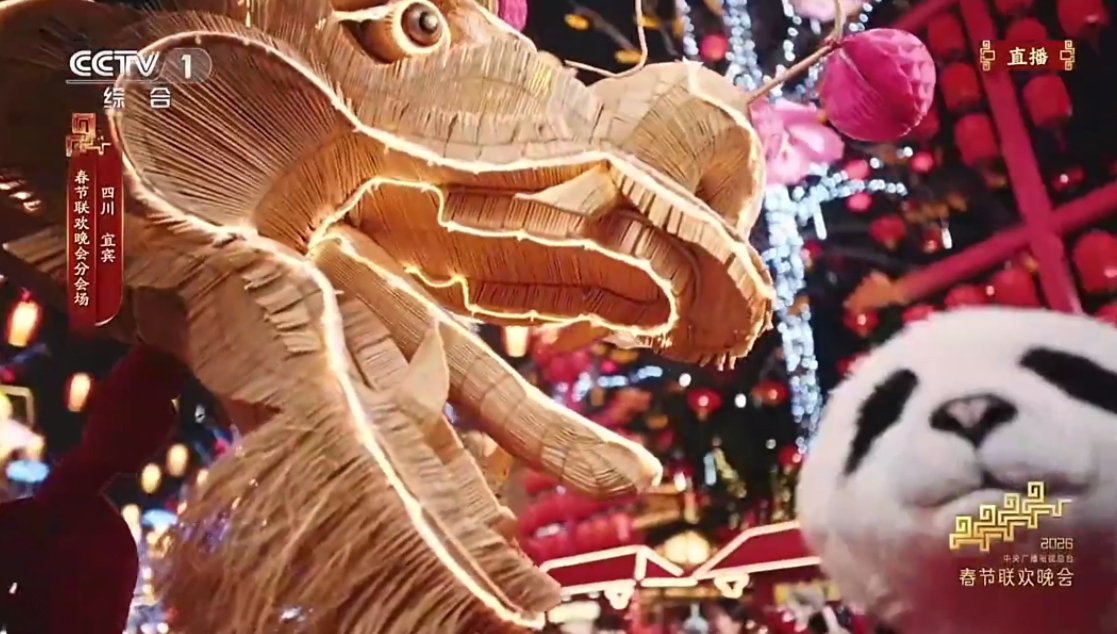
沐川草龙上春晚:长度32米,舞龙人最小16岁
Xin Lang Cai Jing· 2026-02-16 17:15
Core Viewpoint - The performance of the Mu Chuan Grass Dragon at the 2026 CCTV Spring Festival Gala highlights the cultural significance and vitality of this intangible heritage, showcasing its ability to resonate with contemporary audiences and maintain its relevance in modern society [2][4][12]. Group 1: Cultural Significance - The Mu Chuan Grass Dragon, made from straw, is a representation of local heritage and has been elevated to a national stage, symbolizing pride for the local community [2][4]. - The performance featured a specially made 32-meter-long grass dragon, which is double the size of a typical one, emphasizing the craftsmanship and cultural depth involved [2][4]. - The event serves as a cultural dialogue that connects the past with the present, demonstrating that intangible heritage can thrive and evolve [2][4]. Group 2: Community Involvement - The performance team consisted of individuals from various age groups, including the oldest member at 61 years and the youngest at 16 years, showcasing intergenerational participation in cultural preservation [6]. - Local residents expressed pride and excitement as they watched the performance, indicating strong community support and emotional connection to the cultural representation [4][12]. - The preparation for the performance involved extensive rehearsals and dedication from local artists, reflecting a collective effort to honor and promote their heritage [4][5]. Group 3: Craftsmanship and Tradition - The creation of the grass dragon involves meticulous processes, including selecting high-quality straw and bamboo, which are essential for its structural integrity and aesthetic appeal [8][9]. - The intricate crafting of the dragon's head and claws requires significant time and skill, with the head alone taking nearly two months to complete [9]. - The performance not only showcases the physical artistry but also embodies the cultural narratives and historical significance tied to the Mu Chuan Grass Dragon [8][9]. Group 4: Future Prospects - Efforts to promote and protect the Mu Chuan Grass Dragon culture have led to an increase in performance opportunities, with annual shows rising from over 20 to more than 100 [12]. - The introduction of cultural products related to the grass dragon has resulted in annual sales exceeding 5 million yuan, indicating a growing market for cultural heritage [12]. - The upcoming "Grass Dragon New Year Greetings" event further emphasizes the ongoing commitment to cultural celebration and community engagement [12].
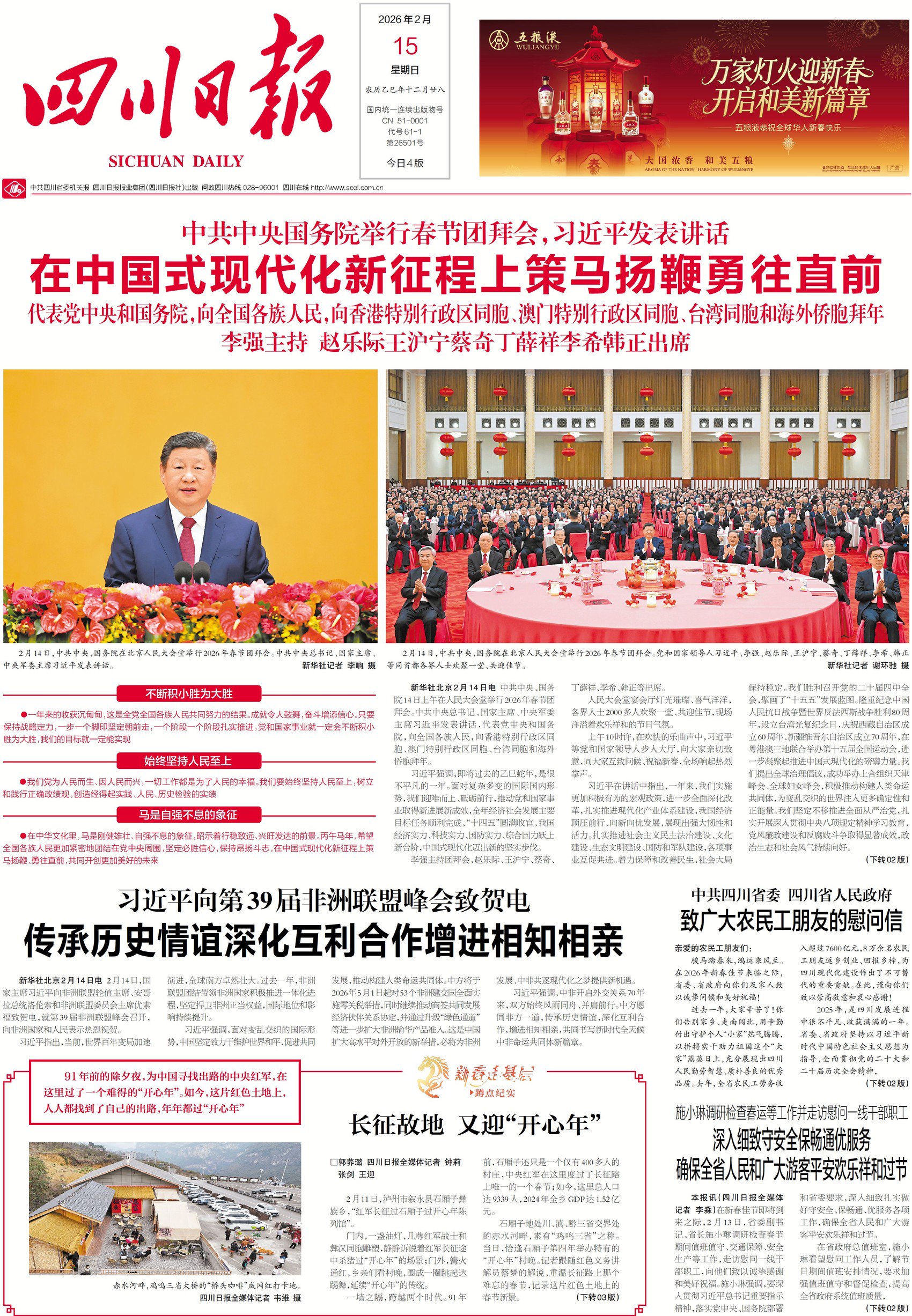
长征印记里的新春 非遗传承中的年味丨川报早读
Xin Lang Cai Jing· 2026-02-14 23:02
Group 1 - The article highlights the cultural significance of the Spring Festival in Sichuan, showcasing the integration of traditional customs with modern tourism and industry [1][10][11] - In Xuyong County, the "Happy Year" village evening event celebrates the legacy of the Red Army's historical presence, emphasizing community engagement and cultural storytelling [1][10] - The local economy is benefiting from tourism and cultural events, with the "Bridgehead Coffee" becoming a popular spot for returning youth, indicating a blend of heritage and modern business [1][12] Group 2 - In Muchuan County, the local intangible cultural heritage, the Muchuan Grass Dragon, is actively preserved by the younger generation, with students dedicating their time to practice for performances during the Spring Festival [11][14] - The preparation of the Grass Dragon involves significant craftsmanship, taking over six months to complete, highlighting the dedication to maintaining traditional arts [14][15] - The Grass Dragon serves as a cultural symbol for the community, with performances aimed at ensuring good harvests and celebrating local traditions [14][19] Group 3 - The article also discusses the economic activities in Shiqu County, where a New Year shopping festival attracts local farmers, supported by government subsidies to boost sales [16][19] - The local economy is diversifying with the introduction of modern cattle farming practices, enhancing the profitability of yak farming through innovative feeding and housing techniques [17][22] - The integration of traditional farming with modern agricultural practices is leading to increased efficiency and productivity in the region, benefiting local farmers [22][23]
舞龙少年的春节倒计时
Xin Lang Cai Jing· 2026-02-14 23:01
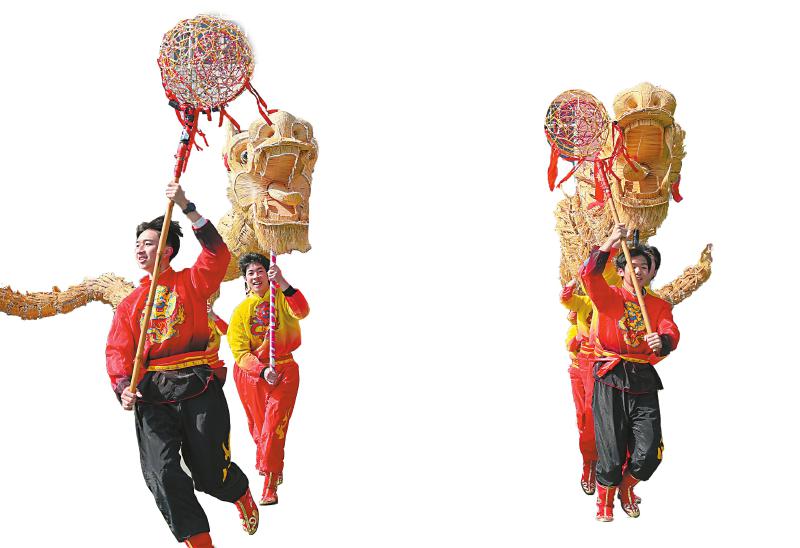
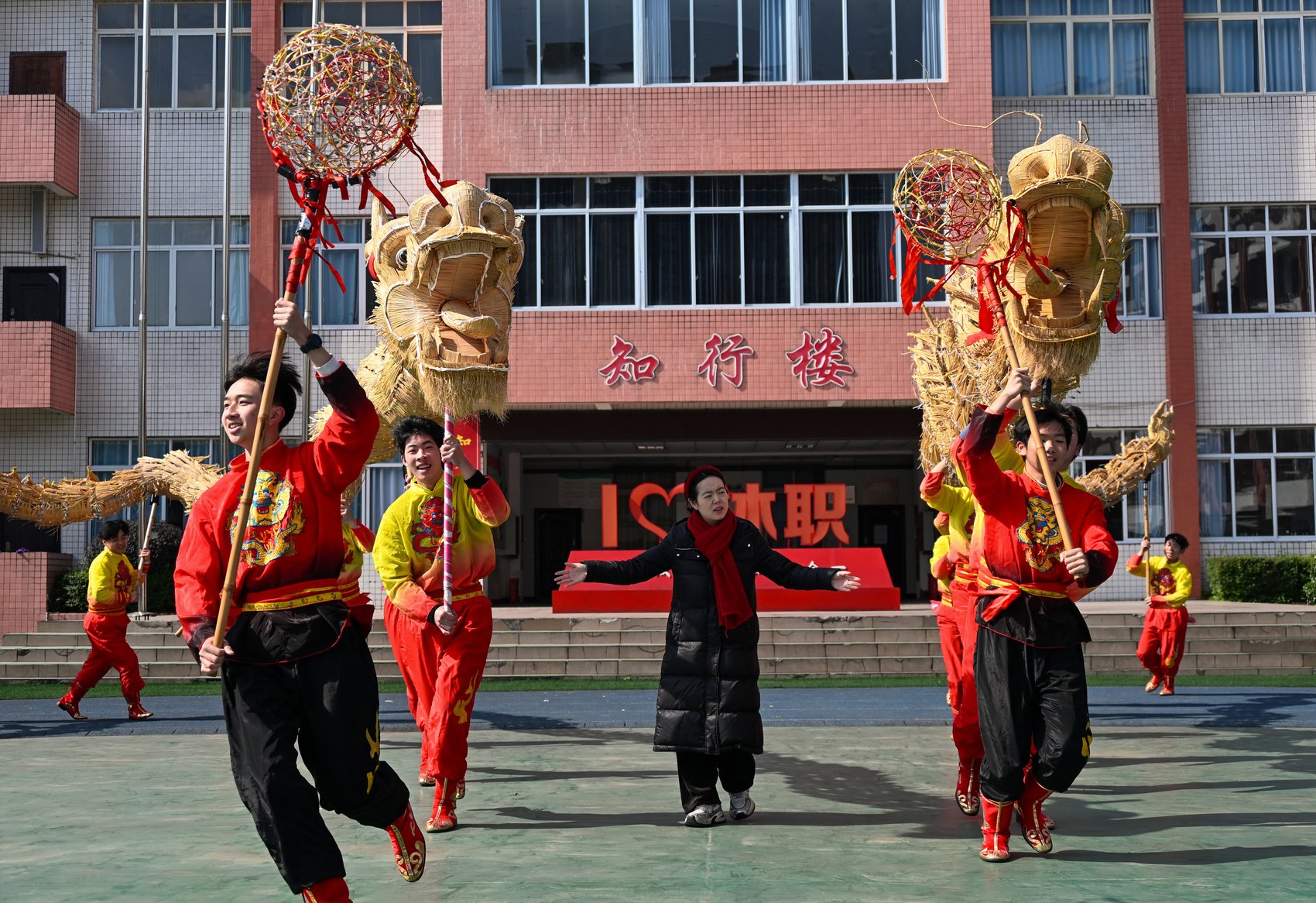
Group 1 - The article highlights the cultural significance of the Mu Chuan grass dragon dance, which is a national intangible cultural heritage and an essential part of the local New Year celebrations [2][3] - The dance team consists mainly of young performers from the "00s" and "10s" generations, trained by a representative inheritor of the tradition, Chen Liyan, who emphasizes the importance of maintaining this cultural practice [3] - The preparation for the dance involves rigorous training, with students practicing even during their winter break, showcasing their dedication to the art form [3] Group 2 - The process of creating a grass dragon is labor-intensive, requiring various techniques and taking several months to complete, indicating the craftsmanship involved in this cultural tradition [3] - Chen Liyan has broken traditional gender roles in the transmission of the grass dragon skills, aiming to inspire more young people to not only appreciate but also learn the craft [3] - The local vocational school has incorporated grass dragon weaving courses, reflecting a growing interest among students in preserving this cultural heritage [3]
舞龙少年的春节倒计时丨新春走基层
Xin Lang Cai Jing· 2026-02-14 14:34
Core Viewpoint - The article highlights the cultural significance and ongoing tradition of the Mucuan Grass Dragon dance, emphasizing its role in the New Year celebrations and the dedication of the youth in preserving this intangible cultural heritage [1][6][17]. Group 1: Cultural Significance - The Mucuan Grass Dragon has been a vital cultural symbol in Mucuan, originating from the Tang Dynasty and has been performed for over a thousand years during important occasions to pray for good harvests [6][17]. - The Grass Dragon dance is not just a performance but a way for the community to connect with their heritage, as seen through the dedication of the youth who practice diligently [1][6]. Group 2: Youth Involvement - A group of young dancers, primarily from the "00s" and "10s" generations, are actively involved in the Grass Dragon dance, showcasing their commitment to this tradition under the guidance of a "90s" representative inheritor [1][4][10]. - The youth's participation is marked by their willingness to sacrifice family gatherings, such as the New Year's Eve dinner, to perform, indicating a strong sense of pride and responsibility towards their cultural heritage [8][17]. Group 3: Training and Education - The training for the Grass Dragon dance involves rigorous practice, with students engaging in physical conditioning and skill development to prepare for performances [3][4]. - Educational initiatives have been established, such as the creation of a Grass Dragon club in Mucuan Vocational School, where students learn the craft of making Grass Dragons, ensuring the continuation of this tradition [12][14]. Group 4: Craftsmanship - The process of creating a Grass Dragon is intricate, requiring several months to complete, with various techniques involved in its construction, highlighting the craftsmanship behind this cultural artifact [10][12]. - The commitment to preserving the craft is evident as younger generations are being taught not only to perform but also to create and maintain the Grass Dragons, ensuring the art form's longevity [16][17].
文博热、非遗热!古韵国风引客来 传统与科技交融让假期文旅市场新意十足
Yang Shi Wang· 2026-01-02 07:41
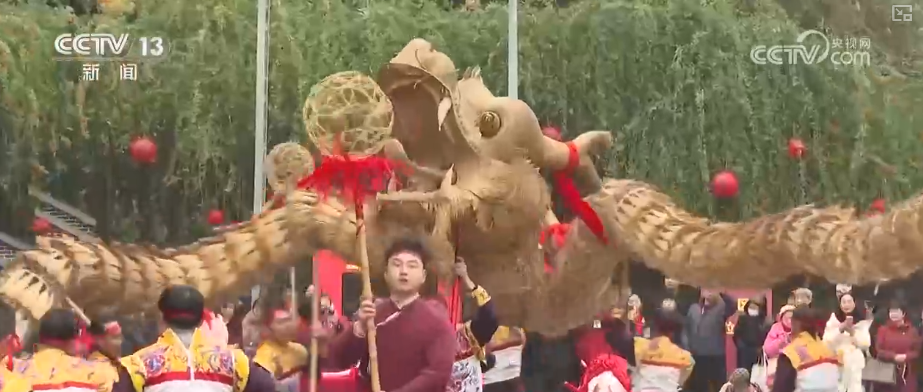
Core Viewpoint - The news highlights the cultural significance and tourism impact of the Mu Chuan grass dragon, a national intangible cultural heritage, during the New Year celebrations in China, showcasing the blend of tradition and modernity in the tourism sector [1][3][4]. Group 1: Cultural Heritage - The Mu Chuan grass dragon, known for its unique construction using bamboo and rice straw, is a significant cultural symbol in Sichuan, with a history tracing back to the Tang Dynasty [3][4]. - The crafting of the grass dragon is meticulous, requiring high-quality materials and significant time investment, with the dragon's head alone taking two to three months to create [6]. Group 2: Tourism Trends - The New Year holiday saw a continuation of the growing interest in cultural and heritage tourism, attracting large numbers of visitors to various locations, including the ancient city of Fenghuang [7][9]. - The first day of the New Year holiday recorded a footfall of 300,000 visitors in key commercial areas of Suqian, indicating a strong consumer interest in cultural events [16]. Group 3: Economic Impact - Nighttime consumption emerged as a new economic driver during the holiday, with streets in Suqian decorated to enhance the festive atmosphere, contributing to increased visitor engagement [18]. - Innovative projects combining traditional culture with technology, such as the "Fish Lantern" ice and snow parade in Jilin, have created new attractions, enhancing the overall visitor experience [20][21].
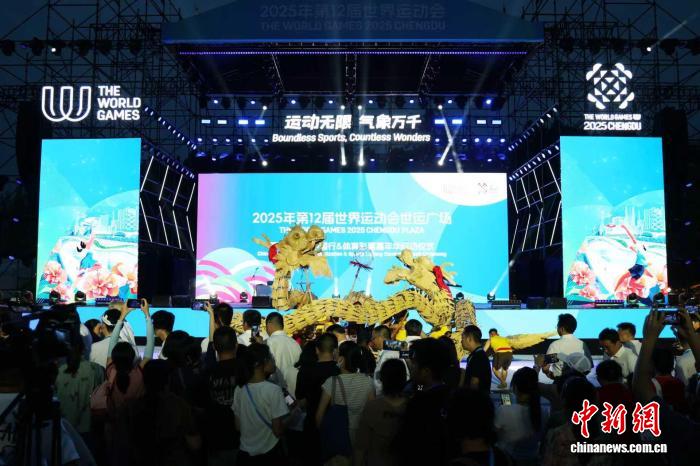
(成都世运会)国际友人体验四川非遗 欢声笑语中感受巴蜀烟火
Zhong Guo Xin Wen Wang· 2025-08-09 13:47
Group 1 - The Chengdu World Games features a sports demonstration area showcasing various sports such as archery, judo, throwing (casting), and soft hockey, which is open for free from August 8 to August 10 and August 13 to August 16 [1] - The city culture display area acts as a "living museum" of Bashu culture, featuring intangible cultural heritage treasures and creative products from various cities in Sichuan, including tea art performances and martial arts displays [4] - The first group of "Today's Best Athletes" at the Chengdu World Games includes Swiss athlete Ricardo Lankamp, who won the first gold medal, and German athlete Nina Holt, who won two gold medals in lifesaving and broke a world record [6]