法拉利F40

Search documents
限制汽车“5秒破百”,我拍烂手掌叫好
3 6 Ke· 2025-11-14 01:04
Core Viewpoint - The article discusses the emergence of high-performance electric vehicles (EVs) that can accelerate from 0 to 100 km/h in as little as 2 to 3 seconds, making such performance more accessible to the general public, but raises concerns about safety and control for average drivers [1][2]. Group 1: Performance and Safety Concerns - The rapid acceleration capabilities of EVs have led to increased incidents of reckless driving and accidents, prompting the Ministry of Public Security to propose a new national standard requiring that passenger vehicles default to a mode where acceleration from 0 to 100 km/h takes no less than 5 seconds [2][5]. - The proposed regulation is seen as a response to the high incidence of loss of control during high acceleration, particularly among inexperienced drivers [5][8]. - Critics argue that the regulation may not effectively address the root causes of reckless driving, suggesting that it is more about limiting vehicle performance rather than improving driver education and training [6][7]. Group 2: Market and Innovation Perspectives - Some voices in the industry advocate for market-driven solutions rather than regulatory restrictions, suggesting that insurance companies could adjust premiums based on the risk associated with high-performance vehicles [7]. - The article highlights a fundamental issue: average drivers, especially those without professional training, may struggle to control high-performance vehicles, leading to dangerous situations [8][10]. - The proposed regulation is positioned as a safety measure rather than a performance limitation, allowing drivers to access high-performance modes while ensuring a safer default setting for everyday driving [11][12]. Group 3: Driving Environment and Real-World Application - The article emphasizes that most drivers operate vehicles in everyday conditions that do not require extreme performance, as urban speed limits and traffic conditions often restrict the use of such capabilities [15][17]. - It argues that the pursuit of high-speed performance should be reserved for controlled environments like racetracks, where safety can be ensured, rather than on public roads where unpredictable factors can lead to accidents [13][17]. - The discussion concludes that while the desire for speed is inherent, the priority should be on safety and responsible driving practices in everyday situations [14][17].

嘉定综合保税区首次亮相进博会
Yang Shi Wang· 2025-11-06 13:13
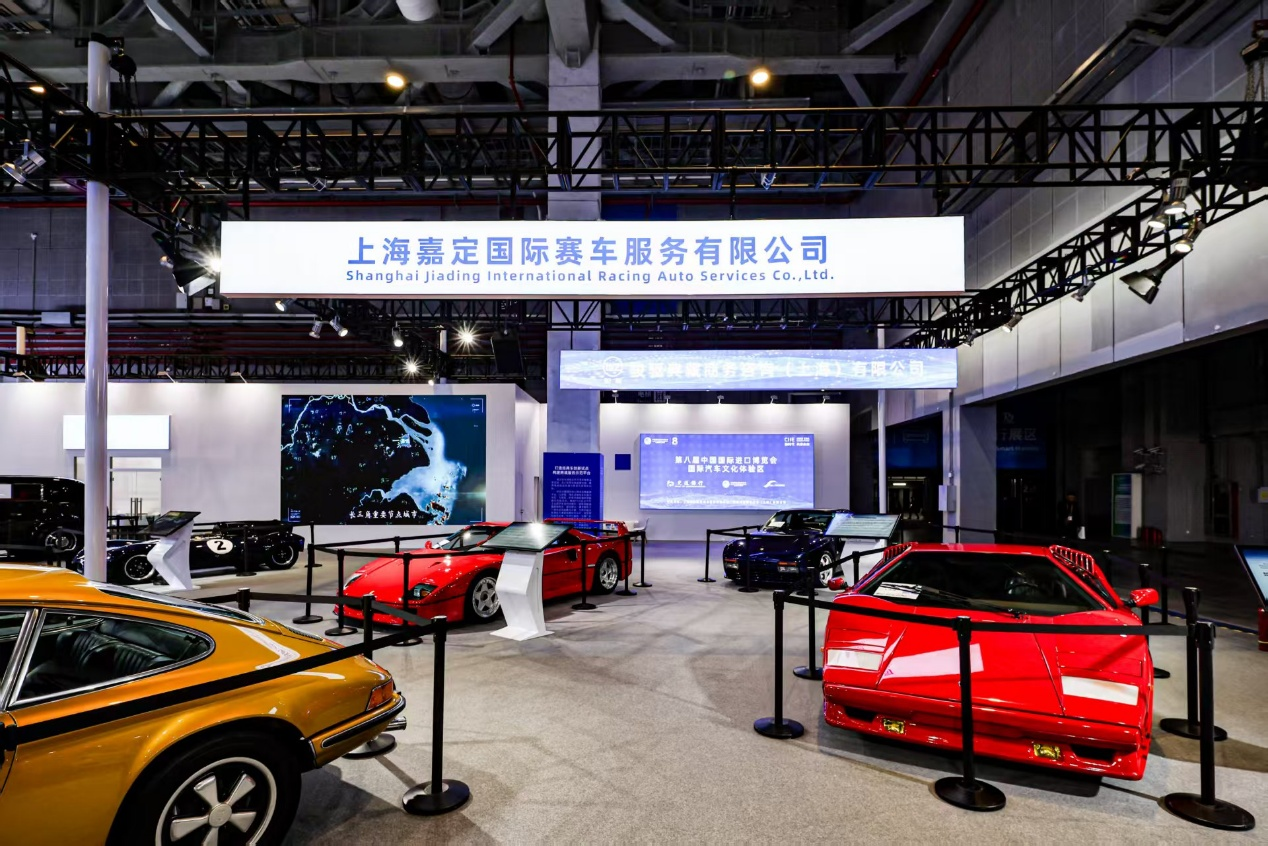
Core Insights - The eighth China International Import Expo (CIIE) opened on November 5, showcasing the integration of industry and culture through the display of classic cars [1] - The exhibition area, covering 600 square meters, features iconic vehicles such as the Ferrari F40 and Porsche 911S, highlighting the evolution of automotive manufacturing and culture [3] - The Jiading Comprehensive Bonded Zone aims to develop a full industry chain ecosystem for classic cars, promoting a model that integrates bonded display, cross-border trade, and cultural promotion [4] - Participation in the expo marks a significant step for Jiading in elevating the classic car industry to an international platform, enhancing its role in industrial cooperation and cultural exchange [6] Industry Developments - The exhibition includes 11 classic models, showcasing the aesthetic evolution and technological breakthroughs in the automotive industry, providing an immersive experience for visitors [3] - Jiading Comprehensive Bonded Zone has been actively involved in establishing national standards for classic cars and hosting cultural events to promote the industry [4] - Future plans include leveraging policy and platform advantages to deepen international cooperation and innovation in the classic car sector, aiming to create a cultural and industrial hub in the Yangtze River Delta [6]
聚焦进博|最“贵”展区诞生!11款跨越半个世纪的老爷车同台
Guo Ji Jin Rong Bao· 2025-11-05 15:24
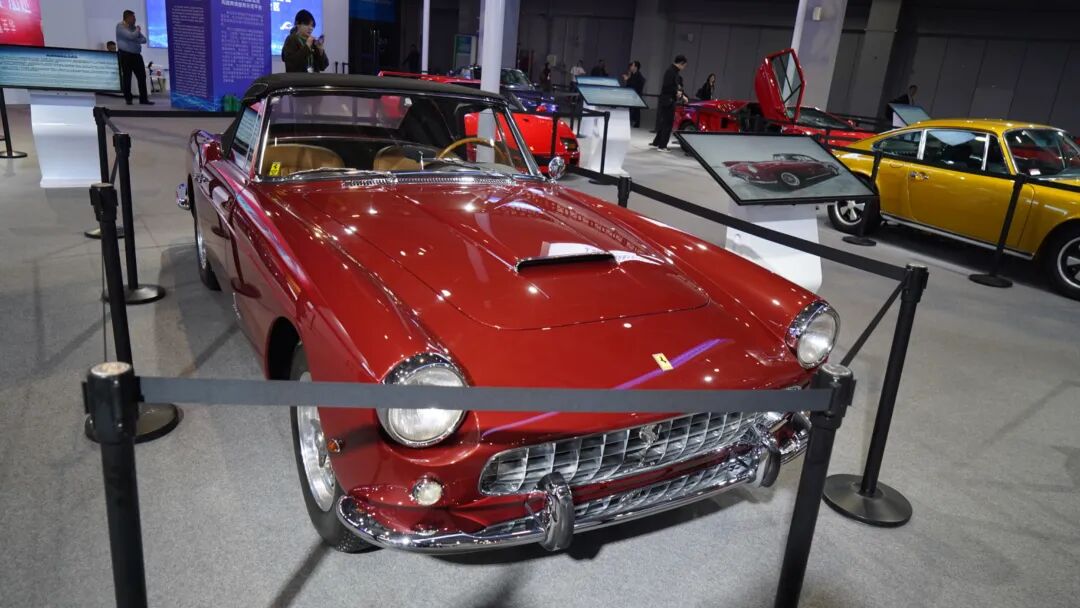
Core Viewpoint - The 8th China International Import Expo showcases a "Time Corridor of the Automotive Industry," featuring classic cars that highlight the evolution of automotive technology and brand identity over the decades [1][19]. Group 1: Classic Cars and Their Significance - The exhibition includes 11 classic cars from the 1920s to the 1980s, representing significant milestones in automotive history [1]. - The Ferrari 250 GT Cabriolet, launched in the late 1950s, set new standards for luxury GT cars with its 3.0L V12 engine producing 240 horsepower, establishing Ferrari's positioning of "high performance + luxury" [1]. - The Ferrari 348, introduced in 1989, marked a strategic shift for the brand by incorporating F1 technology into production cars and was the first Ferrari to enter the Chinese market, laying the groundwork for brand recognition in China [2]. Group 2: Evolution of Luxury Brands - The Rolls-Royce Phantom I Boat Tail, from the late 1920s, exemplifies bespoke craftsmanship, with each vehicle being unique, reflecting the brand's commitment to customization [5]. - The Phantom II from the 1930s showcased a balance of power and comfort with its 7.7L inline-six engine and innovative features, influencing Rolls-Royce's product development for the next century [6]. - The Jaguar E-Type, launched in 1961, broke the notion that sports cars were only for the elite by offering high performance at a more accessible price point [6]. Group 3: Performance and Innovation - The Porsche 911S, introduced in 1966, established itself as a benchmark for handling with its 160 horsepower flat-six engine and optimized suspension, influencing future models [10]. - The 944 Turbo, launched in 1985, achieved near-perfect weight distribution with its innovative layout, proving that non-911 models could also embody Porsche's performance ethos [11]. - The Lamborghini Countach, celebrating its 25th anniversary in the 1980s, became an icon of speed and individuality, reinforcing Lamborghini's image as a maker of extreme supercars [13]. Group 4: Cultural and Historical Impact - The Cooper T40, a mid-engine formula car from the 1950s, set technical standards for modern racing with its lightweight design and 2.0L engine [15]. - The Hongqi CA72, recognized as the first high-end ceremonial vehicle in China, represents a milestone in Chinese automotive history, transitioning to the upgraded CA770 model in 1965 [17]. - The exhibition serves as a platform for cultural revival, demonstrating the integration of "bonded display + cross-border trade + cultural promotion" in the automotive sector [19].