
润饼

Search documents
润饼是派对
Xin Lang Cai Jing· 2026-02-17 07:01
Core Perspective - The article highlights the cultural significance and preparation of "润饼" (spring rolls) in Taiwanese tradition, particularly during the "尾牙" (year-end banquet) celebration, emphasizing its communal and festive nature [1][4]. Group 1: Cultural Significance - "润饼" is a traditional dish associated with family gatherings and celebrations, particularly during the "尾牙" festival, which has been practiced for over a century [1][3]. - The preparation of "润饼" involves a communal effort, where family members gather to choose ingredients and roll their own, creating a festive atmosphere [1][4]. Group 2: Preparation and Ingredients - The key to making "润饼" is the thin, handmade skin, which cannot be mass-produced and must be prepared fresh on the day of the celebration [2]. - Common ingredients for "润饼" include shredded cabbage, radishes, and various proteins, with each family having its own unique recipe and preparation style [3][4]. - The article mentions specific local markets and shops known for their quality ingredients, such as "林良号" for its exceptional "润饼" skins and "尤协丰" for its handmade tofu [2][3]. Group 3: Variations and Regional Differences - Different regions in Taiwan have their own variations of "润饼," with distinct main ingredients and preparation methods, reflecting local culinary traditions [3]. - The article notes that in Northern Taiwan, the main ingredients are often stewed and flavored with curry or turmeric, while other regions may use different vegetables or cooking styles [3].
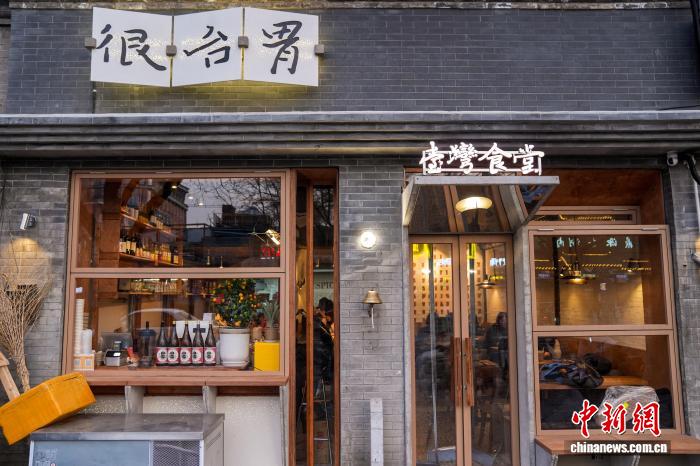
(新春见闻)北京街头的台味小馆:很台味,很对“胃”
Zhong Guo Xin Wen Wang· 2026-02-17 03:12
Core Viewpoint - The Taiwanese restaurant "Hen Tai Wei" in Beijing has gained popularity for its authentic Taiwanese flavors, attracting a significant number of customers since its opening in early 2026 [1][2]. Group 1: Restaurant Overview - "Hen Tai Wei" opened in Beijing in early 2026 and quickly became popular on social media, leading to full occupancy during peak hours [1][3]. - The restaurant features a collaboration between a team from both sides of the Taiwan Strait, with a focus on maintaining authentic Taiwanese cuisine [2][3]. Group 2: Menu and Culinary Approach - The restaurant's signature dish, "Gua Bao," is likened to a Taiwanese version of a meat sandwich, showcasing a blend of flavors and textures [2]. - The team emphasizes the importance of using high-quality ingredients and traditional cooking methods to ensure authenticity, such as using bamboo steamers for buns [2][3]. - Seasonal dishes, including Taiwanese-style "runbing" (a type of wrap), are planned for future menus, indicating a commitment to evolving the culinary offerings [4]. Group 3: Customer Engagement and Cultural Connection - The restaurant has seen a diverse clientele, including Taiwanese expatriates traveling long distances for a taste of home, highlighting the emotional connection to Taiwanese cuisine [3]. - The unique appeal of Taiwanese food lies in its familiarity and novelty for mainland diners, fostering curiosity and nostalgia [3]. - The restaurant aims to strengthen cultural ties through food, reflecting shared culinary values between Taiwan and mainland China [3].

(新春见闻)寻味台胞年夜饭 “拼”出两岸团圆味
Xin Lang Cai Jing· 2026-02-16 13:00
Group 1 - The article highlights the cultural fusion in the New Year's Eve dinner of Taiwanese and mainland Chinese families, showcasing the blending of culinary traditions [1][2] - The character Cao Jingwen represents a new generation of Taiwanese youth who are embracing and promoting traditional Chinese culture through innovative means, such as her guqin studio [1] - The significance of traditional dishes like "润饼" (runbing) and "龙井虾仁" (Longjing shrimp) reflects the deep-rooted cultural connections and the importance of family reunions during the Spring Festival [2] Group 2 - The article emphasizes the role of food in expressing cultural identity and familial bonds, particularly during significant celebrations like the Lunar New Year [1][2] - The integration of Taiwanese and Zhejiang culinary elements in family meals symbolizes the broader theme of unity and shared heritage among Chinese communities [1] - The experiences of young Taiwanese individuals in mainland China illustrate the ongoing cultural exchange and the desire to maintain connections with their roots while adapting to new environments [2]