豆干

Search documents
润饼是派对
Xin Lang Cai Jing· 2026-02-17 07:01
Core Perspective - The article highlights the cultural significance and preparation of "润饼" (spring rolls) in Taiwanese tradition, particularly during the "尾牙" (year-end banquet) celebration, emphasizing its communal and festive nature [1][4]. Group 1: Cultural Significance - "润饼" is a traditional dish associated with family gatherings and celebrations, particularly during the "尾牙" festival, which has been practiced for over a century [1][3]. - The preparation of "润饼" involves a communal effort, where family members gather to choose ingredients and roll their own, creating a festive atmosphere [1][4]. Group 2: Preparation and Ingredients - The key to making "润饼" is the thin, handmade skin, which cannot be mass-produced and must be prepared fresh on the day of the celebration [2]. - Common ingredients for "润饼" include shredded cabbage, radishes, and various proteins, with each family having its own unique recipe and preparation style [3][4]. - The article mentions specific local markets and shops known for their quality ingredients, such as "林良号" for its exceptional "润饼" skins and "尤协丰" for its handmade tofu [2][3]. Group 3: Variations and Regional Differences - Different regions in Taiwan have their own variations of "润饼," with distinct main ingredients and preparation methods, reflecting local culinary traditions [3]. - The article notes that in Northern Taiwan, the main ingredients are often stewed and flavored with curry or turmeric, while other regions may use different vegetables or cooking styles [3].
海南台商新春联谊话封关
Xin Lang Cai Jing· 2026-02-04 14:18
Group 1 - The chairman of the Strait Cross-Strait (Hainan) Investment Consulting Co., Ltd. plans to establish a factory in Yangpu for deep processing projects, importing soybeans from Russia to produce soy sauce and tofu for the Southeast Asian market [1] - The Hainan Free Trade Port policy is continuously releasing benefits, prompting businesses to seize opportunities for expansion [1] - The event in Haikou gathered numerous Taiwanese businesspeople to celebrate the New Year and discuss development opportunities in the Hainan Free Trade Port [1] Group 2 - The local government in Wuzhishan is accelerating the construction of rural revitalization projects, including a tea museum and tea exhibition center, to enhance the tea tourism industry [2] - A Taiwanese businessman plans to increase investment in the tea industry by developing tea-related educational projects and tourism accommodations [2] - A businessman involved in freshwater ornamental fish farming intends to start a new company focusing on Australian silver perch farming, leveraging the Hainan Free Trade Port policies to expand into overseas markets [2]
劲仔食品宣布Jin’s鹌鹑蛋登陆泰国7-Eleven便利店
Cai Jing Wang· 2026-02-02 07:51
Core Viewpoint - Jin's Food Group has successfully launched its quail eggs product in Thailand's 7-Eleven convenience stores, expanding its international presence and product offerings [1] Group 1: Product Launch and Sales Performance - Jin's quail eggs have officially entered the Thai market through 7-Eleven stores [1] - The company's plant-based meat products previously entered Thailand's 7-Eleven in September last year, achieving sales exceeding 1 million within three months [1] Group 2: Brand Expansion and Product Range - In 2024, the company plans to introduce its overseas brand "Jin's" [1] - The brand currently features a diverse product range, including Jin's small fish, tofu, quail eggs, and plant-based meat, with over 60 overseas SKUs [1] - The market reach of the brand extends to approximately 40 countries and regions, including the United States, Canada, Japan, and South Korea [1]
山西古寨豆腐香飘千年 解锁时光沉淀的健康密码
Xin Lang Cai Jing· 2026-01-16 11:53
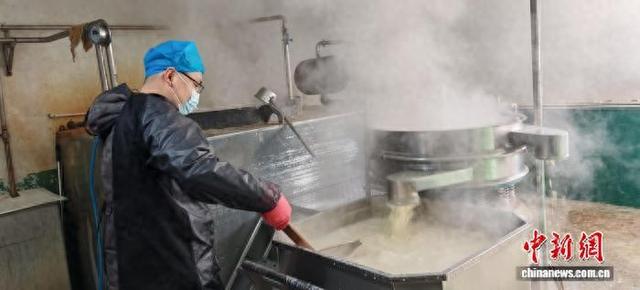
Core Viewpoint - The ancient tofu-making technique from Guzhai, Shanxi, has been revitalized by a new generation, blending traditional craftsmanship with modern production methods to meet increasing market demand and contribute to rural revitalization [1][2][6]. Group 1: Historical Significance - Guzhai tofu production dates back to the Eastern Han Dynasty, earning the village the title of "Hometown of Tofu" due to its rich history and the dedication of local villagers [1]. - In 2011, the traditional technique was recognized as a provincial intangible cultural heritage, highlighting its cultural importance [2][5]. Group 2: Modern Revival - A group of young individuals, led by Lian Yong and Lian Jinghua, returned to their hometown to revive the traditional tofu-making craft, successfully reintroducing the old flavors to the market within a year [2]. - The revival emphasizes a balance between preserving traditional flavors and embracing modern trends, ensuring the technique remains relevant [2]. Group 3: Production Techniques - The production process involves meticulous steps, including selecting high-quality non-GMO soybeans from Heilongjiang, precise soaking times, and traditional methods like "two grinding and two filtering" to ensure a fine texture [2][5]. - The core step of "curing" tofu is still performed manually, ensuring the unique quality of Guzhai tofu, which is described as "tender as fat, elastic as cream" [5]. Group 4: Economic Impact - The workshop currently consumes over 1,000 kilograms of soybeans daily, producing more than a ton of tofu, indicating a significant scale of operation [6]. - The business model aims for "integrated industry, chain production, and value-added sales," focusing on expanding standardized production and deepening the tofu processing industry chain [6].

甘肃陇南绿色风景变发展丰景
Jing Ji Ri Bao· 2025-11-18 22:19
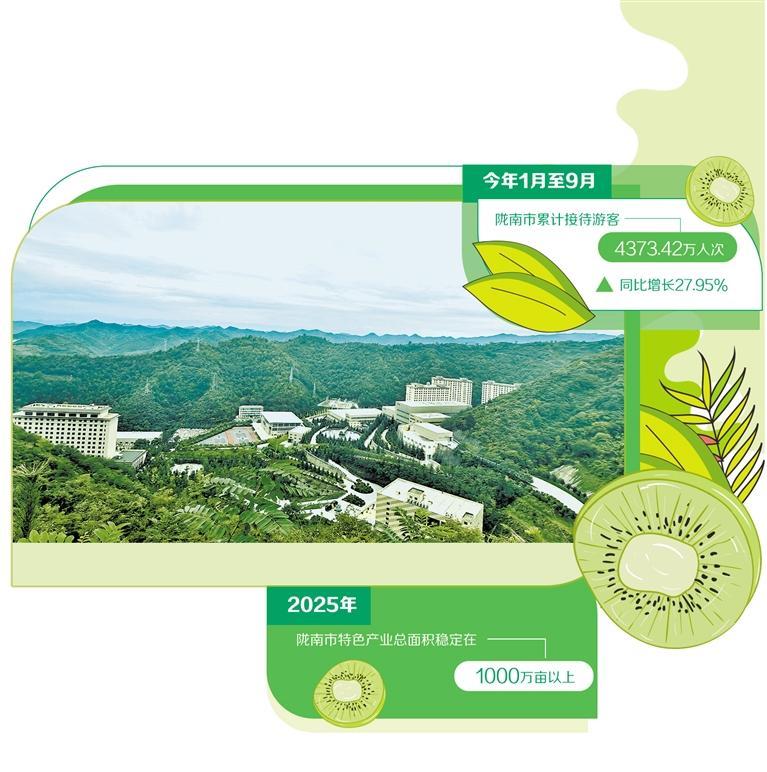
Core Insights - The article highlights the transformation of ecological resources into economic advantages in Longnan City, Gansu Province, through the integration of ecological tourism and sustainable agricultural practices [2][5][9] Group 1: Ecological Tourism Development - Longnan City has actively promoted all-region tourism, establishing ecological protection red lines and implementing various ecological restoration projects, resulting in significant tourist engagement [3][5] - During the National Day and Mid-Autumn Festival, the official scenic area received 158,200 visitors, generating ticket revenue of 7.91 million yuan [3] - From January to September, Longnan City welcomed 43.73 million tourists, a year-on-year increase of 27.95%, with rural tourism accounting for 1.89 million visitors and generating 720 million yuan in revenue [5] Group 2: Agricultural Innovation - The introduction of improved oil olive varieties in Wudu District has doubled production, with an average income of over 10,000 yuan per acre [6] - The area has planted 641,300 acres of oil olives, with an average income of around 4,000 yuan per person in the main production areas [6] - Longnan is focusing on developing a "5+5+N" industrial system, aiming for a stable area of 10 million acres for specialty crops by 2025 [7] Group 3: Mining and Environmental Management - Jinwei Mining Company has invested over 92.58 million yuan in ecological restoration, achieving a terrain recovery rate of over 90% and a land reclamation rate of 60% [8] - The company employs advanced mining techniques and environmental management practices, contributing to a unique landscape that has been recognized as a national 4A-level tourist attraction [8] - Jinwei Mining collaborates with educational institutions to enhance mechanization and digital management, leading to improved resource recovery rates [8] Group 4: Industrial Development - The Longnan Economic Development Zone has attracted 133 enterprises, including 10 large-scale and 9 high-tech companies, focusing on agricultural product processing and other sectors [9] - The zone aims to create a billion-yuan industrial park by enhancing the value chain of local agricultural products and promoting innovation [9] - The city plans for the ecological industry to account for 29% of the GDP by 2024, emphasizing the integration of ecological and economic benefits [9]
市场监管总局通报39批次食品抽检不合格情况
Yang Shi Xin Wen Ke Hu Duan· 2025-11-17 12:40
Core Viewpoint - The State Administration for Market Regulation conducted a food safety supervision sampling, testing 2,127 batches of samples, with 39 batches found to be non-compliant with food safety standards [1]. Group 1: Non-compliant Products - Xunwei Old Store (operated by Jiangxi Province Gan Zhou Xun Wu County Chang Shun Food Business) sold Dougan on Douyin, with lemon yellow and sunset yellow values not meeting national food safety standards [2]. - Gu Jizhou Health Noodles (operated by Shandong Province Jining Ren Cheng Jizhou Department Store) sold Tie Pi Shi Huo Long Xu Noodles on Douyin, with lemon yellow values not meeting national food safety standards [2]. - Yang Bin Boutique Fine Vegetables Store in Shaanxi Province sold Doupi (tofu products) with lemon yellow values not meeting national food safety standards [2]. - Good Luck Food Business in Guangxi Zhuang Autonomous Region sold chili powder with sulfur dioxide residue not meeting national food safety standards [2]. - Xigang Chaili Dry Fresh Seafood Wholesale Department in Shandong Province sold Shan Nai with sulfur dioxide residue not meeting national food safety standards [2]. Group 2: Additional Non-compliant Products - IH Nutrition Food Flagship Store (operated by Zhejiang Province Jinhua City Haohan Trading Co., Ltd.) sold plum juice with sorbic acid and its potassium salt values not meeting national food safety standards [3]. - Fresh Noodles sold by Huijia Eat Dumplings Restaurant in Guangxi Zhuang Autonomous Region had dehydroacetic acid and its sodium salt values not meeting national food safety standards [3]. - Fresh Crisp Jellyfish sold by Fisherman Jia Flagship Store on Tmall had values meeting national food safety standards but did not meet product label requirements [3]. - Dried Ume (fruit products) sold by Longteng Dried Fruit Food Business in Qinghai Province had amaranth red values not meeting national food safety standards [3]. Group 3: Further Non-compliance Cases - Pickled vegetables sold by Guangdong Province Meiduo Industrial Co., Ltd. had sulfur dioxide residue not meeting national food safety standards [4]. - Dried White Apricots sold by Xinjiang Uygur Autonomous Region had sulfur dioxide residue not meeting national food safety standards [4]. - Lychee-flavored mooncakes sold by Guizhou Helix Shopping Co., Ltd. had dehydroacetic acid and its sodium salt values not meeting national food safety standards [5]. - Spicy Potato Powder sold by Tuntai Yang Dajie had aluminum residue not meeting national food safety standards [5]. Group 4: Compliance Issues - Various products, including mooncakes and snacks, were found to have issues with microbial counts, sodium content, and other parameters not meeting national food safety standards [6][7][8][9][10][11].
市场监管总局办公厅关于39批次食品抽检不合格情况的通报
Zhong Guo Zhi Liang Xin Wen Wang· 2025-11-15 14:14
Core Points - The State Administration for Market Regulation (SAMR) reported that out of 2,127 food samples tested, 39 batches were found to be non-compliant with food safety standards [3][4][5][6][7][8][9][10][11][12][13]. Summary by Category Non-compliant Products - Various food products were identified with specific non-compliance issues, including: - "Xunwei Old Shop" sold dried tofu with non-compliant levels of lemon yellow and sunset yellow [3]. - "Guji Zhou Health Noodles" had non-compliant lemon yellow levels in its product [3]. - Dried bean curd from "Yang Bin Boutique Vegetable Shop" also failed on lemon yellow levels [3]. - Chili powder from "Good Luck Food Business" exceeded permissible levels of sulfur dioxide [3]. - Other products, including mooncakes, fruit preserves, and snacks, were found to have issues with various additives and contaminants such as dehydroacetic acid, sodium, and aflatoxin B1 [4][5][6][7][8][9][10][11][12][13]. Regulatory Actions - Provincial market regulation departments have initiated investigations and corrective actions regarding the non-compliant food products identified in the report [3].
山西省 河津市市场监督管理局2025年食品安全监督抽检信息公告(第2期)
Zhong Guo Zhi Liang Xin Wen Wang· 2025-11-13 05:51
Core Points - The announcement details the results of the second phase of food safety supervision and random inspections conducted by the Hejin City Market Supervision Administration in 2025, covering 255 batches of various food products [3][4][5]. Summary by Category Inspection Results - A total of 255 batches were tested, with 250 batches deemed compliant and 5 batches found to be non-compliant, indicating a compliance rate of approximately 98.0% [3][4]. - The inspected food categories included biscuits, catering foods, tea and related products, nuts, egg products, starch and starch products, seasonings, bean products, convenience foods, honey products, pastries, canned foods, alcoholic beverages, grain processing products, meat products, dairy products, sugar, edible agricultural products, edible oils, vegetable products, frozen foods, candy products, beverages, and more [3][4]. Non-Compliant Products - The announcement specifies the non-compliant products, including details such as the name of the product, the sampling unit, the non-compliance item, and the test results, which exceeded the national food safety standards [4][5][6]. - For example, one product contained 0.60 mg/kg of pesticide residue (carbofuran), exceeding the allowable limit of 0.2 mg/kg [4][5]. Consumer Action - Consumers are encouraged to report any non-compliant products found in the market by calling the complaint hotline 12315 [3][4].
科技赋能,大豆卖上好价钱
Ren Min Ri Bao· 2025-11-11 22:40
Core Insights - The article highlights the transformation of the soybean industry in Yongqiao District, Anhui Province, from raw material sales to high-end health food production, significantly increasing farmers' incomes [1][2]. Group 1: Industry Development - The local government proposed a development strategy focusing on "primary production as the foundation, secondary production as the breakthrough, and tertiary production as the extension" to enhance the soybean industry [1]. - The establishment of Bohuizhiyuan Food Technology Co., Ltd. by the Yili Da Agricultural Technology Cooperative represents a shift towards deep processing of soybeans, addressing previous issues of low added value and unstable income for farmers [1][2]. Group 2: Technological and Operational Advancements - The company has built a professional R&D team and applied innovative technologies such as熟浆工艺 (cooked slurry process) and 超微萃取 (ultra-micro extraction) to improve product quality and shelf life [2]. - A modern production base has been established, featuring standardized facilities and advanced digital equipment, ensuring a closed and pollution-free production process from soybean cleaning to product packaging [2]. Group 3: Economic Impact - The "cooperative + enterprise" model has been implemented, managing 100,000 acres of land and providing farmers with seeds and technical guidance, ensuring stable income through guaranteed purchase prices above market rates [2]. - The deep processing base has created job opportunities for over 200 local villagers, enhancing their income sources [2].
盐津铺子(002847):2026年度投资峰会速递:品类品牌战略驱动价值增长
HTSC· 2025-11-07 11:35
Investment Rating - The investment rating for the company is maintained as "Buy" with a target price of RMB 89.52 [1][4]. Core Insights - The company is focusing on a category brand strategy to drive value growth, with a positive outlook for revenue and profit margin improvement through product innovation and channel expansion [1][2][3]. Product Strategy - The company has restructured its organization to manage products based on trends and growth potential, dividing into three main divisions: Spicy (mainly konjac and dried tofu), Health (deep-sea snacks, quail eggs), and Sweet (jelly, baked goods). The konjac division is expected to benefit from innovative flavors and controlled price competition [2][3]. Channel Strategy - The company is enhancing its high-value channel layout by focusing on e-commerce and quantitative distribution channels. E-commerce is expected to improve profitability despite initial revenue adjustments, while quantitative channels are projected to maintain high growth driven by konjac products [3]. Profitability Outlook - The company's profit margin improved year-on-year in Q3 2025 due to a focus on key products and the elimination of inefficient products and channels. The outlook suggests further cost improvements and brand building investments for major products [3][4]. Financial Projections - The company maintains its earnings forecast, expecting EPS of RMB 3.09, 3.73, and 4.34 for 2025, 2026, and 2027 respectively. The target PE for 2026 is set at 24x, aligning with comparable companies [4][9].