深度虚值看跌期权

Search documents
塔勒布:在市场的血雨腥风中,他是唯一撑伞数钱的人
Xin Lang Cai Jing· 2026-02-11 07:06
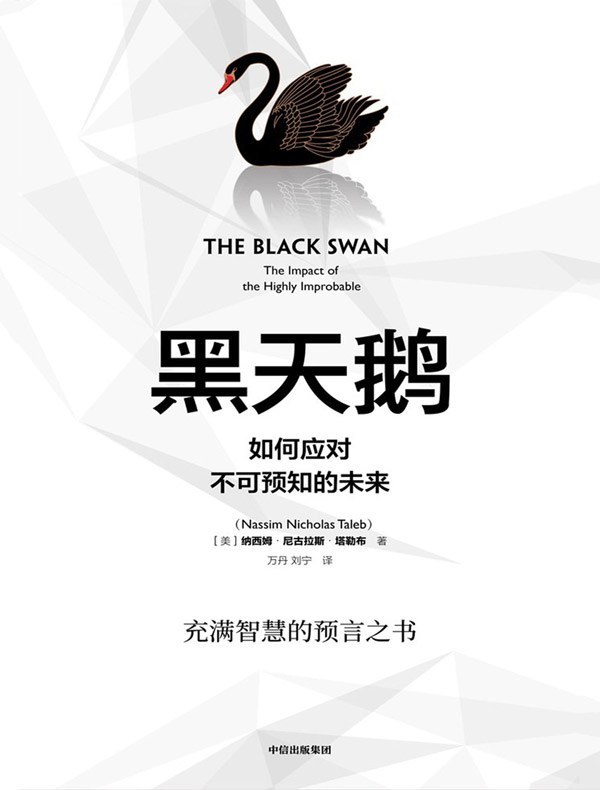
Core Insights - The article discusses the concept of "Black Swan" events, which are unpredictable and have a significant impact, highlighting the importance of recognizing and preparing for such occurrences in financial markets [8][29] - Nassim Nicholas Taleb's investment philosophy emphasizes the need to embrace uncertainty and volatility, advocating for strategies that benefit from chaos rather than avoiding it [21][41] - The narrative illustrates Taleb's personal journey from experiencing the Lebanese Civil War to achieving financial freedom through strategic investments in deep out-of-the-money put options during market crashes [4][24] Group 1: Taleb's Background and Philosophy - Taleb was born into an elite family in Lebanon, where he experienced the abrupt end of stability due to the civil war, shaping his understanding of risk and uncertainty [4][25] - His fascination with options trading stems from their asymmetric risk-reward profile, where buyers face limited losses but can achieve disproportionate gains [5][26] - The success of his strategy during the 1987 market crash validated his framework for understanding financial unpredictability [6][27] Group 2: Investment Strategies - Taleb's investment approach includes identifying "Black Swan" events and developing a "barbell strategy," allocating 85%-90% of resources to safe assets and 10%-15% to high-risk opportunities [10][30] - The strategy aims to create favorable asymmetry, where downside risk is limited while upside potential is significant [30] - Taleb emphasizes the principle of "Skin in the Game," advocating for accountability in decision-making, which enhances the credibility of financial advice [31] Group 3: Practical Applications and Challenges - The article describes the operations of Empirica Capital, a hedge fund co-founded by Taleb, which employs his philosophy by consistently buying cheap deep out-of-the-money options as insurance against market crashes [12][33] - The fund's strategy often results in short-term losses, referred to as "bleeding," which tests the patience of investors [34] - The eventual payoff from this strategy was exemplified during the COVID-19 market crash, where Empirica achieved significant returns after a prolonged period of underperformance [35] Group 4: Broader Implications - Taleb's insights extend beyond finance, suggesting that individuals and organizations should cultivate resilience and adaptability in the face of uncertainty [21][42] - His philosophy encourages a mindset shift from seeking certainty to leveraging volatility for growth and opportunity [41][42] - The article concludes that understanding and preparing for unpredictable events is crucial for both personal and institutional investors in today's uncertain environment [21][41]
风暴越大,塔勒布越兴奋
Feng Huang Wang Cai Jing· 2026-01-28 07:05
Core Insights - The article discusses the concept of "black swan" events and how Nassim Nicholas Taleb capitalized on unpredictable market crashes, particularly during the 1987 stock market crash, to achieve financial freedom [2][3][4][5] Group 1: Black Swan Concept - "Black swan" events are defined as unpredictable occurrences with significant impact that can be rationalized after the fact [13][16] - Historical examples of black swan events include the 1987 stock market crash, the 1997 Asian financial crisis, the 2008 global financial crisis, and the 2020 COVID-19 pandemic [16] Group 2: Taleb's Investment Philosophy - Taleb emphasizes the importance of recognizing and benefiting from volatility, coining the term "antifragility" to describe systems that thrive on chaos [16][18] - The "barbell strategy" is proposed, where 85%-90% of resources are allocated to extremely safe investments, while 10%-15% are placed in high-risk, high-reward opportunities [16] Group 3: Practical Application and Challenges - Taleb's investment strategies are tested through the Empirica Capital hedge fund, which focuses on buying cheap deep out-of-the-money options as insurance against market crashes [18][19] - The fund experiences consistent small losses during stable market periods, leading to client withdrawals, but ultimately reaps significant rewards during market downturns [19][20] Group 4: Life Philosophy - Taleb's approach extends beyond finance to life, advocating for mental exercises that prepare individuals for worst-case scenarios to reduce anxiety [23] - He promotes a lifestyle that embraces physical challenges and limits information intake to enhance decision-making and resilience [32][34] Group 5: Relevance of Taleb's Insights - In an era where uncertainty is prevalent, Taleb's insights on constructing systems that benefit from volatility are increasingly valuable for both individual investors and institutions [38] - The article concludes that true resilience lies not in avoiding fluctuations but in effectively responding to them, reinforcing the idea of building "arks" to navigate through storms [38]

末日蓝线飙升46基点:华尔街狂欢、狼狗已噬喉,你的钱包可能血本无归!
美股研究社· 2025-11-28 11:06
Core Viewpoint - The article discusses historical market crashes and the strategies employed by various investors during these crises, highlighting the importance of timing, market sentiment, and the psychological aspects of trading. Group 1: Historical Market Crashes - The article references the 1929 market crash, where Joseph P. Kennedy sold all his stocks and only held a long position in a Cuban sugar company, indicating a strategic exit from the market when sentiment was overly bullish [6][8]. - Jesse Livermore, known as the "King of Speculation," made significant profits by shorting the market before the 1929 crash, earning $1 billion (equivalent to $20 billion today) [11][12]. - The 1987 crash is highlighted with the story of Mark Cook, who turned a $30,000 investment into $11 million by holding deep out-of-the-money puts on the S&P 500 [15][17]. Group 2: Investor Strategies and Lessons - Bill Lawton, CEO of Westgate Global Group, profited from the 1987 crash by betting on volatility, emphasizing that calmness is crucial during crises [33][34]. - John Paulson made a significant profit during the 2008 financial crisis by purchasing credit default swaps (CDS) against subprime mortgages, earning $10 billion from a $22 million investment [50][52]. - The article mentions the importance of being contrarian, as seen in the actions of various investors who thrived during market downturns by maintaining a clear strategy and not succumbing to panic [12][34][50]. Group 3: Current Market Indicators - The article notes that the cost of options to protect against a significant market downturn has risen to 46 basis points, the highest level since the sell-off in April [66]. - It suggests that investors are increasingly willing to pay for insurance against a potential 55% drop in the S&P 500 over the next five years, indicating heightened market anxiety [66][69].

怕暴跌血亏?用这个“保险”,美股暴跌你也能赚钱 (第五期-Long Put买入看跌期权)
贝塔投资智库· 2025-09-23 04:01
Core Viewpoint - The article emphasizes the importance of asset hedging, particularly through the use of deep out-of-the-money put options, to protect against market downturns and "black swan" events, which are often underestimated by investors [1][2][4]. Group 1: Importance of Hedging - Historical examples illustrate that during significant market downturns, such as the 2008 financial crisis, hedging strategies can yield substantial returns, as demonstrated by Universa Investments achieving approximately 115% returns while the S&P 500 fell by about 37% [1][2]. - Many investors maintain a purely long position without any hedging, often due to a fear of underperforming compared to peers, leading to a lack of protection against potential market crashes [1][2]. Group 2: Mathematical Illustration of Hedging - A hypothetical scenario shows that an investor with a long-only position (Old Wang) could see their investment drop from 1.52 million to 0.988 million after a 35% market decline, while a hedged investor (Old Li) would still retain a value of 1.336 million due to the gains from put options [3][4]. - The article highlights that deep out-of-the-money put options can potentially multiply returns significantly during market crashes, reinforcing the necessity of hedging [4]. Group 3: Strategies for Hedging - The article discusses the use of long put options as a dual-purpose tool for both speculation and hedging, with protective puts being a strategy to mitigate losses in a bear market [5][9]. - It provides a step-by-step guide for investors on how to implement these strategies effectively, including determining risk tolerance and selecting appropriate strike prices and expiration dates for options [11][12]. Group 4: Practical Applications - Two practical applications are presented: one for speculative purposes and another for hedging against potential market downturns. For speculation, the article suggests selecting a strike price close to the current stock price, while for hedging, it recommends choosing a deeper out-of-the-money strike price to minimize costs [13][16]. - The article also outlines the potential outcomes of these strategies, including scenarios where the stock price falls below the strike price, demonstrating how hedging can limit losses [17][18].