滑雪速干衣

Search documents
义乌冰雪产品“卖全球”
Xin Hua Wang· 2025-12-23 23:55
Core Insights - The global demand for snow sports products, particularly from Yiwu, is surging, with a notable 40% year-on-year increase in ski goggles sales for 2024 [1][2] - Yiwu's snow sports products are primarily exported to foreign markets, with 90% of customers located abroad, mainly in Russia and Europe [2][3] - The overall export value of snow sports equipment from Yiwu has seen a dramatic increase, with ski goggles exports rising by 138% and overall winter sports equipment exports increasing by 120% in the 2025 winter season [2] Market Dynamics - The majority of foreign customers are large wholesalers who purchase in bulk and distribute to local retailers [2] - The ice and snow economy in China is projected to exceed 1 trillion yuan by 2025, with Yiwu contributing over 30% of the export share [2][3] - The logistics system in Yiwu is highly efficient, allowing for quick order fulfillment, with domestic orders taking about 7 days and international orders around 15 days [3] Industry Growth - The rise of the ice and snow industry in Yiwu is attributed to early market recognition by merchants, particularly following the Beijing Winter Olympics [3] - The production model in Yiwu is characterized by a "1-hour production circle," enabling rapid response to orders and cost reduction [3] - Merchants are increasingly focusing on product innovation, with features like anti-fog and UV protection being integrated into ski goggles [5] Future Outlook - Merchants plan to expand their product offerings to meet diverse customer needs, with a focus on professional sports markets [6] - The industry is transitioning from mass production to intelligent manufacturing, emphasizing quality and innovation [5] - Yiwu's integration of AI and trade data is expected to enhance market trend analysis and product design optimization for small and medium enterprises [5]
火了就涨价的国产平替,膨胀起来了
投中网· 2025-08-01 06:38
Core Viewpoint - The outdoor sports market in China is experiencing rapid growth, with significant investments flowing into domestic brands, raising questions about sustainability and long-term viability in a competitive landscape [5][6][19]. Group 1: Market Dynamics - The outdoor sports market in China reached a scale of 248 billion yuan in 2022, with a year-on-year growth of 15.8%, and is expected to exceed 400 billion yuan by 2025 [7][19]. - The participation in outdoor activities has surged, with 400 million people engaging in various outdoor sports by the end of 2021, indicating a shift in lifestyle and consumer behavior [7][8]. - Major brands like Pelliot have shown explosive growth, with revenue increasing from 379 million yuan in 2022 to 1.766 billion yuan in 2024, reflecting a compound annual growth rate of 115.86% [5][6]. Group 2: Brand Positioning and Strategy - Domestic brands are striving to emulate the success of industry leaders like Anta, which reported a revenue of 70.826 billion yuan in the previous year, and has expanded its portfolio through acquisitions of high-end outdoor brands [6][21]. - Brands such as Pelliot and Kailas are focusing on developing signature products, with Pelliot's jackets contributing over 80% of its revenue [10][11]. - The pricing strategy among top domestic brands has seen an increase of 25% to 65% over the past year, indicating a shift towards premium positioning [19][20]. Group 3: Challenges and Opportunities - Despite the growth, domestic brands face challenges in achieving high brand equity compared to international counterparts, often being labeled as "domestic alternatives" [16][18]. - The marketing expenditures for brands like Belliot have surged, with advertising costs rising from 68.71 million yuan in 2022 to 359 million yuan in 2024, highlighting the financial strain of customer acquisition [15]. - The outdoor market in China is still in its early stages compared to developed countries, with a penetration rate of only 2%, suggesting significant room for growth and innovation [21][22]. Group 4: Consumer Trends - The shift in consumer preferences towards lightweight and experiential outdoor activities is reshaping the market, with a focus on design and fashion becoming as important as functionality [23][24]. - The concept of "Chinese-style outdoor" emphasizes participation and enjoyment rather than extreme challenges, which aligns with the evolving lifestyle of consumers [23][24]. Group 5: Future Outlook - The future of the outdoor economy in China may not lie in merely replacing international giants but in fostering domestic innovation and iteration [24]. - Brands that can effectively balance quality, marketing, and consumer engagement are likely to thrive in this burgeoning market [24].


国产平替们的户外梦,膨胀起来了
3 6 Ke· 2025-07-25 11:07
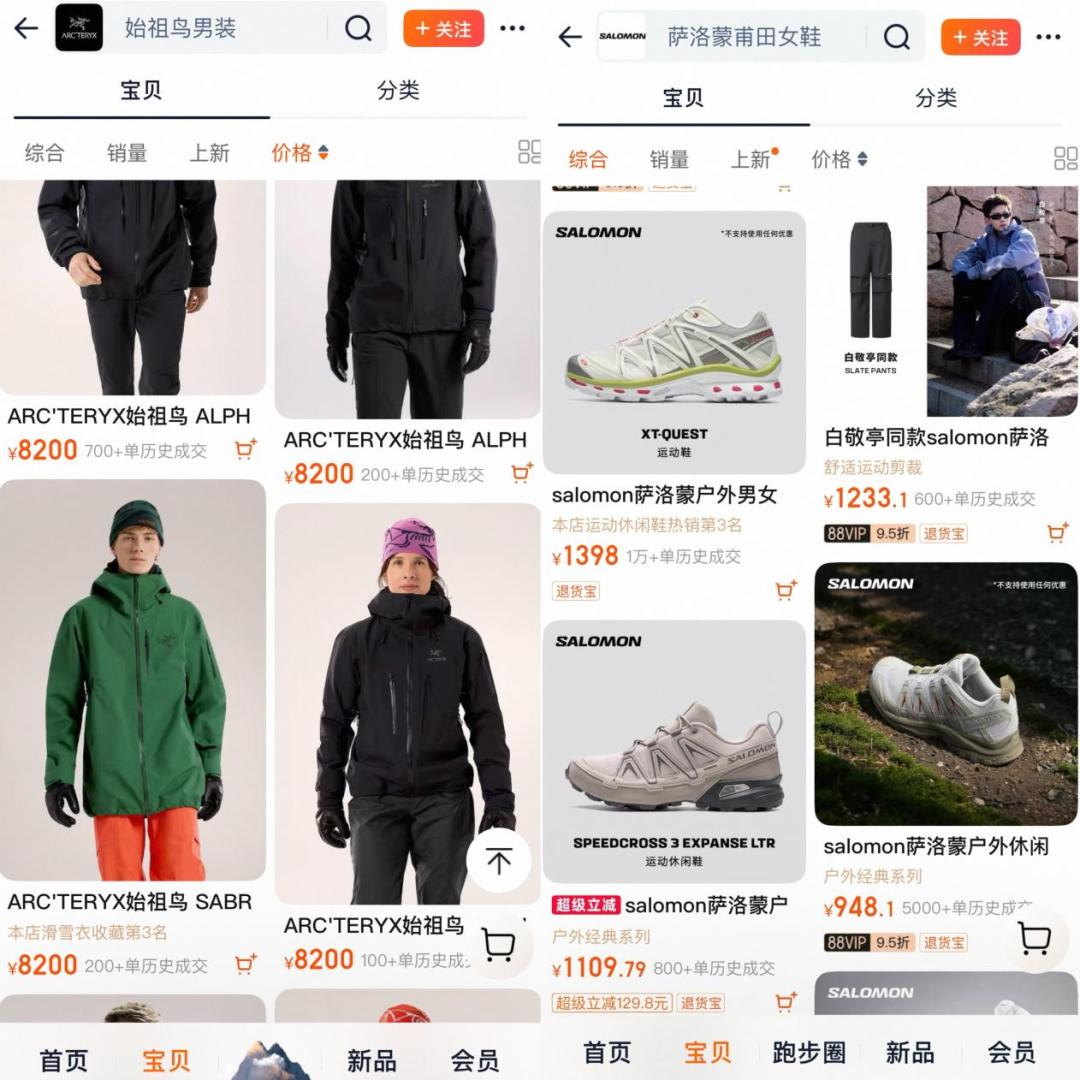
Core Insights - The outdoor sports market in China is experiencing significant growth, with brands like SURPINE and Pelliot attracting substantial investment and showing explosive revenue growth [1][2][6] - Pelliot's revenue is projected to soar from 379 million to 1.766 billion yuan from 2022 to 2024, reflecting a compound annual growth rate of 115.86% [1] - The outdoor market size in China reached 248 billion yuan in 2022, with expectations to exceed 400 billion yuan by 2025, indicating a robust growth trajectory [6][19] Company Developments - SURPINE completed a multi-million Pre-A round financing led by Hangzhou Jiebai Consumer Fund, focusing on "sports sensory technology" [1] - Pelliot aims to become the first high-performance outdoor stock in China, with Tencent as its largest external shareholder, holding 10.7% [1][2] - Anta's revenue exceeded 100 billion yuan when including its subsidiary Amer Sports, showcasing the potential scale of outdoor brands [2] Market Trends - The demand for outdoor products is driven by a growing consumer base, with 400 million people participating in outdoor activities in China by the end of 2021 [5][6] - The average price of top domestic brands has increased by 25% to 65% over the past year, indicating a trend towards premiumization in the market [16] - The outdoor market in China is still in its early stages compared to developed countries, with a penetration rate of only 2% [19] Brand Strategies - Brands like Pelliot, KAILAS, and Mobi Garden are focusing on developing signature products that dominate their respective categories [8][10] - Marketing strategies are crucial, with significant investments in celebrity endorsements and social media campaigns to enhance brand visibility [13] - Domestic brands are increasingly emphasizing design and fashion alongside functionality to appeal to a broader consumer base [20] Competitive Landscape - The outdoor market features a tiered structure, with brands like Arc'teryx and Salomon at the top tier, while emerging brands like Pelliot and KAILAS are in the second tier [5] - The competition is intensifying as domestic brands seek to establish themselves against established international players [15][22] - The future of the outdoor economy in China may hinge on innovation and iteration rather than merely replacing international giants [22]