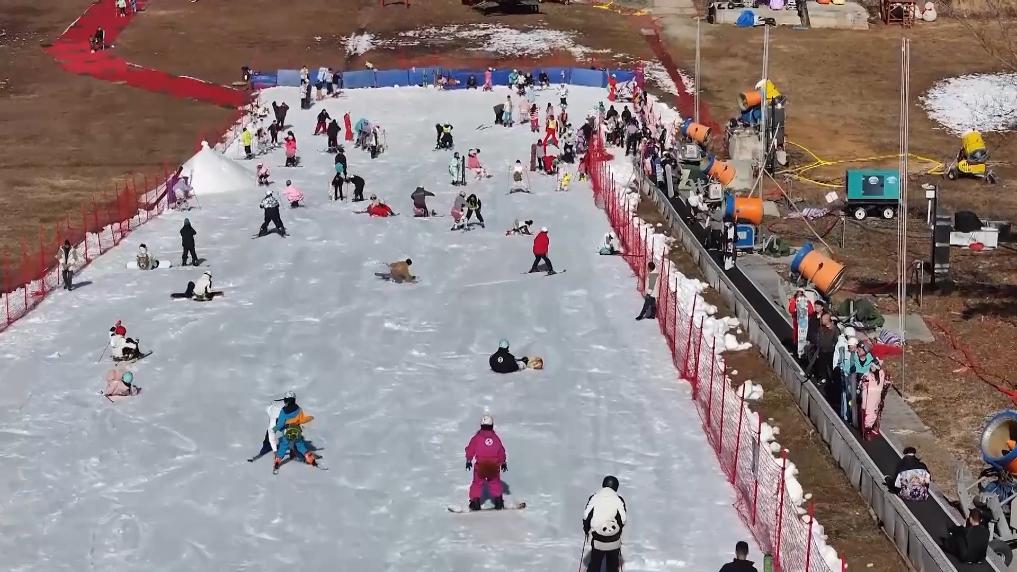
冰刀鞋

Search documents
从“猫冬”到“忙冬” 中国冰雪经济潜力十足
Zhong Guo Jing Ji Wang· 2026-02-06 07:58
Core Insights - The "ice and snow economy" in China is rapidly evolving, driven by the upcoming 2026 Milan-Cortina Winter Olympics, showcasing new economic dynamics across various sectors [3][4] - The transformation from "cold resources" to "hot economy" is evident, with regions like Northeast China experiencing a surge in winter tourism, leading to growth in local service industries [3][4] Industry Development - A comprehensive industrial chain is forming around the "ice and snow economy," transitioning from reliance on imported ski equipment to a significant market share of domestically produced ski gear [3] - Technological advancements are enhancing the competitiveness of China's ice and snow economy, with innovations such as smart ski simulators and big data analysis for winter sports [3] Economic Impact - The spillover effects of the "ice and snow economy" are fostering interconnected development across various industries, including transportation infrastructure improvements and the cultivation of sports management talent [4] - The cultural shift towards ice and snow activities is creating a robust foundation for the economy, with increasing participation from families and youth training programs [4]


“无门槛”冰雪运动激活“冰雪经济”新引擎 冰雪装备拼科技加速“走出去”
Yang Shi Wang· 2026-01-25 05:36
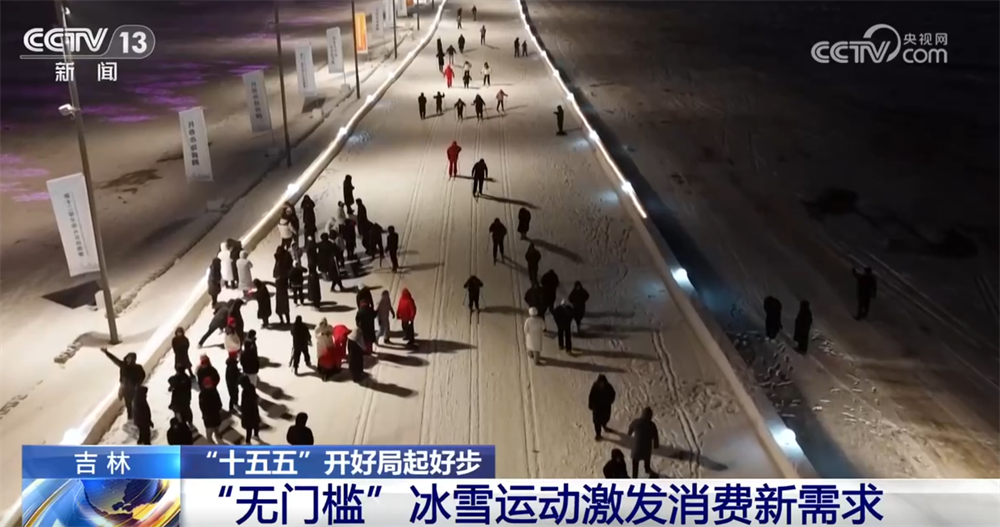
Group 1 - The winter sports market is thriving across China, with a variety of ice and snow activities and the emergence of "ice and snow +" new scenarios, driven by technological empowerment and equipment upgrades [1] - Jilin Changchun has opened a new urban skiing venue, allowing skiing enthusiasts to enjoy the sport closer to home, significantly reducing the barriers to entry for ice and snow sports [4] - The newly established urban snow track in Changchun, measuring 5.7 kilometers, is the first of its kind in the country, enhancing accessibility for participants [2][4] Group 2 - Technological innovation is becoming a key driver for upgrading the ice and snow equipment industry, with local companies utilizing advanced materials like carbon fiber to improve product quality [6] - Jilin's ice and snow equipment manufacturers are expanding their reach internationally, with a sports equipment company in Changchun operating at full capacity to fulfill orders from over 20 countries and regions [8] - The production of carbon fiber ski boards has resulted in a weight reduction of over 20% compared to traditional ski boards, enhancing precision for users [9]
中国冰雪技术开始向海外“反向输出”
Xin Lang Cai Jing· 2026-01-13 18:48
Core Insights - The 2026 Harbin International Ice and Snow Economic Expo, which recently concluded, attracted around 300 well-known enterprises from over 20 countries and regions, indicating the significant impact of China's initiative to engage 300 million people in winter sports, translating consumer enthusiasm into manufacturing strength [9][11]. Industry Overview - The expo showcased a full industrial chain of ice and snow equipment, highlighting the rise of domestic brands in the ice and snow industry. Notable innovations included color-changing ski goggles developed by Harbin Institute of Technology, which can adapt to extreme cold conditions [10][11]. - The 2023-2024 winter season saw participation in various ice and snow sports reach 264 million people, with over 385 million visits for ice and snow leisure tourism, establishing a solid foundation for ice and snow sports in China [10]. Market Dynamics - The expo introduced the "Ice and Snow Economy Full Industry Chain Map," which visually represented the entire industrial chain from equipment manufacturing to tourism and cultural services, facilitating investment cooperation in the ice and snow economy [11]. - Global ice and snow giants are shifting from merely selling products to conducting research and production in China, driven by the country's vast market potential and favorable innovation environment. For instance, the Italian company, which holds a 60% share of the global market, plans to establish its fourth global equipment center in China [13][14]. Future Prospects - The Chinese government aims for the ice and snow economy to reach a total scale of 1.5 trillion yuan by 2030, as outlined in a recent policy document. Local authorities in Harbin are focusing on developing five specialized industrial chains and creating four industrial clusters [14]. - The successful hosting of the Beijing Winter Olympics and the Harbin Asian Winter Games has created historic opportunities for China's ice and snow equipment manufacturing industry, transforming "cold resources" into a "hot industry" [14].

“冷”赛道激发“热”活力
Xin Lang Cai Jing· 2026-01-09 17:40
Core Insights - The winter sports economy in Zhejiang is experiencing significant growth, with companies in the region reporting increased orders and production capacity for winter sports equipment [1][2][3][4] Group 1: Company Performance - Zhejiang Yuanjing Sports Goods Co., Ltd. has seen a 61.8% year-on-year increase in ski goggles orders for 2026 and a 14% increase in ski helmet orders [1] - Ningbo Xueying Sports Equipment Technology Co., Ltd. reported over 20% growth in domestic sales, with full production capacity being utilized [1] - The Daming Mountain Wansongling Ski Resort expects an increase in visitor numbers this season, building on a record of 140,000 visitors in the previous season [3] Group 2: Market Trends - The ice and snow sports consumption market in Zhejiang is rapidly rising, with a 930% year-on-year increase in tourism orders for Anji during the recent New Year holiday [2] - The introduction of multifunctional shoes that can switch between roller and ice skating has attracted consumers, reflecting innovative product development in the market [2] - The Zhejiang Provincial Sports Bureau reported that by the end of 2025, there will be 26 ice and snow sports venues in the province, with 18 ski resorts, leading in the southern region [3][4] Group 3: Government Initiatives - The launch of the 2025 Zhejiang Winter Cultural and Tourism Consumption Season includes over 1,000 cultural and tourism activities, with an expected issuance of over 46 million yuan in consumption vouchers [4] - The collaboration between government policies and enterprises is fostering new opportunities in the ice and snow industry, contributing to a vibrant and growing economic landscape [4]
“三亿人上冰雪”催生“新蓝海”:中国为世界冰雪产业发展创造新机遇
Xin Hua Wang· 2026-01-09 12:56
Core Insights - The Harbin International Ice and Snow Economy Expo showcased China's efforts to engage 300 million people in winter sports, indicating a shift from tourism consumption to manufacturing strength in the ice and snow industry [2][4][6] - The expo featured 300 renowned companies from over 20 countries, highlighting the growing domestic capabilities in ice and snow equipment manufacturing [2][6] Industry Developments - The 2023-2024 winter season saw 264 million participants in various ice and snow sports and over 385 million people engaged in ice and snow tourism in China, demonstrating a solid grassroots foundation for winter sports [4] - The expo introduced a comprehensive "ice and snow economy industry chain map," illustrating the entire industry chain from equipment manufacturing to tourism and cultural services [4][6] Technological Innovations - Harbin's local universities and research institutions presented 80 ice and snow technology transformation achievements, including advanced products like deep-sea exploration devices and ice sculpture robots [4] - Innovations such as color-changing ski goggles developed by Harbin Institute of Technology were showcased, featuring Bluetooth technology and automatic lens adjustment [2][4] Market Trends - Chinese companies are increasingly exporting ice and snow technology, with firms like Ma Die Er Group and Hai Rui Ice and Snow exporting landscape construction and mobile ice-making technologies to countries like Kazakhstan and Saudi Arabia [6][7] - Global ice and snow giants are shifting from merely selling products to developing and manufacturing in China, as seen with brands like TPR and Italian Tianbing Group planning to establish R&D centers in China [7][9] Future Outlook - The Chinese government aims for the ice and snow economy to reach a total scale of 1.5 trillion yuan by 2030, supported by local initiatives to cultivate specialized industrial chains [9] - The successful hosting of the Beijing Winter Olympics and the upcoming Harbin Asian Winter Games are expected to further enhance the ice and snow equipment manufacturing industry in China [9]
“三亿人上冰雪”孕育产业蓝海——从哈尔滨冰博会看冰雪装备新趋势
Xin Hua She· 2026-01-09 11:35
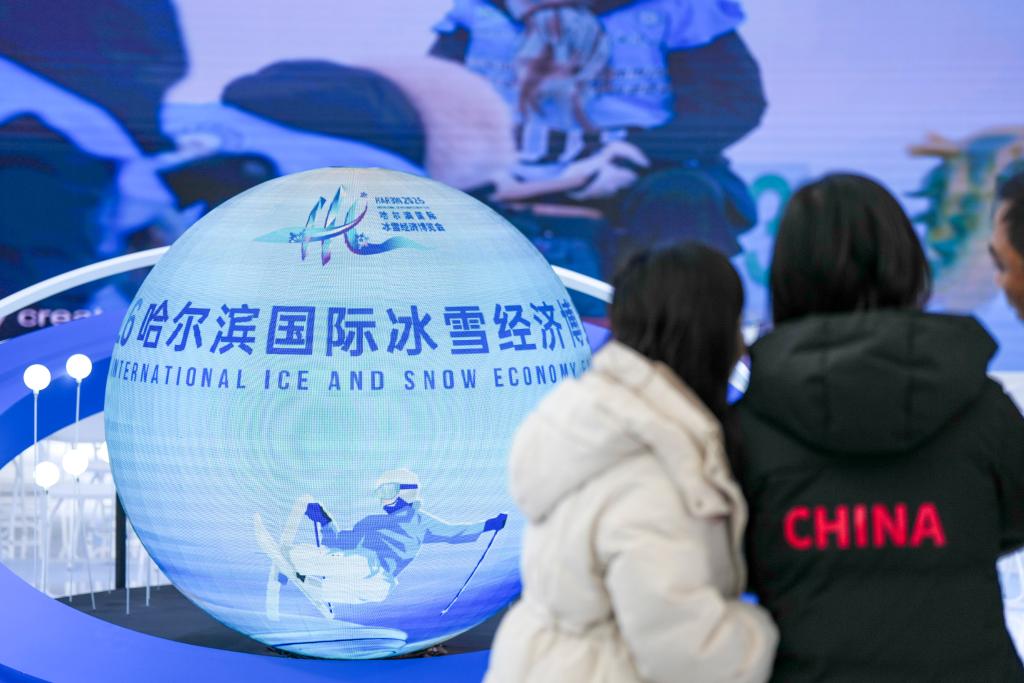
Group 1 - The first Harbin International Ice and Snow Economy Expo attracted over 300 enterprises from more than 20 countries and regions, showcasing a blend of ice and snow art with advanced technologies like unmanned snow removal machines and solid-state batteries [1] - The expo highlighted China's goal of engaging 300 million people in ice and snow sports, indicating a shift from cultural tourism consumption to manufacturing strength in the supply chain [1] - The event featured 80 ice and snow technology transformation achievements from 29 local universities and research institutions, demonstrating the integration of technology into the ice and snow economy [2][4] Group 2 - The Chinese ice and snow sports participation reached 264 million people, with over 385 million people engaging in ice and snow leisure tourism, indicating a strong grassroots foundation for the industry [4] - The Chinese government aims for the ice and snow economy to reach a total scale of 1.5 trillion yuan by 2030, with local authorities in Heilongjiang and Harbin developing specialized plans to cultivate five key industrial chains [3] - Domestic brands are rising, with companies utilizing aerospace materials to innovate products like carbon fiber ski helmets, showcasing a collaborative approach between academia and industry [4] Group 3 - Foreign enterprises are shifting from merely selling products in China to establishing R&D and production facilities within the country, indicating a trend towards localization [6] - Global ice and snow giants are planning to set up significant manufacturing centers in China, which will not only support local ice and snow sports development but also extend their reach to Southeast Asia and Japan [6] - The successful hosting of the Beijing Winter Olympics and the Harbin Asian Winter Games has positioned China as a historical opportunity for the ice and snow equipment manufacturing industry [7]
“冷”赛道激发“热”活力——浙江冰雪经济一线观察
Xin Hua Wang· 2026-01-09 09:20
Core Viewpoint - The "cold" sector in Zhejiang is experiencing a surge in activity and growth, showcasing the potential of the ice and snow economy in southern China, with significant increases in production and tourism related to winter sports [1][2][4]. Group 1: Company Developments - Zhejiang Yuanjing Sports Goods Co., Ltd. has seen a strong demand for its ski goggles, with orders for 2026 expected to increase by 61.8% for goggles and 14% for helmets [1]. - Ningbo Xueying Sports Equipment Technology Co., Ltd. reports over 20% growth in domestic sales, with full production capacity being utilized [1]. - Yiwu merchants are capitalizing on the ice and snow market by offering multifunctional shoes that can be used for both roller skating and ice skating, appealing to a wide range of consumers [2]. Group 2: Market Trends - The ice and snow sports consumption market in Zhejiang is rapidly growing, with a 930% increase in tourism orders for Anji during the recent New Year holiday [2]. - Daming Mountain Wansongling Ski Resort in Hangzhou is expected to see an increase in visitors this season, contributing to local economic growth [3]. - The total revenue for 150 guesthouses in the area surrounding the Xianshan International Ski Resort reached 17 million yuan, highlighting the economic impact of the ice and snow economy on rural revitalization [3]. Group 3: Industry Insights - By the end of 2025, Zhejiang is projected to have 26 ice and snow sports venues, including 18 ski resorts, leading among southern provinces [4]. - The 2025 Zhejiang Winter Cultural and Tourism Consumption Season aims to stimulate the economy with over 46 million yuan in vouchers and around 1,000 events planned [4]. - The integration of ice and snow sports into broader economic activities reflects a dual approach of policy activation and corporate engagement, fostering a vibrant and sustainable ice and snow economy [4].
义乌冰雪产品“卖全球”
Xin Hua Wang· 2025-12-23 23:55
Core Insights - The global demand for snow sports products, particularly from Yiwu, is surging, with a notable 40% year-on-year increase in ski goggles sales for 2024 [1][2] - Yiwu's snow sports products are primarily exported to foreign markets, with 90% of customers located abroad, mainly in Russia and Europe [2][3] - The overall export value of snow sports equipment from Yiwu has seen a dramatic increase, with ski goggles exports rising by 138% and overall winter sports equipment exports increasing by 120% in the 2025 winter season [2] Market Dynamics - The majority of foreign customers are large wholesalers who purchase in bulk and distribute to local retailers [2] - The ice and snow economy in China is projected to exceed 1 trillion yuan by 2025, with Yiwu contributing over 30% of the export share [2][3] - The logistics system in Yiwu is highly efficient, allowing for quick order fulfillment, with domestic orders taking about 7 days and international orders around 15 days [3] Industry Growth - The rise of the ice and snow industry in Yiwu is attributed to early market recognition by merchants, particularly following the Beijing Winter Olympics [3] - The production model in Yiwu is characterized by a "1-hour production circle," enabling rapid response to orders and cost reduction [3] - Merchants are increasingly focusing on product innovation, with features like anti-fog and UV protection being integrated into ski goggles [5] Future Outlook - Merchants plan to expand their product offerings to meet diverse customer needs, with a focus on professional sports markets [6] - The industry is transitioning from mass production to intelligent manufacturing, emphasizing quality and innovation [5] - Yiwu's integration of AI and trade data is expected to enhance market trend analysis and product design optimization for small and medium enterprises [5]
聚焦黑土地冰雪新图景:创新驱动装备“智”造跃升
Xin Lang Cai Jing· 2025-12-20 06:43
Core Viewpoint - The article highlights the transformation of the ice and snow industry in Heilongjiang, China, focusing on innovation-driven manufacturing and the shift from traditional production to intelligent and quality-oriented manufacturing. Group 1: Industry Transformation - Heilongjiang is experiencing a significant industrial upgrade in its ice and snow sector, moving from "manufacturing" to "intelligent manufacturing" and "quality manufacturing" [1][7]. - The province's unique resources and solid industrial foundation are contributing to the growth of the ice and snow economy, creating lasting core momentum [7]. Group 2: Company Innovations - Qianmao Xuelong Sports Equipment Co., Ltd. has seen its order volume increase to over three times that of previous years since 2022, reflecting a successful shift in domestic equipment production [3]. - The company has developed innovative products such as ice skates with new blade structures and land training boards that break seasonal limitations, showcasing a commitment to quality and innovation [3][5]. - Tianxingjian Sports Technology Co., Ltd. has introduced a four-season intelligent skiing machine that allows for year-round indoor training, enhancing accessibility for young athletes [5]. - Bosideng (Harbin) Technology Co., Ltd. has implemented smart manufacturing processes, creating over 200 jobs locally and improving production efficiency through automation [5][6].

新华视点丨冰雪经济“冷资源”激发产业发展“热活力”
Xin Hua Wang· 2025-12-20 01:36
Core Viewpoint - The ice and snow economy is experiencing significant growth, driven by increasing consumer interest and supportive government policies, with projections indicating a thriving market by 2025 [1][6]. Industry Growth - The ice and snow industry is expected to see a substantial increase in demand, with ski goggles orders projected to grow by 61.8% and ski helmet orders by 14% by 2026 [3]. - The 2024-2025 snow season is anticipated to generate a total consumption amount of 786.13 billion yuan across ski resorts, with a 27.97% increase in spending within a two-kilometer radius of these resorts [10]. Policy Support - The Chinese government has issued several policies to promote the development of the ice and snow economy, including the "Opinions on Stimulating the Vitality of the Ice and Snow Economy" and initiatives to boost consumption [6]. - The 2025 Central Economic Work Conference emphasized the importance of domestic demand and the expansion of quality goods and services, providing a clear direction for the ice and snow economy [6]. Regional Developments - Yiwu, known as the "world supermarket," is experiencing a surge in orders for ice and snow products, such as ice skates and ski goggles, due to the onset of the ice and snow season [7]. - The Shengxianli International Ski Resort in Hangzhou welcomed nearly 70,000 visitors last season, generating revenue of 20 million yuan, indicating a growing trend in winter leisure activities [8]. Technological Advancements - The ice and snow equipment sector in China is witnessing advancements in self-research capabilities, with breakthroughs in key areas such as carbon fiber ski boards and indoor ski simulators [15]. - Companies like Taishan Sports are developing innovative products, including big data ski simulators and proprietary ice sports safety mats, enhancing the technological support for ice and snow sports [17]. Industry Ecosystem - The Chinese ice and snow industry encompasses a complete ecosystem, from resource development and equipment manufacturing to service operations and consumer spending, indicating a well-rounded market structure [10]. - In Shandong, over 100 ice and snow equipment manufacturing companies have formed clusters that include facilities for ice and snow venues, competition gear, and leisure equipment, showcasing the region's robust industry growth [22].