滴滴网约车服务

Search documents
滴滴等电子普通发票注明员工信息仍可抵税
第一财经· 2026-02-06 13:59
Core Viewpoint - The recent announcement by the Ministry of Finance and the State Taxation Administration clarifies that electronic ordinary invoices from ride-hailing services like Didi can still be used for VAT input tax deductions, provided they include the traveler's identity information [2][3]. Group 1: Policy Changes - Starting this year, employees traveling for work must provide their identity information when using ride-hailing services to obtain electronic ordinary invoices for tax deduction purposes [2]. - The new announcement removes the previous provision that allowed VAT input tax deductions based on electronic ordinary invoices without requiring traveler identity information [2]. Group 2: Expert Opinion - Professor Zhu Qing from Renmin University of China asserts that the ability to deduct input tax remains unchanged, as long as the invoices include the traveler's identity information [3]. - Companies with employees frequently traveling can still obtain VAT special invoices from ride-hailing services for input tax deductions, and electronic invoices with traveler identity information will also qualify [3]. Group 3: Practical Implementation - Employees can request invoices on the Didi platform by selecting "enterprise unit" and entering the company name and tax number, along with their own name and ID number to ensure the invoice is valid for tax deductions [3].


滴滴等电子普通发票注明员工信息仍可抵税
Di Yi Cai Jing· 2026-02-06 13:42
Core Viewpoint - The recent announcement by the Ministry of Finance and the State Taxation Administration clarifies that electronic ordinary invoices issued by ride-hailing services like Didi can still be used for VAT input tax deductions, provided they include passenger identity information [1][2]. Group 1 - The announcement specifies that general taxpayers can deduct input tax from output tax for domestic passenger transport services, including tickets that list passenger identity information, in addition to VAT special invoices [1]. - The requirement for employees to provide their name and ID number when requesting invoices from ride-hailing platforms ensures that these invoices can be used for tax deductions [2]. - The change in the announcement does not affect the ability of companies with frequent employee travel to deduct input tax as before, maintaining the status quo for businesses [2].

警惕!你的手机号可能正在“打车”
Xin Lang Cai Jing· 2026-01-24 13:23
Core Insights - The article highlights a significant case of personal information theft linked to a fraudulent ride-hailing service, revealing a criminal network that exploits citizens' data for financial gain [1][3]. Group 1: Criminal Activities - A criminal group, led by individuals identified as Zhong and his accomplices, registered numerous fake Didi accounts using stolen personal information, luring customers with low-cost ride services [3]. - The group accumulated over 20,000 yuan in illicit gains within a few months, affecting more than 900 individuals whose personal information was compromised [3]. Group 2: Law Enforcement Response - The police established a special task force and initiated a cross-provincial collaboration to dismantle the criminal network, successfully apprehending two suspects and seizing multiple devices and thousands of stolen phone numbers [5][7]. - The ongoing investigation aims to further address the criminal activities and protect citizens' rights and safety [5]. Group 3: Public Safety Advisory - Authorities urge the public to avoid unofficial ride-hailing services and to safeguard personal information, warning that seemingly attractive offers may lead to data breaches and financial losses [8]. - Citizens are encouraged to report any suspicious activities related to personal information theft or illegal ride-hailing services to law enforcement [8].

滴滴答疑“抽成”:是动态机制,去年平均14%
2 1 Shi Ji Jing Ji Bao Dao· 2025-11-20 00:15
Core Insights - Didi's commission mechanism is dynamic rather than fixed, adjusting based on the mismatch between passenger demand and driver service capacity [1] - A significant portion of the commission is returned to drivers or used to subsidize passengers [1] - The average commission rate for Didi in 2024 is projected to be 14% [1]
滴滴答疑“抽成”:是动态机制 去年平均14%
2 1 Shi Ji Jing Ji Bao Dao· 2025-11-20 00:10
Core Insights - Didi's commission mechanism is dynamic rather than fixed, adjusting based on the mismatch between passenger demand and driver service capacity [1] - A significant portion of the commission is returned to drivers or used to subsidize passengers, enhancing the overall experience for both parties [1] - The average commission rate for Didi in 2024 is projected to be 14% [1]
清华最新调研:七成滴滴司机高估抽成数据,服务意识与满意度和收入呈正相关
Hua Xia Shi Bao· 2025-09-28 06:00
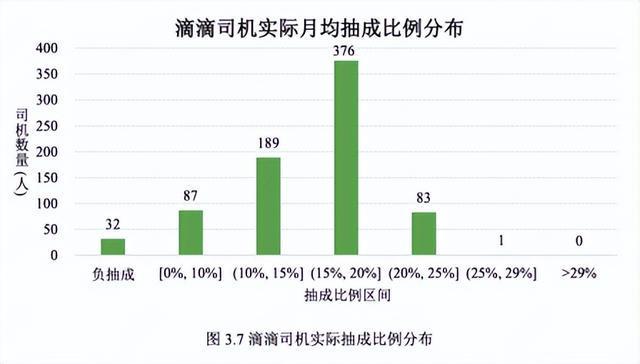
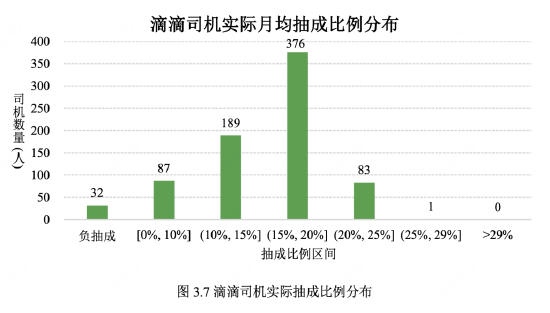
Core Viewpoint - The ecosystem formed by "new energy vehicles - ride-hailing platforms - drivers" plays a significant role in promoting consumption, stabilizing employment, and enhancing manufacturing levels. A recent empirical study by Tsinghua University's Environmental Academy indicates that electrification not only has significant environmental benefits but also reshapes the economic landscape of the industry [1][2]. Summary by Relevant Sections Driver Commission Insights - The study found that the average monthly commission for all surveyed Didi drivers is 15.3%, slightly higher than Didi's reported average commission of 14% for all orders in 2024. Approximately 49.0% of drivers reported a commission rate between 15% and 20%, while 24.6% reported between 10% and 15% [2][4]. - A significant portion of drivers (71.8%) overestimated their commission rates, with over a third believing their commission exceeded 25%. However, only one out of 768 drivers had a commission above this threshold [4][6]. Driver Demographics and Income - The majority of Didi drivers are middle-aged individuals with lower educational backgrounds, with 75.4% having a high school education or less. The average monthly income for surveyed drivers exceeds 8,000 yuan, with significant variations across cities. Drivers in Shanghai earn an average of 14,000 yuan, while those in smaller cities earn less and often work part-time [9][12]. - The highest average monthly incomes are found among drivers aged 36-45 (8,802 yuan) and those with a high school education (8,693 yuan). This indicates that the ride-hailing industry provides a fair platform for various social groups, especially those disadvantaged in traditional job markets [12]. Driver Satisfaction and Service Quality - Drivers who believe that "good service leads to good income" report higher satisfaction levels with the platform, and interestingly, these drivers also tend to earn more [13]. - The report suggests that the platform's commission structure serves as a "reservoir" that can be redistributed based on supply and demand, which helps maintain a sustainable ecosystem. However, the complexity of this structure may lead to misunderstandings among drivers [12][16]. Recommendations for Platforms - The study emphasizes the need for ride-hailing platforms to improve transparency and communication regarding commission structures to reduce misunderstandings among drivers. It also highlights the importance of addressing the diverse expectations of different driver groups to enhance overall satisfaction [6][16].
清华大学调研:滴滴月度平均抽成15.3%,九成司机低于20%
Xin Lang Ke Ji· 2025-09-28 04:00
Core Insights - The research conducted by Tsinghua University's Environmental College indicates that electrification significantly benefits the environment and reshapes the economic landscape of the ride-hailing industry [1] - The study reveals that the average monthly commission for Didi drivers is 15.3%, with 90% of drivers earning a monthly commission below 20% [1][2] - A notable finding is that 71.8% of Didi drivers overestimate their commission rates, with many believing their average commission exceeds 25%, despite evidence showing only one out of 768 drivers actually falls into that category [2] Summary by Sections Research Methodology - The study was conducted between July and August of this year, involving a survey of 894 Didi drivers, in-depth interviews with 31 drivers, and income report verification from 768 drivers [2] Commission Insights - Approximately 49.0% of surveyed drivers reported a monthly commission rate between 15%-20%, while 24.6% reported a rate of 10%-15%, and 4% reported a negative commission [2] - The calculated average commission of 15.3% is slightly higher than Didi's reported average of 14% for all orders in 2024 [2] - The report suggests that drivers' perceptions of commission rates are often inflated due to a focus on individual order commissions and a lack of understanding of monthly statements [2] Driver Demographics and Income - The majority of Didi drivers are middle-aged individuals with a high school education or lower, with an average monthly income exceeding 8,000 yuan [3] - Income levels vary significantly by city, with drivers in Shanghai earning an average of 14,000 yuan per month, while those in Beijing and Shenzhen earn around 10,000 yuan [3] - Drivers in smaller cities tend to have lower incomes and often work part-time due to market constraints [3]
司机抽成、作弊治理、返程费改进,滴滴开放日聚焦这些核心问题
Di Yi Cai Jing· 2025-09-13 05:24
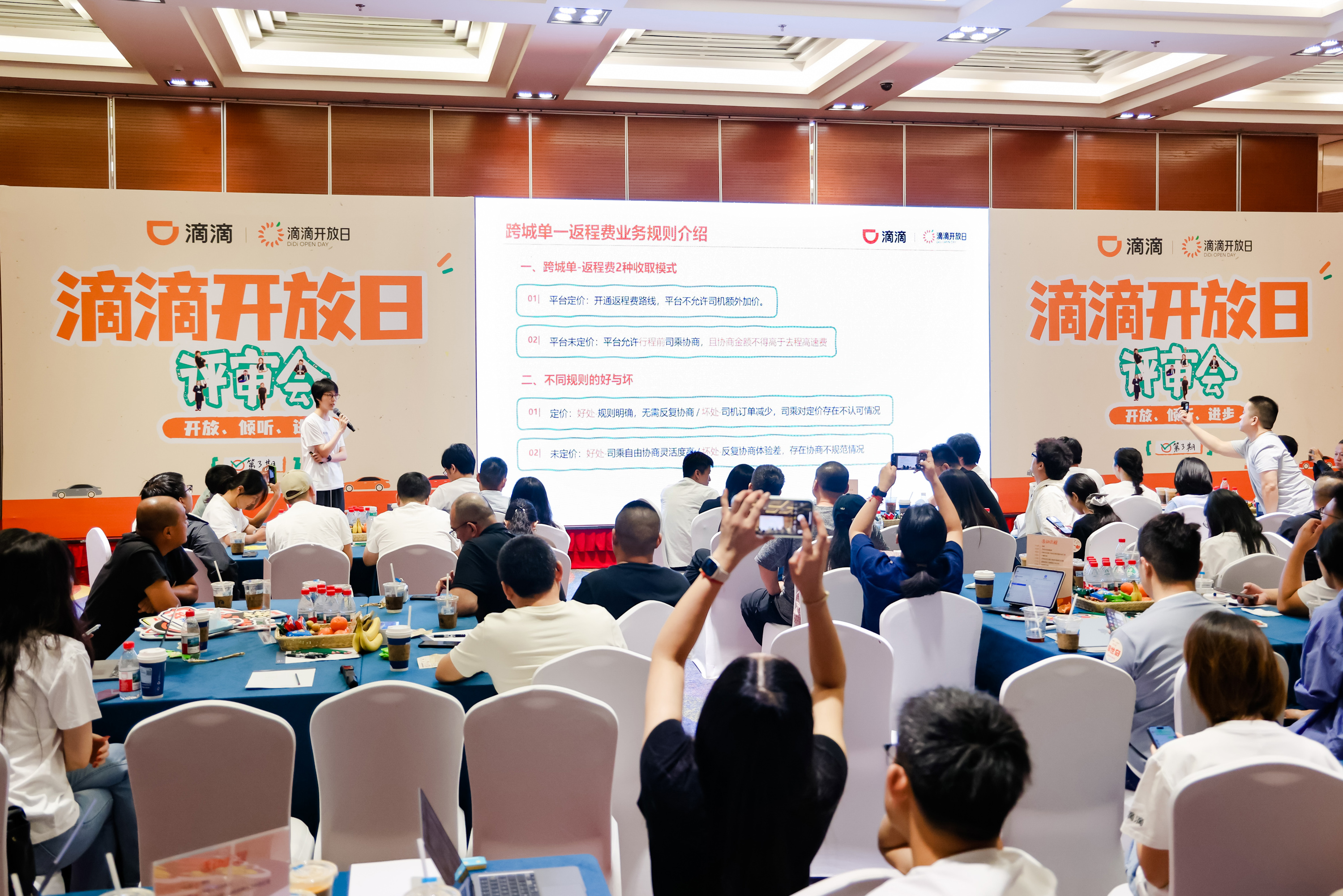
Core Insights - The article discusses Didi's ongoing efforts to improve driver experience and address key issues such as cheating at pick-up stations and cross-city return fees through open discussions and feedback sessions with drivers, media, and experts [1][15][20] Group 1: Cheating at Pick-up Stations - Didi has established a special task force to combat cheating at pick-up stations, quickly addressing system vulnerabilities [2] - Since 2015, Didi has collaborated with law enforcement to tackle illegal activities, resulting in 10 criminal cases and the dismantling of 14 criminal gangs in 2025 alone [2] - New rules have been piloted in some cities to ensure fairness in order allocation, including requiring drivers to stay on the order page and enhancing facial recognition [2] Group 2: Cross-City Return Fees - Didi currently has two methods for handling cross-city return fees, including a negotiation option for drivers and passengers, but issues with communication and pricing clarity have been noted [3] - A new app feature will allow for transparent negotiation of return fees, displaying highway costs as a reference for passengers, with the option for drivers to accept or decline the ride [3] Group 3: Commission Rates - Drivers shared their commission rates during the meeting, with examples showing rates of 6.9% and 18% for different drivers [7] - Didi clarified that the average commission rate for all orders in 2024 is 14%, emphasizing that commissions are not pure profit but are used for subsidies, system maintenance, and other operational costs [9] - Suggestions from drivers included improving bill visibility and reducing commission rates to enhance driver earnings [12] Group 4: Open Dialogue and Continuous Improvement - The event highlighted Didi's commitment to open dialogue and continuous improvement, with a focus on addressing driver concerns and enhancing service quality [17][20] - Didi aims to maintain the open review sessions to foster communication and gather constructive feedback for ongoing enhancements [17][20]
滴滴2024年所有订单平均抽成14%
Di Yi Cai Jing· 2025-09-13 02:23
Group 1 - The average commission rate for Didi's orders in 2024 is projected to be 14% [1] - Didi's representative clarified that the commission does not equate to profit, as a significant portion of the commission is allocated to subsidies for drivers and riders [1] - The funds from the commission are also used for various expenses, including platform system maintenance, payment and settlement security, customer service, insurance and claims, compliance, and taxes [1]
滴滴2024年所有订单平均抽成14%
第一财经· 2025-09-13 02:21
Core Viewpoint - Didi's average commission rate for all orders in 2024 is projected to be 14%, indicating a focus on maintaining a sustainable service ecosystem rather than maximizing profit through commission alone [1] Group 1 - The majority of the commission collected by Didi is utilized for subsidies to drivers and passengers, as well as for various operational costs including platform system maintenance, payment and settlement security, customer service, insurance and claims, compliance, and taxes [1]