玻璃载体

Search documents
先进封装,碰壁了
半导体行业观察· 2026-03-20 00:56
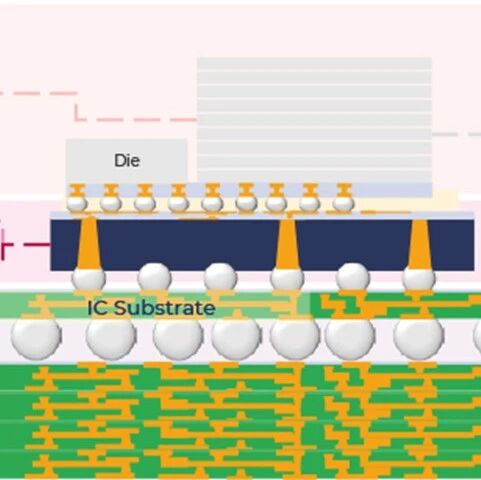
Core Insights - The semiconductor packaging industry is facing increasing challenges as advanced packaging technologies evolve, particularly due to the complexities introduced by artificial intelligence and high-performance computing designs [2][3] - Mechanical and process control issues are becoming significant bottlenecks in scaling up packaging technologies, moving beyond traditional interconnect density limitations [2][3] Group 1: Packaging Challenges - Warping has emerged as a critical issue, affecting assembly and alignment, and is often a manifestation of material and structural imbalances present from the start [5][6] - The mismatch in thermal expansion coefficients (CTE) and stiffness imbalances in layered structures contribute to warping, complicating the packaging process [6][7] - As packaging sizes increase, the economic and yield advantages of wafer-level processes diminish, leading to a shift towards panel-level processes [7][10] Group 2: Material Considerations - Glass substrates offer advantages such as stability and thermal matching with silicon, but they also introduce brittleness and different failure modes, particularly at edges [10][11] - The sensitivity of copper hybrid bonding to contamination and stress increases as interconnect spacing decreases, complicating manufacturing processes [12][13] - The integration of back-end processing into precision budgets is becoming essential as device thickness decreases, impacting overall yield and quality [16][17] Group 3: Supply Chain and Economic Factors - The shortage of substrates is not merely a supply issue but reflects the limitations of traditional substrate platforms in meeting the demands of advanced packaging technologies [19][20] - The industry is exploring new platforms that can support larger components and higher integration levels while managing the mechanical complexities introduced by these advancements [19][22] - The transition to larger modules and tighter chip integration necessitates a holistic view of factors such as substrate selection, carrier strategies, and process sequences to ensure repeatable manufacturing and economic viability [22][23]

玻璃基板,大势所趋
半导体行业观察· 2025-10-23 01:01
Core Insights - Glass has evolved from a simple carrier to a complete material platform for advanced packaging, aligning with trends such as chip integration, panelization, vertical integration, and hybrid bonding [5][9] - The unique properties of glass, including low coefficient of thermal expansion (CTE), excellent dimensional stability, and optical transparency, make it indispensable for meeting the mechanical, electrical, and thermal performance demands of next-generation packaging [9] Market Trends - The market for GCS substrates is expected to reach $460 million by 2030, with optimistic forecasts suggesting widespread adoption starting in 2027-2028 [2] - The glass interlayer market is projected to exceed $400 million by 2030 under conservative estimates, while stable glass carrier applications represent a market size of $500 million [2] Economic Impact - Revenue sources for glass carriers have shifted from board pricing to single-use pricing, with economic benefits depending on reuse rates, laser/UV debonding yields, quality rates, and edge damage avoidance [4] - Companies with deep glass expertise, such as Plan Optik, are well-positioned to benefit from bundling carrier, adhesive, and debonding technologies [4] Technological Advancements - Glass core substrates enhance profitability by integrating TGV (Through Glass Via) and fine RDL (Re-Distribution Layer) technologies, converting display panel capacity into profits [4] - The adoption of advanced techniques such as high-yield TGV drilling/etching, void-free copper filling, and adaptive panel lithography is crucial for maintaining competitive advantages [4] Industry Drivers - The data center and telecommunications sectors are the primary growth engines for glass applications in packaging, with automotive, defense, and high-end consumer electronics also contributing to growth [9] - Emerging supply chains in Asia, particularly in China, South Korea, and Japan, are key to scaling production and strengthening the global advanced packaging glass ecosystem [9]