
珍珠粉

Search documents
记者手记:返程的后备箱里,装着传统与现代交织的浙江
Zhong Guo Xin Wen Wang· 2026-02-24 07:38
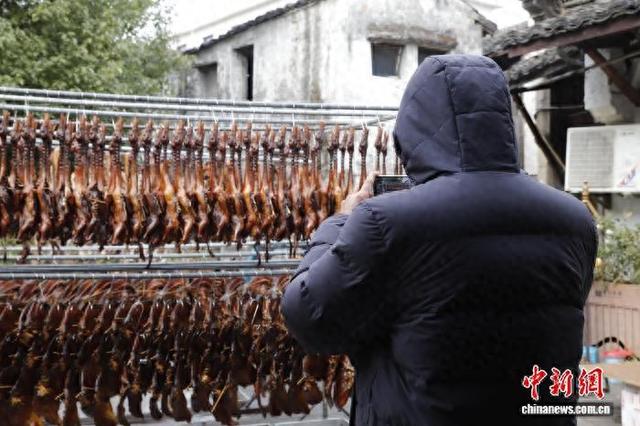
Group 1: Traditional Food Industry - The traditional practice of making soy sauce duck in Shaoxing involves selecting high-quality ducks and marinating them with local soy sauce, yellow wine, and rock sugar for over ten days, resulting in a crispy skin and tender meat [2] - Many old brands in Shaoxing have adopted vacuum packaging for soy sauce duck, preserving traditional flavors while making it convenient for travelers to carry [3] - The production and distribution of local delicacies like soy sauce duck have evolved, utilizing modern logistics to reach consumers nationwide while maintaining the essence of hometown flavors [3][11] Group 2: Pearl Industry - Zhuji, known as the "Pearl Capital of China," hosts the world's largest freshwater pearl trading market, attracting tourists during the Spring Festival to purchase pearl products [5][7] - Local pearl powder, made from high-quality freshwater pearls using advanced technology, has become a popular gift among residents, reflecting the growth of the pearl industry [8] - The pearl industry in Zhuji has diversified, with over 9,000 businesses involved in the entire pearl supply chain, leveraging e-commerce and live streaming to expand their market reach globally [8] Group 3: Local Specialty Products - The combination of frozen rice candy and dried mustard greens represents the flavors of Yongkang, with local youth preserving traditional recipes while modernizing production methods [9] - The production of frozen rice candy, also known as "New Year candy," involves a communal effort during the lunar month, symbolizing the festive spirit of the season [9][11] - The local specialties carried by travelers not only represent physical goods but also embody the cultural heritage and emotional connections to their hometowns [11]

一生“琢磨”一颗珍珠
Xin Hua She· 2025-11-19 07:04
Core Points - The Zhejiang Deqing freshwater pearl farming system was awarded the title of "Globally Important Agricultural Heritage" by the FAO on October 31 in Rome, Italy [1] - Oushiman Group, led by Chairman Shen Zhirong, has achieved an annual output value exceeding 7 billion yuan in pearl production, reflecting over 50 years of dedication [2] Technology Development - Deqing County, located in a water-rich area, has been a historical site for pearl farming, with Shen Zhirong starting his research on artificial pearl cultivation in 1967 [3] - Shen Zhirong faced numerous challenges, including a lack of resources and knowledge, but through hands-on experimentation, he successfully developed techniques for pearl cultivation [4] - By 1975, his team overcame significant hurdles in breeding the triangular mussel, leading to a surge in interest from pearl farming teams across nearly 20 provinces [4] - Shen Zhirong also developed a virus prevention technology that saved the industry from a severe outbreak, demonstrating resilience and innovation [4] Industry Development - Over two decades, the pearl output rate in Zhejiang Province increased from less than 8% to 70% under Shen Zhirong's leadership [5] - In 1976, he established a pearl powder factory, pioneering deep processing in the pearl industry, and later founded a cosmetics company in 1982 to enter the skincare market [6] - The deep processing technology significantly enhanced the value of pearls, with only 5% being jewelry-grade and 15% as craft-grade, while 80% was utilized in cosmetics and pharmaceuticals [7] - Oushiman has become a leading enterprise in the entire pearl industry chain, processing nearly 100 tons of pearls annually, accounting for 10% of global freshwater pearl production [7] Cultural Heritage - The Deqing pearl system was recognized as a global agricultural cultural heritage in May 2025, marking a significant achievement for China's pearl farming culture [8] - Oushiman has invested in cultural tourism, creating attractions that celebrate the rich history of pearl cultivation, thus enhancing the local economy and employment [8] - The integration of pearl farming, deep processing, technological research, and cultural tourism has created a prosperous ecosystem, benefiting nearly 20,000 local jobs [8] Brand Impact - Oushiman's rise represents a transformation of a national brand and showcases Chinese craftsmanship on the global stage [9] - The Deqing pearl system serves as a bridge for traditional Chinese agricultural wisdom to reach international recognition, as noted by FAO experts [9]
传承鱼蚌共生 延长产业链条
Ren Min Ri Bao· 2025-07-04 02:02
Core Viewpoint - The Deqing freshwater pearl farming system in Huzhou, Zhejiang Province, has been recognized as a globally significant agricultural cultural heritage by the Food and Agriculture Organization of the United Nations, highlighting the integration of traditional ecological wisdom and modern practices in pearl cultivation [1]. Group 1: Ecological and Economic Benefits - The Deqing freshwater pearl system employs a mixed farming approach of fish and clams, creating a natural ecological cycle that improves water quality and maintains biodiversity [1]. - The system has led to significant improvements in pearl quality, with traditional farming methods enhancing the survival rate of clams and the overall yield of pearls [2]. - The economic benefits are notable, with 80% of the pearls produced being used for medicinal and cosmetic purposes, while only 5% qualify as jewelry-grade pearls, showcasing a dual focus on ecological and economic gains [2]. Group 2: Industry Development and Innovation - The local pearl industry is evolving towards a full industrial chain model, integrating processing, research, and cultural tourism, which includes the establishment of pearl brands and the development of pearl-based products [3]. - The annual output of pearl deep processing in Deqing is nearly 100 tons, accounting for about 10% of the national total, with the combined annual output value of pearl farming and processing exceeding 7 billion yuan, creating employment for nearly 20,000 people [3].