珍珠

Search documents
奶茶小料“黑榜”上热搜 现存奶茶相关企业超28.7万家
Xin Lang Cai Jing· 2026-02-14 01:56
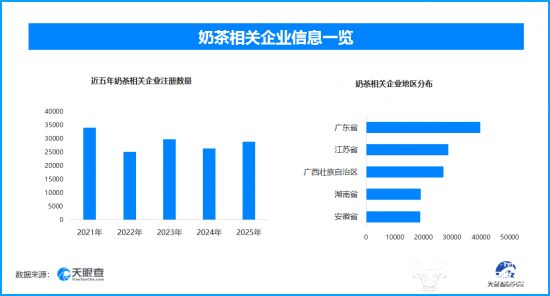
Group 1 - The core issue in the milk tea industry is the safety and consumer experience concerns related to certain ingredients like crushed peanuts, which pose choking hazards for children and the elderly, and high sugar content in red beans and raisins, leading to potential health risks [1][2] - Brands are shifting towards a "tea base + fresh milk" style, reducing the use of heavy toppings and promoting healthier options, indicating a strategic adjustment in response to changing consumer preferences [2] - As of now, there are over 287,000 milk tea-related enterprises in China, with approximately 28,000 new registrations expected by 2025, showing a fluctuating growth trend since 2021 [2] Group 2 - The ability of brands to adapt to consumer preferences is crucial, and assessing the backgrounds of key personnel in product development and quality control can provide insights into their capacity for continuous product optimization [1] - The regional distribution of milk tea enterprises shows Guangdong, Jiangsu, and Guangxi as the leading provinces, with over 39,000, 28,000, and 26,000 enterprises respectively [2]

小红书一姐变了,从被网友怒骂到单场带货1.6亿
Xin Lang Cai Jing· 2026-02-03 12:53
Core Insights - The article highlights the remarkable success of Xiang Tai, who achieved over 1.6 billion yuan in sales during a live-streaming event on Xiaohongshu, positioning her among the top three "live-streaming queens" alongside Zhang Xiaohui and Dong Jie [2][28] - Xiang Tai's shift from selling low-cost products to high-end jewelry aligns with her affluent persona, demonstrating a successful strategy for live-streaming sales on Xiaohongshu, which emphasizes trust and product-persona alignment [2][3][8] Group 1: Live Streaming Success - Xiang Tai's recent live-streaming event focused on high-end jewelry, including colored gems, pearls, and jade, with a reported GMV of 1.6 billion yuan, placing her in the top tier of Xiaohongshu's sales rankings [3][28] - Initially, Xiang Tai faced challenges in her live-streaming career, struggling to connect with audiences while promoting food and skincare products, leading to a significant backlash and high return rates [6][31] - The success of her recent live-stream is attributed to her established persona as a jewelry enthusiast, which resonates with consumers and enhances trust in her product recommendations [8][33] Group 2: Market Dynamics - The jewelry live-streaming market is characterized by a high demand for quality and service, with consumers increasingly seeking trustworthy influencers to navigate the complexities of non-standard products [18][43] - The overall jewelry market in China is projected to reach approximately 850 billion yuan in 2024, with expectations to exceed 900 billion yuan by 2025, driven by consumer recovery and investment trends [21][46] - Online penetration in jewelry retail is expected to surpass 40% by 2025, with live-streaming focusing on non-standard products like jade and colored gems, which account for significant market shares [21][46] Group 3: Consumer Trends - The primary consumers of high-end jewelry are middle-class women, who are shifting their preferences from traditional gold to more diverse and luxurious options like rubies and high-quality pearls [22][47] - Future consumer preferences are anticipated to diversify, with a blend of traditional value retention and a growing interest in personalized and emotional value in jewelry purchases [23][48] - Xiaohongshu's strategy appears to be evolving towards a comprehensive ecosystem that includes both affordable and high-end products, indicating a competitive landscape against platforms like Douyin and Taobao [25][50]

“素人”9小时直播热销1亿,小红书电商又出现象级买手范例
Xin Lang Cai Jing· 2026-01-27 12:27
Core Insights - WinnieTang, a non-celebrity buyer, achieved a remarkable GMV of over 1 billion yuan in just 9 hours during her "Jewelry Spring Festival" live stream, breaking previous records for non-celebrity buyers on Xiaohongshu [2][26][28] - The live stream attracted 34,000 pre-registered fans and featured over 2,000 SKUs of jewelry, with an average transaction value of 18,000 yuan [2][5][30] Group 1: Live Stream Performance - The live stream generated a total sales of 1.7 billion yuan over two days, setting a record in the jewelry category on Xiaohongshu [3][28] - Notable brands such as Ti Ai and Jinling Zhaowu achieved sales exceeding 10 million yuan, while 15 brands, including Chow Tai Fook and Ming Huang Jewelry, surpassed 1 million yuan in sales [5][30] Group 2: WinnieTang's Background and Strategy - WinnieTang, originally a fashion blogger and university teacher, transitioned to entrepreneurship on Xiaohongshu, launching her own clothing store and later expanding into jewelry [9][30] - Her brand, WINNIE TANG, has gained over 700,000 followers and achieved sales exceeding 300 million yuan in the past year [9][34] Group 3: Factors Contributing to Success - The success of the live stream is attributed to meticulous preparation, including a month-long planning phase and a focus on high-quality product selection [11][36] - Winnie’s team implemented a strict selection process, ensuring all jewelry products had necessary certifications and met her aesthetic standards, resulting in an 80% product rejection rate [12][38] Group 4: Pre-Event Marketing - The team executed a comprehensive pre-marketing strategy, utilizing 25 posts and multiple live streams to engage potential buyers, resulting in 34,000 pre-registrations [14][39] - Specific posts highlighted featured products, generating significant engagement and interest prior to the live event [15][40] Group 5: Live Stream Content and Engagement - The live stream was designed to provide a rich experience, akin to a festival, featuring various jewelry categories and professional insights from brand owners [19][45] - Innovative promotional strategies, such as offering clothing vouchers with jewelry purchases, enhanced customer engagement and cross-promoted her fashion brand [20][45] Group 6: Industry Implications - WinnieTang's success challenges the notion that only celebrity buyers can achieve high sales on Xiaohongshu, demonstrating that professional buyers can also thrive [48] - The event highlighted the significant consumer potential in the jewelry category on Xiaohongshu, suggesting that quality products and services can succeed without resorting to price wars [49] - For brands, collaborating with skilled buyers like Winnie provides a pathway to effectively reach targeted consumer groups and enhance brand recognition [50]

向“新”而行:区域产业升级激发经济新动能
Xin Lang Cai Jing· 2026-01-11 06:53
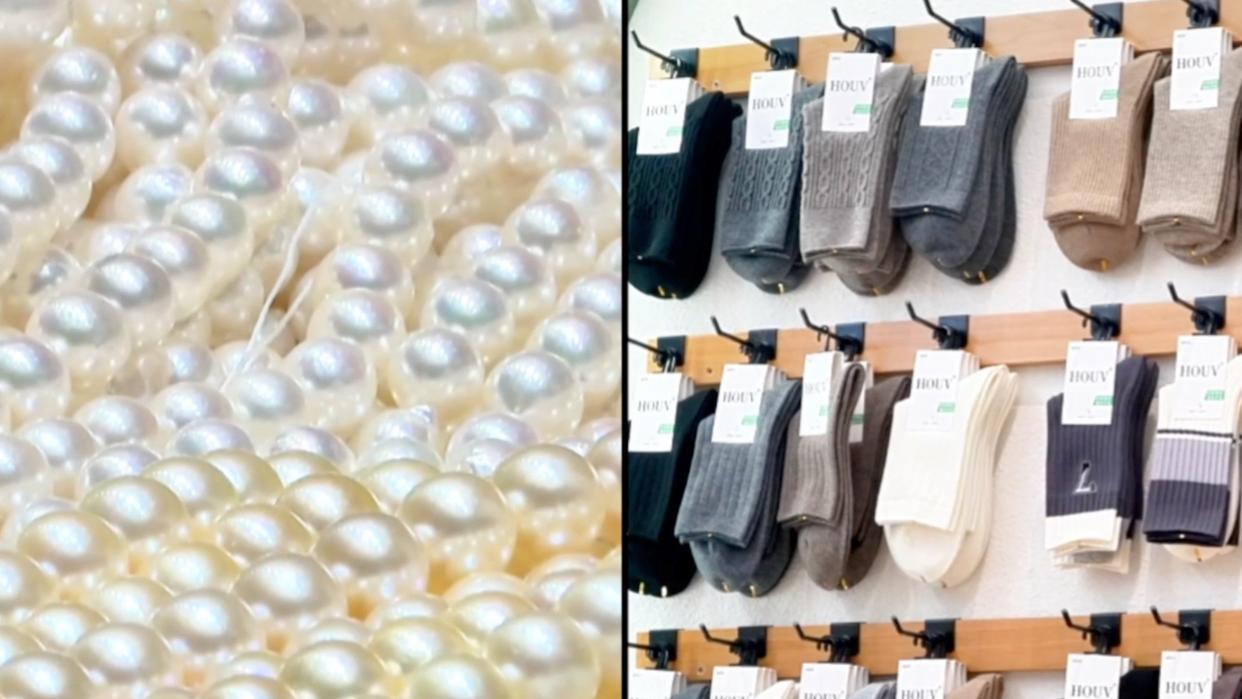
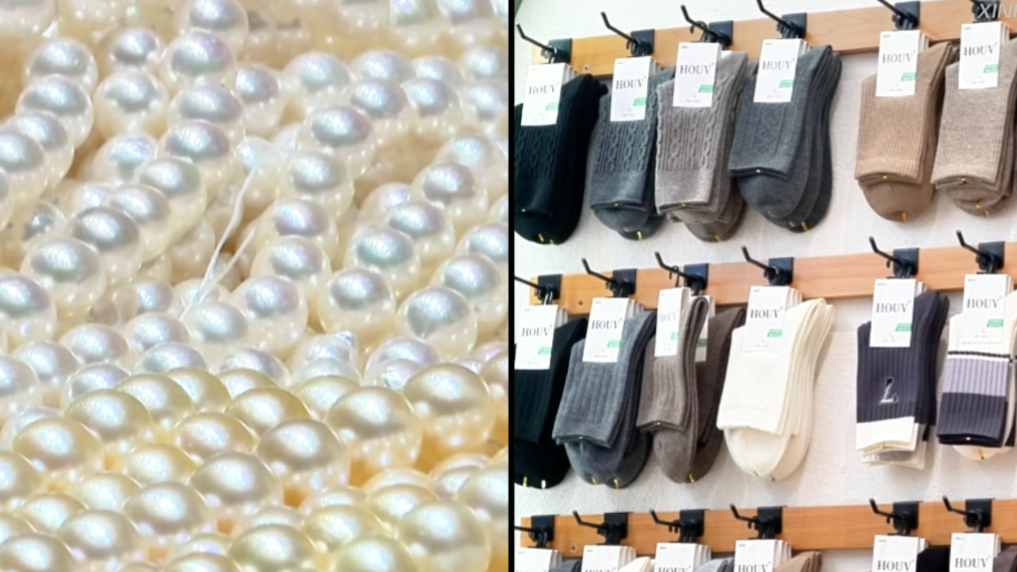
Group 1: Pearl Industry in Zhuji - Zhuji, known as the "Pearl Capital of China," controls over 80% of the national and 70% of the global pearl trading volume, with a total annual output value exceeding 50 billion yuan across the entire pearl industry chain, including breeding, processing, sales, and derivatives [3] - The unique geographical environment of Shanjiah Lake Town in Zhuji has laid the foundation for the development of the pearl farming industry [3] Group 2: Sock Industry in Zhuji - Datang Sock Industry in Zhuji is the largest sock industry cluster globally, with an industry scale exceeding 70 billion yuan, featuring thousands of sock enterprises that form a complete industrial chain from product design to technological innovation [4] - Zhuji is focused on upgrading its industry to achieve a "trillion-level fashion industry," enhancing its competitiveness and influence in both domestic and international markets [4] Group 3: Project Development in Zhucheng, Shandong - Zhucheng City in Shandong is accelerating project construction to seize opportunities and build momentum for the "14th Five-Year Plan" [6] - The city has optimized the approval process in engineering planning, construction permits, and municipal facilities, improving efficiency by nearly 70%, which has facilitated the rapid launch of projects like the second phase of Zhuoyi CNC Equipment Co., Ltd. [8] Group 4: Future Industry Development in Tianjin - The Tianjin Economic and Technological Development Area has launched the "Future Industry Cultivation and Development Action Plan (2025-2027)," focusing on "advantageous industries' future orientation" and "future technology industrialization" [9] - The "Firefly Alliance" has been established to foster an innovative ecosystem by integrating universities, research institutions, enterprises, financial institutions, and service organizations to address bottlenecks in technology transfer [11] Group 5: Agricultural Processing in Zibo, Shandong - Zibo City is enhancing local agricultural resources through deep processing of specialty products, transforming them into significant industries that increase added value and broaden income channels for residents [14] - The peach industry in Yiyuan County, Zibo, has expanded to 20,000 acres, with a total industry chain output value of 914 million yuan, where deep processing projects have increased the processing output value ratio to 68% [16]
新华视点丨向“新”而行:区域产业升级激发经济新动能
Xin Hua Wang· 2026-01-11 06:30
Group 1: Pearl Industry in Zhuji - Zhuji, known as the "Pearl Capital of China," controls over 80% of the national and more than 70% of the global pearl trading volume [1][3] - The pearl industry in Zhuji has an annual output value exceeding 50 billion yuan, covering the entire value chain from breeding to processing and sales [3] Group 2: Sock Industry in Zhuji - Datang Sock Industry in Zhuji is the largest sock industry cluster globally, with an industry scale surpassing 70 billion yuan [5] - The sock industry in Zhuji consists of thousands of enterprises, forming a complete ecosystem from product design to technological innovation and manufacturing [5] Group 3: Industrial Upgrading and Development - Zhuji is focusing on upgrading its industries to enhance competitiveness in both domestic and international markets, aiming for a "billion-level fashion industry" [8] - The city is addressing bottlenecks in its industrial development to strengthen its market position [8]
封关后的海南自贸港:一颗珍珠“链”全球
Xin Lang Cai Jing· 2026-01-11 04:51
Core Insights - The establishment of the Hainan Free Trade Port has led to significant policy benefits such as "zero tariffs, low tax rates, and simplified tax systems," attracting jewelry industry chain enterprises to gather in Hainan and promoting the upgrade of the industry towards high-end and international standards [1][2] Group 1: Policy Impact - The "processing and value-added goods for domestic sales exempt from tariffs" policy has alleviated the burden of high import tariffs, which previously reached 21% for high-end seawater pearl raw materials [1] - A specific case highlighted that a batch of seawater pearls imported from Japan, valued at 101,000 yuan, saw the comprehensive tax rate drop from 51.92% to 25.56%, resulting in a cost savings of 26,000 yuan after processing [2] Group 2: Operational Efficiency - The overall customs clearance efficiency has improved by more than 100%, reducing the procurement cycle from half a month to about one week [2] - The introduction of a "two-step declaration" model has simplified the customs declaration process, allowing companies to retrieve goods without filling out all declaration items at once, significantly enhancing logistics turnover efficiency [2] Group 3: Industry Development - The Hainan Free Trade Port is fostering the establishment of specialized industrial clusters, such as the amber and jade industry park developed by Hong Kong's Yulinglong Group, which integrates various functions from raw material trade to cultural tourism [3] - Companies like Hainan Yuhui Pearl are expanding their production capabilities and collaborating with regional resources to form a coordinated development pattern with the Guangdong-Hong Kong-Macao Greater Bay Area [3] Group 4: Market Opportunities - The policies and geographical advantages of Hainan are expected to attract high-quality resources from the global pearl industry, positioning Hainan as an international center for high-end pearl trade and design processing [3] - The integration of "industry + culture + tourism" is being explored by Hainan jewelry enterprises, aiming to create new consumer experiences that combine cultural display, personalized customization, and immersive experiences [3]
中国经济样本观察·县域样本篇丨浙江诸暨:一个县级市何以拥有两个“产业冠军”?
Xin Hua Wang· 2026-01-06 11:26
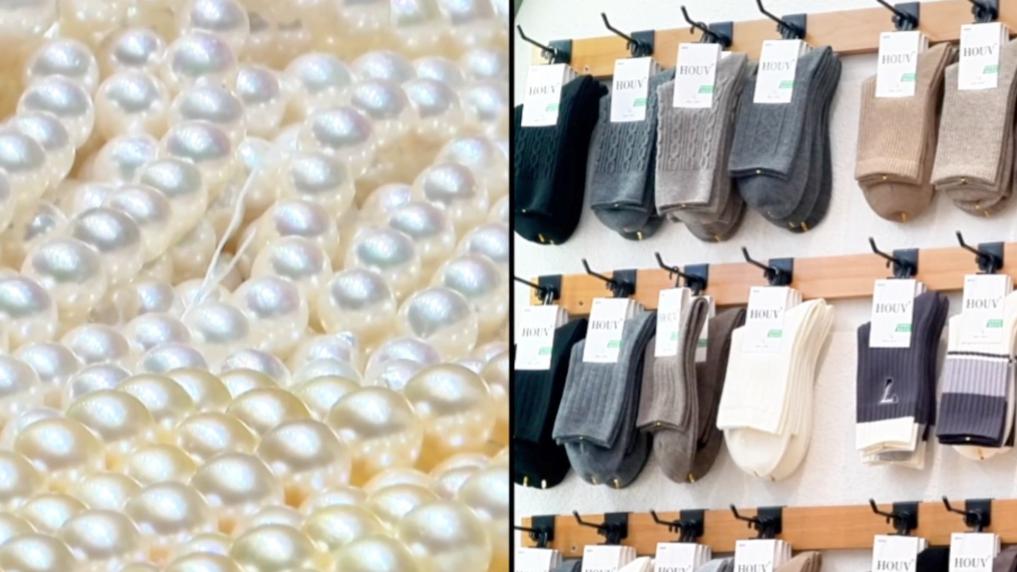
Core Insights - Zhuji, a county-level city in eastern China, dominates the pearl and sock industries, controlling over 80% of the national pearl trading volume and more than 70% globally [1][3] - The city is home to the largest pearl trading market in the world, with an annual output value of over 50 billion yuan in the pearl industry, encompassing breeding, processing, sales, and derivatives [1][4] - The sock industry in Zhuji, particularly in the Datang area, is the largest global sock industry cluster, with a scale exceeding 70 billion yuan and thousands of enterprises covering the entire industry chain from design to production [3][6] Industry Overview - The geographical environment of Zhuji, particularly in the main production area of pearls in Shanxiahu Town, provides a solid foundation for the development of pearl farming [4] - Zhuji has consistently ranked among the top in the national comprehensive strength of county-level cities, indicating its economic robustness [6] - The city aims to enhance its "billion-level fashion industry" by upgrading its industrial capabilities and addressing bottlenecks, thereby increasing its competitiveness in both domestic and international markets [6]
夯实中国式现代化的“三农”底座
Ren Min Ri Bao· 2025-12-28 22:17
Core Insights - The year marks the conclusion of the "14th Five-Year Plan" and the final year of the five-year transition period for consolidating poverty alleviation achievements and effectively connecting with rural revitalization [1] - The Chinese government emphasizes the importance of rural revitalization and agricultural development as the foundation for modernization, ensuring that there is no large-scale return to poverty [1] Agricultural Production - Grain production in China is projected to increase from 1.3657 trillion jin in 2021 to 1.42975 trillion jin by 2025, with per capita grain availability rising from 483 kg to over 500 kg [2] - Despite facing challenges such as drought and heavy rainfall, national grain production has increased by 16.75 billion jin compared to the previous year [2] Agricultural Resilience and Technology - The integration of good land, good seeds, good opportunities, and good practices has strengthened agricultural resilience, with over 1 billion mu of high-standard farmland established and a crop seed coverage rate exceeding 96% [3] - Agricultural technology innovation has contributed over 64% to grain production, placing China among the top ranks globally in agricultural technology [3] Industry Competitiveness - The development of a strong operational system and competitive capabilities is crucial for building an agricultural powerhouse, as highlighted by the potential of the flower industry in Yunnan [4] Rural Development and Employment - The establishment of employment support workshops in rural areas has enabled over 10,000 people to find jobs close to home, with various industries creating micro-factories to provide local employment opportunities [11] - The income of the rural population in poverty-stricken areas has been steadily increasing, with the average disposable income growing at an annual rate of 7.8%, outpacing the national rural average [12] Infrastructure and Public Services - The construction of rural infrastructure, such as 5G connectivity and elderly care facilities, has improved living conditions and public services in rural areas [8] - The integration of cultural and tourism activities in rural areas has attracted significant numbers of visitors, enhancing local economies [10] Modern Agricultural Systems - The establishment of over 100,000 large-scale agricultural processing enterprises has generated approximately 1.8 trillion yuan in revenue, reflecting the modernization of agricultural systems [6] - New industries and business models, such as leisure agriculture and rural e-commerce, are thriving, with online retail of agricultural products increasing by 9.5% year-on-year [9]
首届广西桂林国际珠宝展启幕
Sou Hu Cai Jing· 2025-12-25 08:15
Core Viewpoint - The first Guangxi Guilin International Jewelry Exhibition, organized by the Guangdong Jade Association, aims to expand the Guangdong jewelry market into the southwest region and connect with ASEAN, leveraging the advantages of the Greater Bay Area's jewelry industry [2]. Group 1: Event Overview - The exhibition is held from December 23, 2025, to January 3, 2026, coinciding with peak consumer periods such as New Year's [6]. - Over 300 jewelry enterprises from across the country are participating, showcasing more than 10,000 jewelry items including diamonds, jade, and pearls [6]. - The event features a direct supply model, reducing intermediaries and implementing a "one piece is also factory price" strategy [6]. Group 2: Strategic Importance - The event serves as a practical implementation of the Guangdong Jade Association's strategy to explore new markets in the southwest and build a diversified platform for government-business interaction and cross-industry cooperation [4]. - The association plans to use this exhibition as a foundation to deepen cooperation between Guangdong and Guangxi, creating a regular exchange and display platform for jewelry enterprises [4]. Group 3: Cultural Integration - The exhibition aims to integrate jade culture as a cultural element in Guilin, enhancing the city's tourism appeal beyond its natural scenery [2]. - Various cultural activities are planned, including a rock music festival, intangible cultural heritage performances, and traditional costume parades, creating a "jewelry consumption + cultural experience" model [6].
“双遗”辉映,续写千年农耕智慧
Xin Lang Cai Jing· 2025-12-24 23:56
Core Insights - The "Zhejiang Deqing Freshwater Pearl Composite Aquaculture System" was successfully included in the Global Important Agricultural Heritage Systems (GIAHS) list in May 2025, marking Huzhou's second world-class agricultural heritage following the "Sangki Fish Pond System" in 2017, making it one of the few cities in China with "dual heritage" status [3][4] Group 1: Agricultural Heritage - Huzhou is recognized for its rich natural resources, being known as the "land of fish and rice, and the capital of silk," and has developed two classic ecological circular paradigms that reflect a deep sustainable farming philosophy [3] - The "Sangki Fish Pond System" is a model of "land-based circulation," integrating planting and breeding into a near-zero waste production system, praised as a global sustainable agriculture benchmark [3][4] - The newly recognized "Zhejiang Deqing Freshwater Pearl Composite Aquaculture System" exemplifies "water-based circulation," focusing on a symbiotic ecosystem of "mussels and fish" to achieve efficient ecological balance and natural pearl cultivation [3] Group 2: Historical Significance - Both systems have a long history, with the Sangki Fish Pond dating back to the Spring and Autumn period and maturing during the Tang and Song dynasties, while pearl farming began in the Southern Song dynasty with the invention of the shell-attachment method by craftsman Ye Jinyang [4] - These systems represent local production wisdom and have influenced agricultural and pearl culture across East Asia and the world, being described by FAO experts as a "model of ancient wisdom combined with contemporary conservation" [4] Group 3: Modern Development - Huzhou is advancing active protection and innovative development with a holistic vision, creating a "Pearl Source" cultural community in Deqing and restoring traditional Sangki fish pond landscapes in places like Nanxun, revitalizing ancient ecological wisdom for contemporary engagement [5] - The city showcases its ecological circular models to the world, presenting an Eastern answer to sustainable agricultural development [5]