珠海云

Search documents
国际海运存在四个问题,科技创新赋能成重要战略选择
Di Yi Cai Jing· 2025-11-21 15:02
Core Viewpoint - The article emphasizes the need for accelerated research and standardization in the transportation of lithium batteries and other key areas within China's international shipping sector to enhance material transport capabilities and address existing challenges [1][3]. Group 1: Current State of China's Shipping Industry - China's shipping industry plays a crucial role in economic development, with approximately 95% of the country's import and export trade volume being transported by sea [1][2]. - The country has become the world's largest in terms of shipping facilities and cargo volume, with a projected marine production value exceeding 10 trillion yuan in 2024 [1][2]. - Recent advancements include the application of domestically developed methanol dual-fuel engines in 16,000 TEU container ships and the commercial operation of the first large domestic cruise ship [2]. Group 2: Technological Innovations and Developments - Significant improvements have been made in the safety and green development of international shipping, with the establishment of a high-quality development system supported by technological innovation [2][3]. - The application of the Beidou global satellite navigation system has been recognized by the International Maritime Organization, enhancing navigation capabilities [2]. - Innovations such as blockchain technology for electronic bills of lading and the installation of IoT devices in refrigerated containers have been implemented [3]. Group 3: Challenges and Future Directions - The shipping industry faces three major changes: challenges to international economic trade order, increasing competition in shipping technology focused on AI, and urgent demands for green transformation amid uncertain fuel technology routes [3][4]. - Key issues include weak material transport capabilities, vulnerabilities in maritime safety, and the need for improved global shipping resource allocation [3]. - Recommendations for future development include accelerating AI applications in shipping, upgrading traditional ports to smart ports, and establishing standards for lithium battery transport and green fuel usage [4].

十大领跑竞速深蓝赛道 “海上新广东” 上分了
2 1 Shi Ji Jing Ji Bao Dao· 2025-11-15 02:56
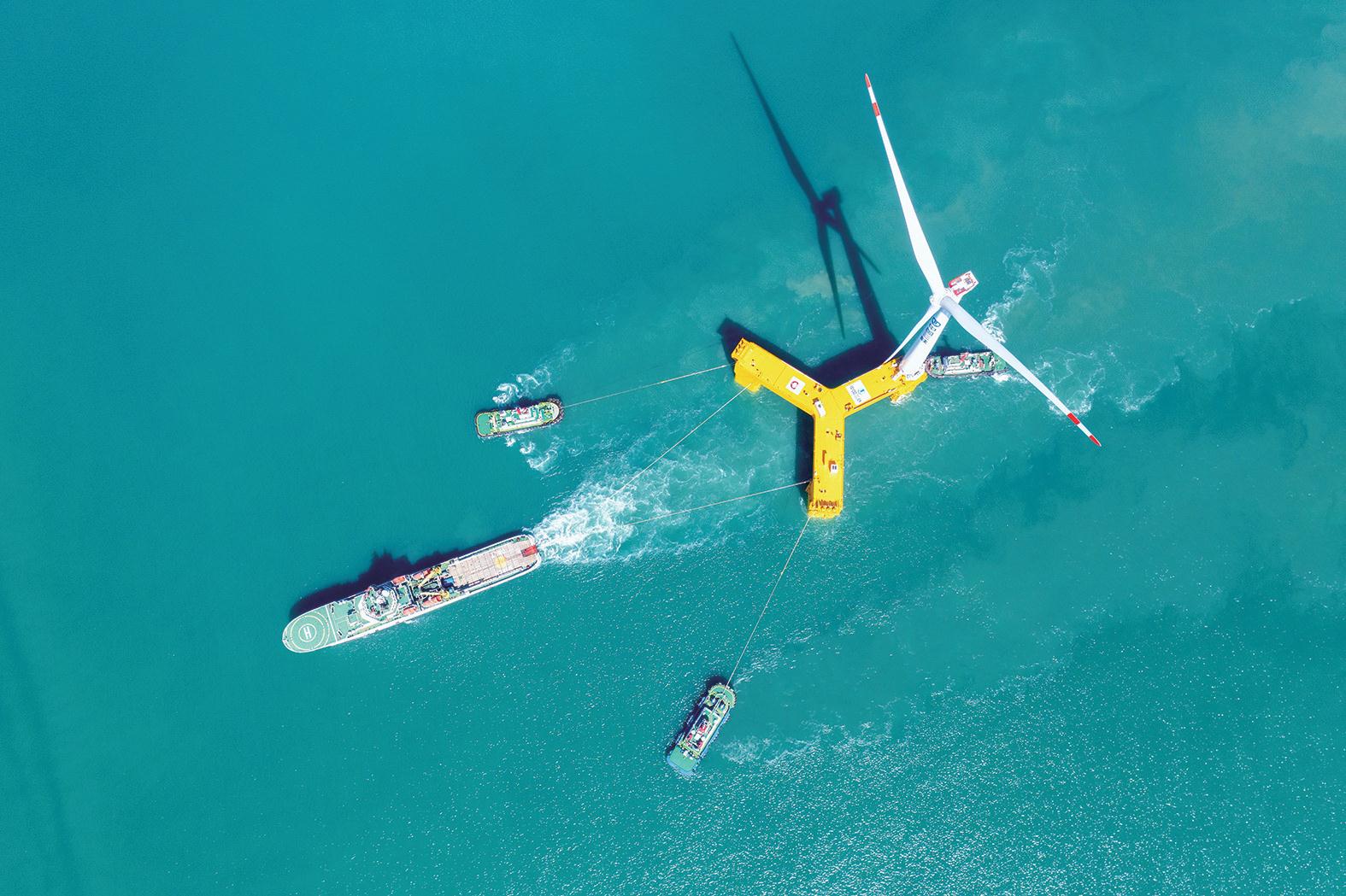
Core Insights - The marine economy in Guangdong has surpassed 2 trillion yuan, marking a significant milestone in its growth [1] - Guangdong leads the nation in offshore wind power installed capacity and deep-sea aquaculture and seedling production [1] - The province is focused on strengthening its research, industry, and consumption foundations to enhance its blue economy's potential and future growth [1] Economic Performance - The marine GDP of Guangdong has reached over 2 trillion yuan, indicating robust economic performance in the sector [1] - The province's offshore wind power capacity is ranked first in the country, showcasing its leadership in renewable energy [1] Industry Leadership - Guangdong is at the forefront of deep-sea aquaculture and seedling production, leading the nation in these areas [1] - Key national projects such as "Nankunhao" and "Zhuhai Cloud" are continuously being upgraded, reflecting the province's commitment to innovation and development in marine technology [1] Strategic Focus - The province is aligning its development with the "14th Five-Year Plan," emphasizing the importance of a strong foundation in research, industry, and consumption [1] - The growth of Guangdong's marine economy is seen as a driving force for China's blue economy, highlighting its potential for future advancements [1]
广东撬动万亿级蓝色经济新格局
Zhong Guo Zi Ran Zi Yuan Bao· 2025-08-26 02:29
Group 1 - Guangdong's marine economy has surpassed 2 trillion yuan, becoming the first province in China to achieve this milestone, maintaining its leading position for 30 consecutive years [2] - The province has actively cultivated six major marine industries: marine electronic information, offshore wind power, marine engineering equipment, marine biology, natural gas hydrate, and marine public services, aiming to build a national marine economic development hub [2][4] - Since 2018, Guangdong has allocated nearly 2 billion yuan in special funds to support innovation in these six marine industries, resulting in breakthroughs in 281 key technologies and driving an industrial output value of 25.2 billion yuan [2] Group 2 - Guangdong has made significant advancements in offshore wind power technology, including the world's first typhoon-resistant floating wind turbine and the first deep-sea floating wind power equipment, marking a leap from "none" to "some" in this sector [4][5] - The province has also developed a series of innovative marine energy solutions, such as the world's first remote-controlled research vessel and a 2000-ton self-elevating wind power installation platform, enhancing its deep-sea energy development capabilities [5] Group 3 - The marine pharmaceuticals and biological products industry is a key component of Guangdong's strategic emerging industries, with significant investments made to support research and development in this area [7] - Guangdong has invested 236 million yuan in 83 marine biomedical projects from 2018 to 2024, fostering collaboration among universities, research institutes, and enterprises to achieve multiple technological breakthroughs [7] Group 4 - The province has made strides in the conservation of rare marine species, developing a comprehensive protection technology for coral and giant clams, significantly improving the survival rates of these species [8] - Guangdong has also achieved breakthroughs in the exploration and commercialization of natural gas hydrates, with significant technological advancements and world records in gas production [8] Group 5 - Innovative technologies such as underwater Wi-Fi networks and advanced communication chips are being developed to enhance operational efficiency in marine resource exploration [10][11] - The establishment of marine public service projects, including a national marine comprehensive test site and a marine big data platform, is expected to support the high-quality development of the marine economy in Guangdong [11]