南鲲号

Search documents
深海经济:引领海洋经济未来发展的新引擎,未来产业规模化与集群化发展加速
Da Gong Guo Ji· 2025-12-31 03:20
Investment Rating - The report indicates that the deep-sea economy is positioned as a strategic emerging industry and is expected to accelerate in scale and cluster development, driven by technological breakthroughs and policy support [2][19]. Core Insights - The deep-sea economy is transitioning from technological validation to commercialization, becoming a core area of strategic competition in emerging industries, with China gaining a local leading advantage in deep-sea equipment and resource exploration [2][6]. - The global deep-sea economy is characterized by a complex industrial chain that includes upstream resource exploration, midstream equipment manufacturing, and downstream application expansion, with a focus on balancing ecological protection and sustainable development [7][18]. - The report highlights the strategic importance of deep-sea resources, which are seen as a new battleground for global competition, with various countries enhancing their strategic frameworks and investments in deep-sea technologies [6][11]. Summary by Sections 1. Overview and Current Status of the Deep-Sea Economy - The deep-sea economy encompasses diverse industrial clusters formed through the development and utilization of deep-sea resources, which are rich in minerals, oil, gas, and biological resources [3][4]. - The deep-sea is defined as waters deeper than 200 meters, with varying definitions across different fields, and is characterized by extreme conditions that require advanced technology for resource extraction [3][5]. 2. Industrial Chain Analysis - The deep-sea economy's industrial chain is structured as "upstream support - midstream core equipment - downstream application expansion," with a focus on technological complexity and military-civil fusion [7][8]. - The report notes significant growth in the titanium alloy market, projected to reach $15.8 billion by 2024, with a year-on-year increase of 13.7% [8]. 3. Global and Chinese Market Competition Landscape - The report compares the strategic frameworks of various countries, noting that the U.S. emphasizes unilateralism and has developed a comprehensive technology system for deep-sea exploration and mining [11][12]. - China has established a policy framework that includes legal guarantees, strategic guidance, and financial support, positioning deep-sea technology as a key emerging industry [14][19]. 4. Development Prospects and Challenges of China's Deep-Sea Economy - The report emphasizes the strategic value of deep-sea resources for national security and the need for a robust policy framework to support industry growth [19][20]. - Emerging fields such as offshore wind power and marine pharmaceuticals are highlighted as areas for potential growth, with a focus on integrating advanced technologies like AI and big data into the deep-sea economy [20].
蓝色引擎动能澎湃,珠海海洋经济“十四五”突破千亿大关
Nan Fang Nong Cun Bao· 2025-12-12 09:33
Core Viewpoint - Zhuhai's marine economy has achieved significant growth during the "14th Five-Year Plan" period, surpassing 100 billion yuan for the first time, driven by innovation and ecological protection efforts [5][8]. Group 1: Economic Growth and Achievements - Zhuhai's marine economy has crossed the 100 billion yuan threshold, marking a milestone in its development [8]. - The city has established one of the four national marine comprehensive experimental zones, enhancing marine scientific research and technology transformation [9][10]. - Several globally influential marine technology equipment have been launched in Zhuhai, including the world's first megawatt-level wave energy power generation device and the first megawatt-level seawater electrolysis hydrogen production device [11][12]. Group 2: Ecological Protection and Development - Zhuhai is the only city in the Guangdong-Hong Kong-Macao Greater Bay Area with three typical marine ecosystems: mangroves, seagrass beds, and coral reefs [21]. - The city has been recognized for its ecological restoration projects, with successful initiatives in the ecological restoration of islands [22][23]. - Zhuhai has pioneered the "China-Portuguese" marine carbon trading, promoting ecological value transformation [25]. Group 3: Modern Fisheries and Technological Innovation - The city has developed modern marine fisheries, establishing national-level marine ranch demonstration zones and creating two advantageous industrial clusters for sea bass and golden pomfret [34][39]. - Zhuhai has launched the world's first self-propelled natural water exchange aquaculture vessel, enhancing its aquaculture capabilities [45]. - The total output value of the fishing industry in Zhuhai has exceeded 10 billion yuan [47]. Group 4: Institutional Innovation and Reforms - Zhuhai has taken the lead in establishing a municipal marine development bureau and a marine development group to coordinate resource development and protection [48]. - The city has introduced innovative measures such as "one map for sea use guarantee" and "one certificate for equipment registration" to streamline project implementation [49][50]. - Zhuhai has enacted the first local island development regulations and the first marine fishing safety legislation in the country, exploring new paths for marine economic innovation [52][56]. Group 5: Future Outlook - Looking ahead to the "15th Five-Year Plan," Zhuhai aims to leverage new marine infrastructure to contribute to the construction of a strong marine province [57].


南方电网:深入贯彻能源安全新战略
Ke Ji Ri Bao· 2025-12-12 02:20
Core Viewpoint - The Southern Power Grid Company of China is committed to advancing energy security and promoting a green, low-carbon energy transition while enhancing its technological capabilities and operational efficiency [1][2][3]. Group 1: Achievements and Developments - The Southern Power Grid has established a robust power supply network, serving 273 million users across 1 million square kilometers, ensuring reliable electricity supply for high-quality economic development [1]. - The company has completed fixed asset investments of 737.3 billion yuan during the 14th Five-Year Plan, a 23% increase from the previous plan, supporting economic recovery [2]. - The Southern Power Grid's electricity market has initiated continuous settlement trials, marking a significant milestone in the establishment of a unified national electricity market [2][3]. Group 2: Strategic Initiatives - The company is focusing on digital transformation and green energy development, with non-fossil energy installations reaching 66% and accounting for over 50% of electricity generation [4]. - The Southern Power Grid is actively promoting the construction of four major industrial clusters, including digital, energy storage, comprehensive energy, and electric vehicle charging industries, to drive growth [4][5]. - The company has established a user ecosystem operation company to enhance service offerings and link over 500 industry partners, facilitating shared infrastructure development [5]. Group 3: Future Directions - The Southern Power Grid aims to transition into a digital grid operator, energy value chain integrator, and energy ecosystem service provider, aligning with high-quality development goals [4][6]. - The company plans to enhance its core competitiveness through initiatives in service, technology, talent, digitalization, ecology, standards, quality, branding, and culture [6]. - The Southern Power Grid is committed to supporting national strategies and contributing to the modernization and revitalization of the country over the next five years [6].
十大领跑竞速深蓝赛道 “海上新广东” 上分了
2 1 Shi Ji Jing Ji Bao Dao· 2025-11-15 02:56
Core Insights - The marine economy in Guangdong has surpassed 2 trillion yuan, marking a significant milestone in its growth [1] - Guangdong leads the nation in offshore wind power installed capacity and deep-sea aquaculture and seedling production [1] - The province is focused on strengthening its research, industry, and consumption foundations to enhance its blue economy's potential and future growth [1] Economic Performance - The marine GDP of Guangdong has reached over 2 trillion yuan, indicating robust economic performance in the sector [1] - The province's offshore wind power capacity is ranked first in the country, showcasing its leadership in renewable energy [1] Industry Leadership - Guangdong is at the forefront of deep-sea aquaculture and seedling production, leading the nation in these areas [1] - Key national projects such as "Nankunhao" and "Zhuhai Cloud" are continuously being upgraded, reflecting the province's commitment to innovation and development in marine technology [1] Strategic Focus - The province is aligning its development with the "14th Five-Year Plan," emphasizing the importance of a strong foundation in research, industry, and consumption [1] - The growth of Guangdong's marine economy is seen as a driving force for China's blue economy, highlighting its potential for future advancements [1]
推动中国品牌迈向高质量发展新阶段
Ren Min Ri Bao· 2025-11-02 22:02
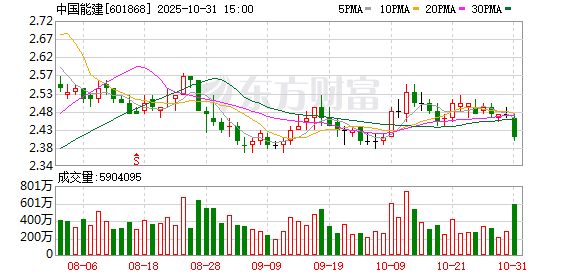
Group 1: Strategic Focus and Industry Leadership - China Energy Construction Group (China Energy) integrates its development into the national strategy, aiming to build a globally recognized brand with advanced management and outstanding contributions [2] - China Energy has completed over 90% of domestic power planning, consulting, and design, and is a leader in ultra-high voltage transmission and nuclear power design [2] - The company emphasizes technological innovation and is expanding into strategic emerging industries such as new energy storage and green hydrogen [2] Group 2: International Expansion and Responsibility - China Energy has established six regional headquarters and 256 branches globally, covering 147 countries, promoting green and low-carbon development [3] - The company aims to leverage its advantages in planning, design, and innovation to deepen its involvement in new energy and infrastructure projects [3] Group 3: Film Industry Development - China Film Group focuses on creating high-quality films to strengthen its brand, with notable works like "The Volunteer Army" trilogy and "The Wandering Earth" series [4] - The company has developed advanced film technology, achieving global recognition in high-end projection systems [5] Group 4: Nuclear Industry Innovation - China National Nuclear Corporation (CNNC) is committed to original innovation, developing advanced nuclear technologies and establishing international competitiveness [6] - CNNC's projects, such as the "Hualong One" and "High-Temperature Gas-Cooled Reactor," are setting international standards in nuclear technology [6] Group 5: Digital Power Grid Development - China Southern Power Grid is constructing a digital new power grid, achieving a reliability rate of 99.924% in power supply [8] - The company is enhancing energy distribution capabilities and has established a large-scale electricity market [8][10] Group 6: Comprehensive Brand Development - China Power Construction Group is focused on becoming a world-class enterprise, integrating new energy and digital technologies into its brand strategy [11] - The company emphasizes social responsibility in its brand development, contributing to rural revitalization efforts [12] Group 7: Automotive Industry Innovation - Great Wall Motors is investing heavily in R&D, with nearly 50 billion yuan spent over the past five years to enhance its technological capabilities [13] - The company is expanding its global presence by developing a comprehensive supply chain for its automotive products [13] Group 8: Satellite Navigation and Application - China Space-Time Information Group is enhancing the competitiveness of the BeiDou system through innovative applications and international collaborations [17] - The company is focusing on building a robust service platform and expanding the use of BeiDou technology across various industries [18]



蓝海逐“能”应向全产业链发展
Zhong Guo Zi Ran Zi Yuan Bao· 2025-09-24 02:23
Core Viewpoint - The development and utilization of marine energy is becoming a crucial part of sustainable development strategies globally, driven by environmental concerns and energy security awareness [1][3]. Current Status of Marine Energy Development in China - China has a vast marine area with rich marine energy resources, and as of the end of 2023, the total installed capacity of marine energy exceeds 12,000 kilowatts, ranking fourth in the world [3]. - The government has integrated marine energy development into the legal framework, setting a target of 400,000 kilowatts of installed capacity by 2030 [3]. Technological Achievements in Marine Energy - China has made significant technological advancements in marine energy, including the commercial operation of the Zhejiang Jiangxia tidal experimental power station for over 40 years and the delivery of the first 500-kilowatt wave energy device in 2020 [4]. - The country leads globally in installed capacity for wave energy, tidal current energy, and tidal energy, with substantial engineering experience accumulated [4]. Marine Energy Industry Chain Analysis - The marine energy industry chain encompasses resource development, technology research, equipment manufacturing, engineering construction, operation maintenance, and energy utilization [6]. - Upstream focuses on resource investigation and technology development, while midstream emphasizes equipment manufacturing and engineering construction [6]. Downstream Operations and Energy Utilization - Downstream activities involve the operation and maintenance of marine energy stations, optimizing energy output and integrating marine energy into the grid [7][8]. - The establishment of a comprehensive energy system combining marine energy with desalination, hydrogen production, and energy storage is emphasized to enhance economic viability [8]. Marine Energy Development in Nansha - Nansha District in Guangzhou is positioned to leverage its marine advantages for economic development, with specific recommendations for advancing marine energy [10]. - Key initiatives include conducting resource surveys, enhancing planning and design, and focusing on core technology development through collaboration with research institutions [10][11][12].

浪涌生绿电 深海养“白金”
Zhong Guo Zi Ran Zi Yuan Bao· 2025-09-15 08:32
Core Viewpoint - The development of China's marine economy must focus on high-quality growth and innovation, as emphasized by President Xi Jinping during the Central Financial Committee meeting [1] Group 1: Marine Economy Development - The Ministry of Natural Resources and the National Development and Reform Commission have jointly issued 19 tasks and policy measures to promote the large-scale utilization of marine energy [1] - The "Penghu" platform, China's first semi-submersible wave energy aquaculture platform, demonstrates how to achieve green power supply and intelligent deep-sea aquaculture [1][3] Group 2: Technological Advancements - The "Penghu" platform, designed by the Guangzhou Institute of Energy Research, is equipped with 60 kW wave energy and 60 kW solar power generation systems, along with energy storage devices and automated feeding systems [4][12] - The platform's design allows for significant automation, reducing the number of workers needed for aquaculture operations from five to two [4][11] Group 3: Successful Harvests - The "Penghu" platform successfully harvested 150,000 pounds of the valuable fish species, red drum, demonstrating its effectiveness in extreme marine conditions [6][7] - The "Gesheng 1" platform, a larger counterpart, has a capacity to cultivate 450 to 600 tons of fish, showcasing the scalability of these marine farming technologies [7][12] Group 4: Resilience and Future Plans - The "Penghu" platform successfully withstood the impact of Super Typhoon "Sula," which reached wind speeds of 61.5 meters per second, proving its robustness [14][15] - Future plans include the development of multi-energy complementary platforms that integrate wave, wind, and solar energy to enhance economic efficiency and sustainability in marine operations [15]
浪涌生绿电 深海养“白金”——探访广东珠海半潜式波浪能养殖平台
Zhong Guo Zi Ran Zi Yuan Bao· 2025-09-08 01:00
Core Viewpoint - The development of China's marine economy must focus on high-quality growth and innovation, as emphasized by President Xi Jinping during the Central Financial Committee meeting [1] Group 1: Marine Economy Development - The Ministry of Natural Resources and the National Development and Reform Commission have released 19 tasks and policy measures to promote the large-scale utilization of marine energy [1] - The "Penghu" platform, China's first semi-submersible wave energy aquaculture platform, demonstrates how to achieve green power supply and intelligent deep-sea aquaculture [1] Group 2: Aquaculture Innovations - The "Penghu" platform has successfully harvested 150,000 pounds of the valuable fish species, red drum, showcasing its effectiveness in aquaculture [4] - The platform's design allows for a significant reduction in labor, with the operational workforce decreasing from five to two for one "Penghu" platform, and from nine to three for the larger "Gesheng 1" platform [3][4] Group 3: Technological Advancements - The "Penghu" platform is equipped with a wave energy generation system of 60 kW and solar power generation of 60 kW, along with energy storage devices and automated feeding systems [3] - The research and development of wave energy technology began over 40 years ago, with significant advancements made since 2010, including the establishment of a marine renewable energy fund [6][7] Group 4: Resilience and Future Plans - The "Penghu" platform successfully withstood the impact of Super Typhoon "Sula," demonstrating its stability and resilience in extreme weather conditions [10][11] - Future plans include the development of a large floating multi-energy complementary platform that integrates wave, wind, and solar energy, aiming to enhance economic efficiency and sustainability in marine operations [11]
锚定海洋强省目标 广东海洋能源产业科技创新研讨会释放“向海图强”新信号
Zheng Quan Shi Bao Wang· 2025-08-31 08:55
Core Viewpoint - The Guangdong Marine Energy Industry Technology Innovation High-Quality Development Seminar highlighted Guangdong's achievements in marine energy development and its commitment to exploring new technologies, models, and business formats for high-quality growth in the marine economy [1][2]. Group 1: Marine Economic Development - Guangdong aims to transform its marine resource advantages into developmental strengths, contributing to the creation of a "new maritime Guangdong" and promoting high-quality economic and social development [1]. - The provincial government has set a target for the marine production value to exceed 2 trillion yuan by 2024, with traditional marine industries expected to grow by 7.5% and emerging marine industries by 8.3% [2]. - The offshore wind power sector has seen significant growth, with installed capacity reaching 12.51 million kilowatts, a tenfold increase since the end of the 13th Five-Year Plan, making Guangdong a national leader in this field [2]. Group 2: Technological Innovation - Guangdong is implementing an innovation-driven development strategy, establishing national-level energy research and innovation platforms to enhance collaborative development between industry, academia, and research [3]. - Notable technological advancements in offshore wind power include the establishment of the Yangjiang 500 kV offshore wind power reactive power compensation station and the world's first ultra-deepwater drilling vessel, "Dream," which signifies a breakthrough in deep-sea resource development [3][4]. - The province is also pioneering in deep-sea oil and gas development with the first fully green-designed offshore oil field and the first offshore CCUS project, promoting a new model of marine energy recycling [3]. Group 3: Energy Integration Models - Guangdong is exploring new paths for the integrated development of marine energy, focusing on a "green energy + blue granary" model that reshapes the marine economy [6]. - The province has developed a series of innovative projects, including the world's largest anti-typhoon wind-fish integration platform and the first semi-submersible wave energy farming platform, which contribute to a new industrial chain that integrates wind, fishery, and tourism [6]. - China General Nuclear Power Group is actively involved in exploring "energy +" integration models, including wind-fish integration and comprehensive energy islands, providing new solutions for marine economic development [6]. Group 4: Strategic Collaborations - The seminar featured several strategic collaborations, including projects focused on green ship fuel production and supply, offshore wind power-driven hydrogen production, and anti-typhoon floating photovoltaic demonstration projects [7]. - These collaborations reflect Guangdong's leading role in energy technology innovation and industrial synergy, contributing to China's modernization efforts [7]. - The event also included thematic reports and project presentations aimed at advancing Guangdong's marine energy industry to new heights [7].



减亏超24亿!隆基绿能,“赌”对了
DT新材料· 2025-07-14 15:56
Core Viewpoint - The photovoltaic industry is experiencing widespread losses among major companies, although some, like Longi Green Energy and Aiko Technology, are significantly reducing their losses due to the penetration of BC batteries into the market [1]. Group 1: Longi Green Energy - Longi Green Energy expects a net loss of 2.4 billion to 2.8 billion yuan for the first half of 2025, a reduction of 2.443 billion to 2.843 billion yuan year-on-year [2]. - The company is still facing losses due to the main products' market prices falling below cost, but improved internal management and the introduction of HPBC 2.0 components have led to increased orders and shipments, resulting in a significant reduction in losses [2]. Group 2: Tongwei Co., Ltd. - Tongwei Co., Ltd. anticipates a net loss of approximately 4.9 billion to 5.2 billion yuan for the first half of 2025, compared to a net loss of 3.129 billion yuan in the same period last year [3]. - Despite the growth in photovoltaic installation scale, the company is facing losses due to an imbalance in supply and demand leading to depressed product prices [3]. Group 3: JA Solar Technology - JA Solar Technology expects a net loss of 2.5 billion to 3 billion yuan, compared to a loss of 874.6 million yuan in the same period last year [4]. - The company is experiencing intensified competition and price pressure across the photovoltaic supply chain, exacerbated by international trade protection policies, leading to a decline in sales prices and profitability [4]. Group 4: Junda Co., Ltd. - Junda Co., Ltd. projects a net loss of 200 million to 300 million yuan, compared to a loss of 166.34 million yuan in the same period last year [7]. - The company has significantly increased its overseas sales proportion from 23.85% in 2024 to 51.90% in the first half of 2025 by expanding into new markets [7]. - Junda successfully listed on the Hong Kong Stock Exchange, raising a net amount of 1.29 billion HKD [7]. Group 5: Aiko Technology - Aiko Technology expects a net loss of 170 million to 280 million yuan for the first half of 2025, with a projected net loss of 410 million to 520 million yuan after excluding non-recurring gains and losses [9]. - The company has optimized its product structure and significantly increased its overseas sales proportion, leading to improved overall gross margins and operational efficiency [9].