瑞幸联名咖啡

Search documents
《疯狂动物城2》狂吸金!4D电影票加价47%,胡萝卜录音笔5分钟售罄
Di Yi Cai Jing· 2025-12-05 09:35
Core Insights - The release of "Zootopia 2" has ignited a surge in consumer spending, with the film achieving a box office of 2.304 billion yuan, making it the highest-grossing imported animated film in Chinese history [2][4] - The film's success has led to increased demand for 4D screenings, with tickets being resold at a premium, reflecting a 47% markup on original prices [8][10] - The extensive collaboration with over 70 brands, including major companies like VIVO and Pepsi, marks one of the largest cross-industry partnerships for an IP in recent years [2][12] Box Office Performance - "Zootopia 2" grossed 146 million yuan during its opening weekend, breaking multiple records for IMAX screenings and imported animated films in China [4][10] - The film's 4D screenings have been particularly popular, with many sessions sold out and ticket prices reaching nearly 100 yuan [8][10] Consumer Engagement and Marketing - The film's content resonates with Chinese audiences, featuring relatable themes and high-quality production, which has been bolstered by extensive pre-release marketing efforts [8][10] - Disney's marketing strategy included collaborations with local animation studios to create promotional content, enhancing audience engagement [10][12] Merchandise and Cross-Industry Collaborations - The demand for merchandise related to "Zootopia 2" has skyrocketed, with items like the carrot recording pen selling out within minutes [12][21] - Collaborations with brands such as Luckin Coffee and Miniso have resulted in significant sales, with some products already sold out shortly after launch [21][22] Investment and Strategic Partnerships - The success of "Zootopia 2" has led to strategic investments, such as Wanda Film's acquisition of a stake in 52TOYS, indicating a focus on IP derivative product development [22] - IMAX Corporation and Wanda Film have signed a memorandum to deepen collaboration in brand development and IP derivative business, aiming to create a more diversified cinema ecosystem [22][23] Trends in IP Economy - The increasing prevalence of IP collaborations reflects a growing consumer demand for brand and cultural recognition, suggesting a robust future for the IP economy [23][24] - The trend of interest-based consumption among younger generations indicates a willingness to spend on IP-related products, enhancing the market's growth potential [24][25]


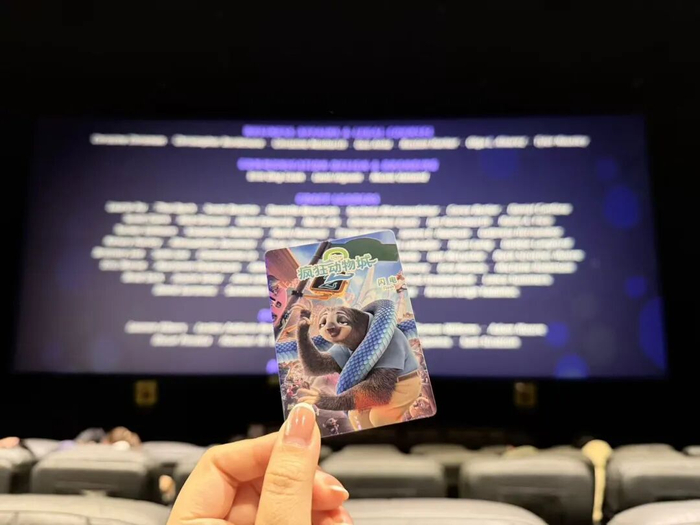
《疯狂动物城2》狂吸金!4D电影票加价47%,胡萝卜录音笔5分钟售罄
第一财经· 2025-12-05 09:04
Core Viewpoint - The release of "Zootopia 2" has ignited a surge in consumer spending, leading to record box office earnings and extensive cross-industry collaborations, showcasing the power of IP in driving economic activity [3][4][12]. Box Office Performance - "Zootopia 2" has achieved a cumulative box office of 2.304 billion yuan, making it the highest-grossing imported animated film in Chinese history, surpassing the original "Zootopia" which earned 1.538 billion yuan [3][4]. - The film's opening day saw a 66.5% share of the total screenings, and it has become the top film of the 2025 holiday season [3]. 4D and IMAX Experience - The popularity of 4D screenings has led to sold-out shows and ticket scalping, with prices for 4D tickets rising by 47% from the original price of 109 yuan to 160 yuan [9]. - IMAX screenings generated 146 million yuan during the opening weekend, setting records for animated films in China [6]. Marketing and Collaborations - Over 70 brands have collaborated with "Zootopia 2," with significant partnerships including Disney's collaborations with China Eastern Airlines, VIVO, and Pepsi [4]. - The film's marketing strategy included a series of animated shorts and appearances by Disney executives, enhancing audience engagement before the film's release [10][12]. Merchandise and Consumer Behavior - Key merchandise, such as the "Gary the Snake" plush toy and carrot recording pen, sold out within minutes, indicating strong consumer demand [15][18]. - Cross-industry collaborations have led to increased sales of co-branded products, with brands like Luckin Coffee and Miniso reporting high demand for their "Zootopia 2" merchandise [18][19]. IP Economy and Future Trends - The success of "Zootopia 2" highlights the growing importance of IP in driving consumer engagement and revenue across various sectors [20][26]. - Analysts suggest that the IP economy will continue to grow, driven by digitalization and globalization, with new forms and applications of IP emerging [20][27].

《疯狂动物城2》大把吸金:4D电影票加价47%交易、胡萝卜录音笔5分钟售罄
Di Yi Cai Jing· 2025-12-05 08:21
Core Insights - "Zootopia 2" has become the highest-grossing imported animated film in Chinese history, with a total box office of 2.304 billion yuan as of December 5, surpassing the previous record held by the original "Zootopia" which earned 1.538 billion yuan [1][3] - The film's success has sparked a surge in 4D cinema experiences, merchandise sales, and cross-industry collaborations, indicating a robust demand for IP-related products and experiences [1][11] Box Office Performance - "Zootopia 2" achieved a box office of 1.46 billion yuan during its opening weekend, breaking multiple records for IMAX screenings in China [3] - The film's opening day saw a 66.5% share of the total box office, highlighting its popularity among audiences [1] 4D Cinema and Experience - The 4D screenings of "Zootopia 2" have been sold out, with ticket prices increasing by 47% from the original price of 109 yuan to 160 yuan [5] - The immersive experience of 4D screenings, which includes sensory effects like wind and seat vibrations, has been compared to theme park rides, enhancing audience engagement [3][5] Merchandise and Cross-Industry Collaborations - Over 70 brands have collaborated with "Zootopia 2," with significant sales in merchandise such as the carrot recording pen and plush toys, which sold out within minutes [1][11] - Major brands like Luckin Coffee and Miniso have launched co-branded products, contributing to the film's merchandising success [11][22] Marketing and Audience Engagement - Disney's marketing strategy included early promotional content and collaborations with local artists, which helped build anticipation and engagement before the film's release [6][8] - The film's themes resonate with Chinese audiences, particularly the relatable storylines and character dynamics, which have driven emotional connections and increased viewership [5][6] Future of IP Economy - The success of "Zootopia 2" reflects a growing trend in the IP economy, where cross-industry collaborations are becoming more prevalent, indicating a strong consumer demand for brand and cultural recognition [24] - The film's performance has prompted further investments in IP-related ventures, such as Wanda's acquisition of a stake in 52TOYS, highlighting the potential for growth in the merchandise and experience sectors [23]
2025年中国消费市场趋势洞察报告v1.0-灵智数科
Sou Hu Cai Jing· 2025-08-19 14:09
Core Insights - The report highlights the transformation of the Chinese consumer market, emphasizing that new consumption is centered around fulfilling consumer task needs rather than brand narratives [1][5] - The consumer demographic is experiencing "dual growth," with Generation Z focusing on individuality and social recognition, while lower-tier markets emphasize value-for-money [1][6] - The report indicates a significant upgrade in consumption structure, with a deepening integration of online and offline channels, and the rise of instant retail and social e-commerce [1][6][34] Group 1: Traditional Consumption Logic Decline - Traditional commercial strategies have focused heavily on first and second-tier cities, leading to a structural imbalance in resource allocation, neglecting the potential of lower-tier markets [17] - The consumer market in lower-tier areas has reached a scale of 20 trillion yuan, accounting for 59% of total consumption, with a growth rate of 17.6%, significantly outpacing first and second-tier cities [17] - Traditional brands have failed to meet the core demand for fair consumption in lower-tier markets, creating opportunities for new consumption brands to connect directly with consumers [17][18] Group 2: New Consumption Brand Emergence - New consumption brands are evolving from product providers to solution providers for consumer life tasks, focusing on specific scenarios to meet unmet needs [24] - Brands like Pinduoduo and Luckin Coffee have successfully tapped into lower-tier markets and social recognition tasks, respectively, demonstrating the shift towards user-driven consumption [24][25] - The report outlines a matrix of new consumption brands that effectively address consumer tasks, showcasing their performance metrics and target demographics [24] Group 3: Economic and Technological Drivers - The Chinese economy is transitioning, with consumption becoming a key growth engine, supported by government policies aimed at upgrading consumption infrastructure [34] - The rise of digital technology has expanded consumption scenarios from offline to online, with significant growth in e-commerce and instant retail, indicating a shift in consumer behavior [37] - The report notes that the application of big data and AI in the consumer sector has enhanced personalization and efficiency, leading to increased sales and market penetration [37] Group 4: Cultural and Social Changes - The younger generations (90s and 00s) are driving a shift in consumption values from materialism to self-expression and emotional value, favoring experiences and cultural resonance [40] - The rise of domestic brands reflects a growing cultural confidence among consumers, with significant increases in the sales of "new Chinese-style" products and traditional elements [40] - The report emphasizes that consumer choices are increasingly influenced by personal identity and social connections, marking a departure from traditional consumption patterns [40]