生成式AI模型

Search documents
“猪茅”牧原股份港股上市!一年卖猪7800万头,市值超2300亿港元;逐际动力完成2亿美元融资丨全球投融资周报01.31-02.06
创业邦· 2026-02-08 01:08
Group 1 - The core viewpoint of the article highlights the active investment landscape in China's primary market, with a total of 124 financing events reported this week, an increase of 53 events compared to the previous week, and a total financing scale of 10.096 billion RMB [7] - The most active sectors in terms of financing events are artificial intelligence, intelligent manufacturing, and healthcare, with 29, 23, and 13 events respectively [9] - The total disclosed financing amount in the intelligent manufacturing sector reached approximately 3.651 billion RMB, with notable investments such as LimX Dynamics securing 200 million USD in Series A funding [9][10] Group 2 - The geographical distribution of disclosed investment events shows a concentration in Jiangsu, Guangdong, and Shanghai, with Jiangsu reporting 27 events, Guangdong 25 events, and Shanghai 16 events [13] - The stage distribution of the disclosed investment events indicates that 101 are early-stage, 18 are growth-stage, and 5 are late-stage [17] - This week, 13 completed M&A events were reported, with an increase of 4 events compared to the previous week, primarily in the intelligent manufacturing, enterprise services, and energy sectors [49]

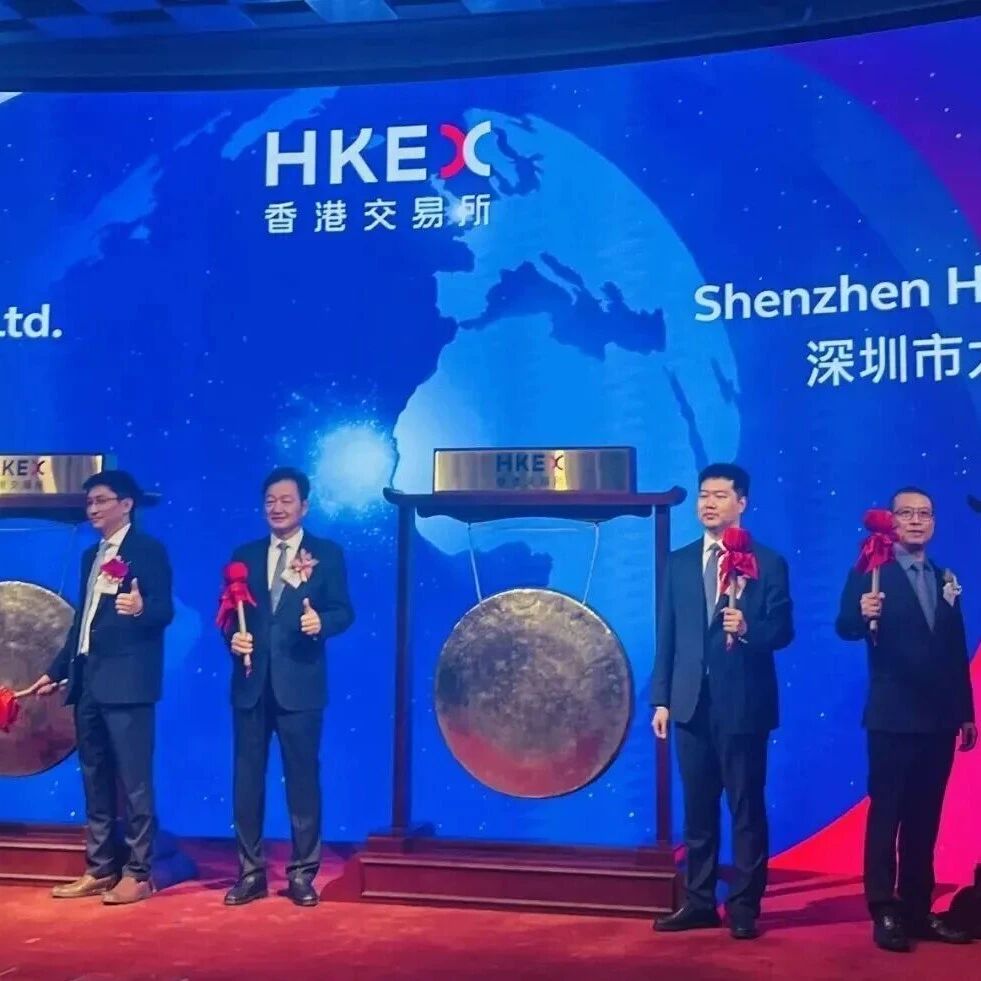
中国大陆企业加速在香港上市
日经中文网· 2025-12-23 07:28
Core Viewpoint - The Hong Kong stock market is expected to see a surge in IPOs from mainland Chinese companies, particularly in the AI sector, with projected fundraising reaching 350 billion HKD in 2026, a nearly 30% increase from 2025 [2][7]. Group 1: Market Activity and Projections - In 2026, several AI-related companies from mainland China, including Shanghai Biren Technology, are preparing for IPOs in Hong Kong, with expected fundraising of 350 billion HKD, marking a significant increase from 2025 [2][7]. - The Hong Kong IPO market is projected to be very active, with KPMG estimating that the total fundraising from new listings (including secondary listings) in 2025 could exceed 272 billion HKD, more than three times the previous year [7]. - The optimistic forecast for 2026 indicates that the fundraising could reach 350 billion HKD, which would be the highest level since 2021 [7]. Group 2: Key Companies and Valuations - Biren Technology plans to list in Hong Kong on January 2, 2026, with a projected market capitalization of up to 46.2 billion HKD, aiming to accelerate R&D with the raised funds [4]. - Other notable companies preparing for IPOs include SHEIN (valued at approximately 30 billion USD), Xiyun Information Technology (17 billion USD), and emerging AI firms like Qiyu Technology (3.7 billion USD) and Beijing Zhiyu Huazhang Technology (3 billion USD) [8]. Group 3: International Investment Dynamics - There is an increasing interest from European and American investors in mainland Chinese tech stocks, with UBS upgrading the investment rating for these stocks to "most attractive" [9]. - The Chinese government is actively promoting leading enterprises to list in Hong Kong, which is seen as a move to enhance Hong Kong's role as a gateway for overseas capital [9]. - The active Hong Kong market has raised concerns among U.S. lawmakers, who fear that American investments flowing into Chinese tech companies could pose a national security threat [9][10].

英矽智能今起招股 入场费12146港元
Jin Rong Jie· 2025-12-18 02:08
Core Viewpoint - The company, 英矽智能 (3696.HK), is launching an IPO from December 18 to December 23, offering 94.6905 million H-shares at a price of HKD 24.05 per share, aiming to raise HKD 2.277 billion [1] Fund Allocation - 48% of the net proceeds will be allocated to further clinical research for key pipeline candidates [1] - 15% will be used for the development of new generative AI models and related validation studies [1] - 12% is designated for the further development and expansion of automated laboratories [1] - 20% will fund research and development for early drug discovery and development [1] - 5% will be used for working capital and other general corporate purposes [1] IPO Details - The public offering will account for 10% of the total shares, with the remainder allocated for international placement [1] - The minimum investment for one board lot of 500 shares is HKD 12,146.27 [1] - The stock is expected to commence trading on December 30 [1]
英矽智能(03696.HK)拟全球发售9469.05万股 12月18日起招股
Zheng Quan Shi Bao· 2025-12-18 01:55
Group 1 - The company plans to globally offer 94.69 million shares, with 9.47 million shares available in Hong Kong and 85.22 million shares for international sale, along with an over-allotment option of 14.20 million shares [1] - The subscription period is set from December 18 to December 23, with a maximum offer price of HKD 24.05 per share and an entry fee of approximately HKD 12,146.27 for 500 shares [1] - The total expected fundraising amount is HKD 2.277 billion, with a net amount of HKD 2.026 billion, which will be used for further clinical research and development of key pipeline candidates, early drug discovery, generative AI model development, and operational funding [1] Group 2 - The company is expected to be listed on the main board by December 30, 2025, with Morgan Stanley, CICC, and GF Securities serving as joint sponsors [2] - Established in 2014, the company is recognized as a reputable AI-driven biotechnology firm with a global presence [2] - The projected net profits for the fiscal years 2023, 2024, and the first half of 2025 are -USD 212 million, -USD 17.1 million, and -USD 19.2 million, reflecting year-on-year changes of 4.59%, 91.92%, and -339.29% respectively [2]
英矽智能拟全球发售9469.05万股 12月18日起招股
Zheng Quan Shi Bao Wang· 2025-12-18 01:30
Group 1 - The company plans to globally offer 94.69 million shares, with 9.47 million shares available in Hong Kong and 85.22 million shares for international sale, along with an over-allotment option of 14.20 million shares [1] - The subscription period is set from December 18 to December 23, with a maximum offer price of HKD 24.05 per share and an entry fee of approximately HKD 12,146.27 for 500 shares [1] - The total expected fundraising amount is HKD 2.277 billion, with a net amount of HKD 2.026 billion, which will be used for further clinical research and development of key pipeline candidates, early drug discovery, generative AI model development, and operational funding [1] Group 2 - The company is expected to be listed on the main board by December 30, 2025, with Morgan Stanley, CICC, and GF Securities as joint sponsors [2] - Established in 2014, the company is recognized as a reputable AI-driven biotechnology firm with a global presence [2] - The net profits for the fiscal years 2023, 2024, and the first half of 2025 are projected to be -$212 million, -$17.096 million, and -$19.215 million respectively, with year-on-year changes of 4.59%, 91.92%, and -339.29% [2]
《自然》社论:中国正引领全球人工智能治理
Ke Ji Ri Bao· 2025-12-12 02:26
Group 1 - The core viewpoint of the article emphasizes the need for global consensus on AI governance to maximize benefits and minimize risks, highlighting China's initiative to lead this effort [1][6]. - China is proposing the establishment of a global AI coordination body, the World AI Cooperation Organization, which aligns with the interests of all nations and encourages government participation [3][6]. - The article notes that while AI models have significant potential for scientific and economic advancement, they also pose risks such as exacerbating inequality and spreading misinformation, which have not been adequately addressed in the current competitive landscape [5][6]. Group 2 - The article points out that the United States lacks a unified regulatory body for AI, relying instead on fragmented state legislation and self-regulation by companies, which has resulted in low safety ratings for major tech firms [5][6]. - In contrast, China is actively integrating AI across various sectors and has implemented regulations requiring safety assessments for AI models, including embedding identifiable markers in generated content to prevent fraud [6][8]. - The global governance of AI is seen as a necessity, with existing frameworks like the OECD's AI Principles and the EU's AI Framework Convention being criticized for their lack of enforceability and effectiveness [8].

中国正引领全球人工智能治理
Ke Ji Ri Bao· 2025-12-12 01:31
Group 1 - The core viewpoint of the articles emphasizes the need for global cooperation and governance in AI development to maximize benefits and minimize risks, with China proposing the establishment of a World AI Cooperation Organization [1][4] - There is a growing concern regarding the risks associated with AI models, including their potential to exacerbate inequality, facilitate crime, and spread misinformation, with the lack of a unified regulatory framework in the U.S. being highlighted [2][3] - China is actively integrating AI across various sectors and has implemented regulations requiring safety assessments for AI models, aiming to ensure traceability and corporate responsibility [3][4] Group 2 - The global efforts for AI regulation, such as the OECD's AI Principles and the EU's AI Framework, are currently limited by their lack of enforceability and insufficient execution [4] - The establishment of the World AI Cooperation Organization is seen as a necessary step towards effective AI governance, drawing parallels to the regulatory model of the International Atomic Energy Agency [4] - China's initiative to create a global AI coordination body is welcomed, encouraging participation from global researchers and institutions to reach a consensus on AI safety and utilization [4]
速递|日本AI独角兽Sakana AI,以26.5亿美元估值完成1.35亿美元B轮融资
Z Potentials· 2025-11-18 02:51
Core Insights - The article discusses the competitive landscape of AI development, highlighting how startups like Sakana AI are carving out niche markets with specialized models tailored for specific regions and industries, contrasting with major players like Google and OpenAI [1] Group 1: Company Overview - Sakana AI, founded in 2023 by former Google researchers, focuses on developing cost-effective generative AI models optimized for small datasets and Japanese culture [1][4] - The company has successfully raised 20 billion JPY (approximately 135 million USD) in Series B funding, increasing its post-money valuation to 2.65 billion USD from 2.5 billion USD [1][4] Group 2: Funding and Financials - The recent funding round attracted both new and existing investors, including major financial institutions like Mitsubishi UFJ Financial Group and global venture capital firms such as Khosla Ventures and NEA [1][2] - Following this round, Sakana AI's total funding raised to date will reach approximately 379 million USD, having previously raised around 244 million USD by March 2025 [4] Group 3: Strategic Plans - The new funds will be allocated towards R&D, expanding the engineering, sales, and distribution teams in Japan, and developing AI solutions in collaboration with leading Japanese companies [2][4] - Sakana AI plans to expand its enterprise business beyond finance into industrial, manufacturing, and government sectors by 2026, focusing on areas like defense and intelligence [4]

人工智能与价值医疗:携手变革医疗健康产业
科尔尼管理咨询· 2025-10-27 10:19
Core Insights - Artificial Intelligence (AI) and Value-Based Care (VBC) are transformative forces in the healthcare sector, aiming to enhance precision medicine, control rising healthcare costs, and improve patient experiences and outcomes. However, both face challenges in implementation within existing healthcare systems [1] Group 1: AI as an Integrator - A key strategy for VBC is the formation of integrated healthcare systems that enhance value through seamless coordination of multidisciplinary opinions and community services. However, data diversity and fragmentation hinder this integration, negatively impacting healthcare quality. AI can act as a "real integrator" across data sources and systems, utilizing generative AI models to extract and interpret vast amounts of heterogeneous data [2] Group 2: Enhancing Alternative Payment Models - Changing payment methods is fundamental to enhancing value in healthcare. Various Alternative Payment Models (APMs) exist, but their adoption in developed countries like the U.S. is slow due to uncertainties regarding patient intervention needs and the transparency of necessary services. AI can address these issues by predicting optimal intervention timings and identifying cost drivers in patient care journeys, thereby promoting the use of APMs [4] Group 3: Patient-Centric Outcome Measurement - Traditional healthcare outcome measurements often do not align with what patients truly care about. AI can improve the efficiency of gathering patient feedback and standardize subjective feedback into actionable decision-support tools. This shift may lead to more frequent use of patient-centered outcome measures in health technology assessments, influencing the pricing of new drugs and devices based on the value they provide to patients [5][6] Group 4: Overcoming Fragmentation Challenges - To realize the potential of AI in healthcare, it is essential to overcome data fragmentation and ensure diverse datasets are available for training models that deliver real patient value. AI models must be validated using recognized standards across diverse populations, and optimizing payment for AI products in a value-based system is crucial [8] Group 5: Mutual Empowerment of AI and VBC - The diverse AI tools and applications in healthcare present a risk of fragmentation during implementation. VBC offers a strategic framework to systematically deploy AI capabilities, creating a high-value healthcare system. Thus, AI and VBC empower each other, working together to fulfill their revolutionary promises and usher in a much-needed new era in healthcare [9]

外媒:谷歌计划与 Scale AI分道扬镳,引发行业连锁反应
Huan Qiu Wang· 2025-06-14 07:11
Core Insights - Google is seeking to diversify its data service providers and has engaged with several competitors of Scale AI, indicating a potential shift away from Scale AI due to concerns over data security and competition with Meta [1][4] - Scale AI's valuation has increased to $29 billion following Meta's investment, up from $14 billion prior to the deal, highlighting the financial implications of strategic partnerships in the AI sector [1][4] - The company is projected to generate $870 million in revenue in 2024, with Google having spent approximately $150 million on Scale AI's services last year [4][5] Group 1 - Scale AI has lost significant business as major clients like Google, Microsoft, and OpenAI are reconsidering their partnerships, raising concerns about the company's reliance on a few key customers [4][5] - Competitors such as Turing, Labelbox, and Handshake are experiencing increased business volume as clients leave Scale AI, indicating a shift in the competitive landscape [5] - The demand for human annotation services has surged, with costs for single annotations reaching up to $100, driven by the increasing sophistication of AI models [5] Group 2 - Scale AI was founded in 2016 and plays a crucial role in providing labeled data for the development of complex AI tools like OpenAI's ChatGPT [5] - The investment from Meta is seen as a positive development for Scale AI's investors and employees, with the CEO Alexandr Wang set to take a senior position at Meta to lead its AI initiatives [5]