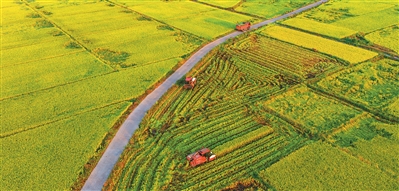
甬优4949

Search documents
科技为农业强国建设插上腾飞之翼
Ke Ji Ri Bao· 2025-12-08 10:03
Group 1: Agricultural Innovation and Technology - The successful creation of the first 2 million mu "ton grain field" in China is marked by an average yield of 1209.1 kg per mu, supported by the "high-yield precision control technology" developed by the Chinese Academy of Agricultural Sciences [1] - Since the 14th Five-Year Plan, China's total grain production has consistently remained above 1.3 trillion jin, with a projected increase to over 1.4 trillion jin in 2024, representing a growth of 74 billion jin since 2020 [1] - The introduction of high-yield rice varieties and innovative production models has led to significant increases in rice yields, with some regions achieving over 1300 kg per mu [2] Group 2: Crop Breeding and Yield Improvement - The innovation in wheat breeding has accelerated, with 12 new varieties approved by Northwest A&F University, enhancing wheat yield potential across various ecological zones [3] - The area of self-bred crop varieties in China has exceeded 95%, ensuring that the majority of grain is produced from domestic seeds [3] - The average grain yield in China reached 394.7 kg per mu, an increase of 12.5 kg since the end of the 13th Five-Year Plan, with yield improvements contributing over 60% to grain production growth [3] Group 3: Smart Agriculture and Efficiency - The integration of smart technologies such as sensors and drones in agriculture has transformed traditional farming practices into data-driven management systems, significantly improving monitoring and intervention capabilities [4][5] - The promotion of smart agricultural technologies has led to the establishment of 116 national innovation application projects, enhancing the efficiency and effectiveness of agricultural practices [5] - The contribution rate of agricultural technology to production has reached 63.2%, with the comprehensive mechanization rate of crop farming exceeding 75% [6] Group 4: Diversification of Food Supply - The development of a diversified food supply system is emphasized, with efforts to enhance food production from various sources, including forests, grasslands, and aquatic environments [8] - The total output of livestock products in China is projected to reach 175 million tons in 2024, an increase of 27.78 million tons or 18.8% since 2020, while aquatic product output is expected to reach 73.58 million tons, marking a 12.3% increase [8] - The focus on agricultural technology innovation is seen as a key driver for creating new industries and enhancing productivity in the agricultural sector [9]
“十四五”,我们见证这些硬核突破|从粒粒良种,到仓廪充盈
Ren Min Ri Bao Hai Wai Ban· 2025-11-04 07:41
Core Insights - China is implementing a seed industry revitalization action plan during the 14th Five-Year Plan period, achieving over 95% of crop breeding area with domestically bred varieties, including high-yield rice and disease-resistant wheat [1][3][4] Group 1: Crop Breeding Achievements - Breakthrough varieties of staple crops such as rice and wheat have been developed, with significant increases in yield; for instance, the combined yield of regenerated rice and mid-season rice in Sichuan reached over 1300 kg per mu [3][4] - The average yield of early rice is projected to exceed 400 kg per mu by 2025, marking a historical high [4] - New wheat varieties, such as "Yangmai 53," have been developed to combat diseases like Fusarium head blight, achieving a yield increase of 10.13% compared to control varieties [4][5] Group 2: Livestock and Aquaculture Innovations - The domestic breeding of white feather broilers has transitioned from 100% reliance on imports to the introduction of varieties like "Shenze 901," which has begun to penetrate international markets [6][7] - The market share of domestically bred white feather broilers has surpassed 25%, while the Huaxi cattle breed has achieved over 20% market share, reducing dependency on imported livestock [7] - The self-bred South American white shrimp varieties now hold over 30% of the market, previously costing millions in imports [7] Group 3: Genetic Resource Survey and Utilization - A comprehensive national agricultural germplasm resource survey has been conducted, collecting 139,000 new germplasm resources, which are crucial for breeding superior varieties [9][10] - The survey has identified and protected traditional local varieties and wild relatives, enhancing the foundation for breeding high-yield and resilient crops [10]

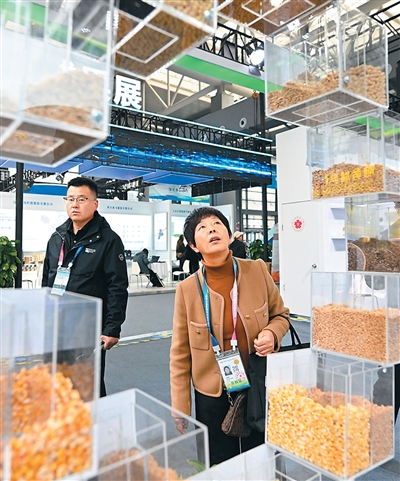
农作物自主选育品种占比超95%,多个品种打破国外种源依赖——从粒粒良种,到仓廪充盈
Ren Min Ri Bao Hai Wai Ban· 2025-11-04 07:40
Core Insights - The article emphasizes the significant advancements in China's agricultural seed industry during the "14th Five-Year Plan" period, highlighting the development of high-quality and high-yield crop varieties, which have led to increased self-sufficiency in food production [1][2][3][4][5][6][7][8] Group 1: Crop Innovations - China has successfully bred a variety of high-yield rice, wheat, and other crops, with over 95% of the cultivated area consisting of self-bred varieties [1] - In Sichuan Province, the introduction of breakthrough rice varieties has led to an average yield of over 1300 kg per mu (approximately 2170 kg per hectare) [2] - The development of disease-resistant wheat varieties, such as "Yangmai 53," has resulted in a yield increase of 10.13% compared to traditional varieties [3] Group 2: Livestock and Aquaculture - The domestic breeding of white feather broilers has transitioned from complete reliance on imports to achieving over 25% market share, with significant exports to international markets [4][5][6] - The introduction of the Huaxi cattle breed has improved domestic beef production, achieving a market share exceeding 20% [6] - The self-bred varieties of South American white shrimp have also gained a market share of over 30%, reducing previous import costs significantly [6] Group 3: Genetic Resource Management - A comprehensive national agricultural germplasm resource survey has been conducted, collecting 139,000 new germplasm resources, which is crucial for breeding superior varieties [7][8] - The survey has identified and protected traditional local varieties and wild relatives, enhancing the genetic diversity available for breeding programs [8] - Over 6000 germplasm resources have already been applied in breeding innovation and industrial development, supporting the goal of enhancing self-innovation capabilities in the seed industry [8]
从粒粒良种,到仓廪充盈(“十四五”,我们见证这些硬核突破⑦)
Ren Min Ri Bao Hai Wai Ban· 2025-11-03 22:46
Core Insights - The article highlights China's significant advancements in agricultural seed breeding during the "14th Five-Year Plan" period, focusing on the development of high-yield and disease-resistant crop varieties, which have led to increased food security and market competitiveness [6][7][10]. Group 1: Crop Breeding Innovations - China has implemented a seed industry revitalization action plan, resulting in over 95% of crop varieties being independently bred, including high-yield rice, drought-resistant wheat, and high-oil soybeans [6][7]. - In Sichuan Province, the introduction of high-yield rice varieties has led to a combined yield of over 1300 kg per mu (approximately 0.067 hectares), showcasing the effectiveness of new breeding techniques [7][8]. - The development of disease-resistant wheat varieties, such as "Yangmai 53," has resulted in a yield increase of 10.13% compared to traditional varieties, marking a significant achievement in wheat breeding [8][9]. Group 2: Livestock and Aquaculture Breeding - The successful breeding of domestic white-feather broilers, which previously relied entirely on imports, has now achieved a market share exceeding 25%, ensuring a stable supply of poultry [10][11]. - The introduction of the Huaxi cattle breed has broken the dependency on imported beef cattle, with a market share surpassing 20% and an average daily weight gain of 1.36 kg [11]. - The development of 12 new varieties of South American white shrimp has led to a market share of over 30%, significantly reducing the reliance on imported shrimp [11]. Group 3: Genetic Resource Survey - A comprehensive national agricultural germplasm resource survey has been conducted, collecting 139,000 new germplasm resources, which are crucial for breeding high-quality crop varieties [13][14]. - The survey has identified and protected traditional local varieties and wild relatives, enhancing the genetic diversity available for future breeding efforts [14]. - Over 6000 germplasm resources have already been applied in breeding innovation and industrial development, supporting the goal of enhancing China's seed industry [14].