田间自动驾驶与作物信息采集平台

Search documents
2025“三农”答卷 | 卫星“看”庄稼、大数据“算”收成 农业发展向“新”而行
Yang Shi Wang· 2025-12-27 03:59
Core Viewpoint - The article discusses the transformative impact of new productive forces on agriculture in 2025, highlighting advancements in technology and practices that enhance productivity and efficiency in farming [1]. Group 1: Technological Advancements - Remote sensing satellites and big data are revolutionizing traditional agricultural practices, enabling smarter decision-making in crop management [1][4]. - The development and application of major crop varieties, such as high-yield rice and disease-resistant wheat, are accelerating, with over 95% of crop varieties being independently bred in China [6]. - The integration of high-end intelligent agricultural machinery is narrowing the gap in agricultural equipment, promoting green transformation in farming operations [8]. Group 2: Smart Agriculture Innovations - The implementation of automated driving and crop information collection platforms, along with precision feeding equipment and underwater inspection robots, marks significant advancements in smart agricultural tools [10]. - Training programs for farmers in digital skills have reached nearly 40 million participants, enhancing the workforce's capability in smart agriculture [10]. Group 3: Case Study - Dragon Fruit Production - In Nanning, Guangxi, the application of new productive forces has transformed traditional dragon fruit farming into a smart agricultural model, improving production efficiency and product quality [11]. - The use of LED lighting for night-time flowering and supplementary light has shortened the production cycle by over 15 days, increasing yield by approximately 2000 pounds per acre [15]. - The establishment of a digital agricultural management system allows for real-time data collection and analysis, enabling precise irrigation and fertilization, thus enhancing operational efficiency [19]. Group 4: Standardization and Traceability - The dragon fruit farm has achieved full-chain standardization, implementing automated sorting and grading processes, and providing traceability for consumers through a "digital ID" for each fruit [21]. - The shift from labor-intensive practices to data and technology reliance signifies a major evolution in agricultural productivity, with smart tools replacing traditional methods [23].

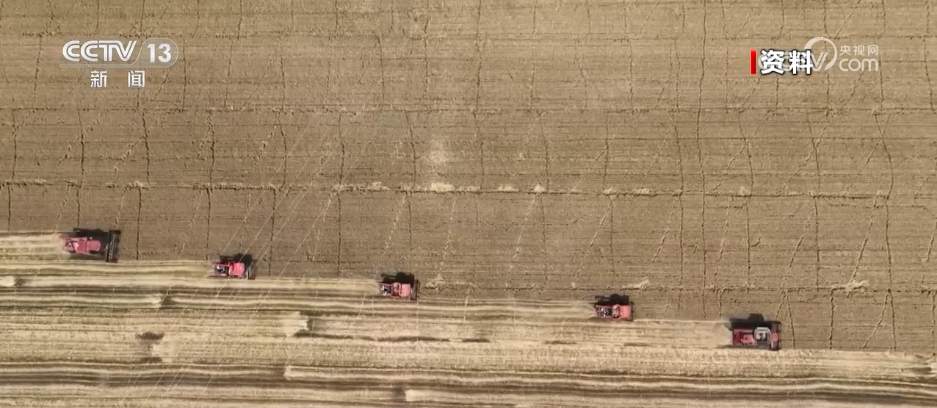
2025“三农”答卷:农业发展向“新”而行
Yang Shi Wang· 2025-12-27 03:58
Core Insights - In 2025, new productive forces will empower various industries, with remote sensing satellites monitoring crops and big data calculating harvests, leading to a transformation in traditional agriculture [1] Group 1: Agricultural Innovation - The year saw significant advancements in agricultural technology, with sensors capturing subtle changes in the land and algorithms generating comprehensive production plans, enhancing agricultural efficiency [2] - Major crop varieties such as high-yield rice, drought-resistant wheat, and high-oil soybeans are being rapidly developed and applied, with over 95% of crop varieties being independently bred in China [3] Group 2: Agricultural Equipment - The acceleration of high-end intelligent agricultural equipment is narrowing the gap in technology, while small agricultural machinery is being deployed in hilly areas to fill existing gaps [4] Group 3: Smart Agriculture - Continuous improvement in smart agriculture innovation capabilities is evident, with new equipment such as autonomous driving in fields and precision feeding devices being implemented in production [5] - A total of 62 new intelligent agricultural equipment breakthroughs have been achieved, enhancing operational efficiency [5] Group 4: Talent Development - The smart agriculture talent pool is expanding, with training programs for large-scale agricultural producers and nearly 40 million people trained in mobile application skills throughout the year [6]
数字中国十载潮涌,神州加“数”奔腾
Xin Hua Wang· 2025-12-17 01:25
Group 1 - The core idea of the article highlights the significant progress made in the construction of Digital China over the past decade, emphasizing the integration of digital technology into various sectors and its impact on economic development [1][4] - The value added by the core industries of the digital economy has increased from 6.8% of GDP in 2015 to 10.4% in 2024, demonstrating the strong momentum for high-quality economic growth [1] - The total number of 5G base stations in China is projected to reach 4.705 million by September 2025, supporting the digital lives of 1.123 billion internet users [1] Group 2 - The computing power scale in China has seen an average growth rate of approximately 30% over the past five years, with a projected total computing power of 280 EFLOPS by the end of 2024, placing it among the top globally [3] - The digital transformation in the manufacturing sector has led to the establishment of over 35,000 basic-level and more than 7,000 advanced-level smart factories, resulting in significant improvements in product development cycles, production efficiency, and reductions in defect rates and carbon emissions [3] - The rural e-commerce retail sales are expected to reach 2.56 trillion yuan in 2024, an increase of 770 billion yuan compared to 2020, indicating the revitalization of the agricultural sector through digital innovation [3] Group 3 - The digital upgrade in the public welfare sector has positively impacted over 600 million people through cross-province medical settlement services, and remote medical services now cover all cities and counties [4] - China has become the largest holder of artificial intelligence patents globally, accounting for 60% of the total, showcasing its strong technological capabilities in AI [4] - The construction of Digital China has evolved from concept to practice, extending from urban areas to rural regions, contributing to global digital transformation with Chinese wisdom [4]