电池管理系统(BMS)

Search documents
重演光伏往事?看透欧盟“壁垒四部曲”:终将向不可替代的供应链妥协
中关村储能产业技术联盟· 2026-03-26 05:54
Core Viewpoint - The European Union's Industrial Accelerator Act (IAA) proposes stricter investment restrictions on foreign capital projects exceeding €100 million, primarily targeting China's dominant production capacity in various sectors [4][7]. Group 1: Legislative Context - The IAA is part of a broader regulatory framework that includes the Battery Act, Critical Raw Materials Act (CRMA), and Net Zero Industry Act (NZIA), which aim to enhance local manufacturing and reduce dependency on single countries [9][14]. - The IAA aims to increase the manufacturing sector's contribution to GDP from approximately 14.3% in 2024 to 20% by 2035, addressing concerns over declining local manufacturing [10][15]. Group 2: Competitive Landscape - The EU faces significant external competition, with manufacturing electricity prices being over twice that of China, impacting competitiveness [11]. - The shift from cost competition to regulatory competition is seen as a viable path for the EU to build industry barriers [12]. Group 3: Local Manufacturing Requirements - The IAA introduces phased localization requirements for energy storage systems, mandating that by 2025, systems over 1MWh must include EU-manufactured Battery Management Systems (BMS) [24]. - By 2028, these systems must also include EU-manufactured cells and at least one critical component [25]. Group 4: Market Dynamics - Despite stringent regulations, the European market remains attractive, with projected growth in installed capacity of 27.1 GWh in 2025, a 45% increase year-on-year, driven by utility-scale energy storage deployments [24][23]. - The historical context of the EU's trade measures in the solar industry suggests that similar restrictions may not deter Chinese companies from participating in the European market [30][31]. Group 5: Strategic Recommendations - Chinese companies are encouraged to explore new pathways, such as local integration with global supply chains, to comply with EU regulations while maintaining competitive advantages [35]. - Strategies include establishing "jumping-off" production capacities in nearby Free Trade Agreement (FTA) countries and utilizing project fragmentation to navigate regulatory scrutiny [35][36].


《工业加速器法案》落地:欧盟IAA新规下,中国储能企业的“入场券”之变
中关村储能产业技术联盟· 2026-03-10 04:10
Core Viewpoint - The European Commission has introduced the Industrial Accelerator Act (IAA) to enhance the competitiveness of strategic sectors and technologies within the EU, particularly focusing on energy-intensive sectors and net-zero technologies, aiming to reduce import dependency and strengthen local manufacturing while achieving decarbonization and climate goals [3]. Group 1: Key Provisions of the Act - The act identifies battery energy storage systems as a crucial component of net-zero technologies, emphasizing their importance in energy transition and manufacturing capability enhancement [5]. - Strict requirements are set for the procurement of net-zero technology products, mandating that all battery energy storage systems over 1MWh must utilize EU-manufactured Battery Management Systems (BMS) one year after the act's enactment, and within three years, they must include EU-manufactured cells, BMS, and at least one other key component [5]. - The act outlines regulations for foreign direct investment, requiring investors from countries controlling over 40% of global capacity in this field and investing more than €100 million in the EU to meet four out of six specified criteria, including mandatory joint ventures with foreign ownership capped at 49%, enforced technology transfer, and local employment and procurement requirements [5]. Group 2: Implications for Chinese Energy Storage Companies - The growing energy storage demand in the EU presents opportunities for Chinese companies, which possess significant competitive advantages in technology diversity and complete industrial chains [6]. - However, the EU's emphasis on local manufacturing and supply chain development may raise entry barriers for Chinese products, increasing operational costs for Chinese energy storage firms in the EU market [6]. - To navigate these challenges, Chinese energy storage companies may need to establish local production facilities, engage in industrial cooperation, and enhance local service systems to participate effectively in the European energy storage market [6].
3.2GWh!昌吉国投4个储能项目招标!技术要求宁德时代/海辰储能/亿纬锂能/中创新航等10家电芯厂商
中关村储能产业技术联盟· 2026-02-10 04:00
Core Viewpoint - The article discusses the procurement of energy storage system equipment for four shared energy storage projects by Changji Guotou Xin Energy Development Co., Ltd., with a total scale of 800 MW/3.2 GWh [2]. Group 1: Project Overview - The total scale of the shared energy storage projects is 800 MW/3.2 GWh, with specific projects including: - Changji Guotou Hutu Bih County: 200 MW/800 MWh - Changji Guotou Mulei County: 300 MW/1200 MWh - Changji Guotou Jimusaer County: 100 MW/400 MWh - Changji Guotou Qitai County: 200 MW/800 MWh [3][20][31]. Group 2: Technical Requirements - The technical requirements for the battery technology reference or are equivalent to major manufacturers such as CATL, Hicharge Energy, Yiwei Lithium Energy, and others [2][11]. - The procurement includes complete sets of equipment such as energy storage battery cabins (lithium iron phosphate batteries), battery management systems (BMS), energy management systems (EMS), and associated fire protection systems [3][20][31]. Group 3: Procurement and Delivery - The delivery period is set to be completed within 90 calendar days from the issuance of the supply notice after the contract is signed [4][20][31]. - The procurement is funded by a combination of self-raised funds (30%) and bank loans (70%) [20][31]. Group 4: Bidder Qualifications - Bidders must be independent legal entities registered in the People's Republic of China and must have the capability to manufacture at least one core component of the energy storage system [9][22][33]. - Bidders are required to have experience in at least two projects involving energy storage systems with a single capacity of no less than 400 MWh over the past three years [9][22][33]. Group 5: Bid Submission and Requirements - The bidding process is conducted electronically, and bidders must register on the Changji Public Resource Trading Network to participate [27][28]. - A bid security of 500,000 yuan is required, and it must be paid before the bid submission deadline [25][34].





25年储能BMS榜单背后的头部企业,在电价规则变化后如何出牌
行家说储能· 2026-02-06 04:06
Core Viewpoint - The energy storage industry is undergoing a fundamental shift in 2026, moving away from a fixed pricing model to a market-driven pricing mechanism, which presents unprecedented challenges for battery management systems (BMS) [2][7]. Group 1: Key Trends and BMS Responses - Trend 1: Deepening of the National Unified Power Market - BMS must develop "trustworthy measurement" capabilities as energy prices transition to real-time market dynamics, making SOC (State of Charge) and SOP (State of Power) data critical for profit and loss calculations [8][10]. - Trend 2: Entering the GWh Scale Era of Energy Storage - BMS needs "system-level coordination" capabilities to manage high-voltage environments and ensure safety and performance across entire energy storage systems [14][16]. - Trend 3: Scaling of Networked Energy Storage - BMS must possess "proactive collaboration" capabilities, transitioning from a protective role to actively defining and broadcasting real-time battery support capabilities [17][19]. - Trend 4: Large Capacity Cells Becoming Mainstream - BMS requires "precise management" and "safety net" capabilities to handle the challenges posed by large capacity cells, necessitating advanced monitoring and balancing techniques [20][22]. - Trend 5: Overseas Markets as Key Growth Areas - BMS must have "global compliance and localization" capabilities to succeed in international markets, requiring a comprehensive understanding of various certification standards [23][24]. Group 2: Company Response and Positioning - Leading companies like XieNeng Technology are responding to these trends by innovating in areas such as active balancing technology and high-voltage solutions, positioning themselves as key players in the evolving landscape [25][27]. - XieNeng Technology has developed advanced BMS products that enhance SOC estimation accuracy and have implemented dynamic balancing algorithms to address the challenges of large capacity cells [27][30]. - The company has established a global delivery capability, with its products and services covering over 60 countries and regions, demonstrating its readiness to meet international market demands [27][30]. Group 3: Future Implications for the Industry - The evolving role of BMS is critical for maximizing the value of energy storage assets in a competitive market, emphasizing the need for investment and focus on BMS technology [31][32]. - As the industry moves towards a more dynamic pricing model, the effectiveness of operational algorithms and business models will be increasingly constrained by the physical realities presented by BMS [31][32].
高特电子部分数据与其他公开信息不符
Huan Qiu Wang· 2026-01-14 01:33
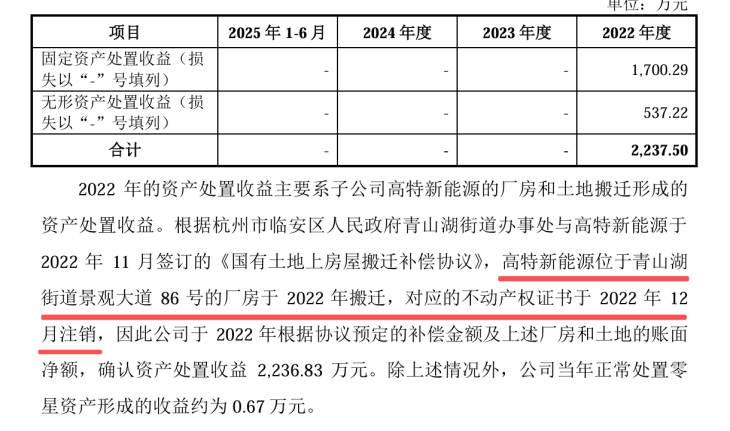
Core Viewpoint - Gaote Electronics is focused on the research and production of Battery Management Systems (BMS) and is currently applying for an IPO to raise 850 million yuan, primarily for the development of energy storage BMS and the construction of an intelligent manufacturing center [1]. Group 1: Financial and Operational Highlights - The company plans to invest 800 million yuan in a project to utilize a 7,258.85 m² idle factory in Hangzhou for the production of BMS products, aiming for an annual production capacity of 3 million units [4]. - The core fundraising project, "Intelligent Manufacturing Center for Energy Storage BMS," has a total investment of 674.1383 million yuan, with 600 million yuan expected to be raised from the IPO [4]. - The company reported fixed asset disposal income of 17.0029 million yuan and intangible asset disposal income of 5.3722 million yuan in 2022, totaling 22.375 million yuan [2]. Group 2: Production Capacity and Performance - The production capacity for energy storage BMS and power battery BMS was reported at 135.87 thousand units in 2024 and 78.93 thousand units in the first half of 2025, significantly lower than the designed capacity of 3 million units [5][7]. - The actual production output has shown a discrepancy with the designed capacity, raising concerns about operational efficiency [5]. - The production capacity utilization rate for 2024 was reported at 100.06%, indicating that the company is operating at its designed capacity but still falling short of production targets [7].
武汉天源:拟5.5亿元投建储能项目
Zheng Quan Shi Bao Wang· 2026-01-09 11:43
Core Viewpoint - Wuhan Tianyuan (301127) has signed an investment framework agreement with the Suichuan County Bureau of Commerce for the construction of a 220KV substation and a 200MW/400MWh grid-side independent shared energy storage project in Suichuan County, Jiangxi Province, with a total investment of approximately 550 million yuan [1] Group 1 - The project will involve the construction of an independent electrochemical energy storage station [1] - Key systems to be included in the project are energy storage batteries (using lithium iron phosphate batteries), battery management systems (BMS), energy storage inverters (PCS), and bus transformers [1]
高特电子IPO,揭开股权回购纠纷往事
Xin Lang Cai Jing· 2025-12-28 00:10
Core Viewpoint - The company, Hangzhou Gaote Electronics Co., Ltd., is undergoing an IPO process while facing scrutiny over its financial practices and business model, particularly in the battery management system (BMS) sector, which is expected to grow significantly in the coming years [3][14]. Business Transformation - The company has undergone three major transformations, starting from traditional lead-acid battery testing to entering the BMS market for power batteries, and finally excelling in the new energy storage BMS sector, leading to explosive growth in performance [5][15]. - BMS technology is crucial for the safety and efficiency of new energy storage systems, and the company has developed significant expertise over 20 years, launching the first domestic lead-acid battery BMS in 2003 [6][17]. Market Challenges - As a third-party supplier, the company faces challenges from vehicle manufacturers and battery manufacturers, with the market share for third-party BMS suppliers being only 22% in 2022, compared to 48% for vehicle manufacturers and 30% for battery manufacturers [5][16]. - The company has benefited from the rise of new energy storage solutions, which have increased the complexity and safety risks in management, allowing it to leverage its technological advantages [6][17]. Financial Performance - The company's revenue grew from 344 million yuan in 2022 to 919 million yuan in 2024, with a net profit increase from 53.75 million yuan to 98.42 million yuan during the same period [9][20]. - However, the growth rate of revenue and net profit has slowed significantly, with a projected revenue increase of only 18% in 2024 compared to 125% in 2023, attributed to a 58% drop in average product prices [9][20]. Accounts Receivable and Cash Flow - The company's accounts receivable surged from 185 million yuan at the end of 2022 to 577 million yuan in mid-2023, with accounts receivable consistently exceeding 50% of revenue [10][21]. - The company has reported negative operating cash flow for 2022 and 2023, with only a slight positive cash flow expected in 2024, raising concerns about liquidity [10][22]. IPO and Fundraising - The company plans to raise 850 million yuan through its IPO, with 250 million yuan allocated for working capital and 600 million yuan for capacity expansion [11][22]. - The cancellation of mandatory energy storage requirements for new energy projects poses a potential risk to the company's ability to absorb new capacity in the market [11][22].

抢抓储能行业窗口期 东方日升斩获100MWh储能大单
Quan Jing Wang· 2025-12-22 03:37
Core Insights - The strategic partnerships with Tingshan Energy and Haihe New Energy mark a significant breakthrough for the company in the energy storage market, aiming for a total of 100MWh of storage systems across various applications [1][2] - The collaboration focuses on deep integration of industry chain resources and core capabilities, allowing the company to provide high-performance energy storage products and comprehensive system support [2] - The global energy storage market is projected to grow from $668.7 billion in 2024 to $5.12 trillion by 2034, with a CAGR of 21.7% from 2025 to 2034, indicating a strong growth opportunity for the company [3] Company Developments - The company has established a comprehensive value chain in the energy storage sector, covering research, production, sales, and service, with a product line that includes storage inverters, battery management systems, and energy management systems [3] - Recent commercial orders include a strategic cooperation agreement with WEG in Brazil for a total capacity of 3GWh and additional contracts for 100MWh of commercial energy storage, showcasing the company's ability to secure significant projects [4] - The company is leveraging its 20 years of experience in the lithium battery field to maintain a leading position in the industry, focusing on scalable and replicable energy storage projects [4]

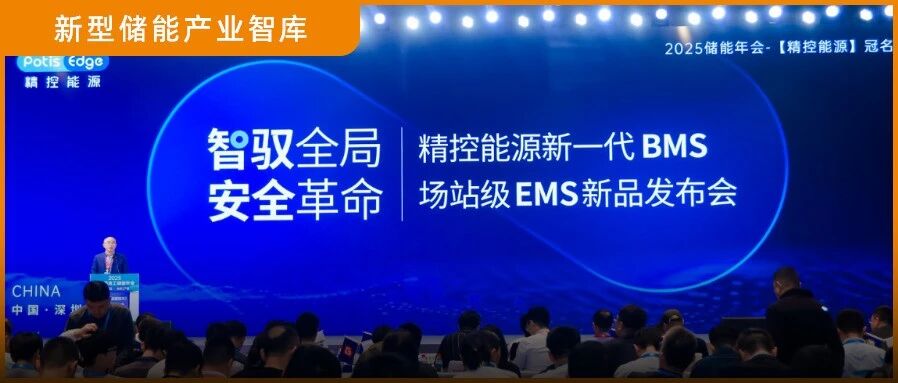
直击储能3大痛点!精控能源BMS+EMS新品齐发
行家说储能· 2025-12-11 11:36
Core Viewpoint - The article emphasizes the transition of the energy storage industry towards a value competition phase, focusing on system-level value creation rather than just hardware scale, driven by the construction of a national unified electricity market by 2025 [2] Group 1: Industry Challenges - The energy storage systems currently face three main challenges: safety issues due to thermal runaway risks, efficiency problems from inconsistent battery degradation, and revenue challenges stemming from slow dispatch responses and crude operational strategies [5] - The challenges are directly related to the capabilities of Battery Management Systems (BMS) and Energy Management Systems (EMS), which are crucial for ensuring safety, extending lifespan, and enhancing environmental adaptability [8] Group 2: New Product Launch - The company has launched a new generation of BMS and EMS aimed at addressing the core pain points of safety, efficiency, and revenue in the energy storage sector [9] - The new BMS has transitioned from a monitoring function to an intelligent protection capability, utilizing active balancing technology to significantly enhance battery pack capacity and lifespan [13] - The EMS has undergone an architectural innovation, shifting from unit management to system collaboration, ensuring reliable operation and compatibility with various communication protocols [18] Group 3: Technological Advancements - The new BMS features advanced monitoring precision, with voltage accuracy within ±3mV and temperature accuracy within ±1℃, along with enhanced safety measures that provide proactive alerts [15][17] - The EMS incorporates an AI decision-making engine that optimizes charging and discharging strategies based on real-time data, thereby maximizing revenue while extending battery life [20] Group 4: Strategic Vision - The company adheres to a long-term commitment to the energy storage field, with a significant portion of its workforce dedicated to R&D and a robust patent portfolio [11] - The integration of BMS and EMS is crucial for enhancing safety, operational efficiency, and economic viability in energy storage systems, reflecting the industry's shift towards high-quality development [21]
3GWh! 东方日升再签全球储能新单!
鑫椤储能· 2025-12-10 08:42
Core Viewpoint - Dongfang Risen New Energy Co., Ltd. has signed a strategic cooperation agreement with Brazilian industrial giant WEG for a total capacity of 3GWh in energy storage systems, marking a significant breakthrough in the global energy storage sector and advancing the company's role in the new power system construction [1][2]. Group 1: Strategic Cooperation - The agreement entails Dongfang Risen providing advanced large-scale and commercial energy storage system solutions to WEG from 2026 to 2028, contributing to global energy structure optimization and green low-carbon transition [1]. - WEG operates in over 140 countries and has a strong technical foundation and market presence in renewable energy, industrial efficiency, and smart grid sectors, actively expanding its energy storage and integrated energy services [1][2]. Group 2: Company Capabilities - Dongfang Risen has 20 years of experience in the lithium battery and energy storage sectors, with a complete industry chain capability encompassing R&D, production, sales, and service [2]. - The company offers a full-stack solution covering energy storage inverters (PCS), battery management systems (BMS), energy management systems (EMS), and battery systems for residential, commercial, and large-scale projects [2]. Group 3: Global Expansion - The partnership signifies an upgrade from previous collaborations in the photovoltaic sector and marks the entry of Dongfang Risen's energy storage business into a new phase of global scale implementation [2]. - Dongfang Risen's business has expanded to over 90 countries and regions, providing stable electricity to remote villages in South America, supporting energy transitions in North American commercial parks, enhancing energy self-sufficiency in European residential solar storage systems, and enabling green microgrids in off-grid communities in Africa [3].