癌症治疗药物

Search documents
“AI药物研发领域,美企依赖中国数据,中企需要美国市场”
Guan Cha Zhe Wang· 2026-01-20 07:08
Core Insights - Artificial intelligence (AI) is accelerating drug development globally, highlighting the increasing interdependence between China and the U.S. in this field [1] - The competitive advantage in AI-driven drug development relies not only on computational power but also on the ability to efficiently extract data from genomics and clinical trials, with China emerging as a significant data source for the U.S. [1][3] Group 1: AI in Drug Development - The first step in building effective AI models for drug development is data collection, which involves integrating dispersed data from various countries [3] - U.S. pharmaceutical companies heavily rely on Chinese clinical data to support their AI model training and drug development processes [3] - China's clinical trial ecosystem is considered one of the best globally, characterized by a large patient base and rapid recruitment speeds [3] Group 2: Market Dynamics and Collaborations - In 2025, Chinese pharmaceutical companies completed 157 early drug licensing agreements totaling $135.7 billion, primarily with large Western pharmaceutical firms [4] - Notable collaborations include a $5.6 billion exclusive licensing agreement between Rongchang Biologics and AbbVie for a new PD-1/VEGF dual-target antibody drug [4] - Chinese biotech firms are leveraging partnerships with multinational companies to access international markets, as seen in the collaboration between Takeda Pharmaceutical and Innovent Biologics, valued at $11.4 billion [4] Group 3: Challenges and Future Outlook - Despite advancements, U.S. remains a leader in AI-driven drug development due to superior AI technology and a mature venture capital ecosystem [5] - The U.S. is tightening control over biological data, with recent legislation seen as a strategic move to limit collaboration with Chinese biotech firms [5] - The global pharmaceutical industry is transitioning from traditional drug discovery methods to AI-supported automated laboratories capable of conducting thousands of experiments daily [5] Group 4: Growth Projections for AI in Pharmaceuticals - The global AI pharmaceutical market is projected to reach $5.62 billion by 2028, with long-term estimates ranging from $28 billion to $53 billion [6] - In China, the AI pharmaceutical sector is expected to experience rapid growth, with market size anticipated to exceed 500 billion RMB by 2025-2030, maintaining a compound annual growth rate of over 15% [6]

2026年美国超350种药品将涨价
第一财经· 2026-01-01 05:18
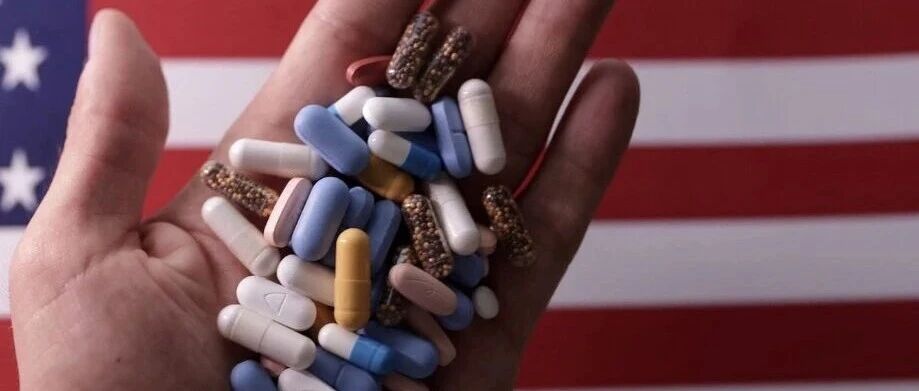
Core Viewpoint - In 2026, over 350 drug prices in the U.S. are expected to rise, despite pressure from the Trump administration for pharmaceutical companies to lower prices [3][4]. Group 1: Price Increases - Pharmaceutical companies plan to increase the prices of at least 350 brand-name drugs, including COVID-19 vaccines, respiratory syncytial virus vaccines, shingles vaccines, and some major cancer treatment drugs [3]. - The number of drugs with price increases in 2026 has risen compared to the previous year, while the increase rate remains stable [3]. - Pfizer is set to implement the largest price hikes, affecting around 80 different drugs, including cancer medications, migraine treatments, and commonly used hospital drugs like morphine and hydromorphone [3]. Group 2: Price Decreases - Fewer than ten drugs are expected to see price reductions, with diabetes-related therapies experiencing a decrease of over 40% [3]. Group 3: Specific Company Actions - Pfizer stated that the average price adjustment for innovative drugs and vaccines in 2026 will be below the overall inflation rate, emphasizing that small price increases are necessary to support ongoing investments in new drug development and to address rising costs [4]. - GlaxoSmithKline (GSK) plans to raise prices for about 20 drugs and vaccines by 2% to 8.9%, citing the need to support scientific innovation while maintaining reasonable drug prices [4].


Here’s Why BeOne Medicines Ltd. (ONC) Declined in Q2
Yahoo Finance· 2025-09-29 14:35
Core Insights - Baird Chautauqua International and Global Growth Fund's second quarter 2025 investor letter highlights a significant recovery in global equity markets after initial losses due to tariff announcements, with markets closing near all-time highs [1] - The fund underperformed its benchmark during the quarter, despite the overall market recovery [1] Company Summary: BeOne Medicines AG - BeOne Medicines AG (NASDAQ:ONC) is an oncology company focused on developing cancer treatments, with a one-month return of 7.99% and a 52-week gain of 47.21%, closing at $326.06 per share on September 26, 2025, with a market capitalization of $38.54 billion [2] - The company experienced an 11% decline in Q2 2025 after a 47% appreciation in Q1 2025, attributed to profit-taking and tariff concerns, while achieving first-time GAAP and non-GAAP net profits in Q1 2025 and maintaining its full-year guidance [3] - BeOne Medicines AG was held by 28 hedge fund portfolios at the end of Q2 2025, a decrease from 37 in the previous quarter, with the potential for greater upside seen in certain AI stocks [4]
美的分拆智慧物流业务赴港IPO,八马茶业再度递交上市申请
Xin Lang Cai Jing· 2025-09-02 15:53
Group 1: Recent IPOs on Hong Kong Stock Exchange - Two companies listed on the Hong Kong Stock Exchange from August 25 to August 31 [2] - Shuangdeng Group Co., Ltd. (6960.HK) listed on August 26, focusing on energy storage batteries, with a first-day increase of 31.29% and a market cap of approximately HKD 73 billion [3] - Jiaxin International Resources Investment Co., Ltd. (3858.HK) listed on August 28, specializing in tungsten mining, with a first-day increase of 177.84% and a market cap of approximately HKD 148 billion [3] Group 2: New Stock Offerings - One company completed its new stock offering during the week of August 25 to August 31 [4] - Aux Electric, a global provider of high-quality air conditioning solutions, went through the listing hearing [5] Group 3: Companies Submitting Listing Applications - A total of 22 companies submitted main board listing applications and one company submitted a GEM listing application from August 25 to August 31 [7] - Notable companies include: - Nazhen Technology, a global provider of optical communication solutions, submitted its application on August 25 [8] - Chengdu Guoxing Aerospace Technology Co., Ltd., a participant in China's commercial aerospace industry, submitted its application on August 25 [9] - InxMed Limited-B, a biotech company focused on cancer treatment, submitted its application on August 25 [9] Group 4: Financial Performance and Projections - Nazhen Technology projected revenues of CNY 5.043 billion, CNY 4.239 billion, and CNY 5.087 billion from 2022 to 2024, with profits of CNY 429 million, CNY 216 million, and CNY 89 million respectively [18] - Guoxing Aerospace projected revenues of CNY 177 million, CNY 508 million, and CNY 553 million from 2022 to 2024, with losses of CNY 91 million, CNY 139 million, and CNY 177 million respectively [20] - InxMed Limited-B reported no commercial sales revenue for 2023 and 2024, with losses of CNY 209 million and CNY 185 million respectively [23] Group 5: Industry Insights - The energy storage battery market is growing, with Shuangdeng Group focusing on applications in communication base stations and data centers [3] - The tungsten mining sector is highlighted by Jiaxin International, which is developing the Bakuta tungsten mine in Kazakhstan [3] - The optical communication sector is represented by Nazhen Technology, which ranks fifth globally in optical module revenue [18]
曹雪涛院士最新论文:揭示癌症转移和耐药新机制,并提出治疗新靶点
生物世界· 2025-07-20 23:55
Core Insights - The study reveals that phosphorylated Toll-like receptor 3 (TLR3) translocation to the nucleus in cancer cells promotes metastasis and chemoresistance, indicating a non-classical function of innate immune sensors in cancer [3][8] - The JAK1/TLR3/PRMT5/c-Myc signaling axis may serve as a potential prognostic marker and therapeutic target to overcome chemoresistance [3][8] Group 1 - The research team utilized immunohistochemical analysis on pancreatic ductal adenocarcinoma (PDAC) and various other cancer samples to observe TLR3's nuclear translocation under chemotherapy stress [6] - In vitro experiments demonstrated that nuclear TLR3 enhances cancer cell invasiveness and proliferation while inhibiting chemotherapy-induced apoptosis [6] - Mice models with nuclear TLR3-expressing cancer cells exhibited increased liver metastasis and shortened survival, indicating a malignant phenotype [6] Group 2 - Mechanistically, JAK1 phosphorylates serine 155 (S155) of TLR3, facilitating its nuclear translocation through cooperation with importin α5 [6] - The abnormal accumulation of double-stranded RNA in the nucleus under chemotherapy stress may activate nuclear TLR3 [6] - Nuclear TLR3 recruits protein arginine methyltransferase 5 (PRMT5) and interacts with c-Myc, promoting c-Myc's symmetric dimethylation and activation of downstream tumor-promoting signaling pathways [6] Group 3 - High levels of nuclear TLR3 in clinical samples predict poor patient prognosis, characterized by shorter disease-free survival and overall survival, along with a poor response to neoadjuvant chemotherapy [8] - The findings underscore the potential of the JAK1/TLR3/PRMT5/c-Myc signaling axis as a novel target for therapeutic intervention in chemoresistant cancers [8]

日美关税谈判陷入僵局,特朗普政府仍“执迷不悟”!
Sou Hu Cai Jing· 2025-05-06 08:28
Group 1: US-Japan Tariff Negotiations - The US-Japan tariff negotiations have reached a deadlock, with both sides unable to find common ground [2] - Japan's Prime Minister Shigeru Ishiba stated that there are significant gaps in positions between the two countries, and Japan will continue to strongly request the removal of tariffs on automobiles and steel [2] - Japan holds over $1 trillion in US Treasury bonds, making it a significant player in negotiations, although officials have denied using this as leverage [2] Group 2: Impact on the Film Industry - The Trump administration is considering imposing a 100% tariff on foreign-made films, claiming it is necessary to protect the US film industry [3] - Critics argue that such tariffs could harm the US film industry's global market presence, potentially leading to a loss of export surplus [3] - The media has raised concerns about the future of Hollywood, suggesting it could become a "shell" of its former self due to these policies [3] Group 3: Pharmaceutical Industry Concerns - The US government is investigating the potential national security implications of drug imports, which may lead to increased tariffs on pharmaceuticals [6] - There are warnings that tariffs could result in drug shortages, particularly for critical medications like cancer treatments, and could raise costs for consumers, especially those without insurance [6] - Experts believe that the attempt to bring pharmaceutical manufacturing back to the US through tariffs is unrealistic due to high costs and time required for establishing new facilities [6] Group 4: General Economic Sentiment - The imposition of tariffs has led to widespread discontent among the American public, with significant impacts on daily life [7] - Despite the turmoil, President Trump expressed confidence that the economy will not enter a recession during his term, although he acknowledged the possibility [7]