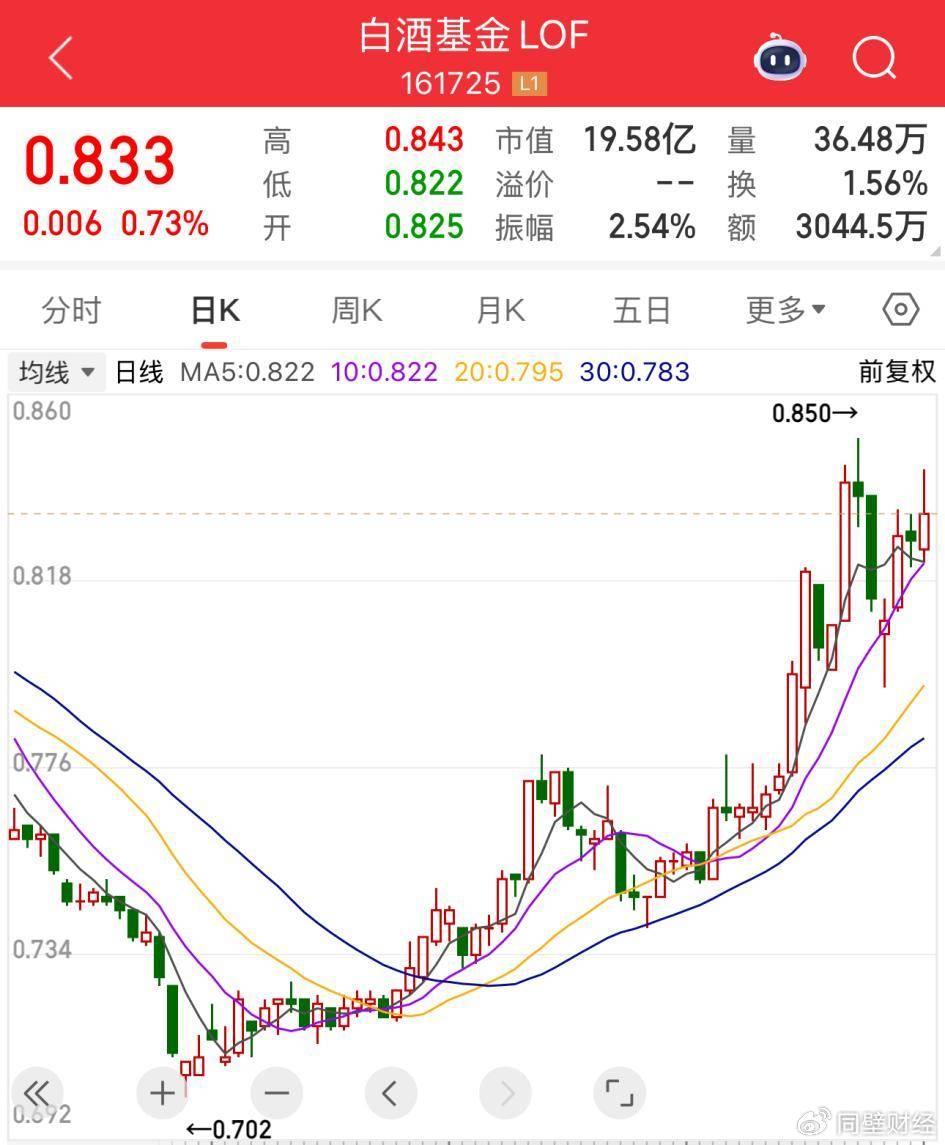
白酒基金LOF

Search documents
白酒基金LOF(161725)触及涨停,成交额2.8亿元
Mei Ri Jing Ji Xin Wen· 2026-01-29 07:33
Group 1 - The core point of the article is that the liquor fund LOF (161725) reached its daily limit increase, indicating strong market interest and performance [1] - The trading volume for the liquor fund was reported at 280 million [1]
白酒基金LOF触及涨停,成交额2.8亿元
Mei Ri Jing Ji Xin Wen· 2026-01-29 07:06
Group 1 - The Baijiu Fund LOF (161725) reached its daily limit increase on January 29, indicating strong market interest and demand [1] - The trading volume for the Baijiu Fund was 280 million, reflecting significant investor activity [1]
需求萎缩规模停滞,新规下的LOF基金该“何去何从”?
Sou Hu Cai Jing· 2026-01-07 09:08
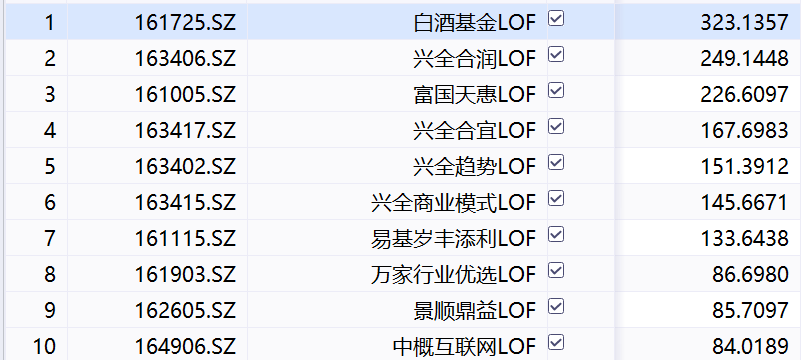
Core Insights - The article highlights the decline of Listed Open-Ended Funds (LOFs) in contrast to the growth of Exchange-Traded Funds (ETFs), with LOFs struggling to maintain relevance in the market [1][3]. Group 1: Market Performance - As of January 6, 2026, only 7 LOF products have surpassed a scale of 10 billion, primarily consisting of established funds like the Baijiu LOF and others [2]. - Since 2022, the number of newly established LOFs has drastically decreased, with only 1 new LOF expected in 2025 and none in 2024, while over 30 LOFs have been liquidated [3][4]. Group 2: Comparison with ETFs - LOFs initially offered a dual trading mechanism, allowing for both on-market trading and off-market subscriptions, but have since lost their appeal due to poor performance and liquidity issues [3][5]. - ETFs benefit from a more efficient redemption mechanism and transparent pricing, which has contributed to their growing dominance over LOFs [5][6]. Group 3: Regulatory Impact - The introduction of new public fund sales regulations effective January 1, 2026, has further diminished the attractiveness of LOFs by lowering subscription fees while maintaining high redemption fees, eroding their competitive edge [6][7]. - The new regulations treat LOFs similarly to other fund types, removing their unique advantages in trading flexibility and cost efficiency [8]. Group 4: Future Outlook - The article suggests that LOFs may still have niche opportunities, particularly in cross-border and commodity LOFs, which can leverage T+0 trading and complex asset management [9]. - There is a call for the public fund industry to explore integrating active management with ETF-like mechanisms to enhance transparency and competitiveness [9].

“股王”归来!白酒基金LOF连续11日“吸金”2.5亿元
Sou Hu Cai Jing· 2025-09-02 09:30
Core Viewpoint - The Chinese liquor sector is experiencing a notable upward movement, with several key companies seeing significant stock price increases, indicating a potential recovery in the market. Group 1: Stock Performance - The liquor sector in A-shares has shown a strong performance, with Jinhuijiu rising over 4%, and other major brands like Luzhou Laojiao and Laobai Gan Jiu increasing by more than 2% [1] - The white liquor fund LOF (161725) has seen a 0.73% increase, with early trading volume exceeding 31 million yuan [1] Group 2: Fund Inflows - The white liquor fund LOF (161725) has experienced a total net inflow of 250 million yuan over the past 11 trading days, despite the index being down for five consecutive years [2] Group 3: Guizhou Moutai Developments - Guizhou Moutai's controlling shareholder has increased its stake by 67,821 shares, amounting to 100 million yuan, and plans to invest between 3 billion yuan and 3.3 billion yuan over the next six months [3] - Guizhou Moutai reported record revenue of 91.094 billion yuan and net profit of 45.403 billion yuan for the first half of 2025, reflecting a year-on-year growth of 9.16% and 8.89% respectively [3] Group 4: Valuation Insights - According to CICC, the liquor sector's valuation has become attractive, with a projected P/E ratio of 19.3 times for 2025, which is a 45% premium over the CSI 300, lower than the historical average of 141% since 2005 [4] - The sector's valuation has been supported by strong domestic demand and limited impact from trade tensions, although it faced pressure from declining consumption and policy factors in the second quarter [4] Group 5: Market Outlook - CICC anticipates that the liquor industry may continue to face pressure in the third quarter, but there are signs of demand recovery since August, suggesting a potential bottoming out by next year's Spring Festival [6] - The improvement in market liquidity and gradual recovery of consumption scenarios indicate a mid-term upward trend for the liquor sector [6]