
公募销售新规

Search documents
需求萎缩规模停滞,新规下的LOF基金该“何去何从”?
Sou Hu Cai Jing· 2026-01-07 09:08
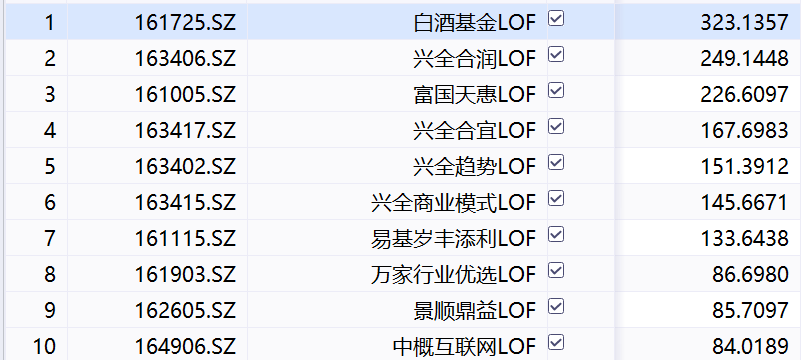
Core Insights - The article highlights the decline of Listed Open-Ended Funds (LOFs) in contrast to the growth of Exchange-Traded Funds (ETFs), with LOFs struggling to maintain relevance in the market [1][3]. Group 1: Market Performance - As of January 6, 2026, only 7 LOF products have surpassed a scale of 10 billion, primarily consisting of established funds like the Baijiu LOF and others [2]. - Since 2022, the number of newly established LOFs has drastically decreased, with only 1 new LOF expected in 2025 and none in 2024, while over 30 LOFs have been liquidated [3][4]. Group 2: Comparison with ETFs - LOFs initially offered a dual trading mechanism, allowing for both on-market trading and off-market subscriptions, but have since lost their appeal due to poor performance and liquidity issues [3][5]. - ETFs benefit from a more efficient redemption mechanism and transparent pricing, which has contributed to their growing dominance over LOFs [5][6]. Group 3: Regulatory Impact - The introduction of new public fund sales regulations effective January 1, 2026, has further diminished the attractiveness of LOFs by lowering subscription fees while maintaining high redemption fees, eroding their competitive edge [6][7]. - The new regulations treat LOFs similarly to other fund types, removing their unique advantages in trading flexibility and cost efficiency [8]. Group 4: Future Outlook - The article suggests that LOFs may still have niche opportunities, particularly in cross-border and commodity LOFs, which can leverage T+0 trading and complex asset management [9]. - There is a call for the public fund industry to explore integrating active management with ETF-like mechanisms to enhance transparency and competitiveness [9].

【银行】公募销售新规落地,理财配置如何演变?——《公开募集证券投资基金销售费用管理规定》点评(王一峰/董文欣)
光大证券研究· 2026-01-04 23:04
Core Viewpoint - The article discusses the implementation of the "Regulations on the Management of Sales Fees for Publicly Raised Securities Investment Funds," which aims to optimize the sales fee structure and enhance the flexibility of redemption fees, thereby impacting the asset allocation behavior of bank wealth management products [4][5]. Group 1: Key Changes in Sales Fee Regulations - The new regulations introduce more flexible redemption fee structures, significantly reducing liquidity constraints for wealth management products [5]. - The minimum holding period for certain funds has been reduced from 6 months to 30 days, allowing for easier access to funds for investors [5]. - The maximum subscription fees for passive index funds have been lowered from 0.8% to 0.3%, which helps in reducing the cost of wealth management allocations [4][5]. Group 2: Impact on Wealth Management Asset Allocation - As of Q3 2025, the total amount of wealth management products holding publicly raised funds reached 1.34 trillion [6]. - The allocation of wealth management products to public funds is primarily driven by the need to quickly deploy excess funds, especially during periods of asset scarcity [6]. - There is a notable increase in the demand for equity asset allocation within wealth management products, indicating a shift in investment strategy [6].

《公开募集证券投资基金销售费用管理规定》点评:公募销售新规对不同公募产品的影响
Shenwan Hongyuan Securities· 2026-01-04 14:04
Core Insights - The report analyzes the impact of the new regulations on public fund sales, which were implemented on January 1, 2026, following the release of the "Public Offering Securities Investment Fund Sales Expense Management Regulations" by the CSRC on December 31, 2025 [4][9] - The new regulations aim to lower investment costs for fund investors and standardize the sales market, thereby protecting investors' rights [9] Group 1: Changes in Sales Fees - The new regulations introduce significant reductions in subscription fees, with the maximum rates set at 0.8% for actively managed equity funds, 0.5% for other mixed funds, and 0.3% for bond and index funds [10][19] - Redemption fees are standardized across all share classes, with specific exemptions for individual investors and bond funds, leading to increased capital costs and limitations on trading strategies [11][24] - The sales service fee for funds held over one year is eliminated, except for money market funds, which significantly affects the cost-effectiveness of C shares [12][25] - Customer maintenance fees are differentiated based on investor and product types, with lower rates for low-risk institutional products [13][28] Group 2: Impact on Different Fund Types - Active equity funds are less sensitive to redemption fees, suggesting limited impact, while the focus for fund managers should be on enhancing long-term investor retention [14] - Index funds, particularly ETFs, are expected to benefit from the new regulations, with recommendations for fund managers to explore the market potential for enhanced index funds [14] - Fixed income funds, especially primary and secondary bond funds, are positively impacted, while low allocation mixed funds may see reduced attractiveness due to redemption fees [14][42] - Pure bond funds may face challenges in liquidity management, benefiting the long-term development of bond ETFs [14][42] - Money market funds are expected to see a slight increase in yields due to the reduction in sales service fees [15] Group 3: Institutional Fund Analysis - The new regulations present challenges primarily for institutional pure bond funds, particularly those requiring high liquidity [29] - The current structure of bond fund holders is predominantly institutional, accounting for 82.97% of the total [29][31] - The estimated scale of public funds held by bank proprietary funds is approximately 9.58 trillion, while insurance proprietary funds account for about 2.35 trillion [32][36] - Institutional investor behavior is expected to shift towards long-term holding strategies, with a focus on quality assessment and reduced trading frequency [40][41]
债券ETF周度跟踪(12.1-12.5):基于销售新规的影响:信用债类ETF增量几何?-20251208
Southwest Securities· 2025-12-08 06:48
Report Industry Investment Rating No relevant content provided. Core Viewpoints - If the new public offering sales regulations are implemented as per the draft for soliciting opinions, the cost - effectiveness of using traditional bond funds as liquidity management tools for institutional investors, especially wealth management products and bank proprietary trading, will be significantly weakened. Bond ETFs, outside the scope of the new fee reform and with advantages such as good liquidity and low trading costs, may become high - quality alternative tools for institutional liquidity management. The "new regulations" may drive institutional funds to migrate to credit - bond ETFs, bringing expansion opportunities for such products [2][5]. - The bond ETF market's scale slightly increased last week, with the increment mainly coming from credit - bond ETFs. As interest rates rise to a high - value level and institutional funds gradually enter the market, the bond market is expected to stop falling and rebound, which may drive the recovery of the bond ETF market. Additionally, with the upcoming implementation of the new public offering sales regulations and the bond market entering a volatile period, the potential value of bond ETFs as liquidity management and tactical allocation tools is expected to be re - evaluated by the market [2][45]. Summary by Directory 1. Sales New Regulations Impact: Credit - Bond ETF Incremental Funds Calculation - **Potential Scale of Migratable Funds**: - Approximate the scale of short - term pure - bond and passive index - type bond funds as the scale of bond funds held by wealth management products and bank proprietary trading for liquidity management. The combined proportion of short - term pure - bond and passive index - type bond funds under the heavy - position caliber of wealth management products and the affiliated - party holding caliber of bank proprietary trading is 28.9% and 10.1% respectively [9]. - Determine the proportion of credit - type bond funds in the short - term pure - bond and passive index - type bond funds held by wealth management and bank proprietary trading. The proportion of credit - type bond funds in short - term pure - bond and passive index - type bond funds under the heavy - position caliber of wealth management and the affiliated - party caliber of bank proprietary trading is 62.8% and 16.8% respectively, accounting for 18.1% and 1.7% of the total bond - fund scale held by each [11]. - Calculate the full - scale bond - fund scale held by wealth management products and bank proprietary trading. The estimated bond - fund holding scale of wealth management products and bank proprietary trading is 8496 billion yuan and 6927.1 billion yuan respectively. Based on this, the potential scale of migratable funds in the bond - type fund positions of wealth management products and bank proprietary trading under the full - scale is 1540.1 billion yuan and 1181.5 billion yuan respectively [21][22]. - **Actual Migrated Funds Calculation**: - Follow the "duration matching" principle. Part of the funds in the (0, 1], (1, 2], (2, 3], and (3, 4] duration intervals of credit - type short - term pure - bond and passive index - type bond funds held by wealth management products and bank proprietary trading will be transferred to credit - bond ETF products with similar duration intervals after the new regulations are implemented. - Set three scenarios: optimistic, neutral, and pessimistic, corresponding to 10%, 20%, and 50% of the fund migration ratio respectively. The incremental funds obtained by credit - bond ETFs in the optimistic, neutral, and pessimistic scenarios are 234.0 billion yuan, 467.9 billion yuan, and 1169.9 billion yuan respectively, with year - on - year increases of 4.7%, 9.3%, and 23.3% [33]. - **Market Capacity**: Even in the pessimistic scenario with the highest migration ratio, the incremental funds in each duration interval only account for 2.2%, 0.9%, 1.1%, and 0.4% of the corresponding index capacity. Existing credit - bond ETFs can absorb the potential fund migration caused by the new regulations without substantial constraints [42]. 2. Weekly Situation of Bond ETFs - **Fund Inflows of Various Bond ETFs**: - Last week, the net inflows of interest - rate bond ETFs, credit - bond ETFs, and convertible - bond ETFs were +0.15 billion yuan, +25.42 billion yuan, and - 3.69 billion yuan respectively. The total net inflow of the bond ETF market was 21.89 billion yuan. The scale increment mainly came from credit - bond ETFs [45]. - Among them, science - innovation bond ETFs had the largest net inflow, with a net inflow of 31.59 billion yuan, followed by corporate - bond ETFs (+8.62 billion yuan) and local - bond ETFs (+3.27 billion yuan). The benchmark market - making credit - bond ETF had the largest net outflow, with a net outflow of 13.45 billion yuan [46]. - **Share Trends of Various Bond ETFs**: As of December 5, 2025, the share inflows were concentrated in credit - bond ETFs. The shares of treasury - bond, policy - financial - bond, local - bond, credit - bond, and convertible - bond ETFs were 732.23 million shares, 434.03 million shares, 134.61 million shares, 7415.46 million shares, and 5010.55 million shares respectively, with changes of - 0.31%, - 0.36%, 2.18%, 0.34%, and - 0.55% respectively compared to November 28, 2025 [60]. - **Share and Net Value Trends of Major Bond ETFs**: - The shares of convertible - bond ETFs and 30 - year treasury - bond ETFs significantly outflowed. As of December 5, 2025, compared to November 28, 2025, the share changes of 30 - year treasury - bond ETFs, policy - financial - bond ETFs, 5 - year local - bond ETFs, urban - investment - bond ETFs, and convertible - bond ETFs were - 7.06 million shares, - 1.93 million shares, 0.15 million shares, no change, and - 26.20 million shares respectively [63]. - The net values of all major bond ETFs declined, with the 30 - year treasury - bond ETF showing a significant decline. As of December 5, 2025, compared to November 28, 2025, the net - value changes of 30 - year treasury - bond ETFs, policy - financial - bond ETFs, 5 - year local - bond ETFs, urban - investment - bond ETFs, and convertible - bond ETFs were - 1.82%, - 0.30%, - 0.15%, - 0.05%, and 0.07% respectively [67]. - **Share and Net Value Trends of Benchmark Market - Making Credit - Bond ETFs**: - The shares of benchmark market - making credit - bond ETFs slightly outflowed. As of December 5, 2025, compared to November 28, 2025, the share changes of 8 existing benchmark market - making credit - bond ETFs were mostly negative [70]. - The net values of benchmark market - making credit - bond ETFs continued to decline. As of December 5, 2025, compared to November 28, 2025, the net - value changes of these 8 ETFs were all negative [71]. - **Share and Net Value Trends of Science - Innovation Bond ETFs**: - The share inflow of the science - innovation bond ETF嘉实 was the largest. Among the 24 existing science - innovation bond ETFs, the total share inflow last week was 31.62 million shares, with a 1.24% increase compared to the previous week [76]. - The net - value decline of science - innovation bond ETFs accelerated. As of December 5, 2025, the average net values of the first - batch and second - batch science - innovation bond ETFs decreased by 0.11% and 0.10% respectively compared to the previous week's closing [75]. - **Market Performance of Single Bond ETFs**: - Constrained by the weak bond - market situation, the net values of bond ETF products generally declined. The 30 - year treasury - bond ETF, 30 - year treasury - bond ETF博时, and benchmark treasury - bond ETF led the decline, with decreases of - 1.94%, - 1.83%, and - 0.48% respectively [78]. - In terms of the premium - discount rate, the benchmark treasury - bond ETF, 30 - year treasury - bond ETF, and 5 - year local - bond ETF had higher premium rates, while the benchmark market - making credit - bond and science - innovation bond ETFs generally had higher discount rates [78]. - In terms of scale changes, the science - innovation bond ETF嘉实 (+31.15 billion yuan), corporate - bond ETF (+8.62 billion yuan), and science - innovation bond ETF景顺 (+7.95 billion yuan) had the largest net inflows, while the 30 - year treasury - bond ETF博时, 30 - year treasury - bond ETF, and credit - bond ETF had the largest net outflows [78].
国债期货12月报-20251128
Yin He Qi Huo· 2025-11-28 11:40
1. Report Industry Investment Rating No relevant content provided. 2. Core Viewpoints of the Report - The weak sentiment in the bond market persists, and it is waiting for the negative factors to materialize. The expectation of interest rate cuts within the year has weakened, and the improvement in inflation expectations continues to constrain the decline of Treasury bond yields. However, the current situation of the fundamentals and the capital market does not support a trend - like rebound in yields, so the bond market trend remains uncertain [6][70]. - Although the rumors of strict public - offering sales regulations and increased fund redemptions have intensified short - term fluctuations, preventive adjustments help release potential risks in advance, and regulatory statements have sent out signals to stabilize the market, so there is no excessive pessimism about the subsequent unilateral trend of the bond market [6][70]. - The current slope of the medium - and short - term end of the yield curve is relatively flat, and the long - term end is steeper. Curve trading may require event - driven factors such as interest rate cuts, inflation, or real - estate policies [6][70][71]. 3. Summary by Directory 3.1 First Part: Preface Summary 3.1.1 Market Review - In November, the bond market did not continue the previous month's recovery trend. Near the end of the month, rumors of the upcoming implementation of public - offering sales regulations resurfaced, and market sentiment quickly weakened. As of the mid - day on November 28, the main contracts of TS, TF, T, and TL decreased by 0.12%, 0.25%, 0.48%, and 1.68% respectively within the month. As of the close on November 27, the IRR of the main contracts of TS, TF, T, and TL were approximately 1.6325%, 1.6068%, 1.6707%, and 1.7541% respectively [5]. 3.1.2 Market Outlook - The weakening of the expectation of interest rate cuts within the year and the improvement in inflation expectations continue to constrain the decline of Treasury bond yields. The current fundamentals and capital market situation do not support a trend - like rebound in yields, and the bond market trend is still uncertain with few high - certainty opportunities [6]. - With the public - offering sales regulations still undecided, the market at the end of the month is more dominated by investor behavior and sentiment. The rumors of strict regulations and increased fund redemptions have intensified short - term fluctuations. However, preventive adjustments help release potential risks, and regulatory statements have sent out signals to stabilize the market, so there is no excessive pessimism about the subsequent bond market [6]. - The current slope of the medium - and short - term end of the yield curve is relatively flat, and the long - term end is steeper. Curve trading may require event - driven factors [6]. 3.1.3 Strategy Recommendations - Unilateral trading: Lightly bet on short - term rebounds, and a better window for going long may appear after the negative factors materialize [7]. - Arbitrage: Temporarily wait and see [7]. - Options: No recommendations [7]. 3.2 Second Part: Market Logic Analysis 3.2.1 "Weak Reality" Continues, Focus on Potential Expectation Gaps - In October, major domestic macro - economic indicators generally weakened. In terms of demand, in the investment sector, the single - month year - on - year growth rate of fixed - asset investment was - 12.2%, a decrease of 5.1 percentage points from the previous month, and the seasonally adjusted month - on - month growth rate was - 1.62%, a new low for the year. In the consumption sector, the year - on - year growth rate of total retail sales of consumer goods in October slightly decreased by 0.1 percentage points to 2.9% [10]. - In the foreign trade sector, in October, China's export amount decreased by 1.1% year - on - year, and the import amount increased by 1.0% year - on - year, both falling short of expectations. The decline in export growth was related to the high base in the same period last year and the intensification of Sino - US trade disputes. The weakening of import growth reflected the weak domestic demand [11]. - On the production side, although there was still resilience, the year - on - year growth rate also declined. In October, the year - on - year growth rate of industrial added value was 4.9%, a decrease of 1.6 percentage points from the previous month, and the seasonally adjusted month - on - month growth rate was 0.17%, a new low for the year [11]. - The bond market has not fully priced in the weak fundamentals because it is not difficult to achieve the annual economic growth target, and the decline in indicators may be temporary. However, the continuous weakening of some domestic demand indicators since the second half of the year may indicate that the multiplier effect of previous policies is not obvious, and the self - repair ability of the domestic economy is weak. Geopolitical factors also cannot be ignored [12][15]. 3.2.2 Prices Continue to Recover, Inflation Expectations Are Optimistic - Price indicators continued to recover. In October, the year - on - year and month - on - month growth rates of CPI were both 0.2%, an increase of 0.5 and 0.1 percentage points respectively from the previous month. The year - on - year and month - on - month growth rates of core CPI both increased by 0.2 percentage points to 1.2% and 0.2% respectively. In October, the year - on - year and month - on - month growth rates of PPI were - 2.1% and 0.1% respectively, an increase of 0.2 and 0.1 percentage points respectively from the previous month, and the month - on - month growth rate turned positive for the first time this year [21]. - The current recovery of CPI is driven by structural factors, and there may still be deflationary pressure. The high - frequency data shows that the upward momentum of industrial product prices is not strong, and price recovery may require demand - side policy support. Multiple factors may lead to the GDP deflator turning positive at least temporarily, which suppresses the performance of the bond market, especially long - term bonds [22][35]. 3.2.3 The Growth Rate of Social Financing Continues to Slow Down, and an Inflection Point in M1 Appears - In October, financial data was mediocre. New RMB loans were 220 billion yuan, a year - on - year decrease of about 280 billion yuan. The balance of loans increased by 6.5% year - on - year, a decrease of 0.1 percentage points from the previous month. The social financing scale was 815 billion yuan, a year - on - year decrease of 597 billion yuan, and the year - on - year growth rate of social financing was 8.5%, a decrease of 0.2 percentage points from the previous month [36]. - The slowdown in credit expansion affected deposit creation. In October, the year - on - year growth rate of M2 was 8.2%, a decrease of 0.2 percentage points from the previous month, and the year - on - year growth rate of M1 was 6.2%, a decrease of 1.0 percentage point from the previous month, showing an inflection point [39][41]. - Weak financial data is favorable for the bond market, but the market has already priced in the weakness to a certain extent. The probability of the central bank increasing monetary policy due to weak financial data is not high. In November, the loan situation may improve, and the social financing scale may be supported, but the year - on - year growth rate of some financial indicators such as M1 may continue to slow down [49]. 3.2.4 The Central Bank's Support Remains, but It's Difficult for Fund Prices to Decline - In November, the market's capital supply and demand were generally balanced. As of November 27, DR001 and DR007 were 1.3740% and 1.4685% respectively, up 3.68bp and 1.06bp from the previous month. The central bank's attitude towards maintaining liquidity is unchanged, and the reverse - repurchase operation shows a peak - shaving and valley - filling characteristic, and the pace of "long - term money" injection is stable [55]. - The third - quarter monetary policy report of the central bank continues to have a relatively loose tone, but the expectation of interest rate cuts and reserve requirement ratio cuts within the year has further decreased. It is difficult for fund prices to decline, which restricts the decline of Treasury bond yields, especially short - term yields. The report may also imply that the upper limit of the 30 - year Treasury bond yield is around 2.25% [65][67]. 3.2.5 The Public - Offering New Regulations Are Uncertain, and Incremental Information Is Mostly Negative - In mid - to late November, some investors may have briefly speculated on the central bank's Treasury bond trading information in November, causing the TF and T contracts to perform relatively strongly. However, near the end of the month, rumors of public - offering sales regulations suppressed bond market sentiment. Incremental information such as potential mortgage interest subsidy policies, Sino - US leader phone calls, and rumors of the central bank's bond purchases falling short of expectations are relatively negative [68]. - If the mortgage interest subsidy policy is implemented next year with a large subsidy amount and wide coverage, it will be negative for the bond market in the long - term, but the short - term impact may be mainly on sentiment [68]. 3.3 Third Part: Future Outlook and Investment Strategies - The expectation of interest rate cuts within the year has weakened, and the improvement in inflation expectations continues to constrain the decline of Treasury bond yields. The current fundamentals and capital market situation do not support a trend - like rebound in yields, and the bond market trend remains uncertain. The public - offering sales regulations are uncertain, and short - term fluctuations are intensified, but there is no excessive pessimism about the subsequent bond market [70]. - The current slope of the medium - and short - term end of the yield curve is relatively flat, and the long - term end is steeper. Curve trading may require event - driven factors [70][71]. - In terms of operations, after the sharp decline in Treasury bond futures at the end of the month, short - term unilateral trading can moderately bet on oversold rebounds. In the long - term, it is reasonable to allocate some long positions in Treasury bond futures to hedge against macro - expectation gaps. In terms of arbitrage, it is recommended to wait and see [71].
公募销售新规带来结构性冲击
Xinda Securities· 2025-10-29 05:14
1. Report Industry Investment Rating No information provided in the content. 2. Core View of the Report - In September, the total bond custody scale increased by 921.2 billion yuan month - on - month, with a slower growth compared to August, hitting the lowest level since May last year. The adjustment in the bond market was affected by the change in public - offering regulatory policies, but market sentiment towards government bonds has recovered. The bond market leverage ratio decreased month - on - month, not showing the seasonal increase seen in previous quarter - end months [2]. 3. Summary According to the Directory 3.1 9 - month Bond Custody Increment Shrinks Significantly, Net Financing of Policy Financial Bonds Drops Notably - The total bond custody scale increased by 921.2 billion yuan month - on - month in September, 584.8 billion yuan less than in August. Among them, the custody increment of policy financial bonds decreased significantly, while that of treasury bonds and local bonds decreased slightly. The custody scale of inter - bank certificates of deposit and commercial bank bonds continued to decline with an enlarged decline, and the custody increment of credit bonds increased slightly [2][5]. 3.2 Public - offering Regulatory New Rules Bring Structural Shocks, Demand for Government Bonds has Recovered - Affected by the public - offering regulatory policy changes in September, the bond market adjusted, especially for bonds with large public - offering holdings. The adjustment was mainly due to panic rather than liquidity pressure. Market sentiment recovered at the end of the month. Structurally, different institutions had different behaviors. Generalized funds reduced their holdings of credit and financial bonds, while securities firms increased their holdings. Both reduced their holdings of policy financial bonds and increased their holdings of local bonds. Commercial banks' increase in holdings decreased, while insurance institutions significantly increased their holdings of treasury bonds, and the reduction in holdings by overseas institutions decreased [2][9]. - **Generalized Funds**: The decline in the bond custody scale of generalized funds widened by 5.99 billion yuan month - on - month to 25.15 billion yuan. They reduced their holdings of more credit and financial bonds, and their relative reduction in bond allocation decreased, turning to increase the allocation of inter - bank certificates of deposit [14]. - **Securities Firms**: The bond custody volume of securities firms decreased by 353 million yuan month - on - month. They mainly reduced their holdings of policy financial bonds and increased their holdings of local bonds and medium - term notes. Their relative reduction in bond allocation increased slightly [18]. - **Insurance Companies**: The bond custody increment of insurance companies increased by 43 million yuan month - on - month to 439 million yuan. They significantly increased their holdings of treasury bonds and increased their allocation of bonds relatively [20]. - **Overseas Institutions**: The decline in the bond custody volume of overseas institutions narrowed by 551 million yuan month - on - month to 446 million yuan. They turned to increase their holdings of policy financial bonds, and their relative reduction in bond allocation decreased [24]. - **Other Institutions**: The bond custody increment of other institutions increased by 203 million yuan month - on - month to 3556 million yuan. They increased their holdings of local bonds and medium - term notes, and increased their allocation of bonds relatively [27]. - **Commercial Banks**: The bond custody increment of commercial banks decreased by 6056 million yuan month - on - month to 5945 million yuan. They mainly reduced their holdings of policy financial bonds and treasury bonds, and their relative increase in bond allocation decreased [32]. - **Credit Unions**: The bond custody increment of credit unions increased by 315 million yuan month - on - month to 419 million yuan. They increased their holdings of treasury bonds and policy financial bonds and increased their allocation of bonds relatively [38]. 3.3 The Bond Market Leverage Ratio Declined Counter - seasonally in September, and the Leverage Ratio of Generalized Funds Continued to Decline - Affected by the decline in the repurchase balance, the bond market leverage ratio decreased by 0.2 pct month - on - month to 107.3% in September, remaining at a relatively low level. The leverage ratio of commercial banks decreased by 0.2 pct to 103.6%, while that of non - bank institutions remained unchanged at 116.9%. Among them, the leverage ratio of securities companies increased by 8.2 pct to 223.3%, and that of insurance and non - legal person products decreased by 0.1 pct to 113.7% [40].

赎回费隐忧下,二永跌出价值了吗?:固定收益专题研究
Guohai Securities· 2025-10-19 10:40
1. Report Industry Investment Rating No relevant content provided. 2. Core Viewpoints of the Report - The adjustment of Tier 2 and Perpetual (Two - Yong) bonds may not be over, and they still face risks of callback and repricing. However, they still have certain cost - effectiveness, especially 5 - year high - rating varieties [5][6]. - In the fourth quarter, the bond market is likely to fluctuate and decline, and there are still concerns about the decline in spreads. It is difficult to reproduce the unilateral downward trend in April [5]. - After the official release of the new public offering sales regulations, the spread center of Two - Yong bonds and their yield may rise slightly [5]. 3. Summary According to the Directory 3.1 Two - Yong Bonds' Cost - Effectiveness is Prominent - In September, affected by market risk appetite and rising interest rates, the bond market continued to adjust. After the China Securities Regulatory Commission solicited opinions on the new public offering sales regulations on September 5, the bond market faced redemption pressure. Two - Yong bonds, as heavily - held by public funds, had significant declines, and the yields of 5Y and above Two - Yong bonds reached new highs for the year [5][12]. - In October, the stock market pulled back, the 10Y Treasury bond interest rate declined slightly, and the yields of urban investment bonds and Two - Yong bonds decreased. The Two - Yong bonds with larger previous declines had more obvious recoveries. As of now, the yields and credit spreads of 5Y credit assets are still at relatively high historical percentile levels for the year, and the decline may be limited [5][14]. 3.2 What to Focus on in Two - Yong Bonds - From a macro - fundamental perspective, Sino - US games and a weak economy support the bond market. However, the stock market rebound in October and concerns about the new public offering sales regulations still pose concerns about the decline in yields of quasi - interest - rate varieties [20]. - In terms of supply structure, the redemption of Two - Yong bonds reached a new high in September, the net financing gap widened, and banks faced capital replenishment pressure. In the fourth quarter, the supply of Two - Yong bonds may not be weak due to "redeeming old and issuing new" [5][23]. - From the perspective of institutional behavior, the spread trend of Two - Yong bonds is more related to the net purchases of funds, wealth management products, and securities firms. Currently, the liquidity of Two - Yong bonds is okay, but the buying power of funds is not strong. The impact of the official release of the new public offering sales regulations remains to be observed [27]. - Historically, the bond market in the fourth quarter is likely to show a pattern of fluctuating recovery, and it mostly moves sideways in October. Currently, the trading volume and turnover rate of Two - Yong bonds have rebounded, and the decline space is limited. Attention can be paid to the effect of the interest - rate amplifier of Two - Yong bonds on increasing returns when interest rates decline [47]. 3.3 Which Two - Yong Bonds Still Have Cost - Effectiveness - From the perspective of asset comparison, except for 3Y - AA+ Tier 2 capital bonds, the historical percentiles of the yields of other Two - Yong bonds are higher than those of other varieties with the same maturity, still having certain cost - effectiveness. The yields of 3Y implied AAA - and AA+ perpetual bonds are higher than those of medium - short - term notes and Tier 2 capital bonds of the same maturity, at 76% and 18% historical percentile levels for the year respectively. The yields of 5 - year Tier 2 capital bonds and perpetual bonds are higher than those of other credit assets, and the yields are all at more than 16% historical percentile levels for the year [53]. - From the perspective of credit spreads, high - implied - rating Two - Yong bonds have relatively higher cost - effectiveness, especially 5Y Tier 2 capital bonds. The 3Y implied AAA - perpetual bonds have relatively large spread compression space compared with Tier 2 capital bonds of the same rating and maturity, at the 50% historical percentile level for the year. The spreads of 5 - year high - implied - rating Two - Yong bonds compared with general credit bonds are more sufficient, and the 5Y implied AAA - perpetual bonds are worthy of attention, with a credit spread of 66bp, at the 59% historical percentile level for the year [58].
债市日报:10月10日
Xin Hua Cai Jing· 2025-10-10 07:47
Core Viewpoint - The bond market has returned to a weak state, with government bond futures declining across the board, and the market is expected to experience weak fluctuations post-holiday, with potential for slight rebounds due to policy changes and market dynamics in the fourth quarter [1][6]. Market Performance - Government bond futures closed down, with the 30-year main contract falling by 0.49% to 113.970, the 10-year main contract down by 0.06% to 107.980, and the 5-year main contract down by 0.09% to 105.650 [2]. - The interbank major interest rate bonds weakened, with the 10-year policy bank bond yield rising by 0.75 basis points to 1.9675%, and the 30-year government bond yield increasing by 1.5 basis points to 2.139% [2]. Primary Market - The Ministry of Finance reported that the weighted average yield for 2-year and 50-year government bonds was 1.4526% and 2.2977%, respectively, with bid-to-cover ratios of 2.48 and 3.62 [3]. Funding Conditions - The central bank conducted a 7-day reverse repurchase operation of 4,090 billion yuan at a rate of 1.40%, resulting in a net withdrawal of 1,910 billion yuan for the day [5]. - Short-term Shibor rates collectively declined, with the overnight rate down by 0.3 basis points to 1.319% [5]. Institutional Perspectives - Guosheng Securities anticipates a potential recovery in the bond market during the fourth quarter, with a gradual reduction in yield spreads and a preference for leveraging and barbell strategies [6]. - CITIC Securities suggests that liquidity gaps in October are manageable, and if the central bank implements interest rate cuts or resumes government bond purchases, there may be further downward pressure on rates [6]. - Changjiang Securities notes that while consumer spending has shown signs of recovery, the sustainability of this trend and the recovery of corporate profits remain uncertain [6].
华泰证券:预计节后债市偏弱震荡
Xin Lang Cai Jing· 2025-10-09 00:04
Core Viewpoint - The fundamental and supply conditions for bonds have entered a favorable phase since October, with stable funding conditions and ongoing room for interest rate cuts and bond purchases [1] Group 1: Market Outlook - The bond market is expected to experience weak fluctuations after the holiday, with attention on the 15th Five-Year Plan, the implementation of new public fund sales regulations, and potential institutional behavior that may lead to slight rebound opportunities [1] - The ten-year government bond old coupon is recommended for adjustment allocation when yields exceed 1.8% [1] Group 2: Investment Strategy - It is suggested to maintain positions in bonds with maturities of 5-7 years and below, as well as medium-short term credit bonds, while avoiding ultra-long bonds [1] - The medium-term curve is expected to slightly steepen [1]
