白醋

Search documents
下周来红星,品尝记忆里的浏阳味道丨“工”筑精品 惠享万家
Xin Lang Cai Jing· 2026-01-10 17:26
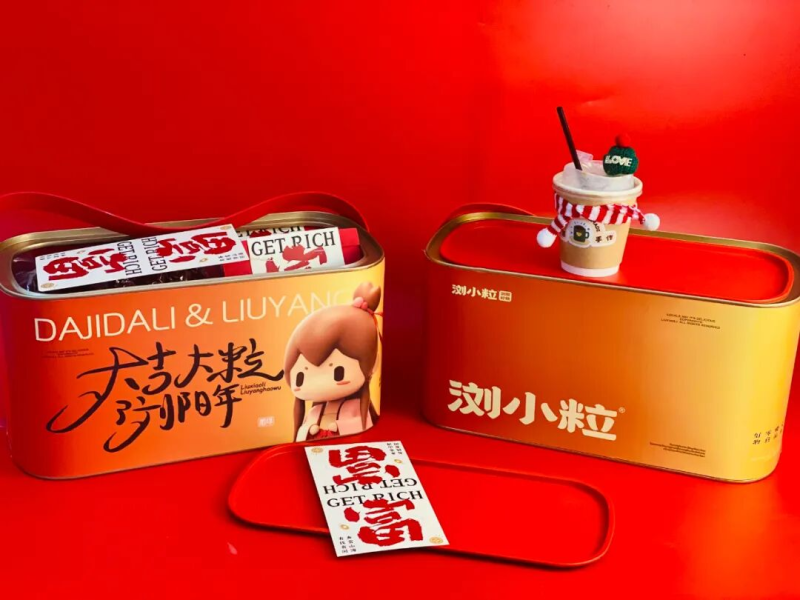
Group 1 - The event "Shared Plan" will take place from January 16 to 18 at the Changsha Hongxing International Convention and Exhibition Center, showcasing local products and brands from Liuyang [1] - The "Jinyang Goodies" exhibition area will feature well-known local brands and products, highlighting the craftsmanship of "Liuyang manufacturing" [1][9] - The event aims to present the rich culinary culture of Liuyang, emphasizing local flavors and traditional food items [2] Group 2 - Local companies such as Hunan Daowushan Food Co., Ltd. and Hunan Dewang Agricultural Technology Development Co., Ltd. will present traditional dishes that evoke nostalgia and local flavors [2] - Hunan Xianola Agricultural Development Co., Ltd. and Hunan Xiangnuo Food Co., Ltd. will showcase unique local products like pickled vegetables and smoked bamboo shoots, which are integral to local cuisine [2] - The event will also feature innovative food solutions, including pre-packaged meals from Hunan Xincongchu Food Co., Ltd., making it easier for families to prepare festive meals [5] Group 3 - The Liuyang food industry is providing new solutions for traditional cooking, allowing for easier meal preparation with high-quality pre-cooked dishes [5] - Local beverage companies like Hunan Aosili Food Technology Co., Ltd. will offer refreshing drinks to complement the festive meals [7] - The "Jinyang Goodies" platform aims to enhance the brand image of Liuyang manufacturing by ensuring quality and traceability for over 20 local enterprises [9]

警惕生活“妙招”变“险招”
Ke Ji Ri Bao· 2025-10-23 05:46
Core Viewpoint - The incident involving a woman who suffered burns from a homemade solution of vinegar and sugar highlights the potential dangers of following unverified life hacks for cleaning, emphasizing the need for scientific understanding of such methods [1][2][3][4] Group 1: Chemical Reactions and Safety - The use of white vinegar to remove limescale is scientifically valid, as vinegar (acetic acid) reacts with calcium carbonate and magnesium hydroxide in limescale to produce soluble compounds [1] - The woman's burns were caused by the high temperature of the solution and the rapid production of carbon dioxide gas, which increased pressure in the sealed thermos, leading to an explosive release [1][2] - To safely use vinegar for descaling, it is advised to keep the thermos open and use room temperature vinegar, avoiding the introduction of high-temperature liquids into sealed containers [2] Group 2: Common Household Hazards - Mixing toilet cleaner (containing hydrochloric acid) with bleach (sodium hypochlorite) can produce toxic chlorine gas, posing serious health risks such as respiratory distress and potential fatality [3] - The combination of cleaning agents like toilet cleaner and dish soap can neutralize each other, reducing cleaning effectiveness [3] - Other popular life hacks, such as using matches to enhance mosquito repellent, can also be dangerous due to the flammable nature of the components involved [2][3] Group 3: General Advice on Life Hacks - While some online life hacks may be effective, it is crucial to verify their scientific basis and understand the underlying principles before attempting them [4]
陕西省铜川市市场监督管理局关于37批次食品安全监督抽检情况的通告
Zhong Guo Zhi Liang Xin Wen Wang· 2025-10-11 05:43
Core Points - The Copper City Market Supervision Administration conducted a food safety supervision sampling inspection in 2025, testing a total of 37 batches of food products, including 24 batches of condiments, 7 batches of dairy products, and 6 batches of pastries, all of which passed inspection without any non-compliant samples [2]. Group 1: Inspection Results - A total of 37 batches of food products were sampled and all were found to be compliant with national food safety standards [2]. - The inspection included various categories of food products, specifically condiments, dairy products, and pastries [2]. Group 2: Product Information - The inspection covered a range of products from different manufacturers, including vinegar, soy sauce, and various sauces, with specific details on the production dates and inspection institutions [3][4]. - Notable products included 500mL of brewed vinegar from Suzhou Haoweijia Food Co., Ltd. and 800mL of brewed soy sauce from Jiajia Food Group [3][4].
江西省抚州市市场监督管理局2025年第8期食品安全监督抽检信息公告
Zhong Guo Zhi Liang Xin Wen Wang· 2025-09-04 14:58
Core Viewpoint - The announcement from Fuzhou Market Supervision Administration reveals the results of food safety inspections, indicating that out of 43 batches tested, 36 were compliant while 7 were found to be non-compliant, primarily concerning agricultural products [2]. Group 1: Inspection Results - A total of 43 batches were inspected, with 36 passing and 7 failing the safety standards [2]. - The non-compliant products mainly included agricultural items, with specific failures related to pesticide residues and microbial contamination [2]. - Consumers are encouraged to report any non-compliant products they encounter by calling the complaint hotline "12315" [2]. Group 2: Non-Compliant Products - The non-compliant products included: - Litchi with pesticide residue exceeding the limit (0.76 mg/kg vs. 0.5 mg/kg) [2]. - Chili pepper with cadmium levels above the permissible limit (0.080 mg/kg vs. 0.05 mg/kg) [2]. - Kiwi with chlorpyrifos residue exceeding the limit (0.16 mg/kg vs. 0.05 mg/kg) [2]. - Specific companies and locations of the non-compliant products were detailed, highlighting the need for improved quality control in food production [2]. Group 3: Compliant Products - The compliant products included various food items such as cucumbers, reusable dining utensils, and cooking oils, all passing safety inspections [3][4]. - The list of compliant products reflects a range of categories, including agricultural products, restaurant supplies, and condiments [3][4]. - The compliance of these products indicates a generally positive trend in food safety within the inspected categories [3][4].