
益达

Search documents
2534亿元,全球食品巨头收购案定了
21世纪经济报道· 2025-12-12 14:32
Core Viewpoint - The acquisition of Kellanova by Mars represents one of the largest food deals in history, enhancing Mars' position in the snack food industry and expanding its product portfolio significantly [1][2]. Group 1: Acquisition Details - Mars announced the acquisition of Kellanova for $83.50 per share, totaling approximately $35.9 billion (around 253.4 billion RMB), which is a 44% premium over Kellanova's 30-day weighted average share price prior to the announcement [2]. - Kellanova's market capitalization was $29.03 billion before its delisting, which is lower than the acquisition price [2]. - The deal was approved by Kellanova's shareholders in November 2024 and received all necessary regulatory approvals by December 2025 [2]. Group 2: Financial Performance - Kellanova reported an organic sales revenue of $13.81 billion for 2024, with a year-on-year growth of 5.6%, while its adjusted operating profit was $1.9 billion, up 17.3% [4]. - In the first three quarters of 2024, Kellanova's organic sales revenue was $9.64 billion, showing a modest growth of 0.2%, and its adjusted operating profit was $1.39 billion, down 4.1% year-on-year [4]. Group 3: Strategic Implications - The acquisition will increase Mars' snack business revenue to approximately $36 billion, with nine brands generating over $1 billion in annual sales, including Pringles, Cheez-It, and Kellanova's brands [5]. - The merger allows Mars to enter new categories such as cereals and healthy snacks, complementing its existing product lines, which include brands like Snickers, M&M's, and Dove [7]. - Mars aims to enhance its market coverage and competitiveness through this acquisition, leveraging the strengths of both companies to shape the future of the snack food industry [7]. Group 4: Recent Acquisitions - Since 2020, Mars has been actively expanding its snack business through several acquisitions, including KIND North America, Trü Frü, Nature's Bakery, Hotel Chocolat, and Kevin's Natural Foods [8]. - In the pet care sector, Mars has also acquired veterinary product suppliers to strengthen its service capabilities in pet health [9].

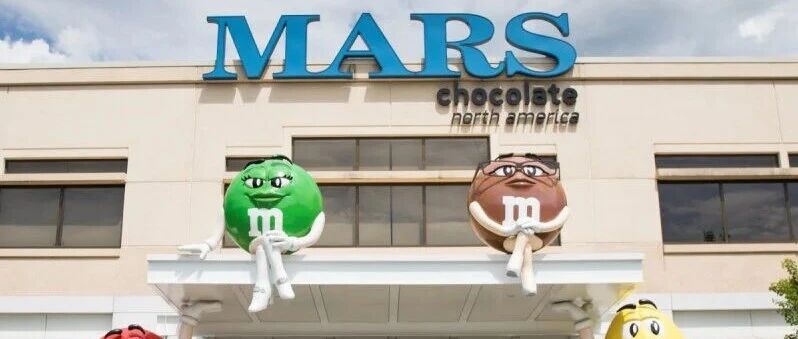
359亿美元天价收购案背后:玛氏构建零食超级“王国”
2 1 Shi Ji Jing Ji Bao Dao· 2025-12-12 11:37
Core Insights - The acquisition of Kellanova by Mars represents one of the largest food deals in history, with a total consideration of $35.9 billion, reflecting a 44% premium over Kellanova's average share price prior to the agreement [1][2] - The merger is expected to enhance Mars' snack business, increasing annual revenue to approximately $36 billion and adding nine brands with over $1 billion in annual sales [3][4] Company Overview - Mars is a well-known global food giant with annual sales exceeding $50 billion and operations in over 145 markets, employing around 150,000 people [2] - Kellanova, prior to its delisting, had a market capitalization of $29.03 billion and generated organic sales of $13.81 billion in 2024, with a 5.6% year-over-year growth [2][3] Strategic Implications - The acquisition allows Mars to enter complementary categories such as cereals and snacks, significantly enhancing its market coverage and competitiveness [4] - Mars has been actively expanding its snack business since 2020, with several key acquisitions aimed at enhancing its portfolio in the snack and pet care sectors [5]
玛氏旗下工厂入选“卓越级智能工厂”名单
Zhong Guo Jing Ji Wang· 2025-11-25 13:10
Core Viewpoint - Mars has been recognized for its Yonghe factory in Guangzhou as one of the latest "Excellent Intelligent Factories" by multiple Chinese government ministries, highlighting its commitment to digitalization and smart manufacturing [1] Group 1: Factory Achievements - The Yonghe factory has undergone a five-year upgrade, completing the intelligent transformation of all 21 production lines, resulting in improvements in capacity, quality, cost, and delivery levels [1] - The factory utilizes 3D modeling and AI algorithms for real-time monitoring of production factors, achieving 100% high-precision traceability in key manufacturing processes [1] - Cloud-based collaborative scheduling has accelerated response times to production anomalies by over 50% [1] Group 2: Technological Innovations - The factory employs nearly a hundred automated guided vehicles and collaborative robots that operate seamlessly 24/7, ensuring "dark factory" operations for finished product stacking and raw material delivery [1] - Collaborative robots are capable of executing automatic feeding processes with no human intervention required [1] Group 3: Strategic Implications - The Vice President of Supply for Mars Wrigley China stated that the "Excellent Intelligent Factory" is a significant practice of Mars' smart manufacturing strategy, injecting new momentum into the company's long-term development in China [1] - Mars aims to continuously build a more efficient and sustainable supply system driven by digitalization, intelligence, and green initiatives to provide high-quality products and services to Chinese consumers [1]
研判2025!中国口香糖行业市场政策、产业链、销售规模、竞争格局及发展趋势分析:无糖口香糖、功能性口香糖产品逐渐成为市场新宠[图]
Chan Ye Xin Xi Wang· 2025-10-21 01:30
Overview - The gum market in China is experiencing steady growth, with sales expected to reach 78,400 tons and revenue of 12.202 billion yuan in 2024, averaging 155,600 yuan per ton [1][4] - Consumers are increasingly seeking gums with additional benefits such as dental care, stress relief, and energy boosting, moving beyond traditional breath-freshening functions [1][4] - Health consciousness is rising, leading consumers to prioritize "healthy ingredients" and "sugar-free formulas," making sugar-free and functional gums popular [1][4] Market Policies - China has implemented various policies to ensure food safety and quality in the gum industry, promoting a shift towards standardized and high-quality production [3] Industry Chain - The gum industry consists of upstream suppliers of raw materials (gum base, sweeteners, flavors), midstream production companies, and downstream sales channels including supermarkets, convenience stores, and e-commerce platforms [3] Current Development - The gum market is projected to grow, with a focus on health-oriented products. Exports are also significant, with 32,952.9 tons exported in the first eight months of 2025, generating 8.2553 million USD [4][5] Competitive Landscape - The market is highly concentrated, with the top three companies holding over 90% market share. Mars Wrigley (68.1%) and Mondelēz (19.3%) are the leading players, while local brands like Fujian Jiujiuwang and Fujian Yake are gaining traction [5][6] Future Trends - The demand for sugar-free gums is expected to rise, and companies will likely develop gums with specific health benefits. The Z generation's preferences for functionality, safety, and creative packaging will shape future product offerings [6][7]
