矿山大模型

Search documents
梅安森:公司智慧矿山解决方案已覆盖全国多个矿区,矿山大模型现处于应用推广阶段
Xin Lang Cai Jing· 2025-10-24 07:38
Core Viewpoint - The company has successfully implemented its smart mining solutions across multiple mining areas in China, establishing a benchmark case at the Caojiatan smart mine [1] Group 1: Company Developments - The company's smart mining solutions are currently in the application promotion phase, focusing on safety management, production optimization, and equipment early warning systems [1] - The company is collaborating with several coal mining enterprises to implement these solutions [1] Group 2: Strategic Focus - The mining big model is a strategic priority for the company, indicating a commitment to advancing technology in the mining sector [1]

华为联手山东能源集团打造“智慧矿山”,共同见证“黑金新生”
Zhong Guo Neng Yuan Wang· 2025-09-16 09:49
Core Viewpoint - The coal industry in China is undergoing a significant transformation through the integration of digital and intelligent technologies, with Shandong Energy Group and Huawei leading the way in creating a scalable model for smart mining solutions [1][5]. Group 1: Industry Challenges - The coal industry faces common global challenges such as safety hazards, efficiency improvement opportunities, and heavy pollution, which are not unique to Shandong Energy but are prevalent across the sector [1][2]. - There are over a thousand large-scale coal mines in China, many of which still rely on manual inspections and traditional maintenance methods, leading to high safety risks and significant capacity losses due to downtime and human errors [1][2]. Group 2: Collaboration and Innovation - In 2021, Huawei's coal mining team was established and began collaborating with Shandong Energy to address technical bottlenecks in smart construction, aiming for a standardized solution adaptable to various coal mining scenarios [2][3]. - A joint innovation center was formed in early 2022, focusing on developing a mining big model as the core research direction, with Shandong Energy's Cloud Ding Technology responsible for implementation [2][3]. Group 3: Technological Implementation - The program showcased the development of a "mining big model" that integrates Shandong Energy's mining data and safety protocols, resulting in specialized models for different applications such as intelligent safety and inspection [3][4]. - The three-tier architecture of "base model - industry model - scenario model" allows for rapid adaptation to new mining environments, significantly reducing deployment time [3][4]. Group 4: Results and Impact - The standardized approach has demonstrated effectiveness in safety monitoring and coal washing processes, with AI cameras and models improving operational efficiency and reducing waste [4]. - The coal washing model has led to a 0.2% increase in clean coal output and zero discharge of coal slurry, adding 5,000 tons of clean coal annually [4]. - Over five years, the collaboration has resulted in the implementation of over 180 application scenarios, marking a significant milestone in the industrial digital transformation [4][5]. Group 5: Future Prospects - The transformation from "dirty and dangerous" to "high-tech and safe" reflects the broader trend of traditional industries embracing the new era of digitalization and intelligence [5]. - The initiative aims to promote the "smart mining template" across various industries, contributing to the strength of China's industrial transformation and offering global solutions for traditional industry upgrades [5].
跨国公司在山东|解码山东与世界的产业共生逻辑
Qi Lu Wan Bao· 2025-06-19 14:03
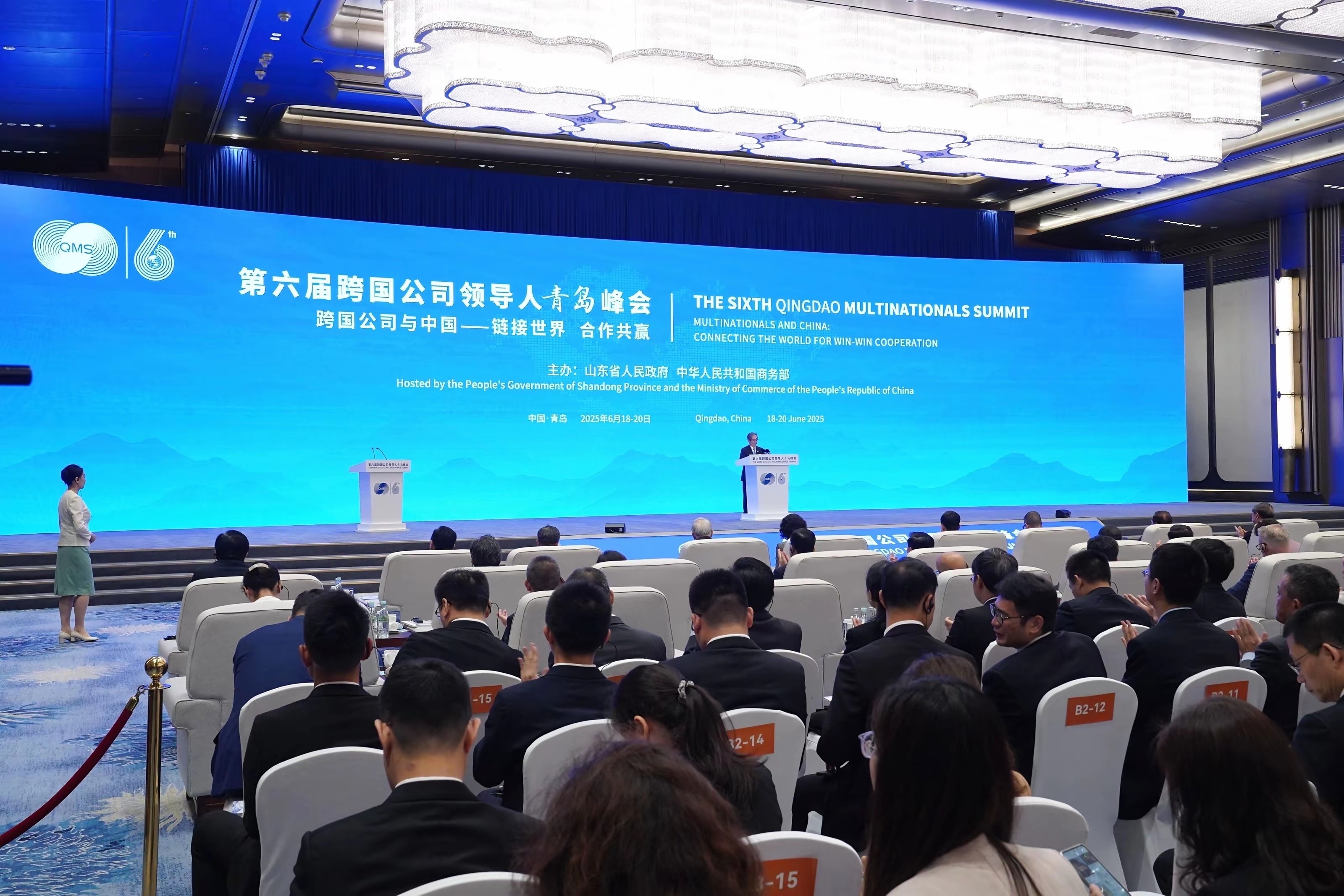
Core Viewpoint - The sixth Multinational Corporations Leaders Summit in Qingdao highlights Shandong's role as a strategic hub for multinational companies looking to engage with the Chinese market amid a shifting global economic landscape [1] Group 1: Industrial Foundation - Shandong's comprehensive industrial base and innovative vitality provide an irreplaceable development soil for multinational companies [5] - The province's "smart transformation" and "digital transition" of traditional industries are key collaboration points for multinational firms [5][6] - The establishment of a food technology industrial park by Louis Dreyfus Group in Qingdao exemplifies the rapid project execution known as "Qingdao speed" [5] - An aluminum production facility by Amway Aluminum will supply core materials for strategic emerging sectors like semiconductors and electric vehicle batteries [6] Group 2: Institutional Innovation - Shandong is becoming a "strategic fulcrum" for multinational companies to connect with the Chinese market through institutional openness [7] - The Qingdao Free Trade Zone has attracted 182 projects from Fortune 500 companies, forming industrial clusters in medical equipment and integrated circuits [7] - The "International Investment Cooperation Ecological Circle" model promotes talent, technology, and capital integration, facilitating cross-border operations [7][10] Group 3: Capital Empowerment - Shandong is building a fund ecosystem and cross-border financial services to support multinational companies with comprehensive investment solutions [11] - The Huiru Jinchuan Fund, initiated by Shandong Talent Group and Shandong Guotou, focuses on investing in high-growth enterprises and innovative projects [11] - Cross-border financial services, such as those offered by Hengfeng Bank, are designed to reduce operational costs for multinational companies [12] Group 4: Future Outlook - The integration of digital economy and traditional industries is becoming a new competitive focus, with Huawei's collaboration in developing AI models in Shandong [13] - Sustainable development potential is showcased through collaborations in seawater desalination, reducing costs by 40% through localized technology [16] - Shandong's cooperation with multinational companies is evolving from mere investment to co-creating innovative ecosystems and nurturing new productive forces [16]