社交

Search documents
——25Q4基金季报专题研究:四类基金画像:加仓、减仓、调仓、极致风格
Huachuang Securities· 2026-01-30 06:42
Group 1 - The overall change in public fund holdings shows an increase in allocation to non-ferrous metals and communications, while reducing allocation to electronics and pharmaceuticals. The top five industries with increased holdings are non-ferrous metals (up 2.1 percentage points), communications (1.8 percentage points), non-bank financials (0.9 percentage points), chemicals (0.8 percentage points), and machinery (0.7 percentage points). The top five industries with reduced holdings are electronics (-1.6 percentage points), pharmaceuticals (-1.6 percentage points), media (-1.2 percentage points), electric new energy (-0.9 percentage points), and computers (-0.8 percentage points) [1][8][12] Group 2 - The report categorizes funds into four types: increasing, decreasing, adjusting, and extreme style. The increasing funds focus on growth style, adding positions in industrial metals, military electronics, and photovoltaic equipment, while reducing positions in batteries, digital media, and social networks. Decreasing funds are shifting from growth to value, adding positions in components, liquor, and coal mining, while reducing positions in communication equipment, semiconductors, and passenger vehicles. Adjusting funds show a balanced configuration, adding positions in semiconductors, industrial metals, and insurance, while reducing positions in consumer electronics, batteries, and state-owned banks. Extreme style funds make internal adjustments within their styles, adding communication equipment and renovation materials while reducing consumer electronics and bioproducts [7][15][16] Group 3 - The report highlights that the consensus for selling includes bioproducts, internet e-commerce, consumer electronics, social media, batteries, and digital media, while the consensus for buying includes insurance, securities, chemical products, components, photovoltaic equipment, and industrial metals [15][16][18] Group 4 - The analysis indicates that increasing funds prefer large-cap and high-valuation stocks, while decreasing and adjusting funds focus on both growth and profitability. Extreme growth funds tend to hold small-cap, high-valuation stocks with pressured profitability, while extreme value funds focus on low-valuation, large-cap stocks with low earnings growth [7][18][25]
赤子城科技高级副总裁宋朋亮:立足中国香港 赋能全球业务增长
Zheng Quan Ri Bao Wang· 2026-01-20 12:41
凭借国际化的营商环境、成熟的资本市场,以及顶级的人才资源,香港将持续为赤子城科技注入发展动 能,助力推进"产品复制+国家复制"的全球化战略。宋朋亮强调:"香港联通世界,使我们能够将成功产 品和运营模式高效复制到不同市场,并依据当地文化进行适应性调整,从而提升用户黏性与社群活跃 度。" 同时,宋朋亮还表示:"香港是创新之都,吸引企业积极应用人工智能创作个人化内容,并开发崭新盈 利模式。香港兼具国际金融中心与人才汇聚优势,让我们能够接触全球合作伙伴和招揽顶尖技术专家, 尤其适合建设人工智能研究中心。" 近年来,凭借本地化运营结合全球视野的双轨策略,赤子城科技在社交娱乐市场的领导地位逐渐巩固; 与此同时,香港在公司全球化战略中的重要价值也日益凸显。目前,赤子城科技在港团队已深度参与国 际化发展进程和研发业务,致力于将人工智能深度融入社交娱乐产品,通过探索前沿技术应用来驱动创 新,构建长期竞争优势。 本报讯(记者李春莲) 近日,赤子城科技有限公司(以下简称"赤子城科技",09911.HK)高级副总裁宋朋亮就该公司全球化战略 等话题对外表示:"我们以中国香港总部作为战略基地,辐射中东北非、东南亚等市场,目前在全球已 设 ...
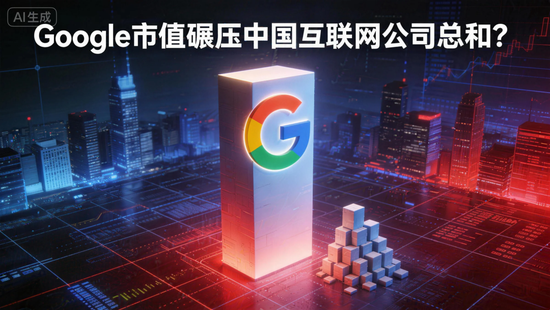
中国所有互联网公司市值加起来,竟然不如一个 Google?劝劝巨头们 别再卷了 通过免费打压行业对手追求垄断
Xin Lang Cai Jing· 2026-01-18 13:23
Core Viewpoint - The market capitalization of Google (Alphabet) is approximately $4 trillion, while the combined market capitalization of China's top internet companies is only about $1.8 trillion, indicating a significant disparity in valuation and market perception [25][28][30]. Market Capitalization Comparison - As of the end of 2025 or early 2026, the estimated market capitalizations of major companies are as follows: - Google (Alphabet): ~$40,000 million - Tencent: ~$5,917 million - Alibaba: ~$3,333 million - Xiaomi: ~$1,987 million - Pinduoduo: ~$1,486 million - Meituan: ~$975 million - NetEase: ~$852 million - JD: ~$471 million - Trip.com: ~$383 million - Kuaishou: ~$345 million - Tencent Music: ~$302 million - The total market capitalization of the top 10 Chinese internet companies is estimated to be around $17,000–20,000 million, which is more than 2.2 times less than that of Google [28][3][25]. Competitive Landscape - The primary issue in the Chinese internet sector is not a lack of effort but rather a misdirection in competitive strategies, focusing excessively on user acquisition, subsidies, and speed, leading to a dangerous cycle of competition [30][5]. - This competitive model, which relies on free services to gain scale and eliminate competitors, is damaging long-term sustainability in the industry [31][32]. Impact on Entrepreneurship - The current environment is systematically clearing out entrepreneurs, reducing their roles to mere tools for larger platforms, and stifling genuine innovation [34][37]. - The lack of reasonable pricing, stable profits, and long-term investment in research and development is leading to fewer companies being profitable and surviving [35][36]. Employment Challenges - The concentration of the industry into a few dominant platforms is contributing to job losses, with monopolistic structures eliminating positions rather than technological advancements like AI [39][10]. - As industry profits shrink, salaries are also compressed, leading to fewer job opportunities for young people [11][39]. Comparison with Google - Google’s strength lies not in the number of applications but in its focus on foundational capabilities, allowing ecosystem partners to thrive and generating productivity-based revenue rather than merely capturing attention [40][41]. - The competitive landscape in China, characterized by internal strife, hinders the emergence of globally competitive companies [41][42]. Future Outlook - If the current competitive practices continue, the industry may end up with a few platforms and many dependent entities, leading to a degraded ecosystem rather than a mature industry [42][45]. - A healthy internet ecosystem should support entrepreneurship and job creation, rather than relying solely on free services as a competitive tool [44][51].