
长征二号F遥二十二运载火箭

Search documents
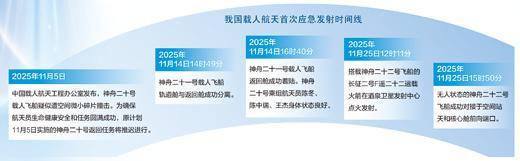
从5圈返回到3圈自主快速返回 神二十乘组这样“换乘”回家
Huan Qiu Wang Zi Xun· 2026-02-16 00:28
Core Viewpoint - The article discusses the emergency response initiated by China's manned space program following an anomaly with the Shenzhou-20 spacecraft, leading to the crew's transfer to Shenzhou-21 for their return to Earth and the launch of Shenzhou-22 for an emergency mission. Group 1: Emergency Response - On November 10, 2025, the Chinese manned space program officially activated an emergency plan due to an anomaly with Shenzhou-20, deciding to transfer the three astronauts to Shenzhou-21 for their return to Earth [1] - The Shenzhou-21 spacecraft will utilize a "3-circle autonomous rapid return" method, which was originally planned for the 2026 mission, but is now being implemented early due to the emergency situation [3] Group 2: Training and Preparation - The crew had to relearn procedures due to the change from a 5-circle return to a 3-circle return, which shortens the return time by three hours [5] - The astronauts engaged in multiple training sessions and discussions to familiarize themselves with the new manual and procedures for the return [8] Group 3: Emotional Aspects - The astronauts expressed feelings of reluctance and attachment to the space station after spending 204 days there, describing it as a home and a companion [10] - The farewell moment was filled with emotions, as the astronauts felt a deep connection to the space station [10] Group 4: Successful Return - On November 14, 2025, the Shenzhou-21 spacecraft successfully separated its orbital module from the return module, marking the beginning of the return journey for the astronauts [12] - The return process was noted to be well-prepared and executed, with the crew closely monitoring instrument parameters during the descent [14] - The new return method allowed for a smoother and quicker return, reducing the time from leaving the space station to landing on Earth by over three hours [16] Group 5: Record Achievement - The mission set a new record for the longest single crew stay in orbit for Chinese astronauts, with a total of 204 days [23] - Following the crew's return, Shenzhou-22 was launched on November 25, 2025, marking China's first emergency launch in manned spaceflight history [23]


中国航天 更多精彩
Ren Min Ri Bao Hai Wai Ban· 2026-01-14 22:50
Core Viewpoint - China's space industry is experiencing significant advancements, with multiple successful missions and the introduction of new technologies, aiming to establish itself as a leading space power by 2026 [7][12][14]. Group 1: Manned Spaceflight Progress - The Shenzhou 21 crew has been working in orbit for over 70 days, conducting key training and scientific experiments [8]. - In 2025, China executed its first emergency launch mission in response to unexpected issues with the Shenzhou 20 spacecraft, demonstrating its capabilities [8]. - The Chinese space station has successfully conducted 265 scientific and application projects in three major fields by December 2025 [8]. Group 2: Deep Space Exploration - The Tianwen-2 mission successfully launched in 2025, marking China's first asteroid exploration and sample return mission, targeting asteroid 2016 HO3 [12]. - The mission aims to return to Earth by the end of 2027 after conducting scientific investigations on the asteroid and later on comet 311P [12]. - The Chang'e 7 mission is planned for 2026, focusing on lunar south pole exploration and ice detection [13]. Group 3: Commercial Space Development - In 2025, various commercial rockets, including Ceres-1 and Zhuque-3, were launched, indicating a surge in China's commercial space activities [14]. - The National Space Administration has initiated a plan to enhance the quality and safety of commercial space development from 2025 to 2027 [14]. - New generation rockets are expected to enter their maiden flights, supporting large-scale satellite networks and low-cost cargo transport [14].

天地接力二十天
Ren Min Wang· 2026-01-11 22:43
Core Viewpoint - The successful emergency launch of the Shenzhou spacecraft highlights China's commitment to astronaut safety and rapid response capabilities in the face of unexpected challenges [1][2][3]. Group 1: Incident Overview - A crack was discovered on the Shenzhou 20 spacecraft's window, prompting immediate assessment and decision-making by the China Manned Space Engineering Office [1][2]. - The crack was determined to be a through-crack, compromising the safety of the spacecraft during re-entry [2][3]. - Experts quickly convened to evaluate the implications of the crack on the spacecraft's structural integrity and astronaut safety [2][3]. Group 2: Response Actions - A series of simulations and tests were initiated to replicate the impact that caused the crack, leading to the decision to postpone the Shenzhou 20 return mission [3]. - The Shenzhou team adopted a parallel working model to expedite the analysis and ensure thorough validation of safety measures [3][4]. - The decision was made to have the Shenzhou 20 crew return on the Shenzhou 21 spacecraft, with the Shenzhou 22 launch scheduled shortly after [4][5]. Group 3: Technical Adjustments - The return method for the Shenzhou 21 was modified from a five-orbit to a three-orbit rapid return, marking a significant technical advancement [5][6]. - The GNC (Guidance, Navigation, and Control) system was crucial for the successful implementation of the new return strategy [6][7]. - The team worked tirelessly to ensure that all systems were ready for the emergency launch, maintaining high standards despite the compressed timeline [10][12]. Group 4: Launch Success - The Shenzhou 22 spacecraft was successfully launched on November 25, 2025, completing the emergency mission [13]. - The event served as a reminder of the importance of rigorous preparation and the need for continuous improvement in safety protocols [13][14]. - The successful return of the Shenzhou 20 crew underscored the resilience and dedication of the Chinese space program [7][14].
在这些照片里,珍藏着你的2025
Xin Hua She· 2026-01-04 04:36
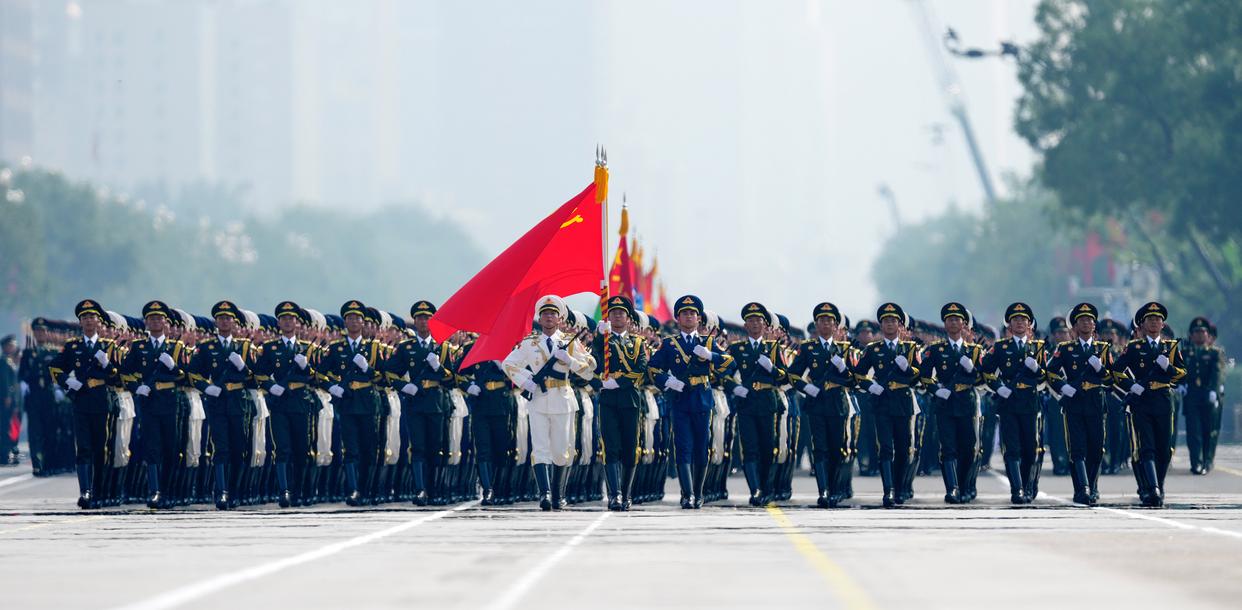
Group 1 - The 80th anniversary of the victory in the Chinese People's War of Resistance against Japanese Aggression and the World Anti-Fascist War was held in Beijing on September 3, 2025 [2][3][5] - The event featured a grand military parade showcasing the strength and unity of the Chinese armed forces [1][5][7] - The ceremony included the release of doves and balloons, symbolizing peace and hope [7] Group 2 - The event was attended by veterans who paid tribute to their sacrifices during the war [2][5] - The military display highlighted China's advancements in defense technology and military capabilities [1][5] - The anniversary serves as a reminder of the historical significance of the war and its impact on China's national identity [2][3]
像说|“神箭凌日”是怎么拍摄的?
Xin Hua She· 2025-11-29 02:24
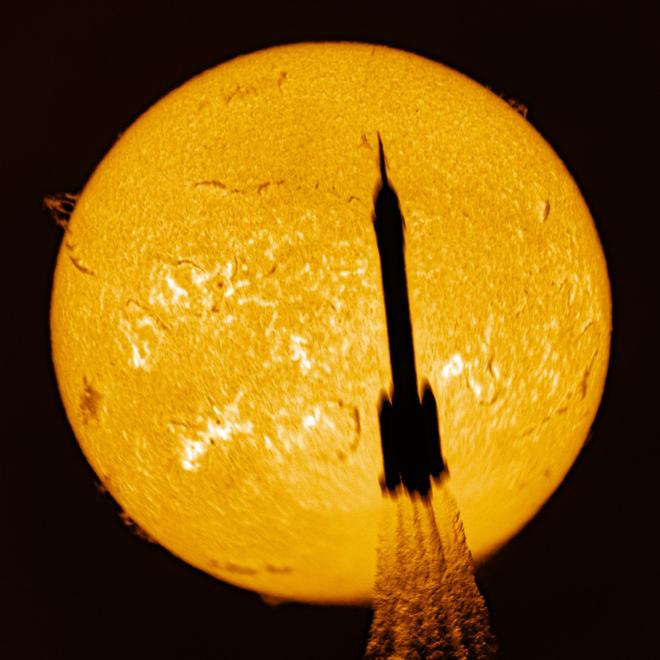
Core Points - The successful launch of the Shenzhou-22 spacecraft aboard the Long March 2F rocket marks China's first emergency manned space mission [1] - The spacecraft successfully separated from the rocket and entered its designated orbit [1] - Stunning photographs of the launch, referred to as "God Arrow Crossing the Sun," were captured by a team led by journalist Zhang Bin [1][3] Group 1 - The Shenzhou-22 mission is a significant milestone in China's manned space program, representing its first emergency launch [1] - The launch took place at the Jiuquan Satellite Launch Center, showcasing China's capabilities in space exploration [1] - The successful separation of the spacecraft from the rocket indicates the mission's technical proficiency [1] Group 2 - The photographs taken during the launch highlight the collaboration and effort of the team involved [3][4] - The use of specialized equipment, such as solar telescopes, was crucial for capturing the moment [3] - The story behind the photographs emphasizes the importance of teamwork in achieving such remarkable results [4]
精准“把脉”气象保障神舟二十二号飞天
Ke Ji Ri Bao· 2025-11-28 09:01
Core Points - The successful launch of the Shenzhou-22 manned spacecraft took place on November 25 at 12:11 PM, facilitated by the Long March 2F Yao-22 rocket from the Jiuquan Satellite Launch Center [1][2] - The meteorological support team effectively analyzed complex weather conditions, including frequent cold air activities and high-altitude wind speeds, to determine the optimal launch window [1] - The Gansu Provincial Meteorological Bureau quickly mobilized experts to form a meteorological support team, which began on-site support tasks on November 18, focusing on critical weather elements [1] Meteorological Support - The meteorological team conducted multiple consultations with the launch base's meteorological office to assess key weather factors such as temperature, wind speed, and weather phenomena [1] - Since November 14, the weather conditions posed significant uncertainties for the wind field forecasts at the Jiuquan Satellite Launch Center [1] - Advanced technologies and platforms from the China Meteorological Administration and Gansu Provincial Meteorological Bureau were integrated to enhance forecasting accuracy [1] Launch Timing - After precise calculations, the team identified November 20 for vertical transport and analyzed various alternative launch windows [2] - The optimal launch time was determined to be 12:11 PM on November 25, coinciding with a break in cold air activity [2]
首批、首次、首个!本周,我国多领域交出硬核成绩单
Yang Shi Xin Wen Ke Hu Duan· 2025-11-28 00:21
Group 1: Aerospace and Nuclear Fusion Achievements - China has made significant breakthroughs in aerospace and nuclear fusion, showcasing its hard power capabilities [1] - The "International Scientific Program for Burning Plasma" was officially launched in Hefei, Anhui, with the BEST device set to validate long-pulse steady-state operation by the end of 2027 [2] Group 2: Lunar Construction and Space Missions - The first batch of "lunar bricks" has successfully returned to Earth after a year-long space exposure experiment, weighing approximately 100 grams [3] - The Shenzhou-22 spacecraft was successfully launched as China's first emergency mission, carrying essential supplies and equipment to the space station [4] Group 3: Maritime Engineering - The new generation of ultra-large dredging vessel "Tongjun" has successfully completed all sea trials and is ready for operational use, boasting the largest hold capacity in Asia at 38,168 cubic meters [5][9] Group 4: Environmental Technology - The world's first aerosol-meteorological coupled forecasting AI model has been tested and is now operational, capable of providing high-precision environmental meteorological forecasts [10]

解密载人航天首次应急发射任务
Ke Ji Ri Bao· 2025-11-27 01:25
Core Viewpoint - The successful launch of the Shenzhou-22 spacecraft marks China's first emergency launch mission in manned spaceflight, utilizing a 16-day emergency launch plan to ensure the safety and efficiency of the operation [1][2]. Group 1: Emergency Launch Implementation - The emergency launch was initiated after the Shenzhou-20 spacecraft window showed minor cracks, leading to a conclusion that it did not meet safety conditions for manned return. The command center quickly activated the emergency plan, completing risk assessments and necessary preparations within 20 days [2]. - The Long March 2F Yao-22 rocket and Shenzhou-22 spacecraft were put into a ready state, undergoing tests and checks, including propellant loading, to ensure a successful launch and docking with the space station [2]. Group 2: Differences Between Emergency and Regular Launches - The Shenzhou-22 spacecraft features several technical upgrades compared to the Shenzhou-21, enhancing reliability. It was launched in an unmanned state, carrying supplies, which differentiates it from manned launches [3]. - The 16-day emergency launch task is characterized by a compact process, high intensity, and rapid pace, presenting significant challenges to the spacecraft systems [3]. Group 3: Safety Measures for the Space Station - The Chinese space station has implemented various risk control measures since its design phase, including backup systems for the Tianhe core module and cargo spacecraft, ensuring normal operations and safe returns for astronauts [5][6]. - For space debris protection, the station employs active avoidance for debris larger than 10 cm, protective devices for debris smaller than 1 cm, and impact sensing for intermediate sizes, allowing for emergency pressure protocols in case of leaks [6].

神舟二十二号飞船应急“太空救援” 发射任务时间压缩一半仅用16天
Nan Fang Du Shi Bao· 2025-11-26 23:05
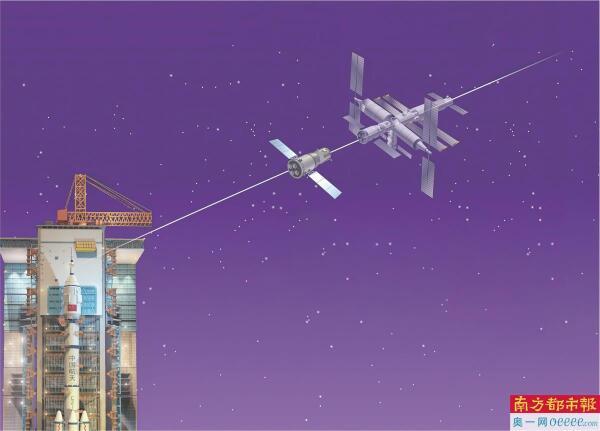
Core Points - The Shenzhou-22 spacecraft was successfully launched on November 25, marking China's first emergency manned space mission due to the delayed return of Shenzhou-20 caused by a suspected collision with space debris [3][5][11] - The launch utilized a 16-day emergency preparation process, significantly shorter than the usual 30-day timeline, demonstrating the efficiency of the Chinese space program [7][8] - Shenzhou-22 is an unmanned mission carrying supplies for the space station, including food, medicine, and equipment to address issues from the previous mission [6][10] Launch Details - The Long March 2F rocket lifted off from the Jiuquan Satellite Launch Center at 12:11 PM, successfully separating from the spacecraft approximately 10 minutes later [5][6] - The spacecraft docked with the Tianhe core module of the space station at 3:50 PM on the same day [5] Emergency Launch Process - The emergency launch was initiated after the Shenzhou-20 mission faced safety concerns due to space debris, leading to a rapid transition to launch readiness [4][11] - The preparation involved advanced planning and division of tasks to ensure that non-time-sensitive work was completed ahead of time [7] Technological Improvements - Shenzhou-22 features several technical upgrades, including enhanced human-machine interaction design and improved payload capacity [8][9] - The spacecraft is designed to support the return of astronauts from Shenzhou-21, despite being launched in an unmanned state [6][10] Space Debris Concerns - The incident with Shenzhou-20 highlights the dangers posed by space debris, which travels at speeds exceeding 7 kilometers per second [11][12] - The increase in space debris is attributed to various factors, including defunct satellites and operational waste from space missions [11][13]
神舟二十二号飞船顺利抵达中国空间站 我国首次应急发射任务取得圆满成功
Yang Guang Wang· 2025-11-26 01:52
Core Points - China's Shenzhou-22 spacecraft was successfully launched on November 25, marking the first emergency mission in the country's manned space program [1][2] - The spacecraft successfully docked with the Tianhe core module of the space station, ensuring the safety of the astronauts aboard [2] - The mission involved significant technical improvements and was executed under strict manned mission standards [2][3] Group 1 - The Shenzhou-22 mission is the 38th launch of China's manned space program and the 610th flight of the Long March series rockets [3] - The mission was designed to ensure the safety of astronauts in orbit, utilizing a 16-day emergency response plan [3] - The spacecraft carried essential supplies, including food, medicine, and equipment for addressing issues with the Shenzhou-20 spacecraft [2][3] Group 2 - The successful launch and docking demonstrate the effective coordination between various systems and teams involved in the mission [2] - The mission serves as a training opportunity for the team, reinforcing the spirit of manned spaceflight [2] - The emergency launch capability was prepared with a fully tested spacecraft ready for immediate launch if needed [3]