星际客机

Search documents
新华财经晚报:铁路12306累计发售春运期间车票2.98亿张
Xin Hua Cai Jing· 2026-02-20 10:28
Domestic News - The State Council's Safety Committee reported two significant fireworks accidents and emphasized the need for comprehensive safety regulation in the fireworks industry, particularly during the upcoming Spring Festival [1] - As of February 20, 2026, the total number of train tickets sold during the Spring Festival period reached 298 million, with a planned increase of 1,469 passenger trains to accommodate the expected 15 million travelers on February 20 [1] - The total box office for the 2026 film year has surpassed 6 billion, with the Spring Festival box office (including pre-sales) exceeding 3.4 billion, led by films such as "Fast Life 3," "Silent Awakening," and "Boon Year" [2] International News - Canada's trade deficit significantly widened to 31.3 billion CAD in 2025, marking the largest deficit since 2020, with previous years showing deficits of 0.933 billion CAD and 7.2 billion CAD in 2023 and 2024, respectively [5] - The European Central Bank imposed a record fine of 12.18 million euros on JPMorgan's European subsidiary for violations related to reporting regulations [5] - The Eurozone's composite Purchasing Managers' Index (PMI) for February was reported at 51.9, remaining above the 50 mark for 14 consecutive months, indicating economic expansion [5]
美认定宇航员滞留为最高等级事故
Xin Lang Cai Jing· 2026-02-20 08:20
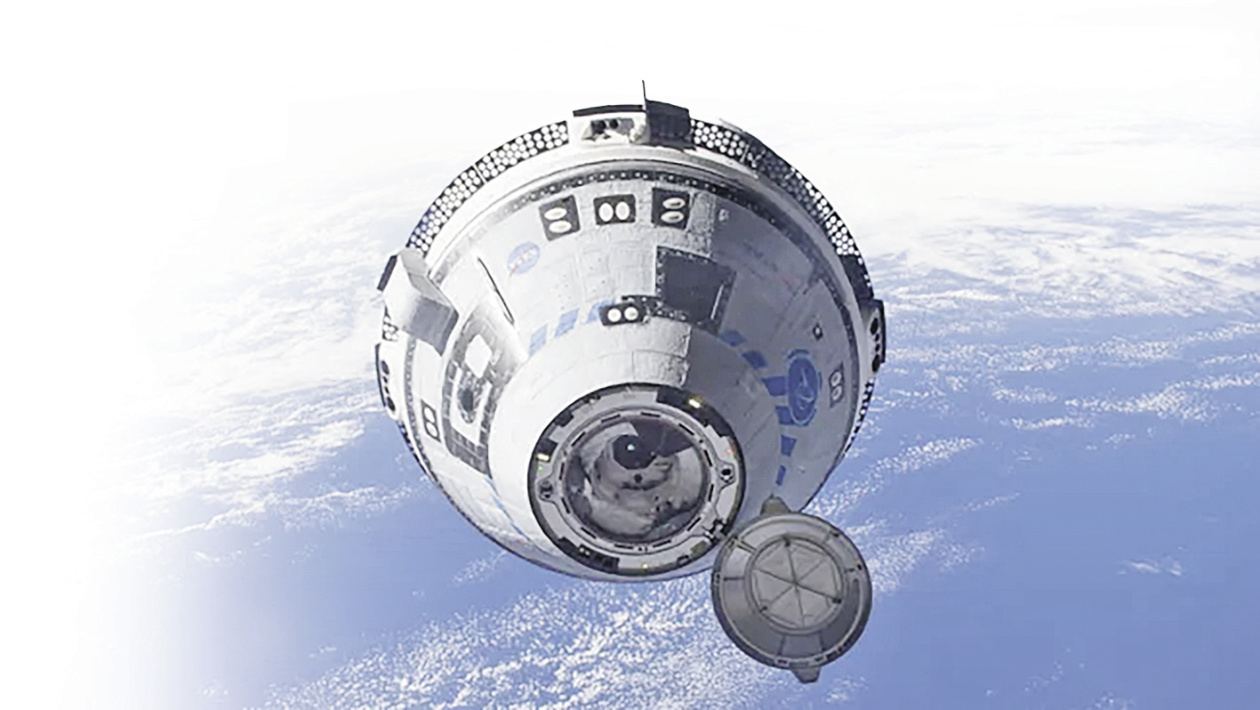
Core Viewpoint - The investigation report by NASA classifies the incident involving Boeing's "Starliner" crewed test flight as a Class A accident, the highest severity level, due to astronaut stranding at the International Space Station caused by spacecraft malfunction [1] Group 1: Accident Classification - NASA categorizes the incident as a Class A accident, which includes scenarios leading to death or permanent disability, direct property loss exceeding $2 million, destruction of crewed spacecraft, or uncontrolled flight in unexpected conditions [1] - The report highlights that hardware failures, certification issues, and leadership errors contributed to the risk conditions that did not meet NASA's crewed spaceflight safety standards [1] Group 2: Technical Issues and Future Actions - Technical problems with the "Starliner" were particularly evident during the docking process with the International Space Station [1] - NASA plans to implement corrective measures based on the investigation findings to ensure the safety of future "Starliner" missions and other crewed projects [1] Group 3: Mission Timeline and Outcomes - The "Starliner" was scheduled to carry two American astronauts to the International Space Station on June 5, 2024, with an expected stay of 8 to 14 days [1] - Due to propulsion failures and helium leaks, NASA decided to return the "Starliner" uncrewed in September 2024, resulting in the astronauts remaining at the ISS until their return on SpaceX's "Dragon" spacecraft in March 2025 [1] - An independent project investigation team was established by NASA in February 2025 to examine the technical issues related to the test flight, with the report completed in November 2025 [1]

美航空航天局认定“星际客机”载人试飞为最高等级事故
Xin Hua She· 2026-02-20 06:44
Core Points - NASA has classified the Boeing "Starliner" crewed test flight incident as a Class A accident due to spacecraft failure that resulted in astronauts being stranded at the International Space Station [1] - The incident was attributed to a combination of hardware failure, certification issues, and leadership errors, leading to risks that did not meet NASA's human spaceflight safety standards [1] - NASA plans to implement corrective measures based on the investigation findings to ensure the safety of future "Starliner" missions and other crewed projects [1] Summary by Sections Incident Classification - The "Starliner" test flight was deemed a Class A accident, which includes scenarios leading to death, permanent disability, or direct property loss exceeding $2 million [1] Technical Issues - The report highlighted significant technical problems with the "Starliner," particularly during the docking process with the International Space Station [1] Investigation and Future Actions - An independent project investigation team was established by NASA in February 2025 to examine the technical issues related to the test flight, with the report completed in November 2025 [2]
人类成功应对过哪些太空紧急事件?
Xin Lang Cai Jing· 2026-01-21 19:36
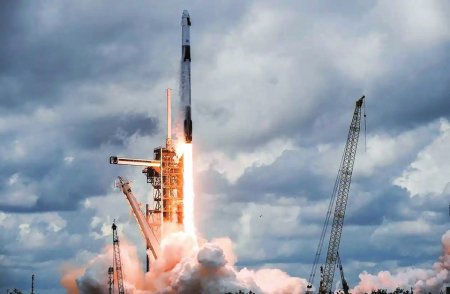
Core Viewpoint - The article discusses the challenges and protocols related to astronaut health in space, highlighting a recent medical evacuation from the International Space Station (ISS) and the historical context of similar incidents in space exploration [4][7]. Group 1: Medical Protocols and Training - All astronauts undergo professional medical training to perform basic medical procedures in emergencies, such as suturing wounds and administering injections [4][5]. - NASA has a dedicated ground team of medical professionals who monitor astronauts' health throughout their missions, ensuring they are prepared for potential medical issues [5][6]. - The ISS is equipped with a pharmacy and medical equipment to address various health issues, but serious emergencies may require astronauts to return to Earth for advanced care [5][6]. Group 2: Historical Context of Medical Emergencies - The article notes that the recent medical evacuation is the first of its kind since the ISS began hosting rotating crews in November 2000, marking a significant event in spaceflight history [4]. - Historical incidents, such as the Soviet "Soyuz" missions and the Apollo 13 crisis, illustrate the risks astronauts face, including health emergencies and spacecraft malfunctions [7][8]. - Recent events, including the Russian "Soyuz MS-22" coolant leak and the Boeing "Starliner" delays, further emphasize the ongoing challenges in ensuring astronaut safety during missions [9].

人类成功应对过哪些太空紧急事件
Xin Lang Cai Jing· 2026-01-15 14:19
Core Viewpoint - The article discusses the recent medical evacuation of astronauts from the International Space Station (ISS), marking the first such incident since the ISS began receiving rotating crews in November 2000, highlighting the challenges and risks associated with space missions [1] Group 1: Medical Evacuations - A four-member astronaut team returned to Earth early due to one astronaut's health issues, representing a significant event in the history of the ISS [1] - Historical precedents exist for medical evacuations in space, including cases from the 1980s involving Soviet space stations where astronauts faced health issues like arrhythmia and high fever [1] Group 2: Spacecraft and Station Challenges - The harsh conditions of space not only challenge human physiology but also pose risks to the stability of spacecraft and space stations [1] - Notable historical incidents include the 1985 rescue operation on the "Salyut 7" space station, where astronauts manually docked with a malfunctioning station under extreme conditions, later adapted into the film "Space Rescue" [1] Group 3: Spacecraft Failures - Recent years have seen multiple emergencies due to spacecraft failures, such as the 2022 incident with the Russian "Soyuz MS-22" spacecraft, which experienced coolant leaks due to micrometeoroid impacts [3] - In 2024, two American astronauts were stranded for over nine months on the ISS due to a failure of Boeing's "Starliner" spacecraft, eventually returning on SpaceX's "Dragon" spacecraft [3] - The Chinese "Shenzhou 20" mission faced a potential safety issue with a cracked window, leading to a successful transfer to "Shenzhou 21" for safe return, showcasing China's effective response to emergencies [3] Group 4: Risks in Space Exploration - Each step in space exploration is accompanied by unknown risks, including astronaut health emergencies, urgent repairs, and spacecraft malfunctions, testing human ingenuity and courage [3]
生命、家园、深空与智能…… 今年可能迎来哪些关键性科技突破?
Xin Lang Cai Jing· 2026-01-12 18:00
Group 1: Scientific and Technological Advances - In 2026, significant breakthroughs in gene editing are anticipated, with clinical trials for personalized gene therapies for rare metabolic diseases planned in Philadelphia [8] - A major cancer detection clinical trial involving over 140,000 participants is expected to reveal results in 2026, potentially allowing for the detection of approximately 50 types of cancer through a single blood test [9] - AI is predicted to play a crucial role in the life sciences sector, particularly in biomarker detection, with the potential to move from detection to prediction [9] Group 2: Climate Change and Renewable Energy - The global average temperature is projected to exceed pre-industrial levels by 1.4 degrees Celsius in 2026, continuing a trend of rising temperatures [9] - Renewable energy is expected to surpass traditional energy sources in various sectors, with China leading the transition towards green and low-carbon energy [10] - China plans to add over 20 million kilowatts of wind and solar power capacity in 2026 as part of its commitment to increasing the share of renewable energy [10] Group 3: Space Exploration - 2026 is set to be a busy year for lunar exploration, with China's Chang'e 7 mission targeting the challenging lunar south pole [11] - Multiple crewed space missions are scheduled by China, including the Tianzhou 10 and Shenzhou 22 and 23 missions, marking significant advancements in their space program [11] - The European Space Agency plans to launch the Plato space telescope in late 2026 to monitor over 200,000 stars in search of habitable exoplanets [11] Group 4: AI in Research - AI is transforming research processes, with predictions of significant scientific breakthroughs driven by AI in 2026 [12] - The integration of multiple large language models for complex tasks is expected to become more common, reducing the need for human intervention [12] - Generative AI is leading technological change, with over two-thirds of chief economists anticipating its commercial value to materialize within the next year [12]
生命、家园、深空与智能
Xin Lang Cai Jing· 2026-01-11 21:22
Key Insights - The year 2026 is anticipated to witness significant breakthroughs in scientific experiments, climate actions, and space missions, driven by advancements in artificial intelligence (AI) technology [1][2][3] Group 1: Medical Innovations - Gene editing technology is expected to gain momentum in 2026, with two clinical trials focusing on rare diseases, including personalized treatments for children with rare metabolic disorders [1][2] - AI is predicted to play a crucial role in disease screening and diagnosis, with a focus on AI-driven biomarker detection that may surpass traditional methods [2][3] - The intersection of gene editing and AI is expected to lead to effective new therapies for cancer and various genetic diseases [2] Group 2: Climate Action - The global average temperature is projected to exceed pre-industrial levels by 1.4 degrees Celsius in 2026, continuing a trend of rising temperatures [3] - The transition to renewable energy is deemed essential in combating climate change, with significant advancements in renewable energy sources outpacing traditional energy [3] - China aims to increase its renewable energy supply, with plans to add over 20 million kilowatts of wind and solar power capacity in 2026 [3] Group 3: Space Exploration - 2026 is set to be a busy year for lunar exploration, with China planning to launch the Chang'e 7 mission targeting the challenging lunar south pole [4] - The U.S. will focus on lunar missions, including the Artemis 2 mission, which will send astronauts to orbit the Moon [4][5] - Various space telescopes and observatories are expected to be active in 2026, including the launch of the Plato space telescope by the European Space Agency [5] Group 4: AI in Research - AI is transforming research processes, with predictions of significant scientific breakthroughs driven by AI in 2026 [6] - The development of small-scale AI models capable of learning from limited data is expected to be a focus area [6] - The integration of generative AI is anticipated to create commercial value across various sectors in the coming year [6]
生命、家园、深空与智能——2026年全球科技展望
Xin Hua She· 2026-01-08 14:02
Group 1: Medical Innovations - In 2026, gene editing technology is expected to gain momentum, with two significant clinical trials focusing on rare metabolic diseases and immune system genetic disorders [2] - A cancer detection clinical trial involving over 140,000 participants is anticipated to reveal results in 2026, potentially identifying around 50 types of cancer through a single blood test [2] - AI is predicted to play a crucial role in disease screening and diagnosis, with a focus on AI-driven biomarker detection in the life sciences sector [2][3] Group 2: Climate Change and Renewable Energy - The global average temperature is projected to exceed pre-industrial levels by 1.4 degrees Celsius in 2026, continuing a trend of rising temperatures [3] - Renewable energy is expected to surpass traditional energy sources, with significant contributions from China, which plans to add over 20 million kilowatts of wind and solar power capacity in 2026 [3][4] Group 3: Space Exploration - 2026 is set to be a busy year for lunar exploration, with China's Chang'e 7 mission targeting the challenging lunar south pole [5] - The U.S. Artemis 2 mission aims to send astronauts on a lunar flyby, marking the first crewed lunar mission in over 50 years [6] - Various countries, including India and Japan, have planned significant space missions, including crewed flights and solar observation [6][7] Group 4: AI in Research - AI is transforming research processes, with predictions of significant scientific breakthroughs driven by AI in 2026 [8] - The integration of multiple large language models for complex tasks is expected to become more common, enhancing research efficiency [8] - AI's influence is anticipated to expand across various sectors, with over two-thirds of economists expecting it to generate commercial value within the year [8]
俄航天设施受损停用,美“星际客机”削减发射,国际空间站陷入“飞船危机”
Huan Qiu Shi Bao· 2025-12-01 22:58
Core Viewpoint - The International Space Station (ISS) is set to retire in 2030, facing significant challenges including reduced launch frequency of Boeing's CST-100 Starliner and damage to the Baikonur Cosmodrome, which may temporarily hinder Russia's crewed spaceflight capabilities [1][7]. Group 1: ISS and Launch Capabilities - The ISS will rely solely on SpaceX's Crew Dragon for astronaut transportation due to the reduction in Boeing's Starliner missions and potential loss of Russian crewed launch capabilities [1][7]. - NASA announced that the next Starliner mission to the ISS will not occur before April 2026 and will only carry cargo, marking a significant setback for Boeing [7]. - The Baikonur Cosmodrome's launch pad has sustained severe damage, potentially leading to a two-year repair timeline, which could result in Russia losing its ability to send humans to space for the first time since 1961 [5][6]. Group 2: Impact on International Space Station Operations - The ISS currently has eight spacecraft docked, including Russian and American crewed and cargo vehicles, which are essential for regular crew rotation every 2-4 months [8]. - SpaceX has five Crew Dragon spacecraft available, but maintenance and inspection cycles could lead to a shortage of available vehicles for crew transport if reliance solely on SpaceX continues [8]. - Possible solutions to mitigate the situation include accelerating repairs at Baikonur or utilizing equipment from the decommissioned launch pad, but both options face significant time constraints [8]. Group 3: International Collaboration Challenges - Discussions have emerged regarding the potential use of China's Shenzhou spacecraft for emergency support, but technical incompatibilities and U.S. legislative restrictions complicate any collaboration [9].
新华财经早报:11月26日
Xin Hua Cai Jing· 2025-11-26 05:35
Group 1: Commercial Aerospace Development - The National Space Administration has issued an action plan to promote high-quality and safe development of the commercial aerospace industry, aiming to achieve significant growth in industry scale and innovation by 2027 [1] Group 2: Data Trading and Utilization - The National Bureau of Statistics supports the establishment of a comprehensive service system for data trading, emphasizing the importance of data exchanges in enhancing market positioning and service capabilities [1] Group 3: Renewable Energy Certificates - In the first ten months of the year, China issued a total of 2.478 billion green certificates, with 1.592 billion being tradable, indicating a robust growth in renewable energy projects [1] Group 4: Power Market Transactions - In October 2025, the total electricity market transaction volume reached 563.8 billion kilowatt-hours, a year-on-year increase of 15.6%, with a cumulative total of 5,492 billion kilowatt-hours for the first ten months, up 7.9% year-on-year [1] Group 5: Aviation Industry Growth - In October, China's international air passenger and cargo transport volumes both saw a year-on-year increase of over 20%, with cargo transport volume exceeding 900,000 tons for the first time in history [1] Group 6: Huawei's Product Launch - Huawei launched the Mate 80 series and Mate X7 foldable phone, with the number of Harmony OS devices surpassing 27 million, indicating steady growth in user adoption [1] Group 7: Alibaba's Financial Performance - Alibaba reported a total revenue of 247.795 billion yuan for Q2 of fiscal year 2026, a year-on-year increase of 5%, with its cloud intelligence group revenue growing by 34% [1] Group 8: NIO's Delivery and Revenue Growth - NIO's Q3 2025 vehicle deliveries reached 87,100 units, a year-on-year increase of 40.8%, with total revenue of 21.794 billion yuan, up 16.7% year-on-year [1]