空气压缩机

Search documents
汉钟精机(002158) - 2026年2月26日-3月24日投资者关系活动记录表
2026-03-31 05:08
Group 1: Financial Performance - In 2025, the company's revenue was 2.928 billion CNY, a decrease of 20.32% year-on-year [2] - The net profit for 2025 was 470 million CNY, down 45.54% compared to the previous year [2] Group 2: Product Overview - The company focuses on two main business segments: compressors and vacuum pumps [2] - The compressor segment is further divided into refrigeration and air compression products, each with distinct market positioning and development directions [2] Group 3: Refrigeration Products - The refrigeration product line covers commercial central air conditioning, refrigeration, and heat pump compressors [3] - These products are widely used in commercial buildings, data centers, food cold chains, and heating applications, meeting diverse customer needs [3] - Major competitors in the refrigeration compressor market include Bitzer and Danfoss [3] Group 4: Air Compression Products - The air compressors serve as essential power sources in industrial applications, covering sectors such as pharmaceuticals, chemicals, electronics, and road maintenance [4] - The company is expanding into oil-free air compressor markets, which have significant potential in food, biomedicine, and electronics industries [4] Group 5: Vacuum Pump Products - Vacuum products are primarily used in the photovoltaic and semiconductor industries, with expansion into lithium batteries, pharmaceuticals, and display manufacturing [5] - The company has gained recognition from domestic chip manufacturers and is beginning to supply products in bulk [5] - The sales revenue for vacuum products in 2025 declined due to the impact of the photovoltaic industry, but this effect is expected to diminish over time [5] Group 6: Disclosure Compliance - During the investor relations activities, the company did not disclose any material information that should be publicly announced [6]

2025年中国空气压缩机行业概览:外资占据高端市场,中国企业挑战与机遇并存(精华版)
Tou Bao Yan Jiu Yuan· 2026-03-17 12:24
Investment Rating - The report does not explicitly provide an investment rating for the air compressor industry in China. Core Insights - The Chinese air compressor industry is characterized by a clear hierarchical competition, with foreign brands like Atlas Copco and Ingersoll Rand holding approximately 30%-40% of the high-end market share, particularly in precision manufacturing and semiconductor sectors, while domestic companies are gradually penetrating the high-end market [4][5]. - The industry is undergoing a transformation towards green, intelligent, and high-end products driven by policy and market forces, with significant opportunities arising from the "dual carbon" goals and the expansion of new energy industries [5][29]. - The market size of the Chinese air compressor industry is projected to grow from 699 billion RMB in 2020 to 937 billion RMB by 2029, with a compound annual growth rate (CAGR) of 3.3% [21][19]. Summary by Sections Industry Overview - The report outlines the production and development status of the Chinese air compressor industry, analyzing the industrial chain and competitive landscape [3]. Market Status and Competitive Landscape - The market competition is tiered, with foreign brands dominating the high-end segment and local companies like Kaishan Group and Hanbell Precise Machinery leading in the mid-to-low-end market through R&D and cost control [4][5]. - The product structure shows that screw compressors account for over 60% of the market share, with increasing penetration of energy-saving and intelligent products [4]. Opportunities and Challenges - Opportunities include the demand for energy-saving retrofits driven by the "dual carbon" goals and the need for high-efficiency compressors in new energy sectors [5]. - Challenges include rising production costs due to raw material price increases and a shortage of high-end technical talent, which may lead to the elimination of smaller companies [5][29]. Industry Chain Analysis - The midstream manufacturing segment holds more power in the value chain, with leading companies like ShaanGu Power leveraging R&D and production capabilities [6]. Financial Comparison - International companies like Ingersoll Rand and Atlas Copco lead in revenue and profitability, while domestic firms like ShaanGu Power show strong performance in profitability metrics [15][17]. Market Size and Growth Forecast - The market size is expected to grow steadily, supported by stable industrial demand and increasing needs from emerging industries like new energy and semiconductors [21][19]. Import and Export Analysis - The high-end air compressor market is primarily occupied by foreign companies, with China being a major producer and exporter, although the export products tend to have lower added value compared to imports [22][27]. Challenges and Opportunities for Domestic Companies - Domestic companies face challenges such as market saturation and reliance on low-end competition, but opportunities exist in specialized fields and technological advancements [29].
汉钟精机20260303
2026-03-04 14:17
Summary of Conference Call Notes Company Overview - The company discussed is **HanZhong Precision Machinery** (汉钟精机), focusing on its performance in various segments including refrigeration, air compressors, and vacuum pumps. Key Points and Arguments Industry Performance - **2026 Outlook**: The refrigeration segment is expected to grow by **10%-15%** in 2026, driven by demand from data centers, heat pumps, and cold storage, which offset the decline in traditional central air conditioning [2][9]. - **Vacuum Pumps**: The vacuum pump segment has shown signs of recovery with shipments turning positive, although there is a reporting lag of **3-6 months** [2][4]. Financial Performance - **2025 Financials**: The company reported a revenue of approximately **2.927 billion** yuan in 2025, a decline of about **20%** year-on-year, with profits down over **40%**. The vacuum pump segment saw a revenue drop of over **60%** [3]. - **Profit Drivers**: The profit decline was attributed to three main factors: reduced revenue scale, lower gross margins in the vacuum pump segment, and foreign exchange losses estimated between **16-20 million** yuan [3]. Segment Analysis - **Refrigeration Compressors**: Revenue from refrigeration compressors grew by approximately **7%-8%**, while air compressors saw a slight increase of **1%-2%**. The vacuum pump segment's revenue significantly declined, impacting overall profitability [3]. - **Data Center Revenue**: The identifiable revenue from data centers in 2025 was about **100 million** yuan, primarily from screw compressors, with a conservative estimate due to tracking limitations [6]. Market Dynamics - **Screw vs. Magnetic Levitation Compressors**: The revenue from screw compressors is around **70 million** yuan, while magnetic levitation compressors account for about **30 million** yuan. The preference for magnetic levitation in domestic data centers is due to higher energy efficiency requirements [6][7]. - **Market Competition**: Danfoss leads the market with a **60%-70%** share, while domestic brands like Midea and HanZhong are in the second tier [8]. Future Projections - **2026 Refrigeration Segment**: The refrigeration compressor segment is expected to grow by **10%-15%**, supported by demand from heat pumps and data centers, despite the decline in traditional air conditioning [9]. - **Gross Margin Outlook**: The gross margin for 2026 is expected to remain stable with slight improvements, contingent on the performance of new applications [9]. Vacuum Pump Segment - **Semiconductor Vacuum Pumps**: The semiconductor vacuum pump business is projected to grow from **130 million** yuan in 2025 to **200 million** yuan in 2026, with significant customer engagement and order growth [12]. - **Market Position**: The domestic market for semiconductor vacuum pumps has a low localization rate, with foreign brands holding about **80%** of the market share [15]. Air Compressor Business - **Growth Factors**: The air compressor segment has seen growth due to internal adjustments rather than overall industry trends, focusing on oil-free markets and specialized applications [19]. - **2026 Performance**: The air compressor business is expected to maintain stable performance in early 2026, following previous growth [20]. Additional Important Insights - **Accounting Adjustments**: Changes in accounting practices led to an increase in reported expenses, impacting net profit for 2025 [3]. - **Market Trends**: The company is focusing on expanding its presence in the semiconductor market, which is expected to have a larger growth potential compared to the photovoltaic sector [12][17]. This summary encapsulates the key insights from the conference call, highlighting the company's performance, market dynamics, and future outlook across its various business segments.
“创新铁三角”联合攻关,破解“卡脖子”技术
Xin Jing Bao· 2026-02-25 01:47
Core Insights - The article highlights the collaborative innovation model in the Beijing-Tianjin-Hebei region, showcasing the "Beijing R&D, Tianjin transformation, and Hebei application" approach as a successful framework for technological advancement and industrial application [2][17]. Group 1: Collaborative Innovation Achievements - Since 2013, the total value of technology contracts flowing from Beijing to Tianjin and Hebei has exceeded 370 billion yuan, with a transaction value of 84.37 billion yuan in 2024, marking a 12.7% year-on-year increase [9]. - The collaborative innovation index for the Beijing-Tianjin-Hebei region has grown from 100 in 2013 to 388 in 2024, reflecting an annual growth rate of 13.1% [8]. - The region has established seven national advanced manufacturing clusters, with five clusters expected to be upgraded to national status in 2024 [5][6]. Group 2: Sector-Specific Developments - The automotive industry exemplifies the collaborative efforts, with a total production of 2.85 million vehicles in 2024, representing an 11.8% year-on-year increase, and a significant surge in new energy vehicle production to 676,000 units, up 154% [6][7]. - The robotics sector is also thriving, with over 1,100 companies in the Beijing-Tianjin-Hebei robotics industry chain, surpassing 60 billion yuan in scale, showcasing distinct focuses among the three regions [7]. - The chemical safety model developed through collaboration between Hebei Xin Hai Chemical Group and institutions like Tsinghua University is set to answer over 50,000 professional queries with a 98% accuracy rate by the end of 2024 [5]. Group 3: Technological and Research Collaboration - The collaborative mechanism has led to a significant increase in R&D investment intensity, rising from 3.22% in 2013 to 4.27% in 2023, exceeding the national average by 1.62 percentage points [12]. - The technology transaction volume between Beijing and Hebei has seen a remarkable increase, with Hebei absorbing 127.17 billion yuan in technology contracts in 2025, marking a substantial rise compared to previous years [16]. - The establishment of the Xiong'an New Area as a core platform for innovation resource aggregation is part of the broader strategy to enhance the collaborative innovation framework in the region [17].


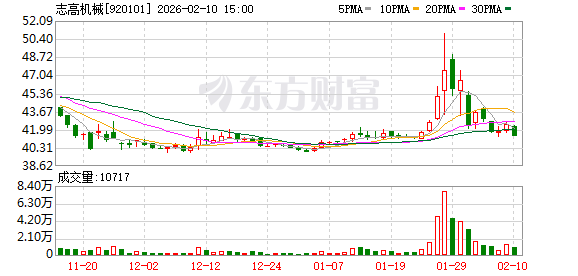
志高机械:公司是一家专业从事凿岩设备和空气压缩机的研发、生产、销售和服务的高新技术企业
Zheng Quan Ri Bao· 2026-02-10 13:12
Core Viewpoint - Zhigao Machinery is a high-tech enterprise specializing in the research, production, sales, and service of rock drilling equipment and air compressors, aiming to provide comprehensive solutions for rock drilling engineering and air power [2] Company Overview - The company has developed a complete product line with over 400 models, including integrated drilling rigs, split drilling rigs, engineering screw compressors, and industrial screw compressors [2] - Products are widely used in various sectors such as mining (copper, gold), construction, industrial air sources, and petrochemical industries [2] Key Projects and Clients - Core products have successfully served national key projects such as the Sichuan-Tibet Railway, Gaoligong Mountain Tunnel, and Zhengzhou-Wanzhou High-Speed Railway, as well as the construction project of Neom City in Saudi Arabia [2] - Major downstream clients include large enterprises like China Railway Tunnel Group, China Power Construction Group, Jiangxi Copper Group, and Beijing Shougang Group [2]
京津冀完成首轮燃料电池车示范任务
Zhong Guo Hua Gong Bao· 2026-02-10 02:26
Core Insights - The Beijing-Tianjin-Hebei fuel cell vehicle demonstration city cluster has successfully completed its initial demonstration tasks ahead of schedule, achieving significant results in building a hydrogen energy industry system and promoting regional collaboration in the hydrogen sector [1] Group 1: Policy and Initiatives - The initiative to promote fuel cell vehicles was launched in September 2020 by multiple government bodies to drive the commercialization of the green hydrogen industry chain [1] - The Beijing-Tianjin-Hebei city cluster was officially established in August 2021, comprising 12 cities, to facilitate the demonstration of fuel cell vehicles [1] Group 2: Achievements and Metrics - The region has achieved technological innovation and autonomous application in key components such as fuel stacks and proton exchange membranes, filling domestic gaps in carbon paper applications [2] - A total of 5,322 fuel cell vehicles have been promoted, with 3,688 in Beijing, and the average hydrogen driving range per vehicle exceeds 40,000 kilometers [2] - 50 hydrogen refueling stations have been built, creating a leading hydrogen environment for fuel cell vehicles in the country [2] - 83 policy measures have been implemented, establishing a comprehensive support system covering design, innovation, application, and safety [2] Group 3: Collaborative Efforts and Infrastructure - The region has developed five hydrogen corridors for intercity transport, facilitating the movement of goods such as furniture and construction materials [3] - The first commercial long-distance hydrogen logistics corridor exceeding 600 kilometers has been established between Beijing, Tianjin, and Qingdao [3] - A stable hydrogen supply collaboration has been formed with surrounding cities, achieving a hydrogen supply ratio of up to 60% [3] - Approximately 400 vehicles in the Beijing demonstration fleet utilize air compressors produced in Hebei, showcasing local production capabilities [3]
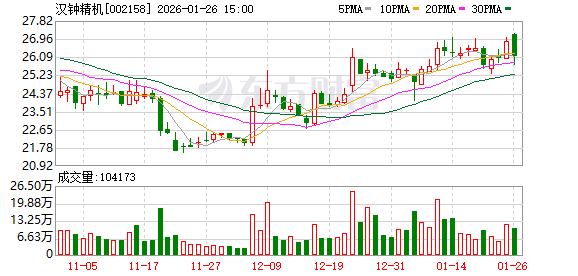
汉钟精机:公司产品具备高度的通用性和跨领域应用潜力
Zheng Quan Ri Bao· 2026-01-26 13:16
Core Viewpoint - The company HanZhong Precision Machinery has a diverse range of main business activities, including the manufacturing and sales of refrigeration compressors, air compressors, and vacuum pumps, indicating a strong position in the general machinery equipment sector [2] Group 1: Business Overview - The company's refrigeration compressor products are primarily used in commercial central air conditioning systems, cold chain logistics, and industrial refrigeration [2] - Air compressor products are applied in various industrial manufacturing fields such as engineering machinery, electronics, power, chemicals, textiles, food, and pharmaceuticals [2] - Vacuum pump products have broad application prospects in industries like photovoltaics, semiconductors, lithium batteries, pharmaceuticals, chemicals, and electronics [2] Group 2: Product Versatility - The company's products exhibit high versatility and potential for cross-industry applications, allowing for flexible use in diverse end-user scenarios based on specific customer needs [2]
汉钟精机(002158.SZ):永磁螺杆制冷压缩机及磁悬浮离心制冷压缩机已在数据中心液冷领域使用
Ge Long Hui· 2025-12-29 07:20
Group 1 - The company, Hanzhong Precision Machinery (002158.SZ), specializes in manufacturing refrigeration compressors, air compressors, and vacuum pumps [1] - The permanent magnet screw refrigeration compressors and magnetic levitation centrifugal refrigeration compressors are utilized in the liquid cooling sector of data centers [1]
日本巨头,再次承认数据造假
Mei Ri Jing Ji Xin Wen· 2025-12-28 12:16
Group 1 - The Japanese Ministry of Defense has suspended Kawasaki Heavy Industries from participating in bidding for two and a half months due to the company's manipulation of marine engine test data [1] - Kawasaki Heavy Industries admitted to altering fuel efficiency data for submarine engines manufactured for the Japan Maritime Self-Defense Force, with a total of 673 engines involved [1] - The recent scandal is part of a broader trend of data falsification issues in various Japanese industries, including automotive, steel, shipbuilding, and chemicals, leading to a widespread trust crisis in "Made in Japan" products [1] Group 2 - In 2017, Kobe Steel acknowledged that its subsidiaries had falsified product data, resulting in the sale of non-compliant products to sectors such as automotive, rail, aerospace, and military, affecting hundreds of companies [3] - In 2021, Mitsubishi Electric was reported to have falsified inspection data at its Nagasaki factory, with issues dating back to around 1985, affecting approximately 84,000 units, including products used in subways in New York, London, and Germany [5] - In 2022, Hino Motors was involved in a scandal regarding falsified engine emissions and fuel consumption data [7] Group 3 - In 2024, multiple Japanese companies faced exposure for data falsification, including Toyota's subsidiary Toyota Automatic Loom Works, which was reported to have three models of engines with data manipulation [9] - IHI Corporation announced that one of its subsidiaries had altered fuel efficiency data for over 4,000 engines since 2003 [9] - The Japanese Ministry of Land, Infrastructure, Transport and Tourism reported that five major automakers, including Toyota and Honda, had manipulated collision data, engine power tests, and brake performance data, affecting approximately 5.18 million vehicles, leading to large-scale recalls and public apologies from executives [9] Group 4 - The loss of craftsmanship spirit in Japanese manufacturing is concerning, as a series of scandals is rapidly eroding consumer trust in Japanese products, which were once synonymous with quality and affordability [11]

日本巨头,再次承认数据造假!事关日本自卫队装备
Mei Ri Jing Ji Xin Wen· 2025-12-28 09:23
Group 1 - The Japanese Ministry of Defense has suspended Kawasaki Heavy Industries from participating in bidding for two and a half months due to the company's manipulation of marine engine test data [1] - Kawasaki Heavy Industries admitted to altering fuel efficiency data for submarine engines manufactured for the Japan Maritime Self-Defense Force, with a total of 673 marine engines involved [1] - The recent scandal is part of a broader trend of corporate misconduct in Japan, affecting various sectors including automotive, steel, shipbuilding, and chemicals, leading to a widespread trust crisis in "Made in Japan" products [1] Group 2 - In 2017, Kobe Steel acknowledged that its subsidiaries had falsified product data, resulting in the sale of non-compliant products to industries such as automotive and aerospace, impacting hundreds of companies [4] - In 2021, Mitsubishi Electric was reported to have falsified inspection data at its Nagasaki factory, affecting approximately 84,000 products, including train air conditioning systems and compressors, with 20% exported overseas [6] - In 2022, Hino Motors was involved in a scandal regarding the falsification of engine emissions and fuel consumption data [8] Group 3 - In 2024, multiple Japanese companies faced exposure for data manipulation, including Toyota's parts supplier, which was reported for data falsification in three engine models, and IHI, which admitted to altering fuel efficiency data for over 4,000 engines since 2003 [10] - The Ministry of Land, Infrastructure, Transport and Tourism reported that five major automakers, including Toyota and Honda, had manipulated collision data and engine power tests, affecting approximately 5.18 million vehicles, leading to large-scale recalls [10] - Both East Japan Railway Company and Japan Freight Railway Company were found to have engaged in data falsification during train wheel installation processes [10] Group 4 - Concerns have been raised about the loss of craftsmanship in Japanese manufacturing, as a series of scandals erodes consumer trust in Japanese products, which were once synonymous with quality and affordability [12]