
纵横G900

Search documents
江淮、极氪、奇瑞,排着队造“劳斯莱斯”
3 6 Ke· 2025-05-07 12:28
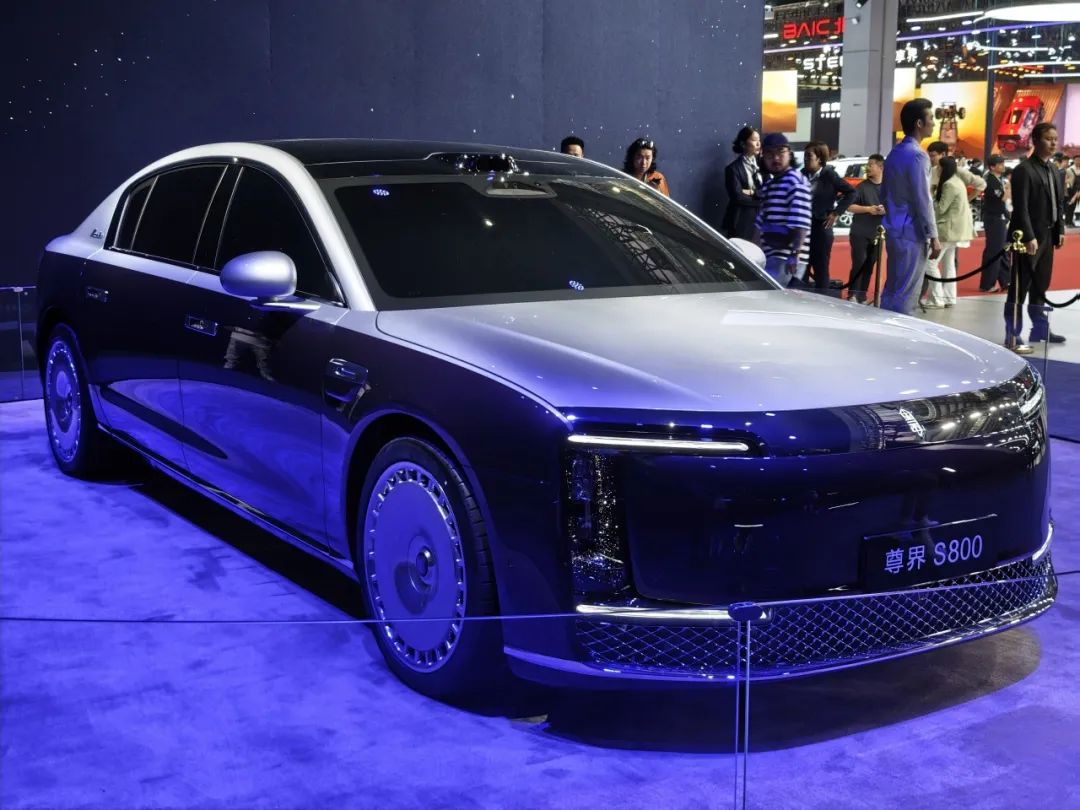
Core Viewpoint - The launch of the Zun Jie S800, a luxury sedan co-developed by Huawei and JAC, marks a significant entry into the high-end automotive market, with a price range of 1 million to 1.5 million yuan, positioning it as a competitor to Rolls-Royce [1][3]. Group 1: Product Launches - The Zun Jie S800 is described as having a design aesthetic reminiscent of Rolls-Royce, featuring a dignified and heavy profile, along with starry lighting accents [1]. - Following the Zun Jie S800, other brands like Zeekr and Chery are also introducing luxury models aimed at the million-yuan market, such as the Zeekr 9X SUV and the Chery Jetour Zongheng G900 [4][7]. Group 2: Market Context - The emergence of these "Chinese Rolls-Royces" reflects a strategic move by automakers to capture the high-margin luxury segment, which is crucial for their survival amid intense competition in the lower-priced electric vehicle market [10]. - Chery has reported profits of 6.266 billion yuan in 2022 and 11.953 billion yuan in 2023, indicating a relatively stable financial position compared to its competitors [10]. - In contrast, JAC has faced significant financial challenges, reporting a profit drop of 1,278% and a net loss of 1.784 billion yuan in 2024, highlighting the risks associated with entering the luxury market [10][11]. Group 3: Competitive Landscape - The competition in the luxury electric vehicle market is expected to be fierce, with domestic brands needing to compete against established luxury models like the Mercedes-Benz S-Class and Land Rover Range Rover [13]. - The current trend indicates that many automakers, including leading new energy vehicle companies, are experiencing revenue growth without corresponding profit increases, suggesting a highly competitive and saturated market [12].


技术豪华PK品牌豪华
Jing Ji Guan Cha Wang· 2025-04-30 15:42
Core Insights - The articles highlight the competitive landscape between traditional luxury car brands from Germany and emerging Chinese luxury brands, emphasizing the challenges faced by the former in the Chinese market [1][9][11] Group 1: Market Dynamics - Porsche's sales in China dropped by 42% year-on-year in Q1, with its share of global sales falling from 30% four years ago to 13.25% [1] - The emergence of Chinese luxury brands, such as BYD's Yangwang, Huawei's ZunJie, and Chery's Jetour, is reshaping the luxury car market, leveraging advancements in new energy and smart technology [1][2][4] Group 2: Product Launches and Innovations - Traditional luxury brands like Mercedes-Benz, BMW, and Audi are set to launch over 10 new models annually in China, focusing on new generation smart vehicles [2][6][7] - The ZunJie S800, developed by Huawei and JAC, has gained significant attention, with pre-orders exceeding 2,000 units within two hours of its unveiling [2][3] - Jetour's new luxury off-road series, including models like the G700 and G900, showcases advanced technologies and aims to disrupt the market [3][4] Group 3: Brand Positioning and Strategy - Traditional luxury brands emphasize heritage and brand value, while Chinese brands focus on "technological luxury" and innovative user experiences [2][11] - The competition is not just about products but also about redefining what luxury means in the automotive sector, with both sides vying for consumer preference [9][10][11] Group 4: Consumer Trends and Future Outlook - The shift in consumer preferences towards technology-driven luxury experiences is influencing the strategies of both traditional and emerging brands [10][11] - The ongoing battle for market share and brand definition will depend on how well these companies adapt to changing consumer expectations and technological advancements [11]