维维豆奶

Search documents
从15跌到3!国企白酒股被弃如敝履,张素芬狂买1233万股,能翻盘吗
Sou Hu Cai Jing· 2025-11-30 09:29
Core Viewpoint - The article discusses the significant decline of a state-owned liquor company, VIVI Co., whose stock price has plummeted from 15 yuan in 2015 to around 3 yuan in 2025, amidst a challenging market environment for the liquor industry, while highlighting the recent investment by renowned investor Zhang Sufen as a potential indicator of a turnaround opportunity [1][3]. Industry Overview - The liquor market in 2025 is characterized by a stark contrast, with leading brands like Moutai and Wuliangye managing to sustain themselves through stable dividends, while smaller liquor companies face severe downturns, with a reported 5.9% decline in revenue for 20 A-share liquor companies in the first three quarters of 2025, and a staggering 18.47% drop in the third quarter alone [1][3]. - The overall liquor industry is experiencing a capacity utilization rate of less than 60% in 2025, leading to increased pressure on smaller companies as they struggle against dominant brands [4]. Company Performance - VIVI Co. has seen its stock price drop significantly, with a 23% decline from the beginning of 2025, and a total market value loss exceeding 10 billion yuan over the past decade [3][4]. - The company's revenue for the first three quarters of 2025 was 2.388 billion yuan, reflecting an 11.2% year-on-year decrease, and a stark contrast to its peak revenue of 5 billion yuan in 2013 [3][4]. - VIVI's liquor business is underperforming, with a mere 2.1% revenue growth in the first three quarters of 2025, significantly lagging behind the regional average of 6.2% [3]. Investment Insights - Zhang Sufen's recent acquisition of 12.33 million shares positions her as the third-largest shareholder in VIVI Co., which she views as a strategic investment based on the company's low valuation and state-owned background [5]. - The company's price-to-earnings ratio stands at 14, notably lower than the liquor sector average of 19.52, making it an attractive investment opportunity for those seeking undervalued stocks [5]. Policy Environment - The 2025 policy landscape presents potential benefits for VIVI Co., including local state-owned enterprise reforms aimed at improving operational efficiency, which could lead to asset revaluation and positive market sentiment [6]. - The recent recognition of liquor as a "historical classic industry" by the Ministry of Industry and Information Technology may provide VIVI Co. with additional support and funding opportunities [6]. - The removal of restrictions on mergers and acquisitions in the liquor sector by the China Securities Regulatory Commission could facilitate VIVI Co.'s efforts to optimize its liquor business and attract quality assets [6].



冲泡类饮品大撤退
3 6 Ke· 2025-08-15 00:17
Core Viewpoint - Traditional instant beverages like Xiangpiaopiao milk tea, Wewei soybean milk, and Southern black sesame paste are facing a collective crisis due to declining sales, primarily driven by a shift in consumer preferences towards more convenient and healthier options [1][4][10] Group 1: Market Performance - In 2024, Xiangpiaopiao's revenue from instant products was 2.271 billion yuan, a year-on-year decline of 15.42% [5] - Wewei's solid instant beverage revenue was 1.909 billion yuan in the previous year, down 3.02% [5] - Southern black sesame's instant beverage revenue was 854 million yuan, a decrease of 3.90% [5] - Xiangpiaopiao's peak sales in 2020 reached 3.067 billion yuan, but by 2024, revenue had dropped to 2.271 billion yuan, indicating a significant decline in market share [8][10] Group 2: Consumer Trends - The decline in instant beverage consumption is attributed to changing lifestyles, with younger consumers favoring immediate satisfaction and convenience [10][12] - Instant beverages were originally transitional products during a time of limited market supply, but as fresh and ready-to-drink options have become more available, traditional instant products have lost their appeal [10][17] Group 3: Company Strategies - Companies like Wewei and Southern black sesame are diversifying their product lines to include ready-to-drink options and other innovations to adapt to market changes [12][15] - Xiangpiaopiao has introduced new products like Meco fruit tea and other ready-to-drink beverages to capture market share [14][23] - Despite these efforts, the transition to ready-to-drink markets is challenging due to intense competition from established players in the beverage industry [15][23] Group 4: Historical Context - Wewei and Southern black sesame have a long history, with Wewei being established in 1992 and achieving significant market share in the soybean milk sector [8][21] - The traditional instant beverage market has been in decline for several years, with companies struggling to maintain their previous growth trajectories [5][6][10]



成为“苏超”徐州赛区冠名商 维维股份成功“出圈”
Zheng Quan Shi Bao Wang· 2025-06-30 10:50
Group 1 - The popularity of the Jiangsu Province Urban Football League ("Su Super") is rising, with ticket demand exceeding supply ratios of over 10:1 and even 30:1 for some matches [1] - Weivi Co., Ltd. (600300), the naming sponsor for the Xuzhou division of "Su Super," has seen a significant increase in visibility, with a 175% year-on-year growth in Baidu search index over the past three months [1] - Weivi Co., Ltd. aligns its brand mission of promoting health and happiness with the growing value of football as a symbol of a healthy lifestyle, beyond just competitive sports [1] Group 2 - The "Su Super" event, characterized by its grassroots appeal and a philosophy of "joy first, competition second," has attracted numerous fans, creating a vibrant and energetic atmosphere [2] - By sponsoring "Su Super," Weivi Co., Ltd. effectively reaches young consumers, conveying its brand philosophy and product information [2] - The deep brand heritage and extensive market influence of Weivi Co., Ltd. enhance the cultural significance of the "Su Super" event, thereby increasing its brand value [2]
植物蛋白饮料“四巨头”,财报里的烦恼各不同
Bei Jing Shang Bao· 2025-04-28 14:41
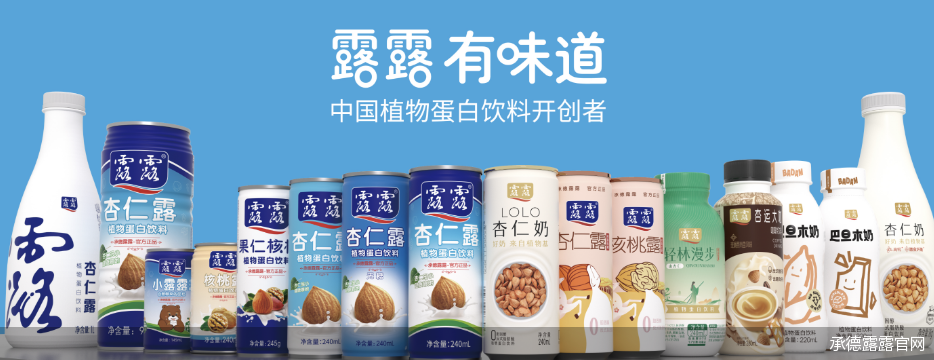
Core Insights - The plant protein beverage market is experiencing intensified competition, leading to a "stronger differentiation" pattern among major companies [1][6] - Traditional plant protein beverages are facing challenges due to low daily consumption penetration and significant seasonal sales fluctuations [1][6] Company Performance - Yangyuan Beverage reported a revenue of approximately 6.058 billion yuan, a decrease of 1.69% year-on-year, but a net profit of about 1.722 billion yuan, an increase of 17.35% [3][4] - Weiweijia's revenue was approximately 3.656 billion yuan, down 9.4% year-on-year, while net profit increased by 96.26% to about 411 million yuan [3][4] - Chengde Lulux achieved a revenue of approximately 3.287 billion yuan, an increase of 11.26%, with a net profit of about 666 million yuan, up 4.41% [3][4] - Huanlejia's revenue was approximately 1.855 billion yuan, down 3.53%, and net profit decreased by 47.06% to about 147 million yuan [3][5] Market Trends - The plant protein beverage industry has seen significant growth, with market size reaching 142.8 billion yuan in 2023, reflecting a compound annual growth rate of 9.8% [6][9] - The market is characterized by a concentration of major players, with the top five companies holding only 58% of the market share, indicating structural opportunities [8][9] - There is a growing demand for healthier products with low sugar, high fiber, and organic certifications, which presents growth potential for the industry [9] Competitive Landscape - The industry is witnessing increased competition from new entrants and product homogeneity, necessitating diversified strategies for differentiation [8][9] - Major companies like Yangyuan Beverage and Chengde Lulux maintain significant market shares due to their established brands and distribution channels [8][9] - Analysts emphasize the importance of functional and refined operations to adapt to changing consumer preferences and market dynamics [6][9]