
美元/日元(USD/JPY)

Search documents
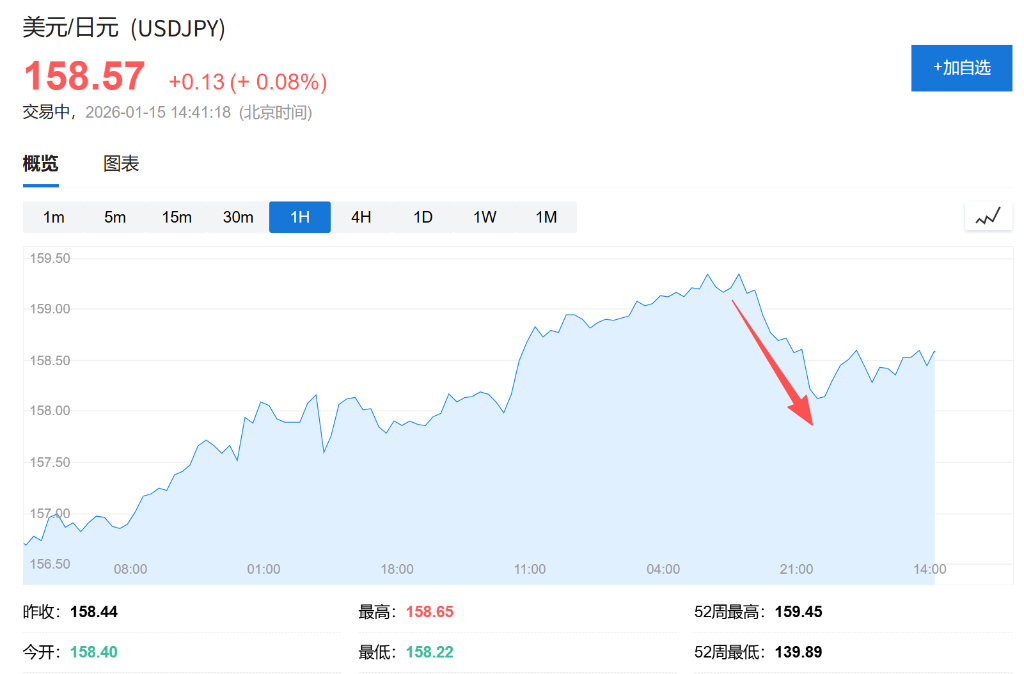
日元干预前奏已现,市场或迎“突袭式”行动,紧盯“利率检查”
Hua Er Jie Jian Wen· 2026-01-15 07:55
Core Viewpoint - Nomura warns that the rules of intervention by the Japanese Ministry of Finance regarding the yen are changing, indicating a significant increase in intervention risk as market volatility suggests a shift from verbal warnings to tactical preparations [1] Group 1: Market Behavior and Intervention Signals - The sudden drop in USD/JPY during the UK trading session, without any apparent positive news for the yen, is likely a result of a "Rate Check" by the Ministry of Finance, which often precedes actual intervention [4] - Historical context shows that after a similar "Rate Check" on September 14, 2022, the Japanese government intervened with a substantial amount of 2.8382 trillion yen (approximately $19.8 billion) just eight days later, suggesting that current market movements may signal impending intervention [4] Group 2: Caution Against Overreliance on Indicators - Nomura advises against placing too much faith in the so-called "Kanda Line," a set of intervention warning indicators, as no signals are currently active; however, this does not imply a low risk of intervention [5] - The former Finance Minister Kanda acknowledged that intervention decisions are not based on these indicators in an automated manner, highlighting the need for vigilance [5][6] Group 3: Broader Focus on Currency Pairs - The scope of the Ministry of Finance's intervention may be expanding beyond just USD/JPY, as new foreign exchange affairs chief Mimura indicated that authorities are monitoring various currency pairs, not solely focusing on the dollar-yen relationship [7] - Reports suggest that the Ministry conducted a "Rate Check" on EUR/JPY in July 2024, indicating potential alternative intervention strategies to curb yen weakness without directly purchasing yen [7][8] - Historical interventions by Japan around the year 2000 targeting EUR/JPY suggest that investors should be cautious and not solely focus on USD/JPY, as they may be caught off guard by unexpected actions [8]

【UNFX课堂】全球汇市扫描:在政策分歧与关税忧虑中寻找航向
Sou Hu Cai Jing· 2025-07-25 07:48
Core Viewpoint - The global foreign exchange market is at a critical juncture, influenced by divergent monetary policies of major central banks, ongoing geopolitical tensions, and mixed macroeconomic data, challenging the dominance of the US dollar while the euro and yen struggle within their respective economic cycles [1]. Group 1: US Dollar Index (DXY) - The DXY is currently oscillating around 97.551, reflecting the market's reliance on the Federal Reserve's hawkish stance while harboring deep concerns about the US economic growth outlook [2]. - The market anticipates the Fed will maintain a tight monetary policy to combat persistent inflation, with rate hike expectations cooling but nearly no anticipation for rate cuts this year, providing solid support for the dollar [2][3]. - Recent economic data presents a mixed picture, with strong labor market indicators supporting the Fed's tightening policy, while weak manufacturing and housing data indicate cooling in interest-sensitive sectors, creating a dilemma for the dollar's movement [3]. Group 2: Euro/USD (EUR/USD) - The EUR/USD struggles around 1.17410, reflecting the European Central Bank's (ECB) difficult balancing act between combating inflation and concerns over economic recession [4]. - The ECB's decision to maintain the deposit rate at 2.00% is not surprising, but President Lagarde's "data-dependent" approach suggests a strategy of "buying time" amid complex challenges [5]. - The risk of fragmentation within the Eurozone, indicated by the widening yield spread between German and Italian bonds, poses a significant threat to the euro's upward potential unless a strong economic recovery occurs [6]. Group 3: Dollar/Yen (USD/JPY) - The USD/JPY trades around 147.058, amid speculation regarding the Bank of Japan's (BoJ) potential exit from its long-standing negative interest rate and yield curve control policies [7]. - The BoJ faces increasing pressure to normalize its policy as domestic inflation stabilizes above 2%, with market expectations for action in the coming quarters, which could reshape global capital flows [7]. - The timing of the BoJ's policy shift remains uncertain, as premature tightening could jeopardize economic recovery and impact Japan's substantial government debt market [8]. Group 4: Other Currencies and Strategic Outlook - The forex market is driven by three main themes: divergence in monetary policies among the Fed, ECB, and BoJ; the momentum of global economic growth; and evolving geopolitical and trade relationships [10]. - The GBP/USD reflects the UK's "stagflation" dilemma, while the AUD/USD's outlook is closely tied to China's economic recovery, and the USD/CAD is significantly influenced by oil price fluctuations [11]. - A core-satellite strategy is recommended, focusing on the dollar while allocating positions in euros and yen based on specific drivers, emphasizing the importance of data analysis and central bank communications [12].