
股票期权激励

Search documents
马斯克560亿美元薪酬方案恢复,特斯拉方面未予置评,马斯克:被证明是清白的
Sou Hu Cai Jing· 2025-12-20 09:26
Core Viewpoint - The Delaware Supreme Court ruled that Elon Musk's $56 billion compensation plan must be reinstated, reversing a lower court's decision that deemed it too extreme [1][3]. Group 1: Court Rulings and Legal Context - The Delaware Supreme Court stated that the lower court did not allow Tesla the opportunity to explain how the compensation was fair [1]. - The initial compensation plan, approved by Tesla's board and shareholders in 2018, was valued at approximately $56 billion and included 12 performance targets for stock options [3]. - The lower court had previously ruled the compensation plan invalid, but the Delaware Supreme Court's recent ruling may end years of disputes regarding Musk's high compensation [3][4]. Group 2: Compensation Plan Details - The original $56 billion compensation plan has increased in value to about $140 billion, and if Musk exercises all stock options, his ownership stake could rise to 18.1% [3]. - A new compensation plan, approved by over 75% of shareholders, could potentially value Musk's stock at $1 trillion, with a target of 12 performance metrics [5]. - Tesla's shareholders had previously created a "Plan B" to allow Musk to purchase approximately 96 million shares at the price set by the original compensation plan, but this plan is now void [5]. Group 3: Corporate Governance and Future Implications - To prevent future lawsuits from shareholders, Tesla has relocated its corporate registration from Delaware to Texas, implementing laws that restrict lawsuits from investors holding less than 3% of shares [5]. - Musk's current ownership in Tesla is approximately 13%, and he has been declared the world's first person with a net worth exceeding $600 billion [7].


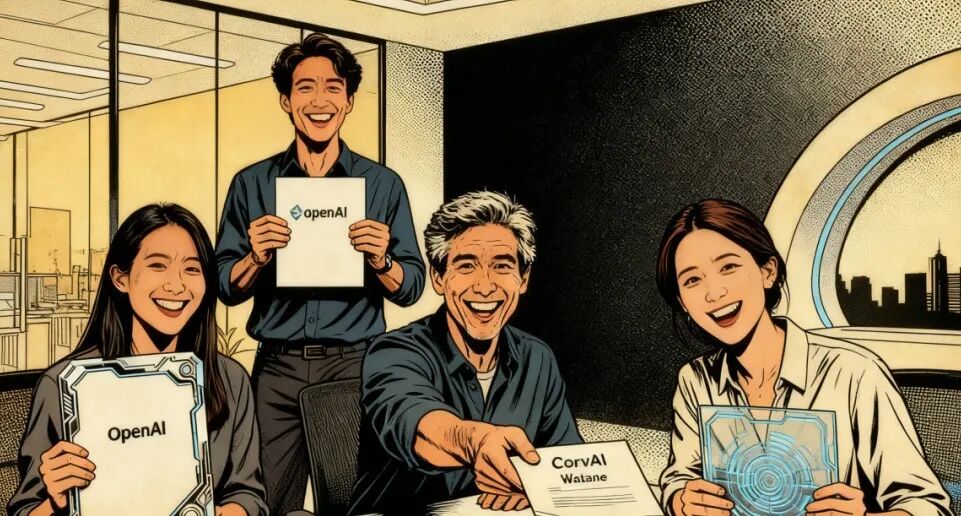
新员工立刻拿期权 ,奥特曼抢人不和张一鸣拼现金
3 6 Ke· 2025-12-17 10:04
Core Viewpoint - OpenAI has eliminated the waiting period for stock options for new employees, allowing immediate access to equity, reflecting a competitive strategy to attract and retain talent in a highly competitive AI job market [1][4][7]. Group 1: Policy Changes - This is the second adjustment to OpenAI's stock option policy this year, having previously reduced the waiting period from 12 months to 6 months before completely removing it [2]. - Other companies, such as xAI, have also shortened their waiting periods, although specific details have not been publicly disclosed [2][14]. - The traditional model of a one-year waiting period followed by a multi-year vesting schedule has been a standard in Silicon Valley for decades, but OpenAI's approach is seen as a radical departure from this norm [6][16]. Group 2: Talent Retention Challenges - OpenAI is facing significant talent retention issues, with a two-year retention rate of only 67%, which is lower than competitors like Anthropic, which boasts an 80% retention rate [3][8]. - The company has experienced notable talent losses, including the departure of eight core researchers to Meta in a single week, prompting OpenAI to reassess its compensation strategies [7][8]. - The aggressive changes in stock option policies are part of a broader effort to combat the pressures of talent competition in the tech industry, particularly in AI [7][19]. Group 3: Financial Implications - OpenAI is projected to spend approximately $6 billion on stock option incentives this year, which constitutes nearly half of its expected revenue of around $13 billion [23]. - The shift to immediate stock option access may increase costs for OpenAI, as it allows employees to potentially leave with significant equity after only a few months of employment [20][23]. - This financial strategy contrasts with the original intent of stock options, which aimed to align employee interests with long-term company growth, now seemingly inverted due to the intense demand for AI talent [23].
凯盛科技股份有限公司监事会关于2024年股票期权激励计划首次授予激励对象名单的核查意见及公示情况说明
Shang Hai Zheng Quan Bao· 2025-06-06 20:09
Core Viewpoint - The company has approved the 2024 Stock Option Incentive Plan and the list of initial grant recipients, ensuring compliance with relevant regulations and internal procedures [1][3]. Disclosure Situation - The company publicly announced the incentive plan and the list of initial grant recipients on January 1, 2025, and conducted an internal disclosure from May 27 to June 5, 2025, allowing employees to provide feedback during the 10-day period [1][2]. Supervisory Board Review Opinions - The supervisory board verified that the individuals listed as initial grant recipients meet the qualifications outlined in the Company Law, Management Measures, and other relevant regulations [3]. - The basic information of the proposed recipients is accurate, with no instances of falsehood or significant misrepresentation [4]. - None of the proposed recipients fall under the disqualifications specified in Article 8 of the Management Measures, including recent inappropriate designations or legal violations [5]. - The proposed recipients meet the conditions set forth in the Management Measures and the Incentive Plan, including being directors, senior management, and key personnel [6]. - The incentive plan does not include independent directors, supervisors, or shareholders holding more than 5% of the company's shares [6].
