人工智能人才争夺

Search documents
马斯克下场抢人!xAI组建「人才狙击队」,极客版HR年薪168万
量子位· 2026-01-22 02:12
Core Viewpoint - xAI is forming an "AI Talent Strike Team" that will report directly to Elon Musk, aiming to rapidly recruit top talent through innovative methods rather than traditional HR practices [2][17]. Group 1: Recruitment Strategy - The "AI Talent Strike Team" will work closely with xAI's engineering and recruitment teams to identify and attract top talent using an engineering mindset [3][9]. - The position is termed "Talent Engineer," focusing on candidates with a technical background rather than traditional HR experience [6][8]. - xAI believes that conventional talent markets cannot yield top-tier candidates, thus relying on referrals, offline events, competitions, and creative channels for recruitment [11][12]. Group 2: Candidate Requirements - Candidates should possess strong technical intuition and experience in high-density talent environments, with a preference for those who have previously recruited top talent [12][14]. - Interpersonal skills are crucial, as candidates must enjoy collaborating with and being accepted by other high-caliber individuals [13]. - Successful candidates will receive annual salaries ranging from $120,000 to $240,000 (approximately 840,000 to 1,680,000 RMB), along with equity benefits [16][32]. Group 3: Company Expansion and Context - xAI is in an expansion phase, having recently launched its second supercomputer cluster, Colossus 2, which is the world's first GW-level supercomputer [27][28]. - The company has completed a $20 billion Series E funding round, indicating strong financial backing for its growth initiatives [32][33]. - xAI is actively hiring across various departments, including data center operations, engineering, finance, and foundational models [25][24]. Group 4: Competitive Landscape - The recruitment approach by Musk is expected to intensify the competition for tech talent in Silicon Valley, reminiscent of Mark Zuckerberg's previous recruitment strategies at Meta [49][51]. - While xAI's salary offerings may seem lower compared to competitors like Meta, Musk emphasizes performance and mission over high salaries, which can attract talent willing to accept lower pay for the opportunity to work with him [34][36][39].

新员工立刻拿期权 ,奥特曼抢人不和张一鸣拼现金
3 6 Ke· 2025-12-17 10:04
Core Viewpoint - OpenAI has eliminated the waiting period for stock options for new employees, allowing immediate access to equity, reflecting a competitive strategy to attract and retain talent in a highly competitive AI job market [1][4][7]. Group 1: Policy Changes - This is the second adjustment to OpenAI's stock option policy this year, having previously reduced the waiting period from 12 months to 6 months before completely removing it [2]. - Other companies, such as xAI, have also shortened their waiting periods, although specific details have not been publicly disclosed [2][14]. - The traditional model of a one-year waiting period followed by a multi-year vesting schedule has been a standard in Silicon Valley for decades, but OpenAI's approach is seen as a radical departure from this norm [6][16]. Group 2: Talent Retention Challenges - OpenAI is facing significant talent retention issues, with a two-year retention rate of only 67%, which is lower than competitors like Anthropic, which boasts an 80% retention rate [3][8]. - The company has experienced notable talent losses, including the departure of eight core researchers to Meta in a single week, prompting OpenAI to reassess its compensation strategies [7][8]. - The aggressive changes in stock option policies are part of a broader effort to combat the pressures of talent competition in the tech industry, particularly in AI [7][19]. Group 3: Financial Implications - OpenAI is projected to spend approximately $6 billion on stock option incentives this year, which constitutes nearly half of its expected revenue of around $13 billion [23]. - The shift to immediate stock option access may increase costs for OpenAI, as it allows employees to potentially leave with significant equity after only a few months of employment [20][23]. - This financial strategy contrasts with the original intent of stock options, which aimed to align employee interests with long-term company growth, now seemingly inverted due to the intense demand for AI talent [23].

对不起,AI博士年薪300万起步
首席商业评论· 2025-08-22 04:11
Core Viewpoint - The competition for AI talent is intensifying in both domestic and international markets, with major companies like ByteDance, Alibaba, and Tencent leading the charge in recruitment efforts [4][14]. Group 1: Recruitment Trends - ByteDance has increased its demand for R&D positions by 23%, with significant growth in algorithm, front-end, and client-side roles. Non-R&D roles related to products, such as product managers and data analysts, have seen a doubling in offer volume [4]. - Alibaba plans to offer over 7,000 positions for the 2026 recruitment cycle, with 60% of these being AI-related roles. Tencent has opened over 70 positions across five categories, emphasizing investment in "AI+" talent [4]. - AI fresh graduates are now commanding salaries of 2 million to 3 million RMB, with some exceptional cases exceeding 5 million RMB [6][8]. Group 2: Talent Retention Strategies - Companies are focusing on not just attracting talent with high salaries but also retaining them through mentorship and project involvement. For instance, a company leader mentioned dedicating time weekly to guide new hires [10]. - The importance of soft factors such as professional growth opportunities and a supportive team environment is highlighted as crucial for retaining top talent [10]. Group 3: Market Dynamics - There is a significant supply-demand imbalance for top AI talent, with only a few hundred fresh graduates earning over 3 million RMB annually. This scarcity is comparable to that of senior management in large companies [8]. - The recruitment landscape is evolving, with companies like ByteDance and Tencent implementing flexible assessment mechanisms to attract fresh graduates [13]. - The competition for AI talent is not as pronounced in China as it is overseas, primarily due to financial constraints and the early stage of AI commercialization in the domestic market [13][14].

300万年薪抢AI应届生,大厂卷疯了
Hu Xiu· 2025-08-20 08:16
Group 1 - The core viewpoint of the article highlights the intense competition for AI talent in China, driven primarily by major tech companies like ByteDance, Alibaba, and Tencent [2][4][18] - ByteDance has significantly increased its recruitment for R&D positions by 23%, with a notable doubling of offers in product-related roles such as product managers and data analysts [3][4] - The salary for AI graduates has surged, with fresh PhD graduates now commanding salaries of 300 million RMB, and some exceptional cases exceeding 500 million RMB [5][7][9] Group 2 - Major companies are implementing various recruitment strategies, such as ByteDance's Top Seed program and Tencent's Qinyun plan, to attract and retain top talent [14][16] - The competition for AI talent is exacerbated by a supply-demand imbalance, with only a limited number of graduates able to command salaries above 300 million RMB [9][19] - Companies are focusing on not just high salaries but also on providing growth opportunities and mentorship to retain talent, as seen in the structured training systems at companies like Meituan and ByteDance [10][11][12] Group 3 - The article notes that while domestic companies are competing fiercely for talent, they face challenges due to lower capital availability compared to overseas firms, impacting their ability to attract top talent [18][19] - The recruitment landscape is evolving, with companies needing to adapt to the preferences of high-caliber candidates who seek direct engagement with technical leaders [12][13] - The ongoing battle for AI talent is expected to be a long-term struggle, as companies aim to prevent their talent from moving to competitors or overseas [22]
OpenAI华人AI大牛集体跳槽Meta!清华北大浙大中科大校友各一位,多模态后训练、感知团队负责人全走了
量子位· 2025-06-29 01:43
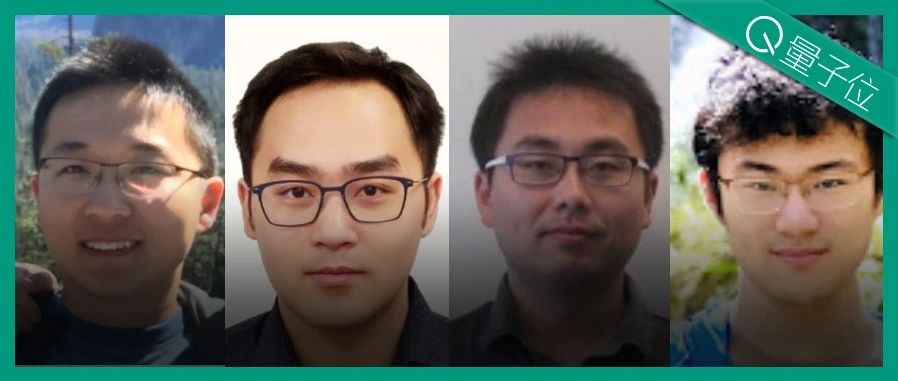
Core Viewpoint - Meta has successfully recruited four top AI researchers from OpenAI, highlighting a growing talent war in the AI industry, particularly involving Chinese researchers [1][2][3]. Group 1: Talent Acquisition - Meta has hired at least eight top AI researchers from OpenAI in three separate waves since forming its super AI team [3]. - The recent recruitment includes four prominent researchers: Zhao Shengjia from Tsinghua University, Ren Hongyu from Peking University, Yu Jiahui from the University of Science and Technology of China, and Bi Shuchao from Zhejiang University [6][13]. - OpenAI is reportedly increasing salaries to retain talent, indicating rising costs in this talent acquisition battle [4]. Group 2: Researcher Backgrounds - Zhao Shengjia joined OpenAI in June 2022 after completing his PhD at Stanford and was involved in the training of ChatGPT [7]. - Ren Hongyu, also a Stanford PhD graduate, contributed to the development of GPT-4o and led a post-training team [9][10]. - Yu Jiahui was the perception team lead at OpenAI and previously co-led the Gemini multimodal vision project at Google [16][18]. - Bi Shuchao served as an engineering director at Google and was a co-founder of YouTube Shorts, now overseeing multimodal post-training at OpenAI [20][21]. Group 3: Industry Dynamics - The competition for top AI talent is not just a corporate rivalry but represents a broader conflict between open-source and closed-source AI development [26]. - Meta's aggressive recruitment strategy has prompted OpenAI's leadership to reassess their talent retention strategies [23][24]. - The influx of talent from OpenAI to Meta may accelerate the development of open-source models like Llama, which focus on multimodal deep thinking [28].