
胸腹腔内窥镜手术系统

Search documents
国家药监局:又有10款医疗器械进入创新通道
Xin Lang Cai Jing· 2026-02-04 12:20
Core Viewpoint - The National Medical Products Administration (NMPA) has approved 10 innovative medical devices for special review procedures as part of the third batch of applications for 2026 [1][2] Group 1: Approved Innovative Products - The following innovative products have been granted special review status: 1. Chronic Obstructive Pulmonary Disease Assessment Software by Bojiang Life Sciences (Shanghai) Co., Ltd. [1][2] 2. Ultrasound Therapy Device by Shenzhen Tengfu Medical Technology Co., Ltd. [1][2] 3. Transcatheter Artificial Tricuspid Valve by Edwards Lifesciences LLC [1][2] 4. Transcatheter Artificial Tricuspid Valve by Jiangsu Zhenyi Medical Technology Co., Ltd. [1][2] 5. Ultrasound Thrombolysis Catheter and Stent System by Shanghai Tengfu Medical Technology Co., Ltd. [1][2] 6. Radiation Therapy Planning Software by Guoke Ion Medical Technology Co., Ltd. [1][2] 7. Implantable Cardioverter Defibrillator by Chuangling Cardiac Rhythm Management Medical Device (Shanghai) Co., Ltd. [1][2] 8. Peripheral Balloon Expandable Stent System by Zhejiang Guichuang Medical Technology Co., Ltd. [1][2] 9. Thoracoabdominal Endoscopic Surgical System by Zhi Guan Medical Company [1][2] 10. Coronary Sinus Balloon Counterpulsation System by Shanghai Micron Melody Medical Technology Co., Ltd. [1][2]


最新!10款医疗器械进入创新通道
思宇MedTech· 2026-02-02 09:58
Core Viewpoint - The article discusses the recent approval of 10 innovative medical devices by the National Medical Products Administration (NMPA) in China, highlighting the advancements in the medical technology sector and the companies involved in these innovations [1]. Group 1: Innovative Medical Devices - The first product is a software for assessing chronic obstructive pulmonary disease, developed by Bojiang Life Sciences (Shanghai) Co., Ltd., which focuses on digital biomarkers and therapies for chronic disease management [2]. - The second product is an ultrasound therapy device from Shenzhen Tengfu Medical Technology Co., Ltd., which specializes in interventional devices for pulmonary embolism treatment [3]. - The third product is a transcatheter artificial tricuspid valve developed by Edwards Lifesciences, a leading company in structural heart disease devices [4][5]. - The fourth product is an ultrasound thrombolysis catheter and stent system from Shanghai Tengfu Medical Technology Co., Ltd., aimed at providing safer treatment options for venous thromboembolism [9][11]. - The fifth product is a radiation therapy planning software from Guoke Ion Medical Technology Co., Ltd., which focuses on the industrialization of medical heavy ion technology [12]. - The sixth product is an implantable cardioverter-defibrillator from Chuangling Heart Rhythm Management Medical Device (Shanghai) Co., Ltd., which aims to provide high-quality heart rhythm management products [13]. - The seventh product is a peripheral balloon-expandable stent system from Zhejiang Guichuang Medical Technology Co., Ltd., which specializes in high-end vascular interventional devices [14]. - The eighth product is a thoracoabdominal endoscopic surgical system from Intuitive Surgical, a global leader in robotic-assisted minimally invasive surgery [15][16]. - The ninth product is a coronary sinus balloon counterpulsation system from Shanghai Micron Melody Medical Technology Co., Ltd., which focuses on coronary intervention devices [17].

医药生物行业周报:聚焦脑机接口与小核酸药物,JPM盛会前奏下医疗布局新浪潮-20260114
East Money Securities· 2026-01-14 10:07
Investment Rating - The report maintains a "Strong Buy" rating for the pharmaceutical and biotechnology sector, indicating a positive outlook for investment opportunities [3]. Core Insights - The pharmaceutical sector has shown a strong performance with a 7.81% increase in the index, outperforming the CSI 300 index by 5.03 percentage points, ranking 6th in industry performance [9][14]. - The report highlights significant growth in sub-sectors such as medical services and medical devices, with increases of 12.34% and 9.42% respectively [17][22]. - The report emphasizes the potential of small nucleic acid drugs, predicting a market valuation of $18.6 billion by 2029, with a CAGR of 29.5% from 2024 to 2029 [38]. - The upcoming JPMorgan Healthcare Conference is expected to showcase over 20 Chinese companies, with a focus on significant R&D advancements [39]. Summary by Sections Market Review - The pharmaceutical index increased by 7.81% this week, outperforming the CSI 300 index by 5.03 percentage points, ranking 6th in industry performance [14]. - The best-performing sub-sector this week was medical services, which rose by 12.34%, while traditional Chinese medicine had the smallest increase at 2.89% [17][22]. Individual Stock Performance - In the A-share market, 453 out of 478 pharmaceutical stocks rose, with the top five performers being Bibet (+68.89%), Innovation Medical (+61.04%), and Sanbo Brain Science (+56.15%) [25]. - In the Hong Kong market, 104 out of 116 pharmaceutical stocks increased, with the top performers including Zhaoyan New Drug (+30.76%) and Rongchang Bio (+28.51%) [29]. Industry News and Policies - The National Health Commission has outlined ten key initiatives for 2026, focusing on enhancing pediatric services and mental health care [32]. - The National Medical Products Administration has announced the establishment of two industry standards for brain-computer interface medical devices, indicating a regulatory push for this technology [32]. Weekly Insights - The report notes that the pharmaceutical sector is experiencing a "New Year Rally" driven by favorable policies for brain-computer interfaces and the launch of small nucleic acid innovative drugs [36]. - The report suggests monitoring companies involved in brain-computer interfaces, such as Chengyitong and Weisi Medical, as they are in the R&D phase [37].
马斯克预言三年机器人超人类医生 中国手术机器人产业已按下加速键?|科技观察
Sou Hu Cai Jing· 2026-01-13 14:44
Core Viewpoint - Elon Musk predicts that within three years, robotic surgeons will surpass human capabilities, emphasizing the precision and shared experience of AI and robots in surgery [1][3] Group 1: Market Growth and Trends - The global surgical robot market is on the verge of explosive growth, with China's market size increasing from 2.47 billion RMB in 2019 to 6.01 billion RMB in 2023, reflecting a compound annual growth rate of 24.9% [3] - China leads the world with 57 surgical robot companies, and the number of related bidding projects has surged, with a 53% increase in 2024 compared to 2023 [3] - As of January 12, there are 956 existing surgical robot companies in China, with a significant portion of registered capital exceeding 10 million RMB [3] Group 2: Innovation and Development - China has filed 8,528 patents related to surgical robots, with over 70% of these applications submitted in the last five years, indicating rapid advancement in technology [6] - The number of approved domestic surgical robots has steadily increased, with 19, 30, and 51 models approved from 2022 to 2024, showcasing diversification beyond orthopedic robots [6] - The National Health Commission's guidelines aim for balanced healthcare institution layouts and the widespread adoption of remote medical services by 2030, which may lower equipment costs and enhance accessibility [6] Group 3: Remote Surgery Breakthroughs - Significant advancements in remote surgery have been made, including the world's first remote robotic retinal injection surgery completed in Xinjiang, demonstrating the capabilities of domestic surgical robots [7] - The Shanghai MicroPort Medical Robotics system has become the first to achieve compliance for remote functionality registration, establishing a global network for remote surgeries [7] Group 4: Challenges and Opportunities - Despite rapid growth, the domestic market penetration for robotic-assisted laparoscopic surgery remains low, with only 0.7% in 2024 compared to 21.9% in the U.S., indicating substantial room for growth [8] - The introduction of surgical robots aims to enhance precision in complex procedures, but the technology's development is gradual and requires overcoming operational challenges [8] - Companies like Precision Medical face profitability challenges, with reported revenues and significant losses in recent years, highlighting the financial hurdles in the commercialization of surgical robots [8][9] Group 5: Research and Policy Support - Continuous R&D investment is common in the industry, with Precision Medical's R&D expenses reaching 171 million RMB in 2023 and 226 million RMB in 2024 [9] - Surgical robots are now included in the medical insurance reimbursement range across 28 provinces and cities, with reimbursement rates between 45% and 75%, providing a supportive environment for industry growth [9]

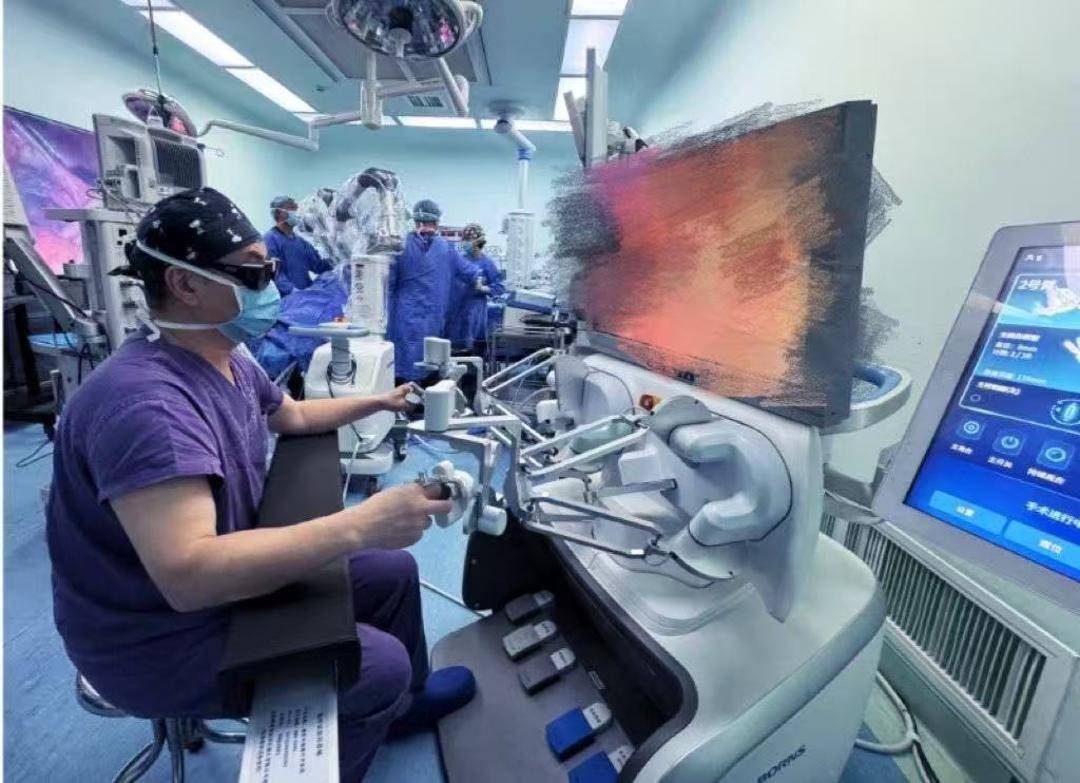
智慧医疗照进现实 手术机器人焕然“医”新
Zheng Quan Ri Bao· 2025-05-23 15:50
Core Viewpoint - The surgical robotics industry in China is experiencing rapid growth and transformation, driven by advancements in technology such as smart algorithms and 5G, leading to increased market penetration and commercialization of surgical robots [1][3]. Industry Overview - The penetration rate of surgical robots in China has risen from 3.7% in 2020 to an expected 11.2% by 2025, with minimally invasive surgeries accounting for 68% of applications [1]. - The market size for surgical robots in China reached 71.7 billion yuan in 2023 and is projected to exceed 100 billion yuan by 2025, potentially surpassing 287 billion yuan by 2030 [3]. Technological Advancements - Surgical robots are becoming essential tools in clinical settings, enhancing precision and reducing recovery times for patients [2]. - The integration of 5G technology is enabling remote surgical operations, allowing surgeons to perform procedures from great distances, thus addressing regional disparities in healthcare access [8][10]. Domestic Development - The domestic production rate of surgical robots has exceeded 80%, with a significant increase in the number of approved products, indicating a shift from reliance on foreign technology to local innovation [1][4]. - By the end of 2024, 64 companies are expected to have a total of 115 surgical robot products approved, with domestic brands accounting for 81.7% of these approvals [4]. Market Dynamics - The Chinese market is characterized by a diverse ecosystem with multiple technological pathways and applications, unlike the more consolidated markets in Europe and the U.S. [7]. - Companies like MicroPort and Tianzhihang are making significant strides in both domestic and international markets, with products that have received approvals in multiple regions [7]. Future Outlook - The surgical robotics industry is anticipated to enter a phase of accelerated growth, particularly with the advent of remote surgical capabilities powered by 5G technology [9][10]. - The global market for remote surgical robots is expected to see explosive growth, with China emerging as the second-largest market after North America [9].
