腾讯CodeBuddy

Search documents
“百虾大战”开打,云厂商重估token价值
第一财经· 2026-03-27 13:57
Core Viewpoint - The article discusses the rapid expansion of the shrimp-related product market driven by OpenClaw, with major tech companies like Tencent, Alibaba, and JD entering the space, leading to a surge in agent capabilities and token consumption in the cloud industry [3][4]. Group 1: Market Dynamics - The launch of various shrimp-related products has led to a significant increase in the number of offerings in the market, with companies like Tencent and JD quickly rolling out their products [3]. - Tencent's Workbuddy was developed rapidly, with its prototype ready by January and launched shortly after, showcasing the agility of tech firms in responding to market trends [3]. - The overall revenue growth for Tencent Cloud is expected to exceed last year's figures, with AI identified as a major growth driver [5]. Group 2: Token Consumption and Cloud Services - The increase in token consumption is directly linked to the rise in computational power usage, with JD reporting a 455% week-on-week increase in token calls for its cloud services [5]. - IDC forecasts that the usage of agents by the largest 2000 publicly listed companies will increase tenfold by 2027, with token and API call volumes expected to grow by 1000 times [5]. - The emergence of agent capabilities is seen as a pivotal moment for cloud vendors, marking a shift towards enterprise-level AI applications [5][6]. Group 3: Strategic Responses from Cloud Vendors - In response to the growing token consumption, Alibaba has established the Alibaba Token Hub to focus on the creation and application of tokens, with expectations that MaaS (Model as a Service) will become a significant revenue stream [7]. - ByteDance's Volcano Engine has also seen a significant increase in cloud model calls, with a target of exceeding 10 billion yuan in annual MaaS revenue [7]. - Tencent has emphasized the importance of SaaS and AI-related services beyond just token consumption, indicating a strategic shift in their approach to cloud services [7]. Group 4: Industry Considerations - There are concerns regarding the sustainability of a business model focused solely on token consumption, as it may lead to high costs for users and potential customer attrition [8]. - The article suggests that the focus should be on developing effective and secure agents rather than merely increasing token consumption [8]. - The shrimp product concept is viewed as a long-term trend with real demand and application scenarios, indicating that the impact of OpenClaw will continue to evolve [9].



2026 奇点智能技术大会上海站来袭,解码AI Agent、世界模型与氛围编程等新范式
AI科技大本营· 2026-02-02 08:46
Core Insights - The article emphasizes a paradigm shift in the tech industry, where traditional roles such as front-end, back-end, and full-stack developers are being replaced by AI Agent engineers, marking a significant transformation akin to an industrial revolution [1][2] - Demis Hassabis, CEO of Google DeepMind, predicts that the scale of this change will be ten times that of the industrial revolution, with a speed that is also ten times faster [1] - AI is evolving from a mere enabling tool to a transformative force in business processes and organizational paradigms, as concluded by the Singularity Intelligence Research Institute after surveying over 100 companies [1] Event Overview - The "Global Machine Learning Technology Conference" has been upgraded to the "Singularity Intelligence Technology Conference" to reflect the rapid advancements in AI technology [2] - The 2026 Singularity Intelligence Technology Conference will take place in Shanghai on April 17-18, 2026, featuring over 50 leading technology figures and more than 1,000 elite attendees from various industries [3] Conference Themes - The conference will focus on the core logic of scaling AI from mere technological breakthroughs to practical applications, specifically how the Agent paradigm can drive business growth and ensure a positive ROI from computational investments [5] - Twelve key topics have been established for the conference, including: - Evolution of large language model technology - Multimodal and world models - AI computing platforms and performance optimization - AI-native software development and ambient programming - Intelligent agent systems and engineering - AI-native application innovation and development practices - Agent-enabled DevOps - Large model system architecture [5][6] Expert Contributions - The conference will feature expert speakers with deep expertise and practical experience in AI, ensuring that discussions are grounded in real-world applications and engineering truths [7][8] - Notable speakers include: - Duan Nan, Vice President of JD Group, with extensive experience in multimodal foundational models [11] - Li Yongbin, Head of Dialogue Intelligence & Code Intelligence at Alibaba, focusing on large model technologies [14] - Wang Shengjie, Head of AI Products at Tencent Cloud, with a background in software architecture and AI development efficiency [19] - He Wanqing, Vice President of Qingcheng Jizhi, specializing in HPC and AI application performance optimization [20] Call to Action - The conference invites participants who are leading teams in AI-native software development, multimodal world models, embodied intelligence, or AI infrastructure performance optimization to attend [62] - The event aims to foster collaboration among long-term thinkers in the AI era, creating a platform for sharing verifiable and reusable engineering experiences [65]


摩根大通:中国AI交易,不确定“谁是最终赢家”,押注“AI应用大战”的受益者
美股IPO· 2026-01-31 16:03
Core Viewpoint - Morgan Stanley defines 2026 as the "activation year" for consumer AI, suggesting investors should focus on secondary beneficiaries rather than single application winners due to the lack of a solid moat in the application layer [1][2]. Group 1: Market Dynamics - The report emphasizes that it is premature to determine "AI application winners and losers" in the Chinese chatbot market, as the market is still developing and short-term share changes reflect distribution and product iteration rather than a solid competitive advantage [3][10]. - Morgan Stanley believes that 2026 will mark a significant shift in consumer AI, with chatbots transitioning from novelty to habitual use, fundamentally changing how users discover information and make decisions [3][4]. Group 2: Investment Strategy - The report advises avoiding bets on single application winners and instead focusing on secondary beneficiaries that are likely to see earlier returns and higher visibility [4]. - The investment logic is anchored on secondary exposures, including AI infrastructure and cloud providers that can capture the rising demand for reasoning workloads, and advertising platforms that will benefit from increased sales and marketing intensity [6]. Group 3: Sector Insights - In the enterprise AI sector, the turning point is when the value proposition becomes measurable in high-stakes workflows, with examples such as Google generating over 25% of new code through AI [6]. - The report highlights that the growth of daily multi-turn chatbot conversations will directly benefit reasoning demand and token throughput, with a compound growth in token consumption as agents expand from conversation to execution [6]. Group 4: Company Comparisons - The report notes that despite recent rebounds, leading Chinese internet companies still trade at significant discounts compared to global peers, with Alibaba's expected PE for 2026 at 20 times compared to Google's 29 times and Amazon's 26 times [11][12]. - The valuation comparison indicates that as AI narratives converge, it is feasible to narrow valuation gaps for companies that achieve execution milestones, benefiting long-term narratives with high credibility [12].


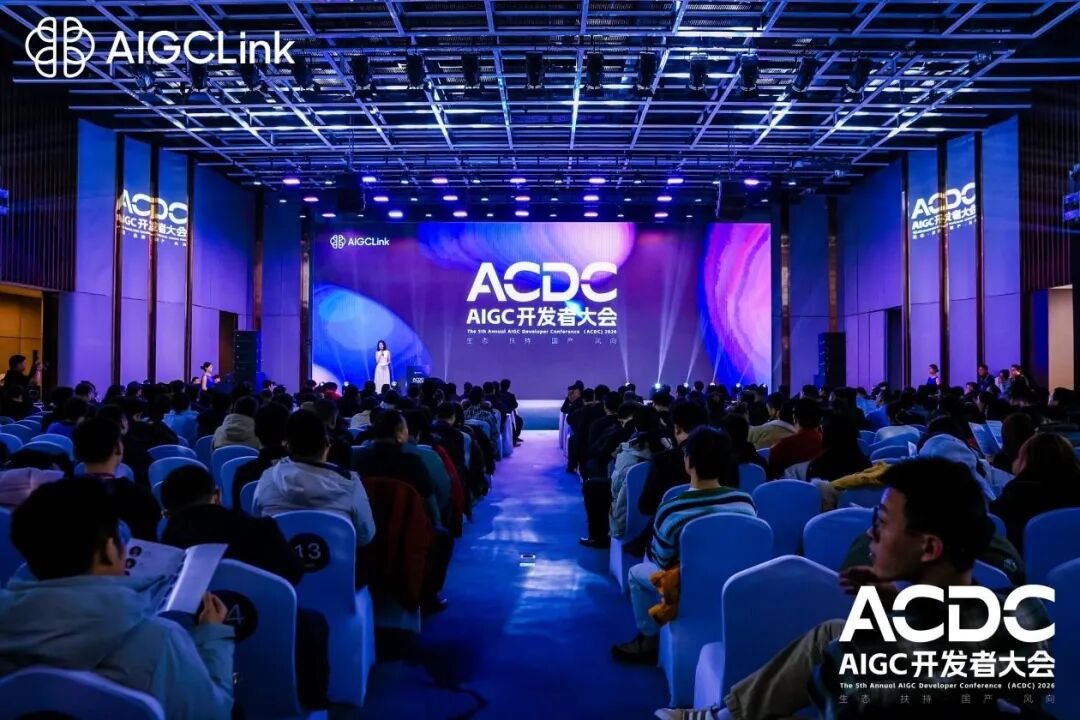
第五届AIGC开发者大会圆满落幕:Vibe Coding创作者经济正式来临
Xin Lang Cai Jing· 2026-01-17 13:35
Core Insights - The ACDC 2026 conference marked the arrival of the "Vibe Coding creator economy," expected to become a trillion-dollar market by 2026, following the previous waves of text and video content creation [1][4][43] - The focus of the AI industry is shifting from technology to deep industry practices, addressing challenges such as high computing costs and supply chain autonomy [2][43] - A series of substantial initiatives were announced to support the ecosystem, including the AIGCLINK developer fund and a chip adaptation alliance, aimed at overcoming bottlenecks in large-scale implementation [1][13][43] Vibe Coding Creator Economy - Vibe Coding refers to the process of using low-code and natural language to create applications, enabling individuals to develop, deploy, and monetize AI applications independently [6][8] - The report predicts that by 2030, the number of One Person Companies (OPC) utilizing Vibe Coding will exceed 3 million, leading to the emergence of new professions such as front-end engineers and context engineers [6][8] - The rise of Vibe Coding is supported by foundational AI technologies, including the MCP, A2UI, and UCP protocols, which facilitate the development of AI applications through conversational interfaces [6][8] Ecosystem Initiatives - The AIGCLINK developer fund was launched to provide essential funding for early-stage AI projects, focusing on the initial stages of development to foster diverse AI innovations [8][11] - The "AI Developer Thousand Support Plan" aims to empower high-level AI talent through systematic training and resource connections, creating a dual engine of talent and funding for AI innovation [11] - The chip adaptation alliance was established to enhance the penetration of domestic chips in AI applications from less than 10% to over 30%, aiming to reduce innovation costs and technical barriers [13][14] Social Responsibility and International Cooperation - The "Hundred Birds Towards the Phoenix" initiative aims to help 100,000 disabled individuals increase their monthly income by 500 yuan through AI skills training and job placement over the next three years [16] - The AI Innovation Island project is designed to create a key platform for AI innovation, integrating technology research, industry incubation, and resource connections [16] - The cross-border computing power initiative focuses on international cooperation in AI, sharing computing resources and developing vertical models with partner countries [16] Industry Recognition - The conference revealed five annual awards recognizing influential figures and companies in the AIGC sector, providing a reference for capital, talent, and market collaboration [19][43] - The awards are based on actual contributions to the industry, helping to identify and amplify key players driving technological advancement and business transformation [19][43]
DeepSeek “极你太美” bug,官方回应了
猿大侠· 2025-08-29 04:12
Core Viewpoint - The article discusses a significant bug in the DeepSeek V3.1 model, which has caused widespread concern among developers due to the unexpected appearance of the character "极" in output results during API calls [1][2][12]. Group 1: Bug Discovery and Impact - The bug was initially discovered on platforms like Volcano Engine and Chutes, but it has since affected more platforms, including Tencent's CodeBuddy and even the DeepSeek official platform [5]. - The issue has sparked discussions on platforms like Reddit, particularly focusing on the terms "extreme," "极," and "極" [7]. - The presence of the "极" character can lead to compilation failures in code, posing a serious risk for scenarios requiring high precision and structured output [11]. Group 2: Solutions and Workarounds - While a complete fix is pending from DeepSeek, users have started sharing potential workarounds, such as using specific prompt patterns to mitigate the issue [14][19]. - One suggested workaround involves prohibiting certain symbol sequences in API calls, which is particularly relevant for third-party platforms [19]. Group 3: Analysis of the Bug's Origin - A user on Zhihu, Huang Zhewai, provided insights suggesting that this bug is not an isolated incident and may relate to a "malicious pattern" in large model programming [20]. - Huang observed similar issues in earlier models, indicating that the bug might stem from inadequate data cleaning during the supervised fine-tuning (SFT) and pre-training phases [23]. - He hypothesized that the "极" character could have been learned as a termination symbol due to its presence in "dirty data" that was not properly cleaned [23]. Group 4: Future Outlook - The resolution of the "极" bug, humorously referred to as "极你太美" or "'极'速版," is contingent upon the release of a new version from DeepSeek [25].
DeepSeek “极你太美” bug,官方回应了
程序员的那些事· 2025-08-28 04:17
Core Viewpoint - The article discusses a significant bug in the DeepSeek V3.1 model, which has caused widespread issues among developers using its API, particularly the unexpected appearance of the character "极" in output results, leading to potential compilation failures in code [1][2][11]. Group 1: Bug Discovery and Impact - The bug was initially discovered on platforms like Volcano Engine and Chutes, but it has since affected more platforms, including Tencent's CodeBuddy and even the DeepSeek official platform [5]. - The issue has sparked discussions on international platforms like Reddit, with the character "极" being a focal point of concern [7]. - The presence of the "极" character in outputs can lead to critical failures in high-precision and structured output scenarios, which are essential for developers [11]. Group 2: Proposed Solutions and Workarounds - While a complete fix is pending from DeepSeek, users have started sharing workarounds, such as using specific prompt patterns to mitigate the bug [14][19]. - One suggested workaround involves prohibiting certain symbol sequences in API calls, which is particularly relevant for third-party platforms [19]. Group 3: Analysis of the Bug's Origin - A user on Zhihu, Huang Zhewai, provided insights suggesting that this bug is not an isolated incident and may relate to a "malicious pattern" in large model programming [20]. - Huang noted that similar issues were observed in earlier models, where unexpected outputs like "极长" appeared during tasks, indicating a potential flaw in data cleaning processes [22]. - He hypothesized that the bug could stem from uncleaned "dirty data" during the supervised fine-tuning (SFT) phase, which may have led to the model misinterpreting the "极" character as a termination symbol [23]. Group 4: Future Outlook - The resolution of the "极" bug is contingent upon the release of a new version from DeepSeek, which is expected to address these issues [25].