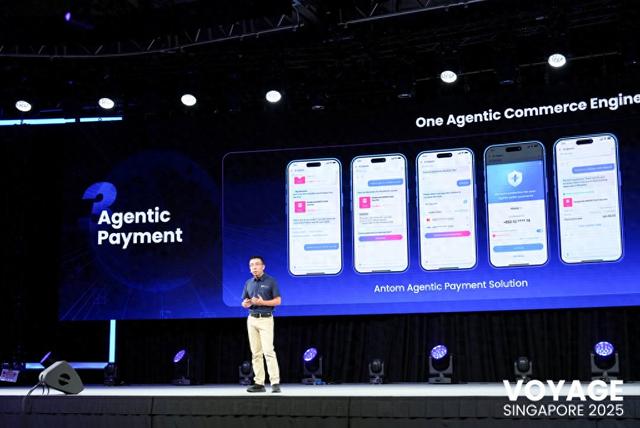
智能体商业

Search documents
AI重构商业未来:Google描绘2026增长新图景
Jing Ji Guan Cha Bao· 2026-02-12 09:28
Core Insights - The article discusses how AI is transforming the shopping experience, making it smoother and more personalized while creating new growth opportunities for businesses [1] Group 1: AI-Driven Shopping Experience - The traditional dilemma of choosing between speed and thorough research in shopping is diminishing due to advancements in AI [1] - Google aims to enhance the connection between brands and creators on platforms like YouTube, allowing for a more direct conversion of influence into measurable business outcomes [2] - The role of advertising is being redefined, with AI enabling a more conversational and exploratory search experience [4] Group 2: New Advertising Formats - New advertising formats are being tested, including "sponsored content" that integrates seamlessly into conversations and provides direct retail information [5] - The "Direct Offers" feature allows brands to present personalized discounts at critical decision-making moments without altering regular prices [5] Group 3: Agentic Commerce - "Agentic Commerce" is set to become a reality in 2026, focusing on reducing friction in the shopping process and enhancing consumer enjoyment [6] - Google has introduced the Agent Payments Protocol (AP2) and Universal Commerce Protocol (UCP) to establish standards for interactions between AI agents and businesses [7] Group 4: Gemini 3 and AI Capabilities - Google has launched Gemini 3, its most advanced model, which significantly enhances advertising capabilities without requiring additional adjustments from advertisers [8] - The use of Gemini-generated creative materials has tripled year-over-year, indicating a substantial increase in efficiency for advertisers [8] Group 5: Trust in AI - Trust remains a foundational element in the AI-driven commercial landscape, with Google emphasizing data privacy and security as core principles [9] - The competition in 2026 will not only revolve around technology but also on understanding consumers better, transforming shopping into an enjoyable and exploratory journey [9]
谷歌(GOOGL.US)电话会:1850亿支出“不得不花”,确认与苹果合作,Gemini并非SaaS的“终结者”
智通财经网· 2026-02-05 01:53
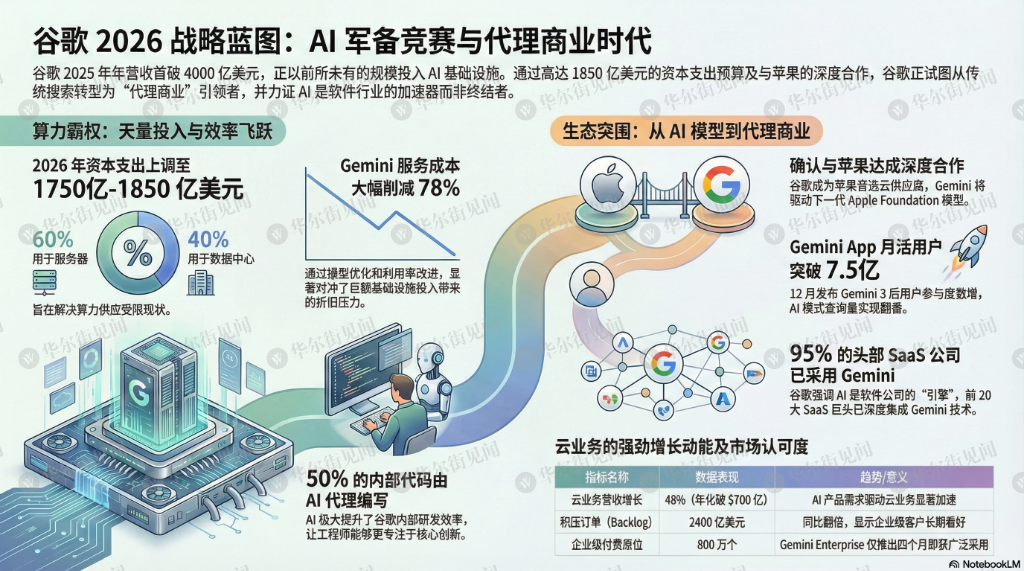
Core Viewpoint - Alphabet's Q4 performance exceeded expectations, but the market reacted negatively to the company's capital expenditure guidance for 2026, projected between $175 billion and $185 billion, raising concerns about depreciation pressure and potential profit margin erosion [1][4]. Capital Expenditure and AI Investment - Alphabet's CFO indicated that the high capital expenditure is necessary to support the development of Google DeepMind's advanced models and to meet the increasing demand from cloud customers, with 60% of the capital expenditure allocated to servers and 40% to long-cycle assets like data centers [4][42]. - The company expects depreciation expenses to rise significantly, with a projected growth rate for depreciation in 2026 accelerating further, which will exert continuous pressure on the profit and loss statement [4][42]. AI and Software Market Position - CEO Sundar Pichai emphasized that Google is positioned as an ally to SaaS companies, asserting that Gemini is becoming a key AI engine for leading software firms, with 95% of the top 20 SaaS companies using Gemini [5][24]. - Pichai countered fears that AI would disrupt traditional software business models, stating that successful SaaS companies are integrating Gemini into their workflows, leading to strong growth in token usage [5][24]. Collaboration with Apple - Alphabet confirmed a significant partnership with Apple, where Google will serve as Apple's preferred cloud provider, utilizing Gemini technology to develop the next generation of Apple Foundation models [6][34]. User Engagement and AI Product Monetization - The Gemini app has surpassed 750 million monthly active users, with increased user engagement since the launch of Gemini 3 [7][18]. - Google is transitioning towards a new business model based on "Agentic AI," which aims to execute tasks for users, laying the groundwork for AI-driven commerce [7][19]. Cloud Business Growth - Google Cloud reported a robust revenue growth of 48%, driven by strong demand for AI infrastructure and services, with a significant increase in backlog orders [9][39]. - The cloud business is benefiting from a dual strategy of utilizing both proprietary TPU and NVIDIA GPU technologies to enhance performance and efficiency [10][39]. YouTube and Advertising Performance - YouTube's ad revenue grew by 9%, with significant contributions from Shorts, which now averages over 200 billion daily views [11][33]. - The company is focusing on enhancing the advertising experience through AI innovations, which are expected to improve ad targeting and effectiveness [29][31]. Waymo and Autonomous Driving - Waymo has secured its largest funding round to date and is expanding its services to multiple cities in the U.S., the U.K., and Japan, indicating strong momentum in the autonomous driving sector [11][27]. Efficiency and Cost Management - Alphabet is pursuing operational efficiency, with 50% of its code now being written by coding agents, allowing engineers to focus on higher-value tasks [12][51]. - The company aims to balance its significant capital expenditures with ongoing efforts to improve internal efficiencies and productivity [12][51].


拥抱AI 沃尔玛跻身“万亿美元俱乐部”
Sou Hu Cai Jing· 2026-02-04 14:35
Core Insights - Walmart has become the first retailer to achieve a market capitalization of $1 trillion, marking a successful transformation over the past decade [1][4] - The company's online business became profitable for the first time last year, with projected annual e-commerce sales reaching approximately $140 billion [1][4] - Walmart is heavily investing in AI, allocating billions for supply chain automation to enhance fresh product quality, speed up delivery, and optimize inventory forecasting [1][5] Market Capitalization - On Tuesday, Walmart's stock rose by 2.9% to $127.71, resulting in a market cap of $1.018 trillion [4] - Over the past year, Walmart's stock has increased by nearly 26%, joining the exclusive club of companies with a market cap exceeding $1 trillion, previously dominated by tech giants [4] - Walmart and Berkshire Hathaway are the only non-tech companies in the U.S. with a market cap over $1 trillion, while the remaining are tech firms [4] E-commerce Growth - In the past five years, Walmart's online marketplace has expanded to over 500 million products, introduced one-hour delivery services, and launched the Walmart+ membership program to compete with Amazon Prime [5] - Walmart's U.S. e-commerce sales grew by 28% due to online orders and advertising business, with annual revenue expected to exceed $700 billion [5][6] AI Investments - Walmart has partnered with OpenAI to introduce an "instant checkout" feature and is integrating Google's Gemini AI chatbot into its shopping process [5][6] - The company is transitioning from traditional web or app searches to AI-driven shopping experiences, reflecting changing consumer behaviors [6] Leadership Transition - The recent leadership change with CEO John Furner, a strong advocate for AI investment, signifies a shift towards a decade-long transformation focused on AI and digitalization [8][9] - Walmart plans to maintain its global workforce of approximately 2.1 million employees over the next three years, despite significant changes in job roles due to AI technology [9]


中国互联网行业-2026 年展望:交易 AI 二阶受益者
2026-02-02 02:42
Summary of the Conference Call on the Chinese Internet Industry Industry Overview - The report focuses on the **Chinese Internet Industry** and its outlook for **2026**, highlighting the potential activation year for consumer-level AI, particularly chatbots transitioning from novelty to habitual use [1][5]. Key Insights and Arguments - **Market Readiness**: The market is not yet prepared to consistently price "AI application winners and losers." Early market share shifts reflect distribution routes, marketing rhythms, and product iteration speeds rather than solid competitive advantages [4][8]. - **Investment Strategy**: The recommended investment strategy is to avoid binary bets on application-level winners and instead target beneficiaries of AI integration in industries, focusing on broader adoption rather than individual application market shares [4][8]. - **AI Infrastructure Growth**: The growth in daily multi-turn chatbot interactions is expected to boost demand for reasoning workloads and token throughput, benefiting companies like **Alibaba** and **Baidu** [4][8]. - **Advertising Platforms**: Increased marketing spending to cultivate chatbot user bases is anticipated to benefit platforms like **Kuaishou Technology**, as they compete for chatbot mindshare [4][8]. - **Gaming Sector**: The gaming industry is expected to benefit from AI adoption, with companies like **Tencent** and **NetEase** leveraging AI to accelerate content creation and improve return on investment [4][8]. Additional Important Points - **Chatbot Adoption**: The rise of chatbots is seen as a significant shift in consumer behavior, with **ByteDance's Doubao** reaching approximately 100 million daily active users, indicating a milestone in mainstream application [5][7]. - **Global Context**: The report draws parallels with global trends, noting that once a reliable adoption path is established, Chinese platforms are unlikely to underinvest in consumer-level AI [5][7]. - **AI as a Business Tool**: Companies are increasingly productizing AI as enterprise toolkits rather than merely as R&D capabilities, with Tencent's **CodeBuddy** reducing coding time by 40% [11]. - **Regulatory Environment**: The regulatory landscape is seen as favorable for content supply, with a stable approval rhythm for game licenses, indicating a healthy content reserve for 2026 [19]. - **Valuation Dynamics**: The report emphasizes that valuation multiples are being driven by narrative changes, particularly regarding AI capabilities, rather than immediate profit forecasts [24][28]. Company-Specific Insights - **Core Stocks**: The preferred stocks in the industry include **Baidu**, **Alibaba**, **Tencent**, **NetEase**, and **Kuaishou Technology** due to their strong positioning in the AI landscape [1][4]. - **Valuation Comparisons**: The report highlights significant valuation discounts for leading Chinese internet platforms compared to their U.S. counterparts, suggesting potential for narrowing these gaps as narratives around AI and platform indispensability evolve [32][33]. This summary encapsulates the key points from the conference call, providing a comprehensive overview of the current state and future outlook of the Chinese internet industry, particularly in relation to AI adoption and its implications for investment strategies.


摩根大通:中国AI交易,不确定“谁是最终赢家”,押注“AI应用大战”的受益者
美股IPO· 2026-01-31 16:03
Core Viewpoint - Morgan Stanley defines 2026 as the "activation year" for consumer AI, suggesting investors should focus on secondary beneficiaries rather than single application winners due to the lack of a solid moat in the application layer [1][2]. Group 1: Market Dynamics - The report emphasizes that it is premature to determine "AI application winners and losers" in the Chinese chatbot market, as the market is still developing and short-term share changes reflect distribution and product iteration rather than a solid competitive advantage [3][10]. - Morgan Stanley believes that 2026 will mark a significant shift in consumer AI, with chatbots transitioning from novelty to habitual use, fundamentally changing how users discover information and make decisions [3][4]. Group 2: Investment Strategy - The report advises avoiding bets on single application winners and instead focusing on secondary beneficiaries that are likely to see earlier returns and higher visibility [4]. - The investment logic is anchored on secondary exposures, including AI infrastructure and cloud providers that can capture the rising demand for reasoning workloads, and advertising platforms that will benefit from increased sales and marketing intensity [6]. Group 3: Sector Insights - In the enterprise AI sector, the turning point is when the value proposition becomes measurable in high-stakes workflows, with examples such as Google generating over 25% of new code through AI [6]. - The report highlights that the growth of daily multi-turn chatbot conversations will directly benefit reasoning demand and token throughput, with a compound growth in token consumption as agents expand from conversation to execution [6]. Group 4: Company Comparisons - The report notes that despite recent rebounds, leading Chinese internet companies still trade at significant discounts compared to global peers, with Alibaba's expected PE for 2026 at 20 times compared to Google's 29 times and Amazon's 26 times [11][12]. - The valuation comparison indicates that as AI narratives converge, it is feasible to narrow valuation gaps for companies that achieve execution milestones, benefiting long-term narratives with high credibility [12].
中国消费级AI“激活年”,AI应用胜负未定,摩根大通更看好“二阶受益者”
Hua Er Jie Jian Wen· 2026-01-30 08:54
Core Insights - Morgan Stanley predicts that 2026 will be a pivotal year for consumer-level AI in China, with chatbots transitioning from trial phases to user habit formation [1] - The report emphasizes that the current market is not ready to price the ultimate "winners and losers" in AI applications, suggesting that early market share shifts reflect distribution capabilities rather than competitive moats [1] Group 1: Market Dynamics - Major internet platforms in China are expected to engage in fierce competition by 2026, leading to increased daily interactions with chatbots and higher token consumption [2] - Platforms will increase customer acquisition spending to capture mind share, directing budgets towards performance-driven channels [2] Group 2: Infrastructure and Advertising - It is premature to make definitive trades on the final landscape of the Chinese chatbot market, as short-term share changes reflect distribution routes and marketing rhythms rather than solid competitive barriers [3] - The growth of daily multi-turn chatbot conversations will benefit AI infrastructure, increasing demand for reasoning and token throughput, with Alibaba and Baidu positioned to reflect this token growth theme [3] - Increased marketing intensity from giants like Alibaba and Tencent will create favorable conditions for companies like Kuaishou Technology to benefit from industry competition [3] Group 3: Enterprise Adoption - The turning point for enterprise AI adoption is when value propositions become measurable in high-stakes workflows, with software development being a clear validation scenario [4] - AI assistants are shown to improve throughput in critical workflows, with companies like Klarna reporting efficiency equivalent to 700 employees [4] - Platforms in China are productizing AI into enterprise toolkits, benefiting both foundational model developers and AI service providers [4] Group 4: Intelligent Agents - The next phase after consumer adoption of chatbots is "intelligent agent commerce," where interfaces not only answer questions but also initiate and complete transactions [6] - Alibaba's recent upgrade of its Qianwen application allows users to order food and book travel through chat, marking a significant transformation in China [6] - The immediate opportunity lies in improving funnel efficiency rather than immediate market share disruption, with chat interfaces reducing friction in discovery, comparison, and checkout processes [6] Group 5: Gaming Industry - The Chinese gaming industry is expected to perform strongly in 2026, with AI adoption being an underestimated benefit [7] - AI's impact is not in replacing creativity but in compressing the "creative to market" cycle, accelerating asset creation and iteration [7] - A stable regulatory environment supports the industry, with a record number of games approved in 2025, indicating a healthier content reserve [7]
巨头联手!沃尔玛、谷歌宣布:合作
Huan Qiu Wang Zi Xun· 2026-01-12 23:20
Group 1 - Walmart and Google announced a collaboration to integrate Google's generative AI chatbot Gemini into Walmart's shopping process, allowing consumers to discover products, compare prices, and complete purchases more efficiently [1][3] - The partnership reflects a shift in consumer behavior in the U.S., where more shoppers are now consulting AI before accessing shopping apps or e-commerce websites [3][5] - Walmart's CEO stated that the retail industry is transitioning from traditional web or app searches to AI-driven business models, marking a significant evolution in retail [5] Group 2 - Google is enhancing its AI e-commerce strategy, having introduced a new open technology standard called the Universal Commercial Protocol (UCP) in collaboration with several retailers, including Walmart [5][6] - The UCP aims to establish a common language and interaction standards for AI-driven shopping processes, facilitating direct connections between AI shopping agents, retailers, and payment systems [6] - Other AI companies are also embedding e-commerce functionalities into their chatbots, with OpenAI and Stripe developing a similar open-source solution, indicating potential competition with UCP [8][10] Group 3 - A McKinsey report projects that the global retail market could reach a potential size of $3 trillion to $5 trillion by 2030, driven by AI tools and "agent commerce" [10]

蚂蚁国际和谷歌共推“通用商业协议”,打通“AI购物”全流程
21世纪经济报道· 2026-01-12 12:22
Core Viewpoint - Ant International is expanding its collaboration with leading global models to support the construction of an intelligent commercial ecosystem, focusing on the new Universal Commerce Protocol (UCP) to enhance AI-driven commercial activities [2][3]. Group 1: Collaboration and Protocol - Ant International is partnering with Google to develop the Universal Commerce Protocol (UCP), aimed at facilitating AI agents in the entire shopping process, including browsing, purchasing, and after-sales support [2]. - The UCP establishes a universal interaction language that allows AI agents to efficiently collaborate across systems, enhancing commercial activities without the need for separate connections for each agent [2]. Group 2: Intelligent Agent Solutions - Ant International's intelligent agent solutions provide three core capabilities for merchants: comprehensive management of AI algorithms, a specialized payment solution for e-wallets, and enhanced transaction security through AI technologies [3]. - The Antom EasySafePay solution allows e-wallet users to complete transactions without leaving the AI interaction interface, improving user experience [3]. Group 3: Market Reach and Applications - Ant International has collaborated with leading model providers like Qianwen and DeepSeek to explore scalable AI applications in various business scenarios, particularly in emerging markets with high economic growth and diverse payment ecosystems [4]. - The company operates in over 200 global markets, connecting more than 1.8 billion user accounts and 150 million merchants, positioning its global payment services and AI-as-a-service platform as key to the UCP's implementation [4].

蚂蚁国际和谷歌共推“通用商业协议”,打通“AI购物”全流程
Huan Qiu Wang· 2026-01-12 10:29
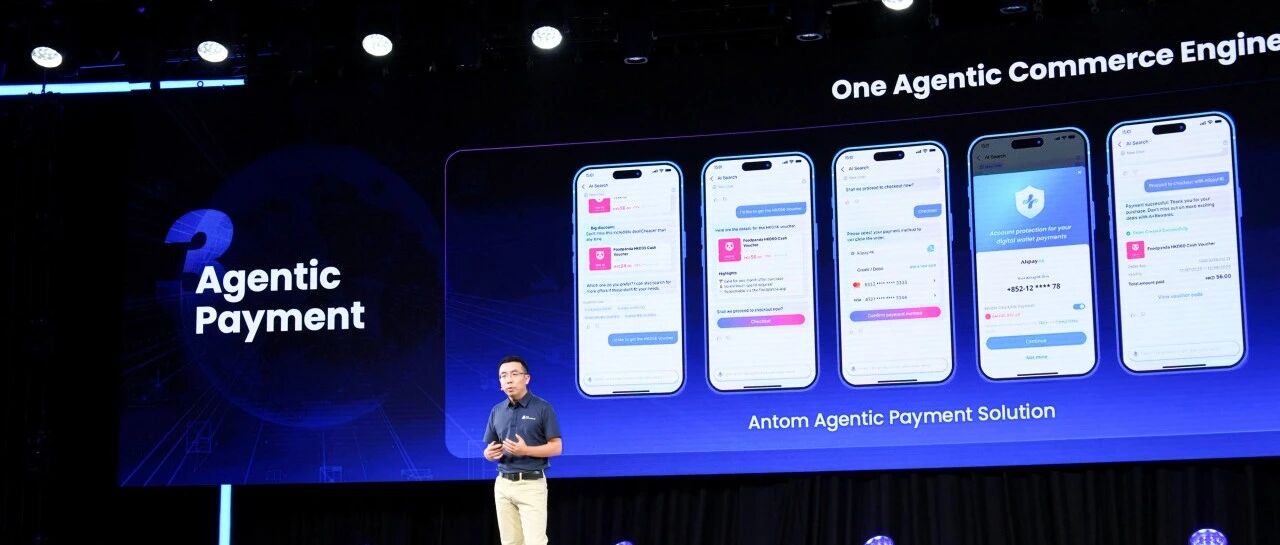
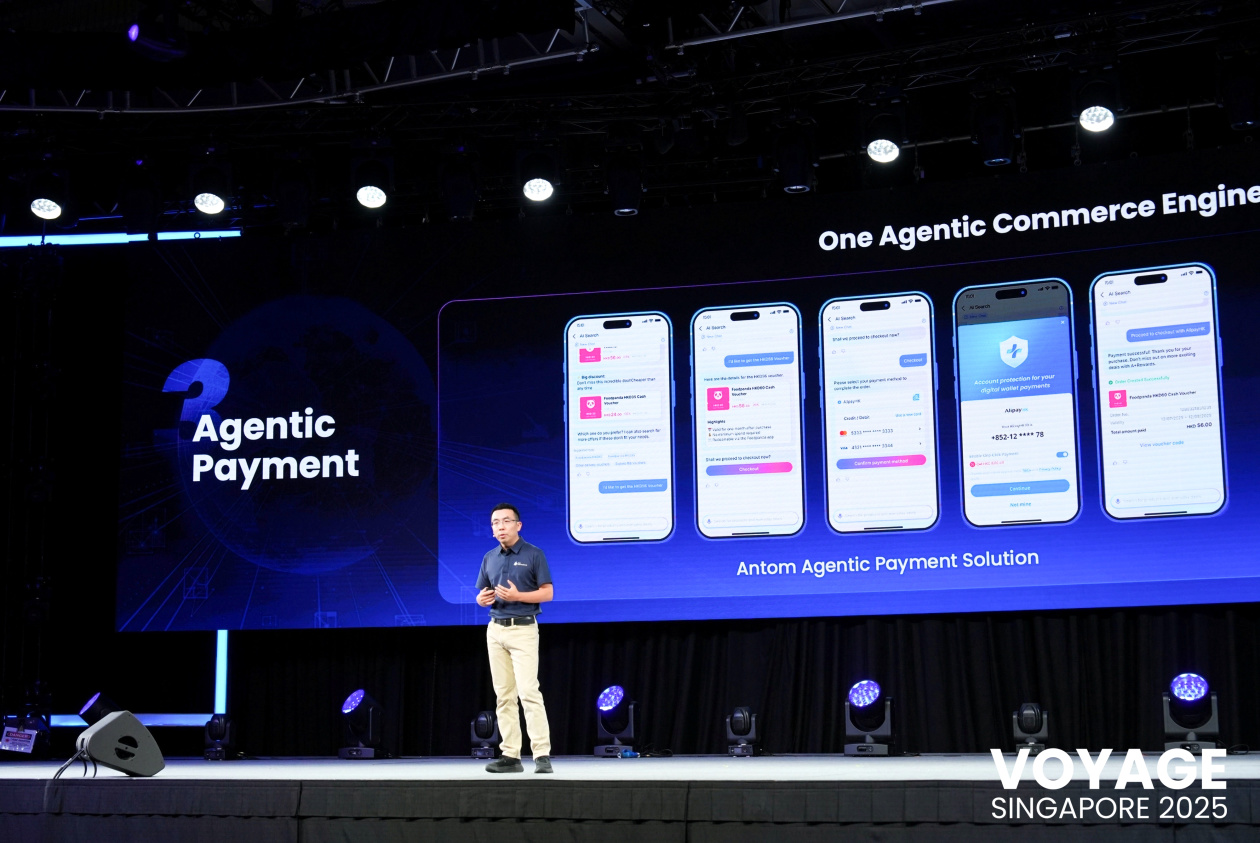
Core Insights - Ant Group and Google are collaborating on a new open standard in the field of Agentic Commerce called the Universal Commerce Protocol (UCP) to enhance AI agent technology and support the entire shopping process, including browsing, purchasing, and after-sales [1] - The UCP establishes a universal interaction language that allows AI agents to efficiently collaborate across systems, consumer interfaces, merchant backends, and payment providers, facilitating commercial activities [1] - Ant Group's Chief Innovation Officer, Yang Jiangming, emphasized the company's commitment to expanding partnerships with leading global models to support the construction of the AI commercial ecosystem, leveraging its advanced payment technology [1] Summary by Sections Collaboration and Protocol - Ant Group and Google are working together on the Universal Commerce Protocol (UCP) to promote AI agent technology [1] - The UCP allows developers to connect all AI agents easily without needing individual connections for each agent [1] - Multiple global payment and retail companies have already joined the UCP initiative led by Google [1] Core Capabilities for Merchants - Ant Group provides three core capabilities for merchants to ensure a reliable AI agent solution [3] - Merchants can manage AI algorithms comprehensively while automating shopping interactions to align consumer experiences with brand image and service standards [3] - Ant Group has developed a smart payment solution specifically for e-wallet scenarios, allowing users to complete transactions without leaving the AI interaction interface [3] Security and Application - Ant Group employs various AI security technologies to ensure transactions are verifiable and traceable, with clear responsibilities among participants in the payment cycle [3] - The company has partnered with leading model vendors like Qianwen and DeepSeek to explore scalable applications of AI in B2B services, particularly in emerging markets [3] - Ant Group's services cover over 200 markets globally, connecting more than 1.8 billion user accounts and 150 million merchants, which will support the implementation of UCP [3]
让AI购物更顺畅:蚂蚁国际与谷歌试点“通用商业协议”
Xin Lang Cai Jing· 2026-01-12 09:46
Group 1 - Ant Group International is expanding collaborations with leading global models to support the construction of an agentic commerce ecosystem [2] - The collaboration will focus on a new open standard called Universal Commerce Protocol (UCP), aimed at enhancing AI agent technology to support the entire shopping process, including browsing, purchasing, and after-sales [2] - UCP establishes a universal interaction language that allows AI agents to efficiently collaborate across systems, consumer interfaces, merchant backends, and payment providers, facilitating commercial activities [2] Group 2 - Ant Group International's Chief Innovation Officer emphasized the need for reliable AI agent solutions to provide three core capabilities for merchants: comprehensive management of AI algorithms, ensuring consumer experience aligns with brand image, and a specialized payment solution for e-wallet scenarios [2] - The company has implemented multiple AI security technologies to ensure transaction verifiability and traceability, with clear responsibilities among participants during payment cycles, and offers compensation protection in case of account theft [3] - Ant Group International's services cover over 200 global markets, connecting more than 1.8 billion user accounts and 150 million merchants, with its global payment services and AI-as-a-Service platform being crucial for the implementation of UCP [3]