
航空级固态电池

Search documents
电力设备及新能源周报20260201:航空级固态电池实现量产,两部门加快建立可靠容量补偿机制
Guolian Minsheng Securities· 2026-02-01 10:30
Investment Rating - The report maintains a "Recommended" rating for key companies in the electric equipment and new energy sector, including Ningde Times, Kodali, and others [6][7]. Core Insights - The electric equipment and new energy sector experienced a decline of 5.10% in the past week, underperforming the Shanghai Composite Index. The lithium battery index saw the smallest drop at 1.03%, while the nuclear power index faced the largest decline at 8.96% [1]. - A significant development is the mass production of aviation-grade solid-state batteries by XWANDA, which includes two product lines with energy densities of 320Wh/kg and 380Wh/kg, aimed at various applications including eVTOLs [2][15]. - The National Development and Reform Commission and the National Energy Administration have announced a new capacity compensation mechanism for power generation, expanding the scope to include various energy sources and enhancing market-oriented reforms [3][37]. Summary by Sections New Energy Vehicles - XWANDA has achieved mass production of aviation-grade solid-state batteries, with Gen1 targeting lightweight drones and Gen2 designed for eVTOLs, featuring a 10-minute fast charge and a range of 320km [2][15]. - The company plans to introduce a Gen3 battery with over 400Wh/kg energy density by 2026 and a 500Wh/kg all-solid-state battery by 2027 [15][19]. New Energy Generation - The new capacity compensation mechanism aims to create a more market-oriented and unified system, allowing various energy sources to participate in capacity compensation [3][38]. - The mechanism will assess the "reliable capacity" based on actual peak output rather than installed capacity, enhancing the scientific evaluation of capacity value [38][39]. Electric Equipment and Automation - Hunan Province plans to invest 45.2 billion yuan in 2026 to accelerate the construction of 24 key energy projects, including the "Xinjiang Electricity into Hunan" project [4]. - The China Electric Power Research Institute has successfully scaled up the application of high-performance transformer protection technology in national grid projects [4]. Commercial Aerospace - SpaceX is seeking to deploy a constellation of up to 1 million satellites to create an orbital AI data center, supporting large-scale AI applications globally [5]. Company Earnings Forecasts - Key companies such as Ningde Times and Kodali are projected to have increasing earnings per share (EPS) from 2024 to 2026, with recommended ratings indicating strong future performance [6].





电力设备及新能源周报20260201:航空级固态电池实现量产,两部门加快建立可靠容量补偿机制-20260201
Guolian Minsheng Securities· 2026-02-01 07:52
Investment Rating - The report maintains a "Recommended" rating for key companies in the electric equipment and new energy sector, including Ningde Times, Kodali, and others [6][7]. Core Insights - The electric equipment and new energy sector experienced a decline of 5.10% in the past week, underperforming the Shanghai Composite Index. The lithium battery index saw the smallest drop at 1.03%, while the nuclear power index faced the largest decline at 8.96% [1]. - A significant development is the mass production of aviation-grade solid-state batteries by XWANDA, which includes two product lines with energy densities of 320Wh/kg and 380Wh/kg, targeting various applications including eVTOLs [2][15]. - The National Development and Reform Commission and the National Energy Administration have announced a new capacity compensation mechanism for power generation, aiming to create a more market-oriented and unified system [3][37]. Summary by Sections New Energy Vehicles - XWANDA has achieved mass production of aviation-grade solid-state batteries, with Gen1 (320Wh/kg) for lightweight drones and Gen2 (380Wh/kg) for eVTOLs, featuring fast charging and high safety standards [2][15][19]. - The company plans to introduce Gen3 batteries with over 400Wh/kg energy density by 2026 and 500Wh/kg full solid-state batteries by 2027 [15][21]. New Energy Generation - The new capacity compensation mechanism expands the scope to include coal and gas power, as well as independent storage resources, promoting a more scientific and market-driven approach [3][38]. - The mechanism aims to unify compensation standards based on actual peak output capabilities rather than installed capacity, enhancing the reliability of power supply [38][39]. Electric Equipment and Industrial Control - Hunan Province plans to invest 45.2 billion yuan in 2026 to accelerate the construction of 24 key energy projects, including high-voltage transmission projects [4]. - The China Electric Power Research Institute has successfully scaled up the application of high-performance transformer protection technology in major power projects [4]. Commercial Aerospace - SpaceX is seeking to deploy a constellation of up to 1 million satellites to create an orbital AI data center, indicating a significant advancement in commercial aerospace [5]. Market Performance - The report highlights key companies to watch, including Ningde Times, Kodali, and others, as they navigate the current market dynamics [12].
欣旺达,航空级固态电池量产
DT新材料· 2026-01-28 16:04
Core Viewpoint - XWANDA has achieved mass production of its aviation-grade solid-state batteries, marking a significant milestone in the commercialization of solid-state battery technology in China, with energy densities reaching up to 380Wh/kg [1][2]. Group 1: Product Development - The company has launched two generations of semi-solid state battery products: Gen1 with an energy density of 320Wh/kg and Gen2 with 380Wh/kg, targeting various low-altitude economic applications [1]. - Gen2 batteries can charge to 80% in 10 minutes and have a range of 320 kilometers, addressing the energy and charging challenges of electric vertical takeoff and landing aircraft (eVTOL) [1][2]. - The Gen2 product utilizes a lithium-zirconium-aluminum-chloride solid-state electrolyte developed in collaboration with the University of Science and Technology of China, which offers cost advantages and good interface compatibility [2]. Group 2: Production Capacity - XWANDA's dedicated aviation battery production line in Shenzhen has achieved full capacity with an annual output of 3GWh, utilizing a roll-to-roll dry production process with over 95% material utilization and a yield rate exceeding 92% [2]. - The production line's high reuse rate with existing power battery production equipment significantly reduces investment and operational costs [2]. Group 3: Market Expansion - The company has established partnerships with leading low-altitude economy enterprises such as Fengfei Aviation, Xiaopeng Huitian, and Yihang Intelligent, enhancing its market presence [3]. - The high energy density batteries for eVTOL applications have a high premium capability, while the drone battery segment focuses on scaling production, creating a beneficial combination of high margins and high sales volume [3]. - Aviation-grade batteries, being high-value products, have significantly higher profit margins compared to traditional power batteries, providing strong support for profitability [3].


技术破壁与政策护航 低空经济2026开启规模化运营新篇章
Zheng Quan Ri Bao Wang· 2026-01-15 09:17
Core Insights - The low-altitude economy is rapidly developing, with significant policy support and technological breakthroughs, leading to a projected market size of 1.5 trillion yuan by 2025, with nearly 20,000 drone operating companies and annual eVTOL orders exceeding 30 billion yuan [1][10] - The low-altitude manufacturing sector, which constitutes 50%-80% of the total industry output, is expected to transition from "following" to "leading" in key technology areas by 2025, focusing on power systems, avionics, and energy systems [2][4] - The drone sector is experiencing a scale explosion driven by core scene development and technological empowerment, with over 36,000 existing drone-related companies in China [5][9] Policy and Market Dynamics - The low-altitude economy has been included in government work reports for two consecutive years, indicating ongoing policy incentives and a shift from pilot testing to large-scale operations by 2026 [1][10] - The establishment of a comprehensive low-altitude flight infrastructure network, including smart nests and low-altitude communication networks, is crucial for the industry's growth [8] Technological Advancements - Key components such as motors, electronic controls, and communication navigation chips are seeing accelerated domestic replacement, enhancing the competitive barrier in the low-altitude manufacturing sector [4] - Innovations in materials and energy technologies, including solid-state batteries and high-performance composite materials, are critical for addressing the limitations of low-altitude equipment [2] Application Scenarios - Low-altitude logistics, particularly in last-mile delivery, cold chain transport, and intercity routes, is identified as a key growth area, with companies like Meituan and JD.com successfully implementing drone logistics [7] - Agricultural and industrial applications are also expanding, with drones improving efficiency in pest control and inspection tasks [7] Industry Growth and Investment Opportunities - The number of registered low-altitude economy-related companies has surged, with over 100,000 currently active and a 162.36% year-on-year increase in 2025 [9] - Investors can leverage tools to trace capital flows and identify core technology companies within the low-altitude manufacturing sector [4]
低空经济驶入规模化爆发快车道 去年新增企业激增162%丨封面有数
Sou Hu Cai Jing· 2026-01-15 06:29
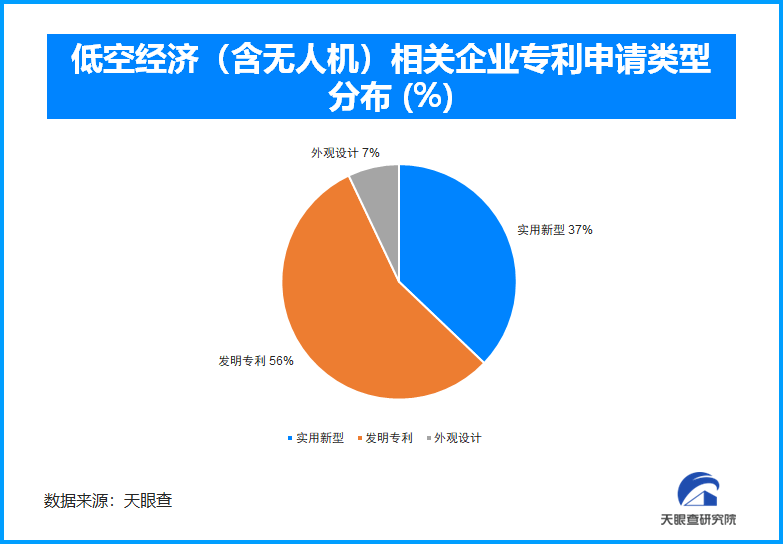
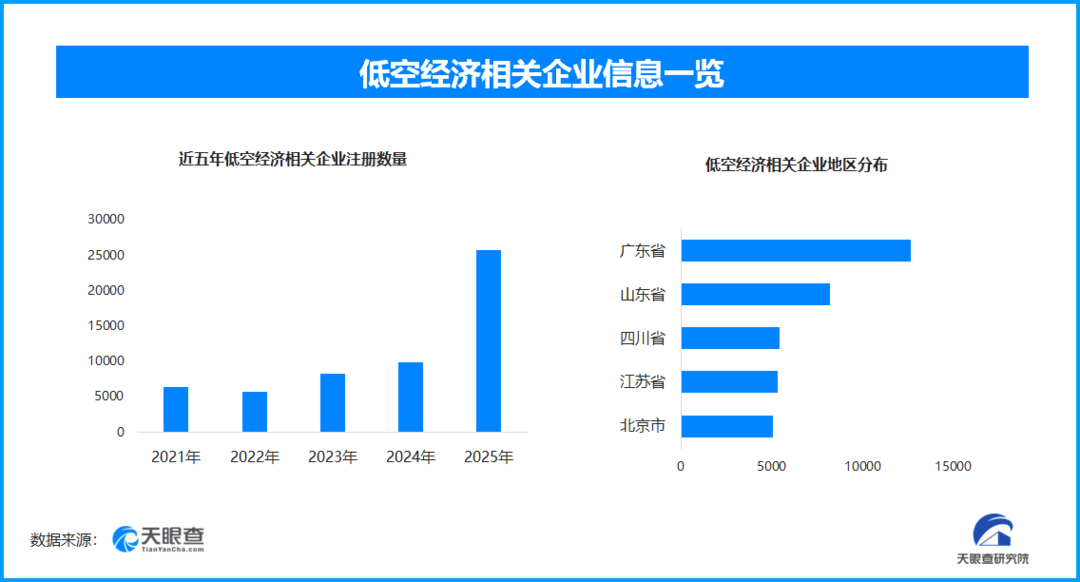
Core Insights - The low-altitude economy is rapidly developing, with significant policy support and technological breakthroughs, transitioning from pilot testing to large-scale operations by 2026 [1][6] - The low-altitude manufacturing sector is crucial, accounting for 50%-80% of the total industry output value, with a focus on key areas such as power systems and avionics by 2025 [3][4] - The drone sector is experiencing a surge, with over 36,000 existing companies in China, and logistics applications are expected to drive substantial growth [6][7] Industry Overview - As of now, there are over 36,000 drone-related companies in China, with Guangdong province leading with over 7,400 companies, representing 20.06% of the total [6][7] - The low-altitude economy is projected to reach a market size of 1.5 trillion yuan by 2025, with nearly 20,000 drone operating companies and eVTOL annual orders exceeding 30 billion yuan [4] - The number of low-altitude economy-related companies is expected to grow significantly, with a projected increase of over 25,000 new registrations by 2025, marking a year-on-year growth of 162.36% [6][7] Technological Advancements - Key breakthroughs in materials and energy technologies are essential for low-altitude manufacturing, with advancements in solid-state batteries and high-performance composite materials enhancing operational capabilities [4] - The patent landscape in the low-altitude economy is robust, with over 179,000 related patent applications, indicating a strong technological foundation [4][6] Future Outlook - The low-altitude economy is anticipated to enter a "normal operation" phase in 2026, driven by refined airspace management and diverse business models [7] - The integration of "low-altitude+" effects is expected to create a complementary and symbiotic ecosystem, contributing to high-quality economic development in China [7]
万亿低空经济启幕:2026从试点飞行迈向常态运营元年
Jin Rong Jie Zi Xun· 2026-01-15 03:13
Core Insights - The low-altitude economy is rapidly developing, with significant policy support and technological breakthroughs leading to a projected market size of 1.5 trillion yuan by 2025, marking substantial growth from previous years [1] - The low-altitude manufacturing sector is crucial, accounting for 50%-80% of the total industry output value, with advancements in key technologies such as power systems and avionics expected to shift from "following" to "leading" by 2025 [2][4] - The drone sector is experiencing a scale explosion driven by innovative applications and deep technological integration, with over 36,000 drone-related companies currently operating in China [5][7] Policy and Market Trends - The low-altitude economy has been included in government work reports for two consecutive years, indicating ongoing policy support and the transition from pilot programs to regular operations by 2026 [1][11] - The establishment of a comprehensive low-altitude flight infrastructure and the optimization of airspace management policies are essential for the industry's growth, with a focus on creating a "sky network + ground network" support system by 2025 [8][9] Technological Advancements - Key components such as motors, electronic controls, and communication navigation chips are seeing increased domestic production rates, enhancing the competitive landscape of the low-altitude manufacturing industry [4] - Innovations in materials and energy technologies, including solid-state batteries and high-performance composite materials, are critical for addressing the limitations of low-altitude equipment and facilitating commercial viability [2] Application Scenarios - Low-altitude logistics, particularly in last-mile delivery and cold chain transport, is identified as a key growth area, with companies like Meituan and JD.com successfully implementing drone delivery services [7] - The agricultural and industrial inspection sectors are also benefiting from drone technology, improving efficiency and reducing costs in high-risk environments [7] Industry Growth and Safety - The number of registered low-altitude economy-related companies has surged, with over 100,000 currently in operation, reflecting a 162.36% year-on-year increase in 2025 [9][11] - Safety and compliance management are becoming increasingly important for the sustainable development of the low-altitude flight industry, with AI technologies being integrated into safety oversight [9][11]
广州可行性研究报告——低空经济投资项目
Sou Hu Cai Jing· 2025-11-12 08:11
Core Viewpoint - The low-altitude economy is being reshaped in China by the combined forces of policy, technology, and demand, transitioning from a new growth engine to a core component of the national comprehensive three-dimensional transportation network by 2025 [3][4]. Policy Environment - The low-altitude economy is included in the national "14th Five-Year Plan" and is a key focus of the Ministry of Industry and Information Technology's "20+8" industrial development plan, promoting key technologies like aviation-grade solid-state batteries and intelligent flight control systems [4]. - Over 30 cities, including Shenzhen, Hefei, and Guangzhou, have introduced special policies, with Shenzhen planning to establish 1,200 low-altitude takeoff and landing points by 2026 [4]. - The Civil Aviation Administration of China is piloting "dynamic electronic fence" technology to enhance airspace efficiency by 40% in Chengdu, while Shenzhen is implementing "sandbox regulation" for innovative companies [4]. Technology Environment - Breakthroughs in power systems include aviation-grade solid-state batteries with energy densities exceeding 400Wh/kg, extending eVTOL range from 50 km to 300 km [5]. - The integration of 5G-A networks and Beidou high-precision positioning enhances low-altitude aircraft's autonomous capabilities, with Shanghai achieving high-density scheduling of 300 aircraft per square kilometer [5]. - The cost of carbon fiber composite materials has decreased by 40%, significantly improving the economic efficiency of aircraft [5]. Market Environment - The consumer market for drones is growing, with Meituan's drone delivery service achieving over 3,000 daily deliveries in Shenzhen, reducing costs by 40% compared to traditional methods [6]. - Agricultural drones are utilizing multi-spectral imaging technology to reduce pesticide usage by 30%, while the area serviced by agricultural drones reached 1 billion mu, accounting for over 50% of the national arable land [6][7]. Regional Competition - The Guangdong-Hong Kong-Macao Greater Bay Area is leading in low-altitude economy development, supported by major companies like DJI and EHang [8]. - The central and western regions are catching up, with Sichuan housing over 200 low-altitude equipment manufacturers and establishing the first low-altitude economic industrial park [8]. Subject Competition - Traditional aviation manufacturers are accelerating eVTOL manufacturing through special funds, while tech companies like DJI hold a 70% market share in consumer drones [9]. - Startups like EHang are focusing on urban air mobility, achieving the world's first manned eVTOL certification [9]. Service Competition - Leading companies are building competitive barriers through a combination of technology, scenarios, and capital, with Meituan leveraging drone delivery data for value-added services [10]. Technical Trends - The eVTOL's range has surpassed 300 km, with hydrogen energy technology enabling long-duration operations in extreme conditions [11]. - The low-altitude intelligent network allows real-time monitoring and precise scheduling of aircraft [11]. Market Trends - Application scenarios are expanding from logistics and tourism to urban transportation and emergency management, with Shenzhen planning to establish 600 takeoff and landing points by 2026 [12]. - The low-altitude economy's output in Shenzhen reached 80 billion yuan in 2023, accounting for over 15% of the national total [12]. Ecological Trends - The integration of eVTOL, drones, and new energy vehicles is creating a collaborative industrial chain, enhancing energy efficiency [13]. - Chinese companies hold over 70% of the global drone market, with efforts underway to internationalize eVTOL certification standards [13]. Investment Recommendations - Investors are advised to focus on high-energy-density batteries and domestic flight control systems, as well as smart cluster control technologies [14]. - Short-term investments should target logistics and emergency rescue scenarios, while long-term strategies may include low-altitude tourism and precision agriculture [15].

