色素

Search documents
当心手作玩具甲醛高 中消协发布消费提示
Ren Min Wang· 2025-12-12 01:31
Core Viewpoint - The rise of DIY crafts among young consumers has led to health concerns due to the use of industrial materials that may contain harmful substances like formaldehyde, prompting the China Consumers Association to issue safety reminders for DIY enthusiasts [1] Group 1: Understanding the Hazards - Formaldehyde is a common toxic volatile organic compound that can cause symptoms such as eye irritation, throat discomfort, skin allergies, and respiratory issues when exposure levels are high [2] - Long-term exposure to formaldehyde can lead to damage to the respiratory and nervous systems and may increase cancer risk, particularly affecting children, pregnant women, and sensitive individuals [2] Group 2: Industrial Materials and Safety - Many DIY enthusiasts use industrial-grade materials like certain UV glues, resins, and acrylics, which require strict safety controls during production and may contain harmful volatile substances [3] - Using these industrial materials without proper safety measures in a home environment can release harmful substances, posing health risks [3] Group 3: Awareness and Precautions - Industrial materials are often sold through e-commerce platforms and may lack proper labeling and safety instructions, leading to unsafe practices among consumers who may not use protective gear or work in well-ventilated areas [4] - The transfer of professional risks to home environments highlights the need for increased safety awareness among DIY enthusiasts [4] Group 4: Consumer Recommendations - Consumers should choose materials clearly labeled as "handmade," "safe," and "environmentally friendly" to avoid industrial-grade products [5] - Personal protective equipment such as gloves and masks should be used during the crafting process, and workspaces should be well-ventilated [5] - Children and pregnant women should avoid direct contact with materials that may release harmful gases, and any adverse health reactions should prompt immediate cessation of use and medical consultation [5] - Consumers are advised to keep purchase receipts and report any health issues related to product quality to relevant authorities [5]
工业原料含甲醛 滴胶摆件、流沙麻将等手作玩具暗藏健康风险
Bei Jing Shang Bao· 2025-12-08 09:17
Core Insights - There is a growing trend among young consumers to engage in DIY projects using materials like UV glue and organic glass, but health complaints have arisen due to potential harmful substances in these materials [1][2] - The China Consumer Association has issued a warning regarding the use of industrial-grade materials in home crafting, which may contain excessive levels of formaldehyde and other volatile organic compounds [1] Group 1: Health Risks - Consumers have reported symptoms such as skin itching, throat discomfort, and dizziness when using certain DIY materials, likely due to the presence of harmful substances like formaldehyde [1] - Formaldehyde exposure can lead to serious health issues, including respiratory and neurological damage, and may increase cancer risk, particularly in poorly ventilated spaces [1] Group 2: Consumer Guidance - The packaging of industrial materials often lacks comprehensive usage instructions and safety warnings, leading to improper use by consumers who may not take necessary precautions [2] - Consumers are advised to select materials labeled as "handmade use," "safe and environmentally friendly," and "compliant with civilian standards" to mitigate health risks [2] - Personal protective measures, such as wearing gloves and masks, and ensuring good ventilation during crafting, are recommended to reduce exposure to harmful substances [2]
中消协提醒:工业原料甲醛高 手作玩具需警惕
Zhong Guo Xin Wen Wang· 2025-12-08 06:28
Core Viewpoint - The China Consumers Association warns about the potential health risks associated with DIY toys made from industrial materials that may contain high levels of formaldehyde and other harmful substances, urging consumers to be cautious when engaging in handmade projects [1]. Group 1: Health Risks of Formaldehyde - Formaldehyde is a common toxic volatile organic compound that can cause symptoms such as eye irritation, throat discomfort, skin allergies, and respiratory issues when exposed to high concentrations [2]. - Long-term exposure to formaldehyde can lead to damage to the respiratory and nervous systems and may increase cancer risk, particularly affecting children, pregnant women, and sensitive individuals [2]. Group 2: Industrial Materials and Safety Concerns - Many materials used by DIY enthusiasts, such as certain UV glues, resins, and acrylics, are originally intended for industrial use and require strict safety controls during production [3]. - These industrial materials may contain volatile harmful substances like formaldehyde and benzene, and using them without proper safety measures can release these toxins into living spaces, posing health risks [3]. Group 3: Consumer Awareness and Precautions - Consumers are advised to choose materials clearly labeled as "handmade," "safe and environmentally friendly," or "meeting civilian standards" to avoid industrial-grade materials that lack proper labeling [5]. - When using glues and resins, it is essential to wear disposable gloves and masks, ensure good ventilation, and consider using air purifiers if possible [6]. - Children should not independently handle materials that may release harmful gases, and pregnant women and sensitive individuals should minimize their exposure [7]. Group 4: Monitoring Health and Legal Rights - Individuals should pay attention to their physical reactions during the crafting process; symptoms like skin irritation, eye discomfort, or dizziness should prompt immediate cessation of use and ventilation of the area [9]. - It is important to keep purchase receipts, as consumers can report health issues caused by product quality to relevant authorities or consumer associations [10].
贵州辣椒火到全球!揭秘288亿元产值背后的全产业链进阶
Sou Hu Cai Jing· 2025-10-06 11:25
Group 1 - The core viewpoint highlights the significance of chili peppers in Guizhou, where they are not only a culinary staple but also a vital part of the local economy and livelihood [1] - Guizhou's chili pepper industry has a substantial scale, with an annual output value exceeding 28.8 billion yuan, driven by a complete industrial chain from breeding to global sales [5][3] - The province has a planting area of 5.04 million acres and an annual production of 7.29 million tons, leading the industry for several years and increasing the average annual income of over 1.4 million chili farmers by 18,000 yuan [7] Group 2 - The deep processing segment of the chili pepper industry significantly enhances its value, with over 300 processing enterprises producing more than 70 product categories, generating an output value of 18 billion yuan, ranking first in the country [9] - Guizhou's oil chili accounts for 70% of the domestic market, while pickled chili varieties are emerging as new growth points [9] - Industrial raw materials extracted from chili peppers, such as capsaicin and pigments, are widely used in pharmaceuticals, cosmetics, and military applications, increasing product added value by 4 to 5 times [11]

2025年中国柑桔深加工行业产业链全景、发展现状、竞争格局及未来趋势研判:产业集群效应凸显,深加工规模持续扩大[图]
Chan Ye Xin Xi Wang· 2025-07-17 01:11
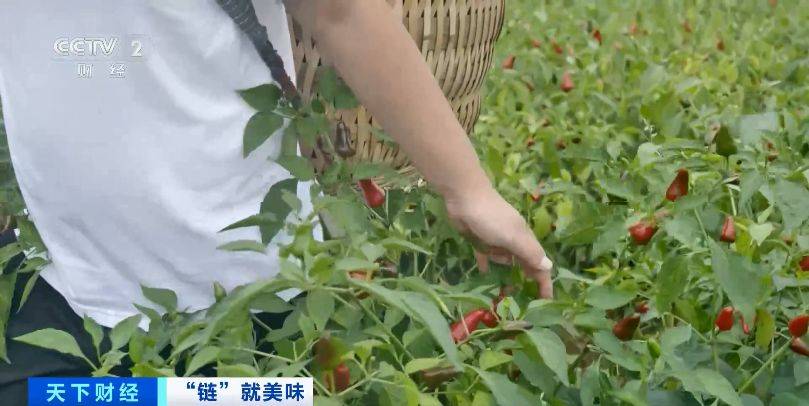
Core Insights - The core viewpoint of the article emphasizes the robust growth and potential of the citrus deep processing industry in China, driven by increasing production and innovation in high-value products [1][6][10]. Group 1: Overview of Citrus Deep Processing - Citrus deep processing refers to the refined treatment of citrus fruits (such as oranges, grapefruits, and lemons) through physical, chemical, or biological methods to transform them into high-value products [2]. - The main product categories include food products (juices, jams, canned goods), chemical extracts (essential oils, pectin), biological products (fruit wines, enzymes), and by-product utilization (feed, organic fertilizers) [2]. Group 2: Industry Chain of Citrus Deep Processing - The industry chain is characterized by a collaborative structure: stable upstream supply, quality enhancement in midstream processing, and market expansion downstream [4]. - Upstream focuses on large-scale planting in major production areas like Guangxi and Hunan, ensuring stable raw material supply through standardized management and new variety cultivation [4]. - Midstream emphasizes technological innovation in deep processing, achieving over 80% comprehensive utilization of by-products [4]. - Downstream involves building a multi-channel sales network, leveraging e-commerce and retail to meet consumer demands [4]. Group 3: Current Development Status - China is a major citrus producer, with a total output of 67.9149 million tons in 2024, reflecting a 5.56% increase from the previous year [6][8]. - The agricultural output value has grown from 148.49 billion yuan in 2018 to 233.88 billion yuan in 2024, with a compound annual growth rate of 7.8% [10]. - The industry exhibits regional concentration, with Guangxi, Hunan, Sichuan, Guangdong, and Jiangxi contributing over 70% of the total output [8]. Group 4: Market Structure and Competition - The citrus deep processing industry has developed a diversified market structure, with juice processing as the leading segment, projected to reach a market size of approximately 14 billion yuan in 2024 [12][14]. - Major players like Huiyuan Juice and Nongfu Spring dominate the market, while regional leaders focus on niche segments [14][16]. - The competition is shifting from price wars to a focus on technology, brand, and service, with high-value processed products becoming the focal point [14]. Group 5: Future Development Trends - The industry is expected to focus on three main trends: innovation in high-value products, smart and green transformation, and internationalization of industry clusters [18][20]. - High-value products such as NFC juice and functional beverages are anticipated to drive growth, with the production capacity of NFC orange juice in Chongqing expected to reach 200,000 tons by 2025 [18][20]. - Technological advancements and smart production systems are crucial for industry transformation, with a goal to increase resource utilization rates significantly by 2030 [20]. - Regional clusters and international branding will reshape the competitive landscape, with support from policies enhancing the integration of the entire industry chain [21].