
树脂

Search documents
麦加芯彩(603062) - 关于2025年度主要经营数据的公告
2026-03-30 11:31
麦加芯彩新材料科技(上海)股份有限公司 关于 2025 年度主要经营数据的公告 本公司董事会及全体董事保证本公告内容不存在任何虚假记载、误导性陈述 或者重大遗漏,并对其内容的真实性、准确性和完整性承担法律责任。 麦加芯彩新材料科技(上海)股份有限公司(以下简称"公司")根据《上 海证券交易所上市公司自律监管指引第3号——行业信息披露》有关规定,将公 司2025年度主要经营数据披露如下: 一、主要产品产量、销售及收入实现情况 单位:吨、元 证券代码:603062 证券简称:麦加芯彩 公告编号:2026-014 单位:元/吨 | 主要产品 | 2025年平均售价 | 2024年平均售价 | 变动幅度 | | --- | --- | --- | --- | | 海洋装备行业涂料 | 15,117.65 | 15,503.32 | -2.49% | | 新能源行业涂料 | 29,980.06 | 30,657.65 | -2.21% | | 基础设施行业涂料 | 17,452.38 | 17,958.07 | -2.82% | (二)主要原材料价格变动情况 单位:元/吨 | 主要原材料 | 2025年平均采购价 | ...

今年的市场主线,会是消费医药吗?
雪球· 2026-03-29 03:22
Core Viewpoint - The current market focus is on geopolitical tensions and oil prices, but the actual market performance suggests a different direction, with a strong emphasis on AI hardware, non-ferrous metals, precious metals, and minor metals leading into 2025 [3] Group 1: Market Trends and Predictions - The strongest trends in 2025 will be seen in AI hardware, non-ferrous metals, precious metals, and minor metals, particularly from Q2 to Q3, with a focus on products closely related to computing power [3] - By Q4 2025 to Q1 2026, price increases will drive market strength, with significant price hikes in AI hardware components like optical fibers, storage, and M9 materials, leading to a bullish market [3] - The latter part of the period will see a shift in market dynamics, with a higher emphasis on price increases and a weakening of overarching narratives, indicating a potential retreat of major themes [3] Group 2: Emerging Themes and Opportunities - The market is currently in a phase of waiting for new main themes to emerge, as old themes have faded, with a focus on sectors like consumer healthcare that are showing positive marginal improvements [4] - Two leading themes in consumer healthcare, one related to a weight-loss probiotic and another concerning a drug in clinical trials, suggest that consumer healthcare may become a new main theme [4] - Historical patterns indicate that strong themes often emerge before new main themes or during the retreat of existing ones, with current themes potentially setting the stage for consumer healthcare to take the lead [4] Group 3: Market Behavior and Sentiment - If the market fails to identify a new main theme, it may experience chaotic behavior, oscillating between various sectors without clear direction [5] - The contrast between the market's performance in consumer healthcare and the focus on geopolitical issues raises questions about the potential for consumer healthcare to be the main theme in 2026 [5] - The ambiguity of the main theme's emergence requires participants to make strategic choices, as being correct in research is less critical than making the right decisions in positioning [6]


东丽对树脂和碳纤维实行附加费制度
日经中文网· 2026-03-27 08:00
Core Viewpoint - Toray has introduced a surcharge system to quickly reflect changes in raw material costs in product prices, particularly in response to significant price increases due to geopolitical tensions in the Middle East [2][4]. Group 1: Surcharge System Implementation - The surcharge system allows for rapid price adjustments, with market price changes being reflected in product prices within a month [2]. - This system is a temporary measure implemented after military conflicts between the US, Israel, and Iran led to rising raw material prices [4]. - The surcharge applies to three main business areas: functional chemicals like films and resins, carbon fiber used in aircraft, and fibers for industrial and clothing applications [4]. Group 2: Specifics of the Surcharge System - The surcharge system is not uniformly applied to all products; specific products and the frequency of price adjustments will be negotiated between business departments and customers [4]. - Some products, such as films, have already begun implementing this surcharge [4]. - The system ensures that both increases and decreases in raw material costs are automatically reflected in product prices, enhancing price transparency for customers [5].

再聊PCB
猛兽派选股· 2026-03-14 13:04
Group 1: Circuit Board Segment - Both Huadian and Shenghong are performing well, but Huadian is stronger than Shenghong [2] Group 2: Copper Clad Laminate Segment - Both Nanya and Shengyi are performing well, but Nanya has a horizontal structure that broke out earlier than Shengyi, which still needs time to prepare for a breakout [3] Group 3: Glass Fiber Segment - Honghe Technology, China Jushi, and International Composites have all broken through the holding line for several days, currently experiencing a pullback of around 20%, likely entering a base construction phase [5] Group 4: Resin Segment - Dongcai Technology has broken through a small platform and is currently experiencing a pullback with support at the upper track, with a pullback of less than 15%, showing a favorable volume-price structure, and is expected to rise further [5] Group 5: Copper Foil Segment - Copper Crown Copper Foil has broken through a large platform and is currently experiencing a pullback with support at the upper track, with a pullback greater than 17%, likely forming a small platform [6] Group 6: Industry Insights - Each segment of the industry chain has its own characteristics, and individual stocks within each segment differ, requiring careful analysis [7]

AdvanSix(ASIX) - 2025 Q4 - Earnings Call Transcript
2026-02-20 15:30
Financial Data and Key Metrics Changes - The company reported Q4 2025 sales of $360 million, an increase of approximately 9% year-over-year, with sales volume up about 11% due to the prior year's extended planned turnaround [8][9] - Adjusted EBITDA for the quarter was $25 million, up $15 million from the previous year, resulting in an adjusted EBITDA margin of 6.9% [9][11] - Full-year adjusted EBITDA reached $157 million, with a margin expansion of 90 basis points to 10.3% [11][12] Business Line Data and Key Metrics Changes - In Nylon Solutions, volumes declined sequentially as production rates were moderated to manage inventory in a softer demand environment [10] - Plant nutrients showed strong performance with increased volumes and pricing, particularly in granular ammonium sulfate, supported by sulfur nutrition demand [10][11] - Chemical intermediates pricing remained stable sequentially but was lower year-over-year, consistent with expectations as acetone pricing moderated from previous highs [11] Market Data and Key Metrics Changes - The agriculture and fertilizer market remains the largest end market for the company, with favorable ammonium sulfate supply-demand fundamentals and sulfur nutrition demand growing approximately 3%-4% [14] - Sulfur prices have increased significantly, settling at nearly $500 per long ton in Q1 2026, compared to $165 per ton in Q1 2025 [14][15] - The building construction market is expected to see a recovery in 2026, with third-party estimates indicating approximately 3% growth [17] Company Strategy and Development Direction - The company is focused on bolstering sustainable cash flow generation through risk-based prioritization of capital investments and operational execution [18][22] - A reduction in CapEx is expected for 2026, with planned spending in the range of $75 million-$95 million, down from $116 million in 2025 [19] - The company aims to optimize production output and sales volume mix while managing cash tax rates and maintaining a disciplined approach to capital investment [21][22] Management's Comments on Operating Environment and Future Outlook - The macro environment remains challenging, with raw material input costs expected to be a headwind, particularly in the first half of the year due to higher sulfur and natural gas prices [6][7] - Management anticipates continued strength in plant nutrients and expects acetone margins to remain near cycle averages, while nylon remains plateaued in its trough [6][14] - The company is confident in its ability to navigate current market conditions and create long-term shareholder value through its integrated business model and competitive advantages [22][68] Other Important Information - The company successfully executed planned turnarounds at the low end of its target spend range and delivered record annual production across key ammonia and sulfuric acid unit operations [4][5] - The company is actively managing its cash tax rate, which is anticipated to be below 10% for the year [21] Q&A Session Summary Question: Outlook on nylon and capacity closures - Management noted that Europe remains structurally long in nylon, with utilization hovering around 50-60%, and mentioned potential capacity closures from companies like Fibrant and DOMO [26][28] Question: Sulfur market dynamics - Management indicated that sulfur prices are at nearly 20-year highs, driven by stronger demand in agriculture and mining, alongside supply constraints [31][33] Question: Section 45Q carbon credits - Management confirmed that the endangerment finding does not impact the ability to claim Section 45Q credits, which are expected to be worth over $100 million through 2029 [36][39] Question: Ammonia and sulfuric acid production records - Management attributed record production to ongoing maintenance and capital investments, indicating potential for permanent increases in production capacity [47][49] Question: Input cost pressures - Management acknowledged significant increases in sulfur and natural gas prices, with expectations of margin challenges in the first quarter [56][58] Question: Planned turnaround activity - Management clarified that they are focusing on key compliance and preventative maintenance while aligning turnaround activities with necessary inspections [63][65]

建材新材料行业研究:AI PCB升级迭代,通胀看上游新材料
SINOLINK SECURITIES· 2026-02-13 14:24
Investment Rating - The industry is rated as "Buy" with expectations of an increase exceeding 15% in the next 3-6 months [57]. Core Insights - The report emphasizes that upstream materials are a key inflationary component in the PCB upgrade iteration process, with three main conclusions: the number of PCBs is increasing, the value of PCBs per cabinet/GPU is rising, and upstream materials are undergoing continuous upgrades [2][8]. - The market is focusing on materials that are close to "ultimate" technology or "upgrade" directions, indicating a potential profit release in 2026 [3][18]. - The report highlights the significant price inflation in electronic fabrics, particularly Low-CTE and Q fabrics, driven by supply constraints and increasing demand from high-end applications [4][15][24]. Summary by Sections Upstream Materials - The report identifies that the PCB board count is increasing, and the corresponding value per cabinet/GPU is also on the rise, particularly with the introduction of new PCB designs like the Vera Rubin NVL144 CPX [2][8]. - Continuous upgrades in PCB upstream materials are necessary to meet the higher demands for transmission speed and signal integrity from AI applications [11][12]. - Upstream materials are prone to inflation, with significant price differences observed in various generations of electronic fabrics [15][18]. Electronic Fabrics - The report predicts a continued price increase for Low-CTE fabrics in 2026 due to supply shortages and rising demand from high-end applications [4][36]. - The second-generation Low-Dk fabrics are expected to face a clear supply-demand gap in 2026, driven by the large-scale deployment of Google's TPU V7 and above [36][37]. - Q fabrics are highlighted for their superior performance and scarcity, with a gradual increase in production expected in 2027 [26][34]. Copper Foil - The report notes a clear upgrade trend in HVLP copper foil, with significant price increase potential due to rising demand from AI applications and planned expansions by leading manufacturers [5][41]. - The market for carrier copper foil is identified as a second growth pole, with a current global market size of approximately 5 billion, primarily dominated by Japanese companies [49][50]. Resins - The report discusses the importance of resin types, particularly carbon-hydrogen resins, in high-frequency and high-speed applications, with domestic companies accelerating production to meet demand [51][54].



AI PCB升级迭代,通胀看上游新材料
SINOLINK SECURITIES· 2026-02-13 09:54
Investment Rating - The industry is rated as "Buy" with an expected increase of over 15% in the next 3-6 months [57]. Core Insights - The report emphasizes that upstream materials are a key inflationary component in the PCB upgrade iteration process, with three main conclusions: the number of PCBs is increasing, the value of PCBs per cabinet/GPU is rising, and upstream materials are undergoing continuous upgrades [2][8]. - The market is focusing on materials that are close to "ultimate" technology or "upgrade" directions, indicating a potential profit release in 2026 [3][18]. - The report highlights the significant price inflation in electronic fabrics, particularly Low-CTE and Q fabrics, driven by supply constraints and increasing demand from AI applications [4][15][26]. Summary by Sections Upstream Materials - The report identifies that the PCB upgrade process is characterized by increasing PCB quantities and value, with a focus on the evolving requirements for materials such as electronic fabrics, copper foil, and resins [2][8]. - It notes that the industry trends for upstream materials lag behind PCB developments by 0.5-1 year, suggesting a delayed but strong profit release potential in 2026 [3][21]. - The sensitivity of material prices to market trends is highlighted, indicating that cost structures and supply dynamics are favorable for upstream materials [3][22]. Electronic Fabrics - The report predicts a continued price increase for Low-CTE fabrics due to supply shortages and rising demand, particularly from high-end applications [4][38]. - Q fabrics are expected to see significant adoption starting in 2027, with a strong short-term outlook due to supply constraints [26][34]. - The second-generation Low-Dk fabrics are anticipated to face a clear supply-demand gap in 2026, driven by the large-scale rollout of Google's TPU V7 and above [36][37]. Copper Foil - The report discusses the clear upgrade path for HVLP copper foil, with major producers expanding capacity and confirming strong demand trends [5][41]. - The market for carrier copper foil is identified as a second growth area, with a current global market size of approximately 5 billion, primarily dominated by Japanese firms [49]. - Price increases for HVLP copper foil are expected, supported by strong demand from AI and high-performance computing applications [46][45]. Resins - The report highlights the importance of resin types in high-frequency and high-speed applications, with carbon-hydrogen resins being the mainstream choice for advanced PCBs [51][54]. - Domestic companies are accelerating production to meet the growing demand for high-performance resins, indicating a shift towards local supply chains [54].


【建滔积层板(1888.HK)】全球覆铜板王者归来,铜价上行赋能盈利+AI 高端材料开启成长新周期——首次覆盖报告(付天姿/王贇)
光大证券研究· 2026-02-12 23:06
Core Viewpoint - The article highlights the strong market position and growth potential of Jiantao Laminates, a leading manufacturer of copper-clad laminates, driven by robust demand in the PCB industry and advancements in high-end applications like AI servers [4][5]. Group 1: Company Overview - Jiantao Laminates, established in 1988, is a global leader in the copper-clad laminate manufacturing industry with a vertically integrated supply chain [4]. - The company has maintained the largest market share in the copper-clad laminate sector for 20 consecutive years, with over 60 factories worldwide [4]. Group 2: Market Demand - The PCB industry is experiencing steady growth, with a projected global market value of $94.661 billion by 2029, reflecting a compound annual growth rate (CAGR) of 5.2% from 2024 to 2029 [5]. - The rapid development of AI servers is expected to significantly increase the demand for high-end PCB products, particularly high-frequency and high-speed copper-clad laminates [5]. Group 3: Market Share and Product Range - In 2024, Jiantao Laminates is projected to hold a 14.4% share of the global copper-clad laminate market, ranking first among competitors [6]. - The company offers a range of products, including economical paper-based laminates and high-performance FR-4 epoxy glass fiber laminates, catering to various sectors such as consumer electronics, computing, and automotive electronics [6]. Group 4: Pricing Power and Cost Management - Jiantao Laminates has strong pricing power and cost pass-through capabilities, with less than 30% of sales coming from its top five customers, indicating a diversified customer base [7]. - The current tight supply in the copper-clad laminate industry, combined with rising copper prices, is expected to drive both prices and profitability upward [7]. Group 5: Strategic Expansion - The company is strategically expanding its upstream raw material production, including low-dielectric glass fiber, to meet the growing demand in high-end communication fields such as 5G and AI servers [8]. - A new copper foil production facility in Guangdong is set to enhance capacity and respond to the increasing demand for thick copper foils driven by data centers and cloud computing [8].

成都汇阳投资关于AI发展驱动PCB升级,上游材料迎发展良机
Quan Jing Wang· 2026-02-12 02:41
Industry Overview - The PCB industry is expected to expand significantly, driven by the development of AI technology and the demand from the electric vehicle sector, with a projected global market size of $96.8 billion by 2025 [1] - The industry is evolving towards high-density, small aperture, large capacity, and lightweight designs, leading to increased requirements for core materials such as copper-clad laminates and high-frequency, high-speed materials [1] Material Upgrades - The demand for high-end copper-clad laminates is increasing, with HVLP copper foil expected to become mainstream; foreign companies like Mitsui Metals dominate the high-end copper foil market, while domestic firms are gradually entering the supply chain [3] - Electronic fabrics are becoming thinner and lighter, with a positive outlook for Q fabric upgrades, where Japanese companies currently lead the high-end electronic fabric market, and domestic enterprises are increasing their investments [3] - The performance of copper-clad laminates is primarily determined by the resin formulation, with a shift from epoxy resins to advanced materials such as bismaleimide resins, cyanate esters, polyphenylene ether, hydrocarbon resins, and polytetrafluoroethylene [3] Specialized Products - The upgrade in PCB technology is driving the iteration of silicon micro-powder products, with spherical silicon micro-powder better meeting high-end demands; the market size for silicon micro-powder in China is projected to reach 1.73 billion yuan by 2024, with a demand of 418,000 tons, and the high-performance spherical silicon micro-powder market is expected to be 852 million yuan, accounting for 49.22% [5] - The market for PCB-specific chemicals is expected to expand alongside PCB development, with foreign companies currently leading the market while domestic firms are accelerating their catch-up efforts [5] Key Companies in the Industry - **Shengyi Technology**: A leading domestic manufacturer of copper-clad laminates, holding a significant global market share and excelling in high-frequency and high-speed material development [6] - **Huazheng New Materials**: A prominent domestic player with strong competitiveness in high-speed substrates and metal substrates [7] - **Jia Yuan Technology**: One of the leading domestic companies in the copper foil sector, focusing on high-end PCB copper foil [8] - **Zhongyi Technology**: Notable for significant breakthroughs in high-end copper foil technology and possessing deep technical reserves [9] - **China Jushi**: A global leader in the fiberglass industry, providing stable and high-quality raw materials for PCB upstream [9] - **Honghe Technology**: A global leader in mid-to-high-end electronic-grade fiberglass cloth, widely used in PCB manufacturing for AI servers and 5G base stations [10] - **Dongcai Technology**: The only producer of M9 grade hydrocarbon resin, breaking foreign monopolies and supplying to ShenNan Circuit, achieving domestic substitution in high-end resin [12]
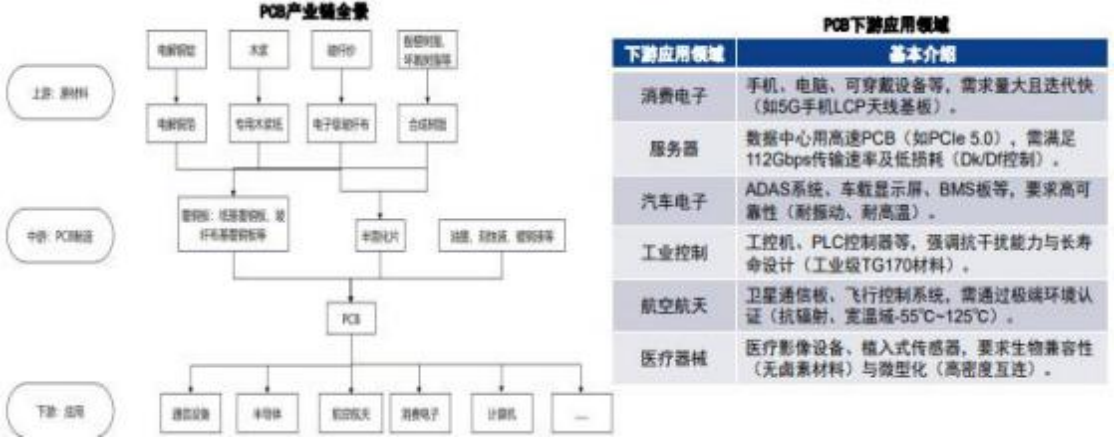
建滔积层板(01888):首次覆盖报告:全球覆铜板王者归来,铜价上行赋能盈利+AI 高端材料开启成长新周期
EBSCN· 2026-02-11 14:53
Investment Rating - The report gives a "Buy" rating for the company, indicating a positive outlook for its stock performance [3][6]. Core Insights - The company, Kingboard Laminates (1888.HK), is a leading manufacturer of copper-clad laminates with a vertically integrated supply chain, maintaining a global market share of 14.4% in 2024, the highest in the industry [2][3]. - The demand for copper-clad laminates is expected to grow due to the robust expansion of the PCB industry, driven by applications in AI servers, consumer electronics, automotive electronics, and communication devices [1][41]. - The company is well-positioned to benefit from rising copper prices and a tight supply environment, which are expected to enhance both pricing and profitability [2][3]. Company Overview - Kingboard Laminates was established in 1988 and has evolved into a major player in the copper-clad laminate market, with over 60 factories globally and a strong presence in South China and East China [1][16]. - The company specializes in various types of copper-clad laminates, including FR-4 epoxy glass fiber laminates, which are crucial for mainstream markets such as computers and communications [2][25]. Market Position - The copper-clad laminate market is characterized by high concentration, with the top four manufacturers holding approximately 50% of the market share, indicating significant barriers to entry and strong pricing power for established players [2][70]. - The report highlights that the company has a strong bargaining power due to its diversified customer base, with the top five customers accounting for less than 30% of total sales [2][3]. Financial Projections - The company is projected to achieve net profits of HKD 2.17 billion, HKD 3.95 billion, and HKD 4.84 billion for the years 2025, 2026, and 2027, respectively, reflecting growth rates of 64%, 82%, and 22% [3][5]. - The report indicates that the company's stock is currently undervalued compared to its peers, with projected P/E ratios of 27x, 15x, and 12x for the years 2025 to 2027 [3][5]. Industry Analysis - The PCB industry is expected to see a compound annual growth rate (CAGR) of 5.2% from 2024 to 2029, with the total market value projected to reach USD 94.66 billion by 2029 [1][44]. - The demand for high-frequency and high-speed copper-clad laminates is increasing, particularly in the AI server sector, which requires advanced materials to support higher data transmission rates [2][67].