泡椒

Search documents
每天制造220吨“热辣滚烫”
Xin Lang Cai Jing· 2026-01-17 22:51
Core Insights - The company, Liupanshui Meiwaiyuan Food Co., Ltd., has established a 5G smart factory that significantly enhances production efficiency and product quality, leading to increased market demand and sales growth [1][2] Group 1: Production and Operations - The 5G smart factory operates at full capacity, producing 220 tons of products daily, with production running from 7:30 AM to 10 PM [1] - The company anticipates a total production volume of 15,000 tons by 2025, generating a revenue of 115 million yuan [1] - The production lines for chopped chili and pickled chili are running efficiently, with robots and automated processes in place for packaging and quality control [1] Group 2: Market Demand and Sales - There has been a surge in orders leading up to the Spring Festival, with orders starting to increase from December 20 of the previous year [1] - The company exports products to countries such as South Korea and Thailand, indicating a strong international market presence [1] - The company has received continuous orders from customers, with some orders already scheduled for after the Spring Festival [1] Group 3: Technological Advancements - The implementation of a "digital brain" platform integrates core functions such as equipment management, production management, and energy consumption management, facilitating closed-loop management from production planning to quality traceability [2] - The production efficiency has improved by over 30%, with a product first-pass yield rate of 99.8% and a reduction in operating costs by 20% [2]
三亚首批冬季瓜菜开摘 明年1月将大规模上市
Zhong Guo Xin Wen Wang· 2025-11-07 13:46
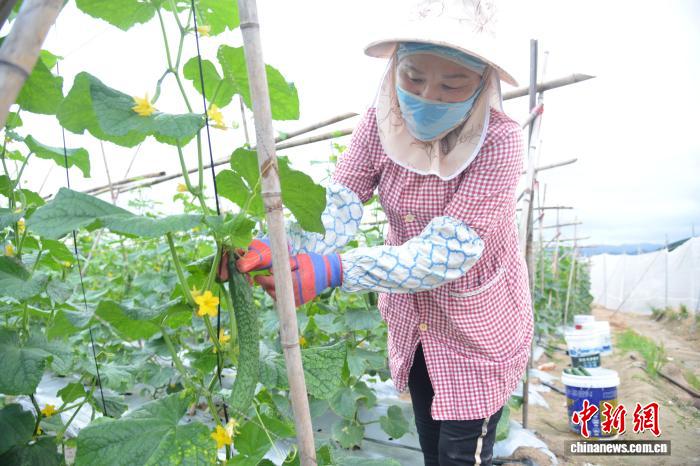
Core Insights - The winter vegetable harvest in Sanya, Hainan, has begun, with significant production expected to support the market before the Spring Festival [1][3] - Sanya's winter vegetable planting area is projected to reach 166,100 acres, with an expected yield of over 340,000 tons [3][5] Group 1: Production and Harvesting - Farmers in Sanya are currently harvesting cucumbers, with individual farmers like Li Junning expecting to collect two to three thousand pounds in a single day [1][5] - The largest area for winter vegetable cultivation in Sanya is located in the Yazhou District, where 30,000 acres have been prepared for planting, involving approximately 4,300 households [3][5] - The peak harvest period for Sanya's vegetables will see products shipped nationwide, with cucumbers and other vegetables expected to be available in large quantities starting January next year [5][7] Group 2: Agricultural Strategy and Crop Management - The Hainan Provincial Department of Agriculture has proposed adjustments to winter vegetable planting, focusing on stabilizing melon production, increasing bean varieties, and reducing pepper cultivation [5][7] - Sanya is implementing advanced agricultural techniques, such as the "insect net+" green pest control technology for cowpeas, and promoting the "netted cowpea" brand [5][7] - The introduction of high-yield, disease-resistant varieties through the "South Breeding" program has resulted in significant yield increases, with cowpea varieties yielding over 4,000 pounds more per acre compared to traditional varieties [7] Group 3: Research and Development - Sanya is leveraging its favorable climate and research partnerships with institutions like the Chinese Academy of Tropical Agricultural Sciences to introduce and test new vegetable varieties [7] - The establishment of a healthy seedling production base aims to support local vegetable production, with plans to produce at least 10 million seedlings annually through intensive factory-style cultivation [7]

广西壮族自治区防城港市港口区:以金融改革创新破题 全力推动乡村振兴产业发展提速增效
Zhong Guo Fa Zhan Wang· 2025-10-22 07:41
Core Insights - Guangxi Zhuang Autonomous Region's Fangchenggang City is focusing on rural revitalization through financial reforms, addressing issues like financing difficulties and weak services in rural areas [1][2] Group 1: Financial Services Network - The port area has established a comprehensive financial service network, achieving 100% coverage of 17 administrative villages with "Three Rural Financial Service Rooms" [1] - 34 village-level inclusive financial service stations have been upgraded, allowing farmers to access convenient financial services without leaving their villages [1] - The integration of 28 functions, including social security payment and anti-money laundering monitoring, has led to the creation of specialized service stations [1] Group 2: Innovative Credit Service Models - A "village committee recommendation loan" model has been created, simplifying the loan process through recommendations from village leaders [2] - The area has issued over 700 "village committee recommendation loans" totaling 60 million yuan, with products like "Industry Enriching Farmers Loan" exceeding 25 million yuan [2] - The use of big data technology has facilitated the development of tailored financial products for agricultural sectors [2] Group 3: Financial and Industrial Integration - The "pepper economy" initiative has led to the establishment of an investment company involving 17 administrative villages, with land being used as equity [2] - Financial support from companies has reached 1.2 million yuan for pepper cultivation, with projected annual production of 3 million bottles of pickled peppers generating 36 million yuan in revenue [2] - Over 500 villagers are expected to benefit from local employment opportunities, with daily earnings of 120 yuan [2] Group 4: Technological Empowerment - A "Technology Assisting Agriculture" initiative has been launched to support high-tech aquaculture, with 6 million yuan in funding provided since 2023 [3] - The region has attracted 8 new aquaculture enterprises, establishing over 550 land-based round tanks and 40 breeding pools [3] - The projected annual output of shrimp is over 2,330 tons, with a value exceeding 100 million yuan, contributing to the development of a "blue granary" [3]
贵州辣椒火到全球!揭秘288亿元产值背后的全产业链进阶
Sou Hu Cai Jing· 2025-10-06 11:25
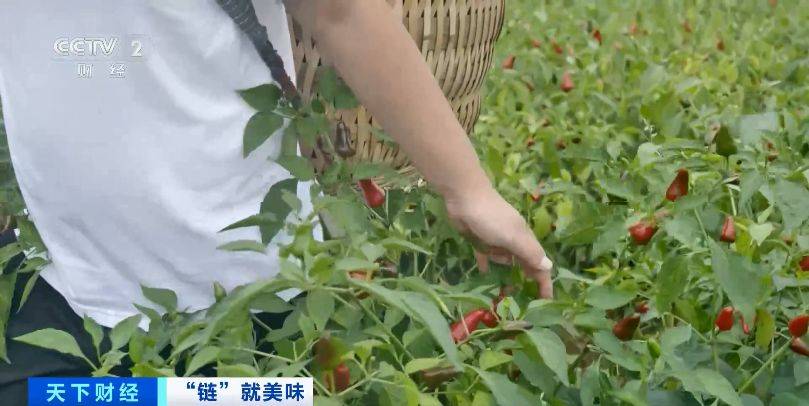
Group 1 - The core viewpoint highlights the significance of chili peppers in Guizhou, where they are not only a culinary staple but also a vital part of the local economy and livelihood [1] - Guizhou's chili pepper industry has a substantial scale, with an annual output value exceeding 28.8 billion yuan, driven by a complete industrial chain from breeding to global sales [5][3] - The province has a planting area of 5.04 million acres and an annual production of 7.29 million tons, leading the industry for several years and increasing the average annual income of over 1.4 million chili farmers by 18,000 yuan [7] Group 2 - The deep processing segment of the chili pepper industry significantly enhances its value, with over 300 processing enterprises producing more than 70 product categories, generating an output value of 18 billion yuan, ranking first in the country [9] - Guizhou's oil chili accounts for 70% of the domestic market, while pickled chili varieties are emerging as new growth points [9] - Industrial raw materials extracted from chili peppers, such as capsaicin and pigments, are widely used in pharmaceuticals, cosmetics, and military applications, increasing product added value by 4 to 5 times [11]
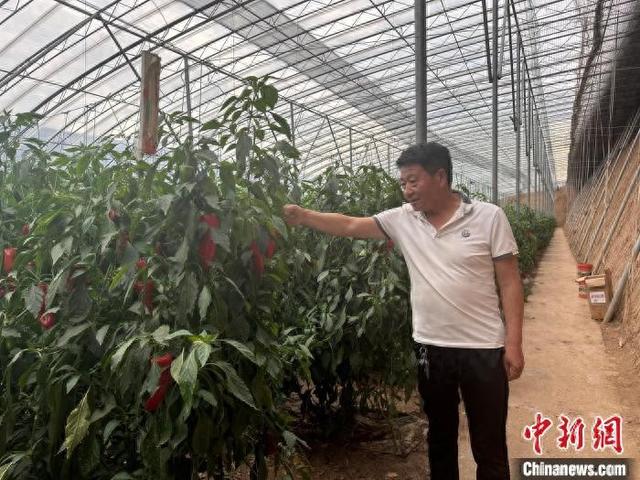
(乡村行·看振兴)山西屯留:设施农业助农增收 五彩椒带来多彩生活
Huan Qiu Wang· 2025-06-30 08:24
Core Insights - The article highlights the successful development of facility agriculture in Laojunzhuang Village, Shanxi Province, which has significantly increased the income of local villagers and stimulated trade and logistics [1][3]. Group 1: Agricultural Development - Laojunzhuang Village has established 39 greenhouse structures since June 2022, transforming the previously idle winter season into a busy harvesting period [3]. - The village has improved the yield and quality of chili peppers through scientific management and guidance from agricultural experts [5]. Group 2: Economic Impact - The chili pepper yield ranges from 15,000 to 20,000 pounds per acre, generating an income of 40,000 to 60,000 yuan per acre [5]. - The facility agriculture model has created job opportunities for over 40 villagers, allowing them to work close to home and increase their earnings [3][5]. Group 3: Market Expansion - The products from Laojunzhuang Village, including colorful and pickled peppers, are exported to countries such as Russia and South Korea [5]. - The introduction of four connected summer greenhouses allows for a continuous harvest of chili peppers from August to November, ensuring year-round income for villagers [5].