
英伟达 Blackwell 芯片

Search documents
一台吹风机,吹开全球最大英伟达芯片走私案
Xin Lang Cai Jing· 2026-03-20 17:24
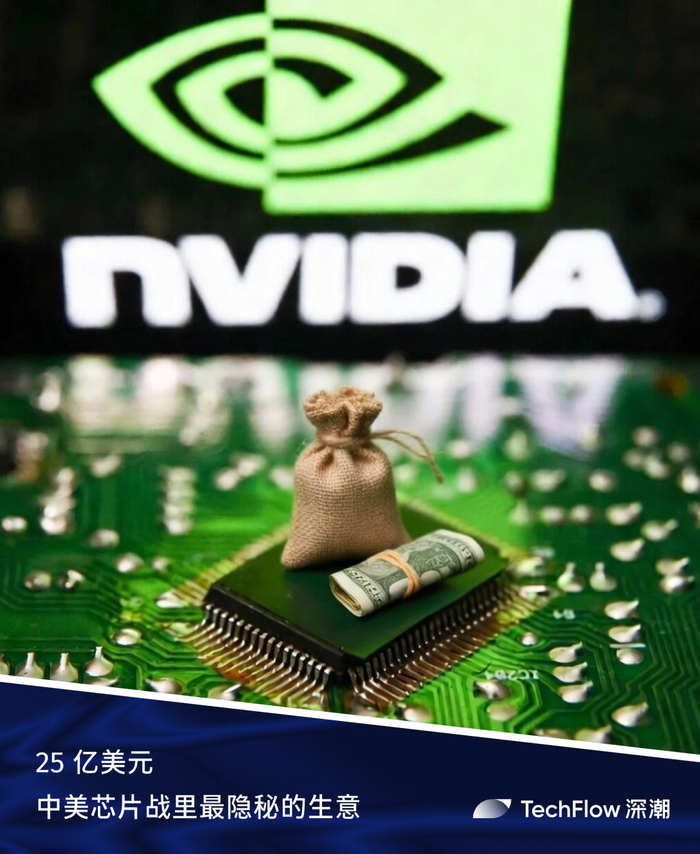
Core Viewpoint - The arrest of Wally Liaw, co-founder of Supermicro, highlights a significant case of smuggling involving $2.5 billion worth of NVIDIA AI chip servers to China, marking it as the largest AI chip smuggling case in history [3][11]. Group 1: Arrest and Charges - Wally Liaw was arrested in California and is charged with smuggling NVIDIA AI chip servers valued at $2.5 billion through a shell company in Southeast Asia to China, facing a maximum sentence of 20 years [3][11]. - The case is characterized by elaborate schemes, including the creation of thousands of fake servers to deceive compliance teams and auditors [4][6][7]. Group 2: Smuggling Operations - Liaw orchestrated a smuggling operation that involved confirming demand from Chinese buyers, applying for chip quotas from NVIDIA under the guise of self-use, and then shipping the servers to Southeast Asia before sending them to China [12][14]. - The operation saw a peak in activity just before new U.S. export regulations were set to take effect, with $510 million worth of servers shipped in a three-week period [15][18]. Group 3: Company Response and Compliance Issues - Following the news of Liaw's arrest, Supermicro's stock dropped by 13%, and the company stated that Liaw has been suspended while another involved individual was terminated [8][9]. - Supermicro claims to have a robust compliance system, although this is not the first time the company's compliance has been called into question [9][10]. Group 4: Industry Context and Trends - The smuggling case reflects a broader trend in the semiconductor industry, where smuggling operations have evolved from small-scale individual efforts to sophisticated schemes involving corporate executives [19][20][26]. - The demand for NVIDIA chips in China remains high, with over 60% of leading AI models relying on NVIDIA hardware, creating a strong incentive for smuggling despite regulatory risks [27][28].


高盛周末宏观电话会-宏观股市观点-AI采用信号-油价地缘政治溢价-新兴市场韧性及全球其他地区跑赢大市
Goldman Sachs· 2026-03-01 17:22
Investment Rating - The report does not explicitly provide an investment rating for the industry Core Insights - The report highlights the rapid increase in AI adoption among consumers, significantly driving demand for computational power, while enterprise adoption remains slow due to data and system integration challenges [7][8] - The geopolitical landscape, particularly regarding tariffs and trade policies, continues to create uncertainty, with potential impacts on economic growth and market sentiment [1][2][3] - There is a notable shift of capital from Western markets to Eastern markets, with investors favoring companies with tangible competitive advantages [3][11] - Nvidia's recent earnings report exceeded expectations, but the stock did not react positively due to investor concerns about future capital expenditures and the sustainability of spending from non-traditional clients [9][10] Summary by Sections Tariff and Trade Policy - The Trump administration's tariff policies are characterized by frequent adjustments, with a potential implementation of a 15% tariff that may vary by country and product [1][2] - Refunds related to tariffs are progressing, with an estimated total of $180 billion, but the speed of disbursement remains uncertain [2][4] - Legal challenges to new tariffs are anticipated, particularly regarding the applicability of the "Section 122" clause, which may lead to a restructured trade policy framework [4][5] AI Adoption Trends - Consumer AI adoption is accelerating, with significant increases in user engagement and query volume, while enterprise adoption lags behind due to integration issues [7][8] - The structure of computational demand is shifting, with inference now accounting for nearly 30% of computational needs, compared to a previous focus on model training [7] Market Dynamics - The U.S. stock market faces valuation pressures, particularly for asset-light companies, while non-U.S. markets are outperforming as capital flows towards firms with solid fundamentals [3][11] - The report notes a regime shift in capital flows, with increasing investments in non-U.S. equities, driven by diversification needs and a reevaluation of asset allocations [20][21] Nvidia's Performance - Nvidia's earnings report showed strong revenue growth, but the stock's lack of upward movement post-report is attributed to investor concerns about future capital expenditures and competitive positioning [9][10]
AI 主线归来的探讨
2025-08-13 14:52
Summary of Conference Call Industry or Company Involved - The discussion primarily revolves around the AI application sector and the semiconductor industry, particularly focusing on companies like Nvidia and domestic Chinese firms. Core Points and Arguments - **AI Application Performance**: The performance of AI applications in the A-share market is under scrutiny, as many AI revenues have not yet materialized. The focus is on Hong Kong stocks, particularly Meitu and Kingdee, which have seen significant declines due to poor earnings reports from US AI software companies [1] - **Impact of Global Events on Computing Power**: Recent global events, such as a 90-day suspension of tariffs and negotiations involving Nvidia's Blackwell chips, have positively impacted overseas computing power. However, there was a sudden downturn in 5G stocks, attributed to government advisories against using WH20 chips for certain applications [2][3] - **Concerns Over Chip Security**: There are significant concerns regarding the security of chips being transferred to unknown countries, especially in the context of potential US-China trade negotiations. The risks associated with remote shutdowns of computing power servers are highlighted, particularly for applications like autonomous driving [4] - **Market Size and Share**: The global market size for computing power chips is estimated at approximately $140 billion, with AMD and Nvidia accounting for two-thirds of this market. The discussion emphasizes the increasing likelihood of domestic companies embracing local AI chips [5] - **AI Application Commercialization**: By 2025, overseas AI applications are expected to show signs of commercial viability, contrasting with the A-share market, where valuations do not seem to correlate with earnings. This indicates that A-share pricing may be based more on perceived probabilities rather than actual performance [6] Other Important but Possibly Overlooked Content - **Investor Sentiment**: The current investor sentiment appears to be reactive, with funds shifting focus due to the underperformance of AI applications, leading to a need for reallocation within the sector [3] - **Long-term Implications**: The discussions suggest that the long-term implications of these trends could lead to a significant shift in how AI applications are valued in the A-share market compared to their US counterparts [6]