
菲达奶酪

Search documents
“汽车换牛肉”:欧盟—南共市自贸协定影响几何?
2 1 Shi Ji Jing Ji Bao Dao· 2026-01-29 12:24
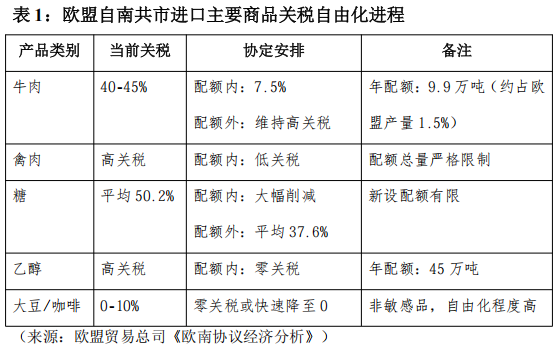
Core Viewpoint - The European Parliament has voted to submit the EU-Mercosur Free Trade Agreement for review by the EU Court, which may delay the approval process and increase uncertainty regarding its implementation [1] Group 1: Agreement Overview - The EU and Mercosur reached the EU-Mercosur Partnership Agreement after over 25 years of negotiations, marking the largest and highest-level trade agreement between the EU and Latin America [1][2] - The agreement aims to create a free trade area covering approximately 700 million people by systematically reducing tariffs and non-tariff barriers, deepening economic ties and regulatory integration between the two regions [2] Group 2: Strategic Implications for the EU - The agreement is expected to increase EU exports to Mercosur by approximately 39%, creating over 440,000 jobs and opening new markets for industries facing competition from the US and China [3] - The EU aims to diversify its supply chains by accessing key raw materials such as lithium, copper, and soybeans from Mercosur, enhancing economic resilience [3] - The agreement incorporates environmental commitments, including adherence to the Paris Agreement and Amazon rainforest protection, as core elements to embed EU values in the Latin American market [3] Group 3: Mercosur's Objectives - Mercosur countries seek to access the EU's high-end market for agricultural products like beef, sugar, and ethanol, while attracting EU investments in manufacturing and renewable energy to upgrade their industrial structures [4] - The agreement has drawn criticism from the US, which accuses the EU of monopolizing the South American market through geographical indication protections, reflecting the EU's strategic intent to counter US protectionism [4] Group 4: Tariff Liberalization and Sensitive Industries - The tariff liberalization level is close to 90%, with Mercosur committing to liberalize 91% of its import value and the EU 92% of its import value [5] - Both parties have set a transition period of up to 15 years for sensitive industries, with the EU implementing strict quota management for sensitive agricultural products to address domestic opposition [5][6] Group 5: Market Access and Competition - The agreement expands EU companies' access to Mercosur's government procurement and key service sectors, creating fairer competition opportunities [10][11] - It establishes high standards for intellectual property protection, particularly for geographical indications, enhancing the EU's agricultural brand interests [12] Group 6: Environmental and Labor Standards - The agreement links trade to sustainable development, incorporating legally binding environmental commitments and labor rights protections [13] - It introduces rules to ensure fair competition between state-owned and private enterprises, promoting a neutral market environment [14] Group 7: Dispute Resolution Mechanism - A multi-tiered dispute resolution mechanism is established to address trade disputes more effectively than under WTO frameworks, enhancing the agreement's stability and predictability [15] Group 8: Implications for China - The agreement poses structural challenges and opportunities for China, potentially impacting its market share in the region while also encouraging industrial upgrades and strategic cooperation [16][17] - China can leverage the demand for intermediate goods in Mercosur to strengthen its position in global supply chains and explore new cooperative models [18]

特朗普拟对欧盟六国征关税或令美国海关陷入难题
Xin Lang Cai Jing· 2026-01-21 09:14
Group 1 - The core issue revolves around President Trump's threat to impose tariffs on specific EU countries, which could complicate customs operations for the U.S. [1][6] - The targeted EU countries include Denmark, Finland, France, Germany, the Netherlands, and Sweden, along with non-EU countries Norway and the UK, with tariffs expected to gradually increase until the U.S. is allowed to purchase Greenland [1][6] Group 2 - The complexity of determining the origin of goods arises from the EU's internal rules, where products are labeled as "EU origin," making it challenging for U.S. customs to identify the specific member state of origin due to the intricate cross-border supply chains [2][8] - Smaller companies may find it easier to conceal their production locations, while larger firms with transparent supply chains might relocate production to EU countries not affected by the tariffs [2][8] Group 3 - The ability of the U.S. to accurately target specific brands is questioned, as products may be produced in various locations, complicating the enforcement of tariffs [3][9] - For instance, Volkswagen produces cars in both Germany and Slovakia, while Volvo has production facilities in Belgium and Sweden, indicating that production adjustments in response to tariffs may take significant time [3][9] Group 4 - French products like Champagne and Camembert cheese are likely to be more vulnerable to sanctions due to their strong association with traditional craftsmanship and geographical origin [4][10] - The EU's geographical indication protection system safeguards around 4,000 products linked to specific regions, which the U.S. has criticized as trade protectionism [4][10] Group 5 - Among the six EU countries targeted for tariffs, France has the highest number of products protected under the geographical indication system [5][11]
英媒:羊痘蔓延,希腊面临菲达奶酪荒
Huan Qiu Shi Bao· 2025-12-03 22:52
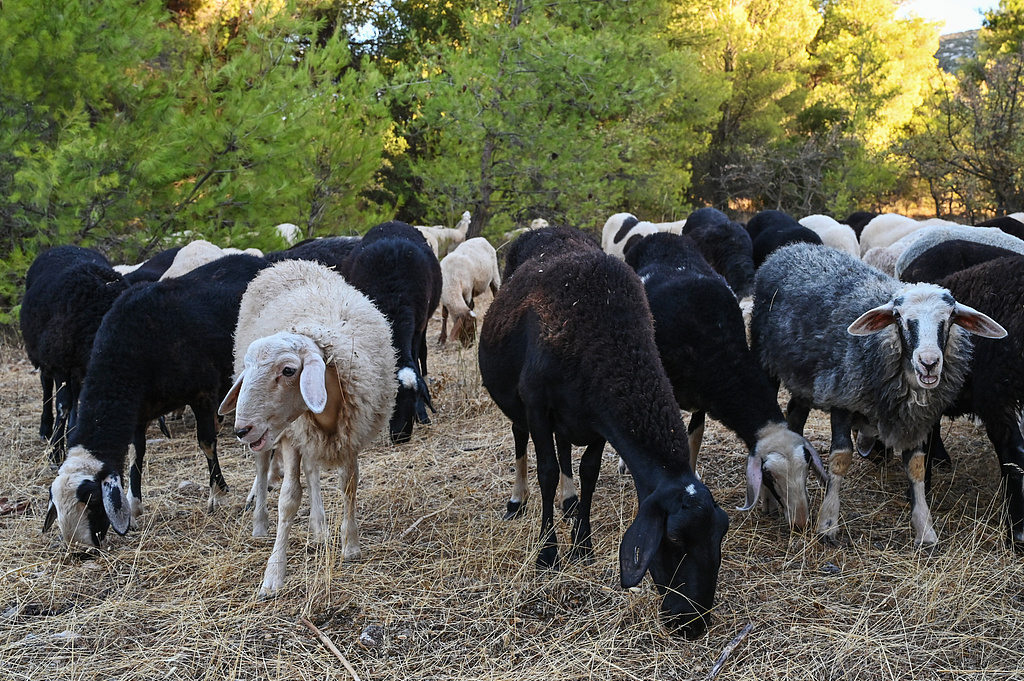
Core Insights - The ongoing spread of sheep and goat pox in Greece has led to the culling of approximately 417,000 sheep and goats, impacting the production and export of the renowned Feta cheese, raising concerns about potential shortages in the market [3] Group 1: Impact on Feta Cheese Production - The first cases of sheep and goat pox were reported in August 2024 in northern Greece, and the disease has since spread to multiple regions [3] - Approximately 5% of the total sheep and goat population in Greece has been culled due to the outbreak, which poses a significant threat to the supply of sheep milk used for Feta cheese production [3] - Feta cheese, recognized as a European Union geographical indication product, relies on sheep and goat milk, with about 80% of this milk being used for its production [3] Group 2: Economic Consequences for Farmers - The export value of Feta cheese reached €785 million last year, indicating its importance to the Greek economy [3] - Farmers are facing severe economic challenges due to the loss of livestock, with government compensation ranging from €132 to €220 per culled sheep, which many farmers claim is insufficient to cover their losses [3] - Emotional distress is also a significant factor for farmers, as they experience not only financial loss but also the trauma of losing their livestock [3] Group 3: Vaccination and Control Measures - Some farmers are advocating for large-scale vaccination against the disease, drawing on experiences from Bulgaria and Turkey, but the Greek government is hesitant due to fears of being classified as an endemic country, which could restrict cheese exports [3] - The lack of officially certified vaccines for sheep pox in Greece complicates the situation further [3] - Reports indicate that up to 1 million illegal vaccinations may have been conducted by farmers, distorting the data and complicating disease control efforts [4]
美国高关税下希腊农产品出口前路维艰
Xin Hua She· 2025-08-21 06:25
Core Viewpoint - The article highlights the significant challenges faced by Greek agricultural exports, particularly feta cheese, table olives, and olive oil, due to increased tariffs imposed by the United States on EU products, which threaten the competitiveness and market access of these key products [1][2][3] Group 1: Feta Cheese Industry - Feta cheese, a key Greek product, has seen its exports to the U.S. grow to 9% of its total export market share in 2024, with an export value nearing 800 million euros [1] - The president of a prominent feta cheese company indicated that the new tariffs have forced them to abandon plans to expand into the U.S. market, as increased costs will likely deter American consumers [1] - The Greek Dairy Industry Association president noted that the new tariff policy will weaken the competitive edge of feta cheese in the U.S. market, prompting some producers to look towards emerging markets [1] Group 2: Olive and Olive Oil Industry - The U.S. has raised tariffs on Greek table olives from 10% to 15% since April, impacting the export value of table olives to the U.S., projected to reach 214 million euros in 2024, accounting for 28% of Greece's total olive exports [2] - Local olive growers expressed that the tariffs have severely affected their earnings, with one grower stating the direct impact on their profitability [2] - The president of the Greek Table Olive Production, Packaging, and Export Association mentioned that rising costs from tariffs are eroding profits across the supply chain, potentially limiting market access to the U.S. [2] - The Greek Olive Oil Standardization Industry Association noted that while the current export share of Greek olive oil to the U.S. is limited, the tariffs will inevitably increase prices and reduce competitiveness in the U.S. market [2] Group 3: Market Adaptation - Greek media analysis indicates that the U.S. market currently represents about 5% of Greece's overall exports, and the increased tariffs could severely undermine growth and future potential in key overseas markets [3] - In response to the tariff challenges, the Greek agricultural sector is exploring alternative markets to mitigate reliance on U.S. exports [3]

【环球财经】美国高关税下希腊农产品出口前路维艰
Xin Hua She· 2025-08-21 05:21
Group 1: Core Insights - The imposition of high tariffs by the US on Greek agricultural products, including feta cheese, table olives, and olive oil, poses significant challenges for Greek exports [1][2][3] - Feta cheese, a key Greek product, has seen a strong export market, with 65% of its total production of approximately 140,000 tons in 2024 destined for export, generating nearly 800 million euros [1] - The US market has become increasingly important for Greek feta cheese, accounting for 9% of its total export market share in 2024, but the new tariffs threaten to undermine this growth [1] Group 2: Impact on Specific Products - The tariff on Greek table olives has increased from 10% to 15% since April 2023, impacting the export value, which is projected to reach 214 million euros in 2024, representing 28% of Greece's total olive exports [2] - Olive growers in regions like Messinia are experiencing significant financial strain due to the tariffs, which are eroding profit margins across the supply chain [2] - The Greek olive oil sector, while currently having a limited share in the US market, is also expected to face increased prices and reduced competitiveness due to the tariffs [2] Group 3: Market Adaptation - Greek agricultural exporters are beginning to explore alternative markets in response to the challenges posed by US tariffs, indicating a shift in strategy to mitigate reliance on the US market [3] - The overall share of the US market in Greek exports is approximately 5%, highlighting the importance of diversifying export destinations to sustain growth [3]
通讯丨美国高关税下希腊农产品出口前路维艰
Xin Hua She· 2025-08-21 02:40
Group 1: Impact of US Tariffs on Greek Agricultural Exports - The US tariffs on EU goods have severely impacted the export of Greek agricultural products, particularly feta cheese, table olives, and olive oil [1][2] - Feta cheese, a key Greek product, has seen its export market share to the US grow to 9% in 2024, but new tariffs threaten its competitiveness [1] - The increase in tariffs from 10% to 15% on Greek table olives since April 2023 has put additional pressure on this sector, with the US accounting for 28% of Greece's total olive exports in 2024 [2] Group 2: Industry Responses and Future Strategies - Greek producers are exploring alternative markets due to the adverse effects of US tariffs on their profitability and market access [3] - The president of the Greek Dairy Industry Association noted that the new tariff policies could weaken the competitive edge of feta cheese in the US market, prompting some producers to look towards emerging markets [1][3] - Local olive growers expressed that the increased tariff costs are significantly damaging their earnings, indicating a potential shift in focus to other markets if prices continue to rise [2]