营业中断险

Search documents
金融服务如何精准把脉企业需求?金洽会“园区行”走进金山园区一探究竟
Guo Ji Jin Rong Bao· 2025-11-07 12:37
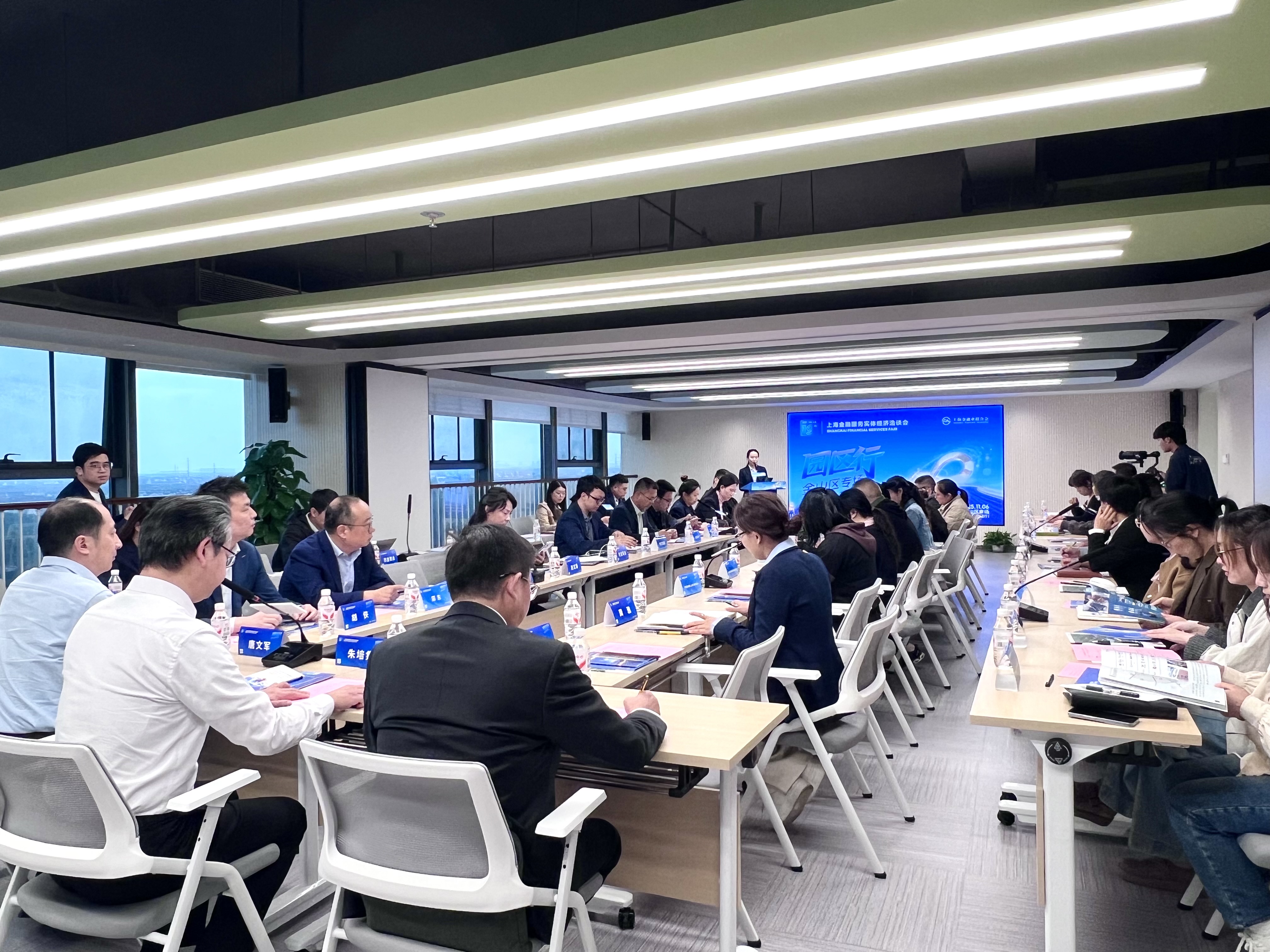
Core Insights - The 19th Shanghai Financial Services for the Real Economy Fair (referred to as "Jin Qiao Hui") successfully held a special event in Jinshan District, focusing on directing financial resources to the real economy [1] Group 1: Event Overview - The event gathered representatives from government departments, financial institutions, parks, and enterprises to promote precise financial support for the real economy [1] - The Jinshan District has introduced specific policies to support insurance premiums for technology-based enterprises, encouraging the development of innovative insurance products [5] Group 2: Financial Services and Support - Companies such as Shanghai Yongsheng Packaging Co., Shanghai Xianglun New Materials Technology Co., and others expressed their operational and financing concerns during the interactive session [4] - Financial advisors from various institutions provided specific suggestions for financing issues, including the use of technology-based loan products for advanced manufacturing enterprises [5][6] - Insurance companies can offer research and development insurance during project processes to enhance the security of R&D loans, thereby reducing banks' credit concerns [6] - In cases where factory assets cannot be effectively mortgaged, companies may consider using leasing companies to activate production line equipment to alleviate financial pressure [7] Group 3: Future Initiatives - The Jin Qiao Hui will continue to innovate its format and content, with over ten special "park tours" planned before the end of the year, and an online exhibition lasting until September 2026 [7] - The fair aims to enhance the quality and effectiveness of financial services, aligning with Shanghai's mission to support the real economy [7]

制造业巨头入局保险业背后的多维逻辑
Nan Fang Du Shi Bao· 2025-09-16 23:14
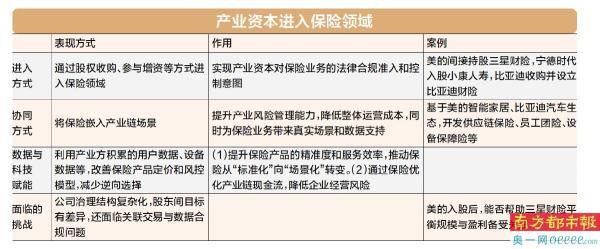
| | | 产业资本进入保险领域 | | | --- | --- | --- | --- | | | 表现方式 | 作用 | 零例 | | 讲入 方式 | 通过股权收购、参与增资等方式进 入保险领域 | 实现产业资本对保险业务的法律合规准入和控 制意图 | 美的间接持股三星财险,宁德时代 入股小康人寿,比亚迪收购并设立 | | | | | 比亚迪财险 | | 协同 方式 | 将保险嵌入产业链场景 | 提升产业风险管理能力,降低整体运营成本,同 时为保险业务带来直实场景和数据支持 | 基于美的智能家居、比亚迪汽车生 态,开发供应链保险、员工团险、设 | | | | | 备保障险等 | | 数据与 | 利用产业方积累的用户数据、设备 | (1)提升保险产品的精准度和服务效率,推动保 | | | 科技 | 数据等,改善保险产品定价和风控 | 龄从"标准化"向"场景化"转变。(2)通过保险优 | | | 赋能 | 精型,减少逆向选择 | 化产业链现金流,降低企业经营风险 | | | 面临的 挑战 | 公司治理结构复杂化,股东间目标 有差异,还面临关联交易与数据合 | | 美的入股后,能否帮助三星财险平 新规模与盈利备 ...

制造大亨“抢滩”保险业!美的曲线入股三星财险的多维逻辑
Nan Fang Du Shi Bao· 2025-09-11 14:17
Core Viewpoint - The entry of Midea Group into Samsung Property Insurance signifies a strategic shift in the insurance landscape, highlighting the integration of industrial capital into the insurance value chain, which brings both opportunities and challenges for governance and compliance [1][10]. Group 1: Midea's Strategic Entry - Midea Group, through its indirect ownership via Junlan Hotel Management, is set to become the third-largest shareholder of Samsung Property Insurance by acquiring 11.5% of the shares from Yuxing Technology [2][4]. - The indirect investment approach allows Midea to navigate regulatory constraints while minimizing risks to its core business operations [3][8]. - Midea's entry is seen as a potential catalyst for Samsung Property Insurance, leveraging its industrial resources and financial experience to drive growth [4][8]. Group 2: Samsung Property Insurance's Performance - Samsung Property Insurance has undergone a transformation, with Tencent becoming the second-largest shareholder in 2022, leading to significant changes in management and business structure [5]. - The company's insurance revenue grew from 899 million to 2.132 billion from 2022 to 2024, reflecting a compound annual growth rate of 33.35% [5]. - Despite revenue growth, net profit declined from 87 million to 12 million during the same period, indicating ongoing profitability challenges [6]. Group 3: Industry Trends and Challenges - The influx of industrial capital into the insurance sector is reshaping the value chain, moving towards a model that emphasizes scenario-based and data-driven insurance products [10][11]. - The integration of industrial capital presents governance challenges, as differing strategic goals among shareholders may complicate decision-making processes [11][12]. - The insurance industry requires high levels of actuarial and risk management expertise, which may pose challenges for manufacturing giants entering the sector [11][12].
重磅!中美达成关税共识,将激活哪些保险需求
Bei Jing Shang Bao· 2025-05-12 09:51
Core Points - The recent high-level economic talks between China and the U.S. resulted in significant tariff reductions, with both sides canceling 91% of additional tariffs and suspending 24% of retaliatory tariffs [3][4] - The adjustments in tariffs and trade measures are expected to directly impact international trade activities, leading to increased demand for insurance products related to goods trade [3][4] Group 1: Direct Impacts - The cancellation of tariffs is likely to lower import and export costs, stimulating trade volume growth and increasing demand for cargo and transport insurance [4] - The removal of trade barriers may enhance the demand for credit insurance and political risk insurance as companies expand their cross-border operations [4] - Improved trade conditions could reduce the risk of supply chain disruptions due to tariff fluctuations, affecting the pricing and underwriting strategies of business interruption insurance [4][5] Group 2: Indirect Impacts - A rebound in bilateral trade is expected to boost related industries such as logistics and manufacturing, leading to increased demand for property and liability insurance [5] - Stabilization of the RMB exchange rate may lower foreign exchange risks and alleviate the currency hedging pressures faced by insurance companies in cross-border investments [5] - The establishment of a regular consultation mechanism is anticipated to reduce policy uncertainties, benefiting the optimization of risk assessment models for cross-border insurance fund allocation [5]