
蒸汽清洁机

Search documents
有商家日入1700万,5家工厂连轴转,今年春节这个品类卖爆了
Sou Hu Cai Jing· 2026-02-14 13:41
Core Insights - The traditional Chinese custom of thorough cleaning before the Spring Festival is evolving with the influence of high-tech home appliances, particularly among the younger generations [1][10] - The market for smart cleaning appliances is experiencing significant growth, with sales data indicating a shift towards technology-driven consumer preferences [1][6] Group 1: Market Trends - By 2026, the consumption of technology-related New Year goods is expected to reach 32.7%, with smart home and health tech products having a high acceptance rate of 89.4% [1] - Sales of window cleaning robots surged by 209%, while floor washing machines and robotic vacuums saw increases of 101% and 59%, respectively, indicating a strong demand for smart cleaning devices [1][6] - The Spring Festival is becoming a critical growth period for cleaning brands, with companies like 洒拖 experiencing a tripling of customer inquiries and significant production increases [3][4] Group 2: Product Innovations - The demand for cleaning appliances is shifting towards more specialized products, with categories like window cleaning robots and mite removal devices gaining popularity [9][10] - 洒拖's window cleaning robot achieved a daily GMV of 17 million yuan during the New Year sales period, accounting for 30% of annual sales [4] - New product innovations, such as the "Magic Cube" robotic vacuum from 友望, are addressing consumer pain points by offering customizable features and improved cleaning efficiency [7][10] Group 3: Consumer Behavior - The trend indicates that consumers are increasingly looking for comprehensive cleaning solutions rather than single-function devices, reflecting a shift in purchasing logic [10][19] - The younger generation, particularly those born in the 90s and 00s, values emotional connection and practicality in their purchases, leading to a rise in demand for pet-friendly cleaning solutions [19][20] - The perception of cleaning appliances is changing, with products like window cleaning robots becoming popular gift options due to their novelty and utility [9][10] Group 4: Competitive Landscape - Brands are adapting to market demands by offering bundled cleaning solutions, with 卡赫 reporting that 35% of their sales come from packaged cleaning sets [17] - The competition is shifting from technical specifications to addressing real consumer pain points, with a focus on practical and affordable solutions [16][24] - Companies like 洒拖 are expanding their market reach globally, leveraging their patented technologies to capture significant market shares in various regions [22][23]


直播预约 智能清洁 社区驿站 兰州家政服务刮起“智能便民风”
Xin Lang Cai Jing· 2026-01-18 01:56
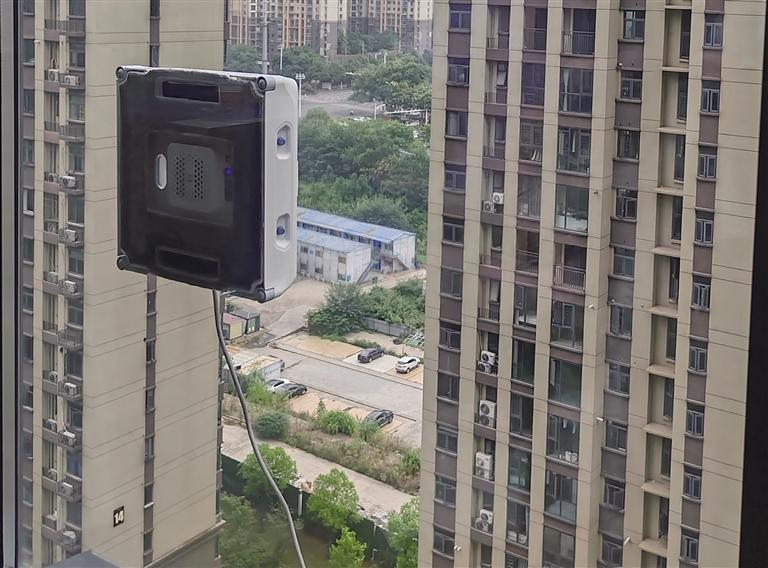
Core Viewpoint - The home service market in Lanzhou is experiencing significant transformation with the introduction of digital booking, smart cleaning devices, and community service stations, making year-end cleaning more efficient and convenient for residents [3][13]. Group 1: Digital Transformation in Home Services - Live streaming appointments have become the mainstream method for acquiring customers in the home service industry, allowing for real-time interaction and order placement [3][4]. - The "AiJiaJia" app developed by Gansu Longyuan Sister Home Service has achieved over 30,000 registered users within six months, with daily orders reaching over 200, marking a 40% increase compared to the previous year [5]. - The establishment of a credibility platform by the Gansu Family Service Industry Association has recorded information for 172 companies and 27,752 service personnel, enhancing consumer trust [5][6]. Group 2: Adoption of Smart Cleaning Devices - The sales of window cleaning robots have surged, with some stores reporting a 60% increase in sales compared to the previous year, as consumers find them safer and more cost-effective than hiring human cleaners [9][10]. - The cost of a window cleaning robot is around 1,500 yuan, which is more economical than hiring a cleaner multiple times a year [9]. - Home service companies are also integrating smart devices to improve efficiency, with robots cleaning windows three times faster than human workers [10]. Group 3: Community Service Stations - Community service stations are providing quick and convenient home cleaning services, with residents able to book services through a mini-program, resulting in faster response times compared to traditional methods [11][12]. - These stations offer a range of services, including regular cleaning and appliance maintenance, and have established a closed-loop service model that enhances accessibility for residents [11]. - The integration of property management and home services through community stations addresses traditional challenges such as distance, slow response, and trust issues in the home service industry [12][13].
做强智能小家电的大市场
Jing Ji Ri Bao· 2025-08-08 22:00
Core Viewpoint - The smart small appliance industry in China is experiencing significant growth driven by policy guidance and market demand, transitioning from scale expansion to quality and efficiency improvement [1][2]. Group 1: Sales Performance and Market Trends - The sales of small appliances, particularly in the categories of household and kitchen appliances, have shown remarkable performance, with products like leg massagers and steam cleaners experiencing rapid year-on-year sales growth [1]. - From June 5 to July 24 this year, smart small appliances such as electric cookers and window-cleaning robots achieved exponential sales growth, indicating a steady increase in sales and improvement in smart technology levels [2]. Group 2: Innovation and Global Competitiveness - The innovation capabilities of the smart small appliance industry have significantly improved, enhancing global competitiveness. For instance, Cixi in Zhejiang province, known as the "capital of small appliances," has driven product upgrades through independent innovation and collaboration with research institutions [2]. - Cixi has become a manufacturing source for 60% of the world's small appliances, showcasing its strong position in the global market [2]. Group 3: International Market Expansion - Many smart small appliance companies are focusing on international market expansion as a growth strategy. For example, Shunde in Guangdong has seen its exports to the US, EU, and Middle East reach 6.5 billion, 5.93 billion, and 4.05 billion respectively in the first two months of this year, with growth rates of 4.1%, 9.1%, and 5% [3]. - Emerging markets in Southeast Asia, Africa, and Latin America are also being actively explored, increasing the global influence of Shunde's appliances [3]. Group 4: Challenges and Development Strategies - Despite significant achievements, the smart small appliance industry faces challenges such as high dependence on imported core chips and algorithm gaps that hinder precision control and energy efficiency compared to international benchmarks [3]. - The industry is also grappling with homogenized competition in a saturated market, leading to declining profits and consumer trust issues, which constrains innovation [3]. Group 5: Industry Collaboration and Innovation - To strengthen the industry's foundation, there is a need to build national-level industrial clusters, enhance vertical integration of the supply chain, and optimize resource allocation [4]. - Companies are encouraged to increase R&D investment and personnel to overcome technological bottlenecks and reduce reliance on foreign technologies, thereby improving product quality [4]. Group 6: Consumer Engagement and Market Activation - Strategies to enhance consumer awareness and activate market demand include fostering green consumption concepts and establishing smart small appliance experience centers [5]. - A transparent information disclosure system and improved after-sales service mechanisms are essential to protect consumer rights and boost confidence in smart small appliances [5].
智能小家电市场依然大
Jing Ji Ri Bao· 2025-07-30 22:20
Core Insights - The sales of small home appliances have performed well during the summer, particularly in categories like kitchen appliances and lifestyle devices, with significant year-on-year growth in products such as electric cookers, leg massagers, and steam cleaners [1] Group 1: Market Trends - Small appliances are favored due to their compact size and convenience, appealing to small households and renters [1] - The rise of outdoor camping culture has expanded the market for small appliances [1] - The trend of "one-person economy," "aesthetic economy," and "silver economy" has driven demand for aesthetically pleasing and personalized small appliances [1] Group 2: Consumer Preferences - Consumers are increasingly seeking high-quality lifestyles, which small appliances can cater to through their design and functionality [1] - The ongoing "trade-in" policy has enhanced the competitiveness of small appliances in the home appliance market [1] Group 3: Challenges and Solutions - Some small appliances, despite their attractive designs, fail to meet practical usage expectations, leading to underutilization [1] - To overcome the "useless" label, small appliances must address practical consumer needs, such as health-oriented features and ease of cleaning [2] - Companies should focus on enhancing the smart capabilities of small appliances to provide health-conscious cooking options [2] - Product design should prioritize easy cleaning and maintenance to improve user experience and increase usage frequency [2]